A maioria das empresas de aluguel da Europa Ocidental — Sixt, Hertz, Avis, Europcar — proíbe a entrada de seus carros em Marrocos. A solução inteligente para turistas: atravessar como passageiro a pé e alugar localmente. Rotas completas de ferry, documentação e detalhamento de custos.
Resposta curta: quase nunca. A maioria das empresas de aluguel da Europa Ocidental — incluindo Sixt, Hertz, Avis, Europcar, e operadoras espanholas como Goldcar e Centauro — proíbe a travessia de seus veículos pelo Estreito de Gibraltar para Marrocos. O contrato de aluguel padrão lista explicitamente as razões citadas: lacunas de seguro (a maioria das apólices da UE não cobre Marrocos), a carga burocrática do rastreamento transcontinental, o risco histórico de roubo de veículos e o risco prático de que a alfândega marroquina possa recusar a entrada de um aluguel não autorizado. Se você chegar ao terminal de ferry em um carro alugado espanhol sem permissão por escrito da empresa de aluguel, espere ser impedido de prosseguir.
A alternativa inteligente — aquela que recomendamos a quase todo viajante que planeja uma viagem Espanha-Marrocos — é atravessar da Espanha como passageiro a pé e alugar um carro (ou, melhor ainda, contratar um motorista) em Marrocos. É mais barato, não exige nenhuma burocracia da sua parte e elimina toda a questão alfandegária/de seguro. Este guia explica por que a proibição existe, as três rotas de ferry Espanha-Marrocos, a comparação de custos reais e exatamente o que fazer ao chegar ao lado marroquino.
Resposta rápida
- Os Termos e Condições da Sixt Espanha proíbem explicitamente a saída do continente europeu — incluindo os enclaves espanhóis de Ceuta e Melilla.
- Hertz, Avis, Europcar, Goldcar e a maioria das outras empresas de aluguel espanholas aplicam a mesma proibição geral.
- Razões citadas: lacunas de seguro, carga burocrática, risco de roubo, risco de recusa de entrada pela alfândega.
- Se você trouxer um carro particular (seu próprio), precisará de um TIP (Permissão de Importação Temporária / formulário D16ter), seguro Green Card válido cobrindo Marrocos — ou uma Carte Brune marroquina comprada no porto (€50–100).
- Três rotas de ferry conectam a Espanha a Marrocos: Tarifa→Tânger-Ville (~1h), Algeciras→Tânger-Med (1.5–2.5h), Algeciras→Ceuta (~1h, depois dirija pelo enclave espanhol).
- Realidade do custo: um ferry de ida com carro e 2 passageiros custa €130–250. Uma passagem para passageiro a pé custa €30–40. Aluguéis econômicos locais marroquinos começam em €5–9/dia mais €14–23/dia de seguro.
- Conclusão para a maioria dos viajantes: deixe o carro alugado espanhol na Espanha, atravesse a pé, alugue ou contrate localmente. O custo total da viagem é menor e seu nível de estresse diminui visivelmente.
Por que as empresas de aluguel recusam
Quando um contrato de aluguel espanhol diz "o veículo não pode sair da Europa continental", a empresa não está sendo arbitrária. Quatro razões reais impulsionam esta política:
- Lacuna na cobertura do seguro. O seguro automóvel padrão da UE, o sistema Green Card, trata Marrocos como um território separado. A maioria dos pools de seguro das empresas de aluguel não cobre danos, roubo ou reclamações de responsabilidade que se originam em Marrocos — então toda a frota fica operacionalmente sem seguro no momento em que o carro embarca em um ferry para o sul.
- Carga burocrática. Trazer um carro com matrícula estrangeira para Marrocos exige uma Permissão de Importação Temporária (TIP, também chamada D16ter). A empresa de aluguel precisa estar disposta a emprestar o certificado de registro V5C, assinar cartas de autorização e aceitar que o paradeiro do carro seja relatado através dos registros alfandegários marroquinos. A maioria das frotas não está configurada para essa sobrecarga.
- Histórico de roubo de veículos. Esta é a maneira mais educada de dizer. Carros alugados em rotas transmediterrâneas têm um longo histórico de serem alvos atraentes — tanto roubos organizados quanto o risco mais comum de danos em estradas rurais marroquinas. As empresas estabeleceram a proibição décadas atrás e não viram razão para relaxá-la.
- Recusa de entrada pela alfândega. Mesmo que um viajante planeje atravessar de ferry com um aluguel não autorizado, a alfândega marroquina tem autoridade para recusar a entrada em Tânger-Med, Tânger-Ville ou Bab Sebta. Você então teria que voltar para um terminal de ferry espanhol, tendo pago por passagens, combustível e estresse, e ainda precisaria alugar um carro em Marrocos de qualquer maneira.
Se uma empresa de aluguel conceder uma exceção — e um pequeno número ocasionalmente o faz para clientes corporativos de longo prazo — isso exige permissão específica por escrito, uma cobertura de seguro transfronteiriça adicional e, geralmente, um depósito que mais do que compensa qualquer economia.
A alternativa inteligente: passageiro a pé + alugar em Marrocos
Três razões pelas quais esta é a melhor opção para a maioria dos viajantes:
- Sem burocracia. Você pula TIP, trânsito V5C, seguro Carte Brune, cartas de autorização — toda a pilha.
- Custo total mais baixo. Uma passagem de ferry para passageiro a pé (€30–40 só de ida) mais um aluguel marroquino a preços locais (~€5–9/dia econômico + €14–23/dia para a isenção básica de danos) fica bem abaixo da tarifa de ferry de carro de ida de €130–250 mais seguro marroquino mais o custo original do aluguel espanhol. Para uma viagem de uma semana, a economia geralmente varia de €150–300.
- Melhor para as estradas marroquinas. Os aluguéis locais são equipados para a condução local — caixas de câmbio manuais são padrão, os pneus e a parte inferior são adequados para o que você realmente encontrará na estrada de Marrakech ao Atlas, e a empresa de aluguel tem uma rede de recuperação no local. Carros alugados na UE são ajustados para as autoestradas europeias.
Há também uma quarta vantagem a ser mencionada: em Marrocos, contratar um motorista-guia para a viagem é muitas vezes apenas um pouco mais caro do que dirigir por conta própria, e frequentemente a melhor escolha. As estradas são bem pavimentadas nas rotas principais, mas desconhecidas; a sinalização está em árabe e francês; a navegação em medinas antigas é realmente difícil. Para tours privados como os que operamos, incluímos o motorista-guia como padrão — veja nosso planejador de viagens para o que está incluído. Comparando operadores? Nossa lista de verificação de 17 perguntas abrange o que perguntar a qualquer operador (incluindo nós) antes de pagar um depósito.
As três rotas de ferry Espanha–Marrocos
Todas as três rotas acomodam carros e passageiros a pé, embora como passageiro a pé seu embarque seja mais simples, sua tarifa seja mais barata e sua experiência na alfândega seja mais rápida. A escolha entre as rotas depende principalmente de onde na Espanha você está começando e onde em Marrocos você deseja desembarcar.
| Rota | Tempo de travessia | Principais operadoras | Melhor para |
|---|---|---|---|
| Tarifa → Tânger Ville | ~1 hora | Baleària, Africa Morocco Link (AML) | Passageiros a pé — desembarca no centro de Tânger; a DFDS interrompeu esta rota após maio de 2025 |
| Algeciras → Tânger Med | 1.5–2.5 horas | Baleària, Trasmediterránea, FRS/DFDS, Naviera Armas, AML | Motoristas que atravessam com carros; rota mais frequente. O porto de Tânger Med fica 50 km a nordeste do centro de Tânger |
| Algeciras → Ceuta | ~1–1h15 | Baleària, Armas Trasmediterránea, DFDS | Viajantes que desejam flexibilidade — mais de 20 partidas diárias. Desembarca você em um enclave espanhol; você então atravessa para Marrocos em Bab Sebta a pé ou de carro |
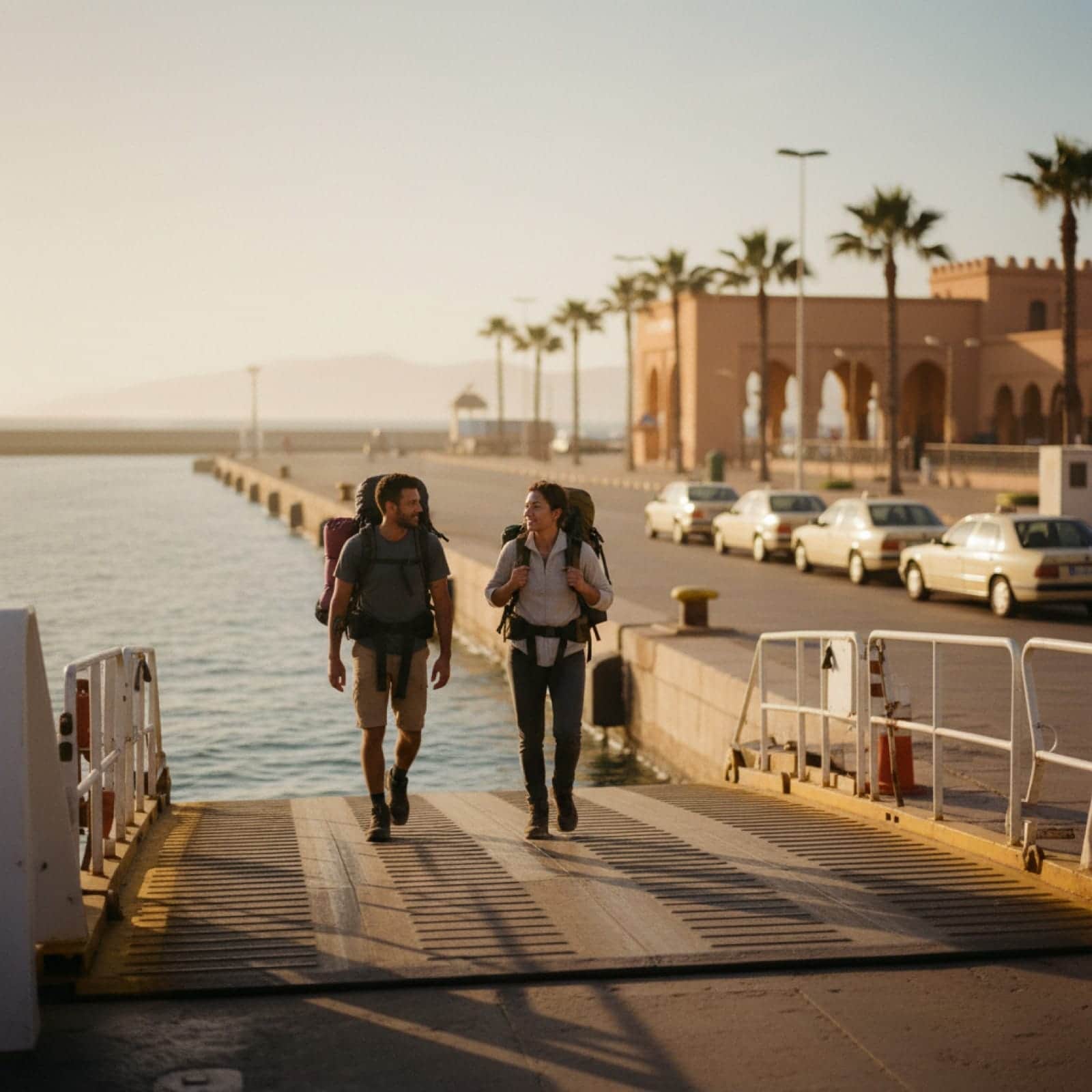
Para um turista que atravessa como passageiro a pé e aluga no lado marroquino, Tarifa → Tânger Ville é a combinação mais conveniente: o barco leva uma hora, desembarca você no coração de Tânger, e Tânger em si tem um mercado de aluguel saudável, além da nossa cobertura Careem recomendada (veja nosso guia Careem em Marrocos para a configuração prática).
A comparação de custos — realmente faça as contas
Abaixo está o cálculo real para uma viagem de 7 dias, duas pessoas, rota marroquina média (por exemplo, Tânger → Chefchaouen → Fes → Atlas → Marrakech). Valores de tarifas publicadas em 2025–2026 no Ferryhopper, Baleària e principais agregadores de aluguel marroquinos.
| Linha de custo | Trazer aluguel espanhol (só ida) | Passageiro a pé + aluguel marroquino |
|---|---|---|
| Ferry (ida e volta) | €260–500 (carro + 2 pax) | €60–80 (2 pax a pé) |
| Carte Brune (seguro marroquino, se o Green Card não cobrir) | €50–100 + fila de burocracia | Não necessário |
| Formulário TIP / D16ter | Obrigatório, gratuito mas ~30–60 min no porto | Não necessário |
| Aluguel por 7 dias | Já pago na Espanha (~€350+ por uma semana) | €35–63 (carro econômico) + €98–161 seguro |
| Risco se a alfândega recusar a entrada | Alto — viagem de volta perdida | Nenhum |
| Total aproximado | €660–1,050+ | €255–470 |
O padrão é consistente em todas as janelas de viagem: o caminho do passageiro a pé economiza €200–600 por casal para uma semana típica. Para famílias ou grupos maiores, a diferença aumenta, porque o seguro de aluguel adicional e as sobretaxas de ferry-carro se acumulam, enquanto as tarifas de passageiros a pé permanecem aproximadamente lineares.
Se você realmente insiste em trazer seu próprio carro
Cenário diferente: você não está alugando na Espanha, você está dirigindo seu próprio carro (de propriedade privada) com matrícula europeia pela Espanha e quer atravessar para Marrocos. Este é o caso em que a burocracia é viável, e também é o caso em que a rota Algeciras → Tânger Med faz sentido. Aqui está o que você precisará no porto:
- Passaporte — válido por pelo menos 3–6 meses após a data de sua partida.
- Certificado de registro do veículo V5C — o original, em nome do motorista. Se o carro não for seu, você precisará de uma carta de autorização autenticada do proprietário registrado.
- Carteira de motorista válida — a carteira do seu país de origem é aceita; uma Permissão Internacional para Dirigir é recomendada, mas não estritamente exigida.
- Formulário TIP / D16ter — a Permissão de Importação Temporária vincula seu passaporte ao veículo. Você pode preenchê-lo online antecipadamente através do portal da Alfândega Marroquina (o caminho recomendado — economiza mais de 30 minutos na fila do porto) ou preenchê-lo à mão no cais. O TIP é gratuito, mas obrigatório; sem ele, o carro é tecnicamente contrabandeado. É válido por 180 dias dentro de um ano civil por carro.
- Seguro Green Card — sua apólice padrão da UE deve listar explicitamente Marrocos como um território coberto. A maioria não o faz. Se não o fizer, você deve comprar um seguro marroquino temporário (Carte Brune) no porto. Espere pagar €50–100 por 10–30 dias de cobertura.
Tudo isso pode ser feito em 30–90 minutos em Tânger Med se você chegar preparado, mas espere filas mais longas nas tardes de sexta-feira e nos fins de semana de agosto. Leve euros em notas pequenas para o balcão do seguro; cartões nem sempre são aceitos.
A solução alternativa de Ceuta (e por que ela não ajuda com aluguéis)
Alguns viajantes consideram a rota Algeciras → Ceuta → Bab Sebta esperando que ela contorne a proibição de Marrocos, já que Ceuta é tecnicamente território espanhol. Não funciona. Os Termos e Condições da Sixt Espanha nomeiam Ceuta e Melilla especificamente como fora dos limites para seus aluguéis, e as outras grandes redes seguem a mesma lógica — no momento em que você cruza a fronteira terrestre de Bab Sebta para a província de Tetouan, você está em Marrocos com um aluguel não autorizado.
Onde a rota de Ceuta faz sentido:
- Você possui o carro que está dirigindo (não é alugado) e quer flexibilidade — Algeciras→Ceuta tem mais de 20 partidas diárias, mais do que qualquer outra rota.
- Você está atravessando como passageiro a pé (ou com um ônibus de turismo) e o horário da rota de Ceuta se encaixa melhor do que Tarifa ou Tânger-Med.
- Você quer passar um dia explorando Ceuta — é uma cidadezinha curiosa, meio espanhola, meio norte-africana, que vale a pena uma parada se você não estiver com pressa.
Caso contrário, para um turista que se dirige para Marrocos, a rota de passageiros a pé Tarifa→Tânger Ville continua sendo o ponto de entrada mais simples.
Alugar (ou contratar) uma vez que você esteja no lado marroquino
Três opções depois de atravessar:
1. Carro de aluguel local marroquino
Melhor para viajantes confortáveis com a condução em autoestradas de estilo europeu e confiantes na leitura de sinalização bilíngue francês/árabe. Carros econômicos de agências locais (Hertz Marrocos, Avis Marrocos, Europcar Marrocos, Sixt Marrocos, além de empresas regionais como Medloc ou First Car) começam em torno de €5–9/dia, com a isenção básica de danos adicionando €14–23/dia. O custo semanal total fica em €120–230 para um carro econômico com seguro — significativamente menos do que arrastar um aluguel espanhol para o outro lado.
A devolução em uma cidade diferente geralmente é possível, mas cobra €40–100. Cartões são necessários para o depósito; um 'petit-déjeuner' de burocracia na retirada é normal — traga paciência.
2. Motorista + carro (a opção que geralmente recomendamos)
Por €60–150/dia, dependendo da categoria do carro e da rota, você obtém um motorista-guia licenciado que cuida da navegação, idioma, combustível, estacionamento, o problema de desembarque na medina e o momento inevitável em que o Google Maps tenta levá-lo por um beco de 1 metro de largura. A maioria dos nossos itinerários privados em Marrocos inclui o motorista como padrão — é a diferença entre sentir que você viu Marrocos e sentir que você sobreviveu a ele.
3. Transferências baseadas em aplicativos e transporte intermunicipal
Se o seu itinerário for principalmente baseado em cidades — Tânger → Chefchaouen → Fes → Marrakech — você pode não precisar de carro. A rede ferroviária ONCF conecta a maioria das grandes cidades, os ônibus CTM e Supratours preenchem as lacunas, e dentro das cidades você tem Careem, Uber em Casablanca e Marrakech, e táxis pequenos com taxímetro. O custo total de transporte para um itinerário de 7 dias apenas em Marrocos pode ficar abaixo de €150.
Erros comuns que os viajantes cometem
Aparecer no terminal de ferry com um aluguel não autorizado
Você será impedido de prosseguir. A verificação acontece no balcão do ferry (operadores verificam o V5C em relação ao seu passaporte e contrato de aluguel) e novamente na alfândega marroquina. Não há caminho para "passar despercebido". Não perca um dia aprendendo isso da maneira difícil.
Reservar o ferry para carro assumindo que você resolverá o aluguel no porto
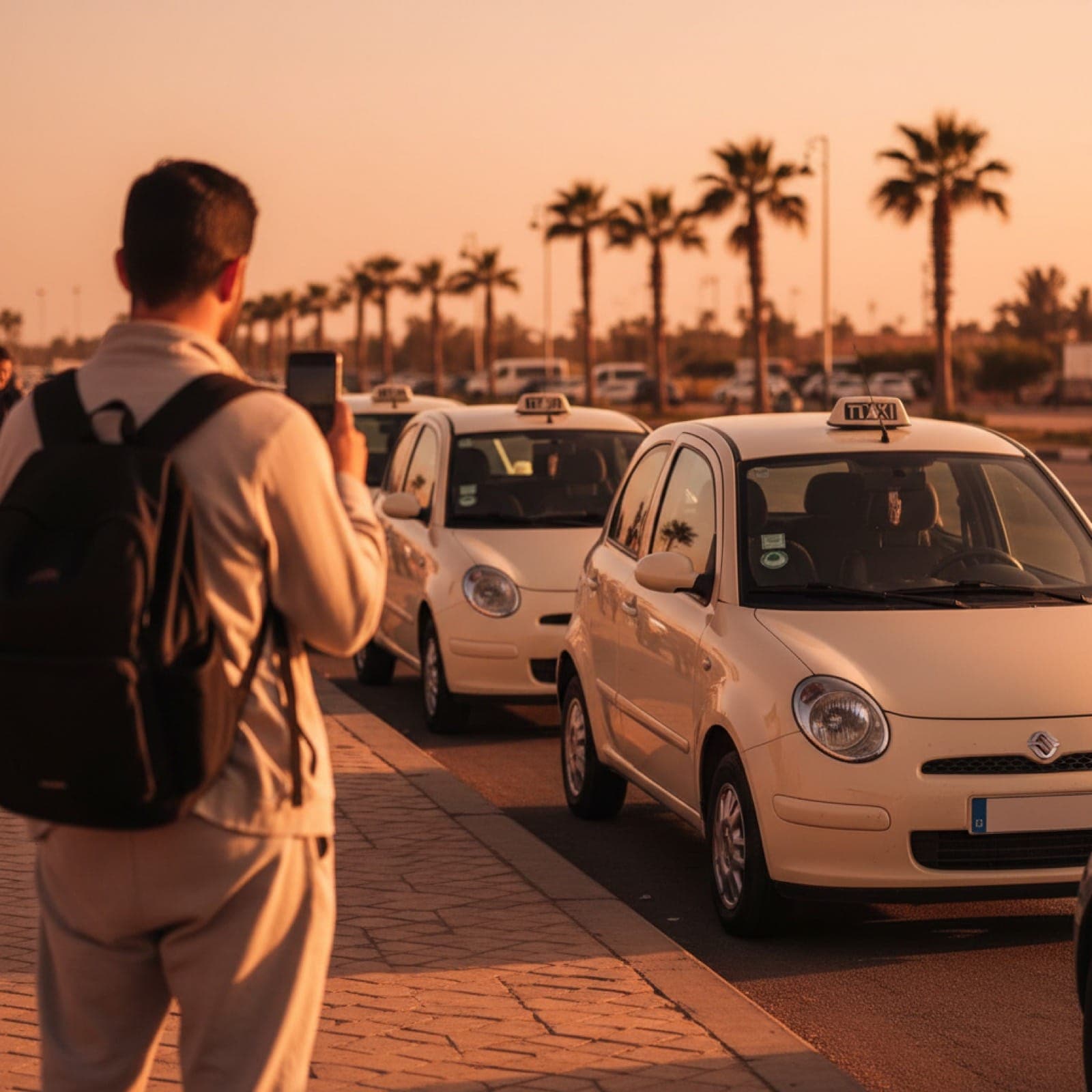
Se você chegar a Tânger-Med esperando alugar um carro no porto, a oferta é limitada e os preços são premium. Reserve seu aluguel marroquino com antecedência na cidade de Tânger ou Casablanca, depois pegue um táxi do porto até o escritório de aluguel — é mais barato e o inventário é muito melhor.
Esquecer que Tânger-Med fica a 50 km do centro de Tânger
Tânger-Med é um enorme porto comercial, não um centro da cidade. Se você estiver atravessando para Tânger, pegue o ferry Tarifa → Tânger Ville, que o desembarca na cidade. Se você estiver atravessando com um carro indo para Casablanca ou mais ao sul, Tânger-Med está bem — mas planeje a transferência de 50 km se você chegar em um ferry de Tânger Med sem seu próprio veículo.
Subestimar a travessia de Bab Sebta em um dia movimentado
A fronteira terrestre Ceuta → Marrocos em Bab Sebta pode ficar muito lenta nos fins de semana de Eid, durante os horários de iftar do Ramadã e nas sextas-feiras de agosto. Filas de pedestres de três horas não são incomuns. Se o seu itinerário depender de uma travessia em uma data específica, reserve um dia inteiro para isso.
Comprar Carte Brune do vendedor mais barato do porto
Se você atravessar com seu próprio carro, compre o seguro marroquino apenas no balcão oficial de seguros dentro do terminal do porto. Os vendedores de Carte Brune fora dos portões às vezes vendem cobertura legítima a preço total, mas ocasionalmente vendem cobertura que não pagará. O balcão oficial é claramente marcado e os preços são padronizados.
Recomendação final
Para 95% dos viajantes que atravessam da Espanha para Marrocos: deixe o carro alugado na Espanha, atravesse de ferry como passageiro a pé via Tarifa → Tânger Ville, e organize seu transporte marroquino no lado marroquino. Você economizará €200–600 por casal em uma viagem de uma semana, evitará uma fila de burocracia alfandegária e se colocará em uma posição melhor para realmente aproveitar o que veio ver. Para viajantes que desejam logística zero, isso significa um motorista particular — diga-nos suas datas e responderemos em 24 horas com um itinerário completo, motorista incluído.
Os 5% que atravessam com seu próprio carro — tipicamente expatriados se mudando, viajantes de longa distância ou viagens de caravana de famílias grandes — devem chegar a Algeciras → Tânger Med com o TIP pré-preenchido online, o V5C em mãos e o seguro marroquino pré-arranjado ou orçado no porto. É perfeitamente viável; apenas raramente vale a pena o custo adicional para umas férias normais.

Escrito por
Youssef El Alaoui
Lead Morocco Specialist
Born in Fes, based in Marrakech. Designs private itineraries for Morocco Beauty Spots and still argues mint tea is best in the Atlas.