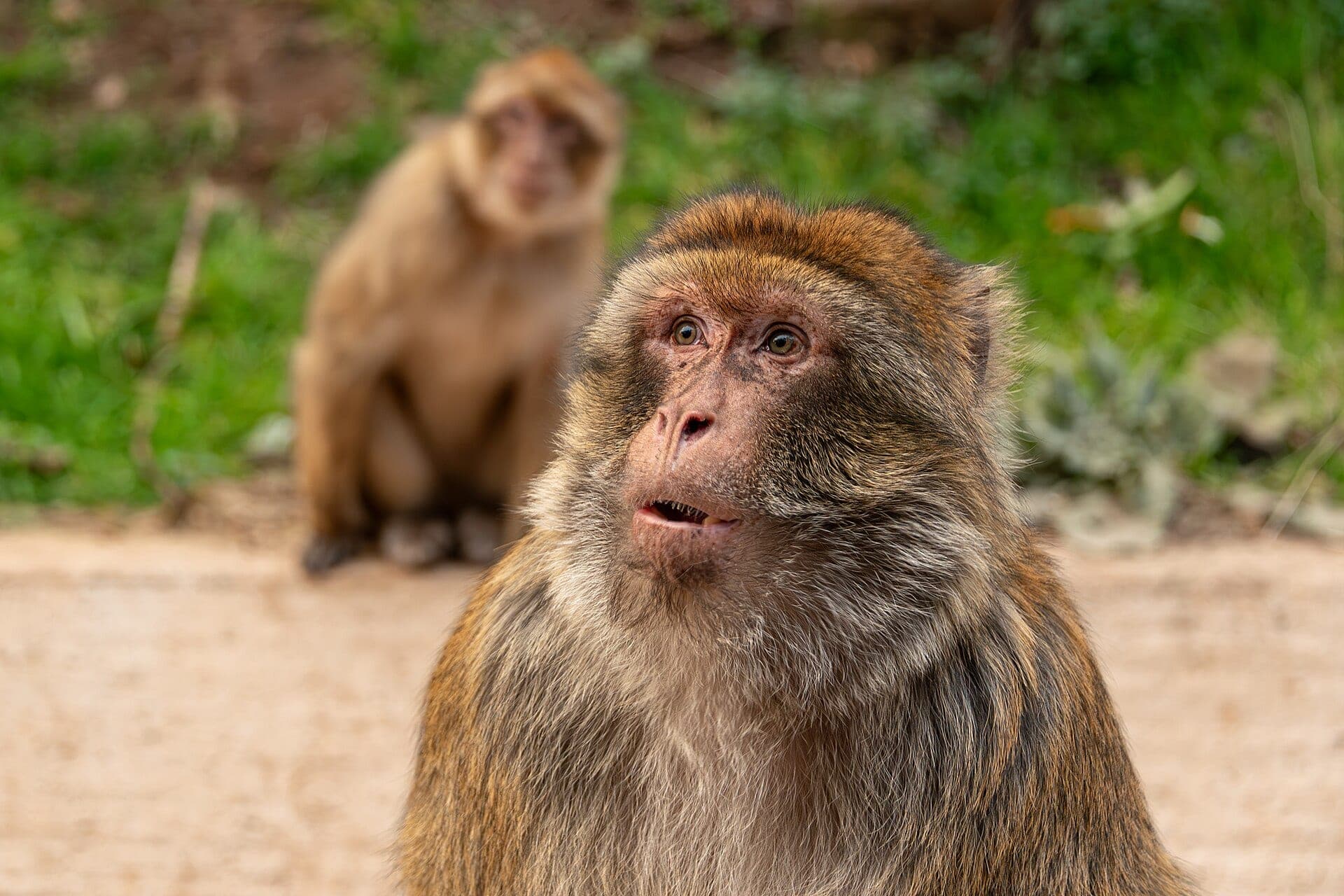
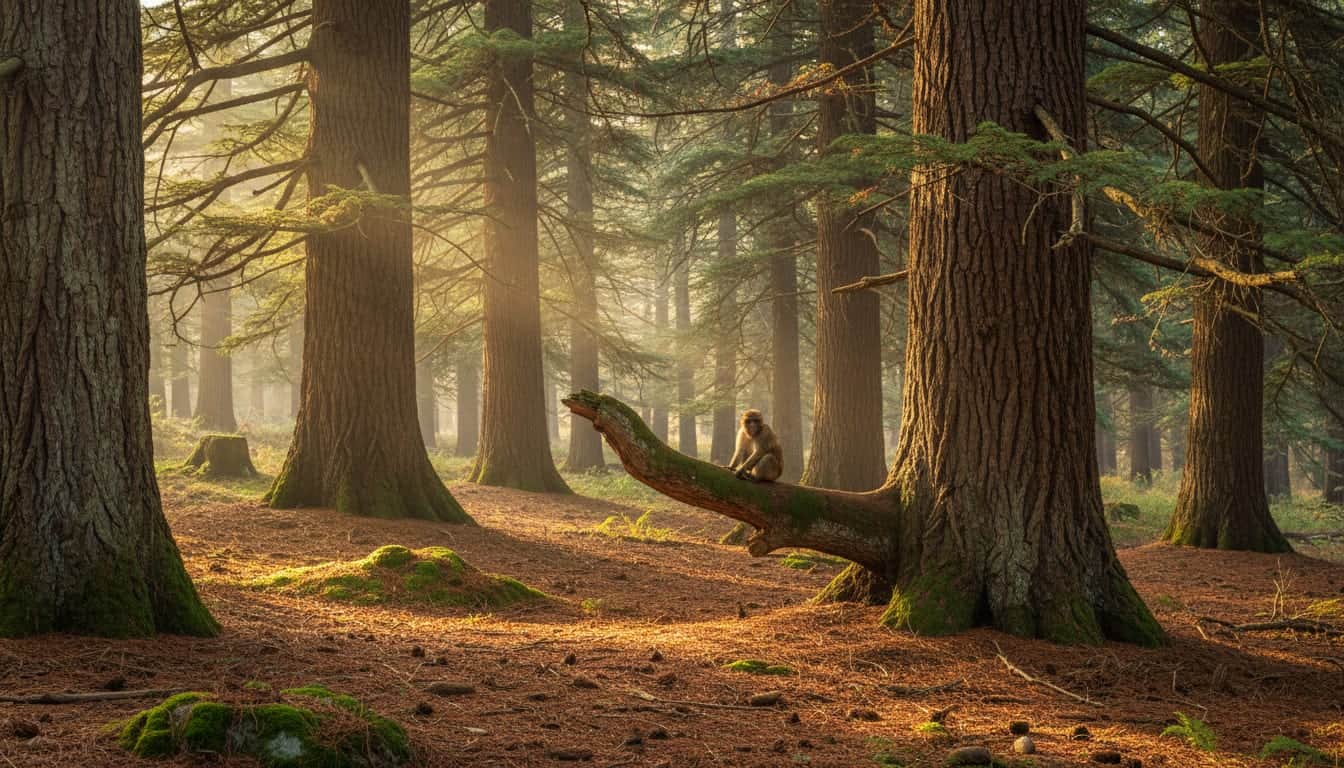
A cena à beira da estrada em Azrou — vendedores de amendoins, macacos em capôs de carros, selfies — está a prejudicar uma espécie em perigo. Aqui está a ciência do porquê não deve alimentar os macacos-de-Gibraltar, e como vê-los eticamente na floresta de cedros do Atlas.
Ver os macacos-de-Gibraltar na floresta de cedros de Azrou pode ser ético ou prejudicial, e a diferença é simples: não os alimente. A cena à beira da estrada — vendedores a vender sacos de amendoins, macacos a subir em carros, turistas a posar para selfies — está a prejudicar silenciosamente uma espécie em Perigo. A alternativa ética é observá-los à distância, idealmente ao amanhecer, na floresta de cedros do Atlas perto de Azrou e Ifrane, sem comida, sem tocar e sem adereços. Este guia explica a ciência por trás dessa regra e exatamente como fazê-lo corretamente.
Perguntam-me muito se a 'floresta dos macacos' perto de Azrou é uma armadilha para turistas ou uma verdadeira experiência de vida selvagem. A resposta honesta: é ambos, dependendo inteiramente de como o faz. Os animais são genuinamente selvagens e genuinamente dignos de serem vistos. A forma como a maioria dos turistas interage com eles é o problema.
Por que não deve alimentar os macacos-de-Gibraltar?
Porque a alimentação os deixa doentes, estressados e menos capazes de se reproduzir — isso é medido, não é uma opinião. Um estudo de 2016 na PLOS ONE (Maréchal et al.) comparou macacos que eram fortemente alimentados por turistas com macacos que se alimentavam naturalmente. O grupo alimentado era mais pesado, mostrava hormônios de estresse elevados e mais perda de cabelo, e era dramaticamente menos saudável e menos fértil. Os números são claros:
| Medida | Grupo alimentado por turistas | Grupo alimentado naturalmente |
|---|---|---|
| Episódios de doença (período do estudo) | 32 | 1 |
| Fêmeas que deram à luz | Cerca de um terço | Todas elas |
| Tamanho / peso corporal | Maior (menos saudável) | Normal |
| Estresse e perda de cabelo (alopecia) | Elevado | Inferior |
Além disso, a alimentação atrai os macacos para perto o suficiente das pessoas para que doenças passem em ambas as direções — pesquisas mostram que macacos alimentados passam longos períodos dentro do alcance de aerossóis de turistas e continuam a interagir mesmo quando doentes. Adicione as mordidas e arranhões que enviam turistas a clínicas marroquinas todos os anos (quase sempre durante a alimentação ou selfies), e o 'divertido' encontro à beira da estrada começa a parecer o que realmente é.
Quão ameaçados estão os macacos-de-Gibraltar?
O macaco-de-Gibraltar (Macaca sylvanus) está Em Perigo na Lista Vermelha da IUCN e listado no Apêndice I da CITES. É o único macaco que vive fora da Ásia e o único primata nativo do Norte de África. Os números caíram de mais de 20.000 na década de 1970 para uma estimativa de 12.000–21.000 hoje em Marrocos e na Argélia, com cerca de três quartos nas montanhas do Atlas e do Rif em Marrocos. O próprio escritório de ecoturismo do Parque Nacional de Ifrane relata que a população local diminuiu cerca de 40% em quarenta anos. Estima-se que 200 macacos também sejam contrabandeados para a Europa anualmente para o comércio ilegal de animais de estimação.
Onde os pode ver, e como é a floresta de cedros?
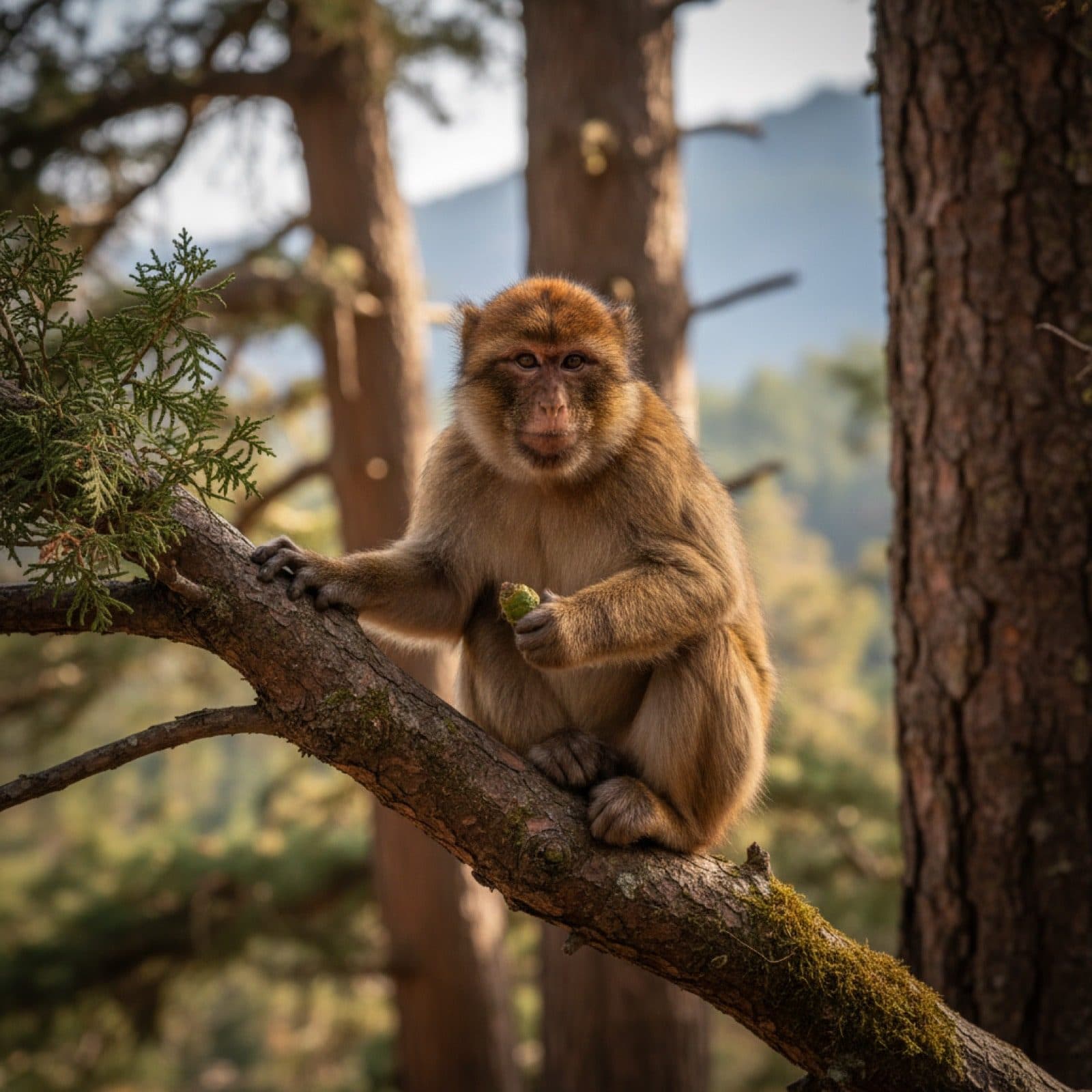
O local clássico é a floresta de Cèdre Gouraud perto de Azrou, no Parque Nacional de Ifrane — 125.000 hectares do Médio Atlas que abriga aproximadamente um quarto dos macacos-de-Gibraltar do mundo e cerca de um décimo dos cedros do Atlas do mundo. Fica a cerca de 89 km (1,5 horas) de Fes, a mais de 1.600 m de altitude, por isso é fresco e alpino — a cidade vizinha de Ifrane é apelidada de 'a Suíça de Marrocos' por uma boa razão. A dieta natural dos macacos é a própria floresta: folhas de cedro e carvalho-negral, sementes, bolotas, casca, erva, líquenes e o inseto ocasional — que é exatamente por isso que eles não precisam dos seus amendoins.
Como ver os macacos de Azrou eticamente?
Cinco regras. Não os alimente — nem mesmo 'apenas um'. Mantenha a sua distância — use uma lente zoom, não a proximidade, para fotos. Não os toque nem pose com eles — sem selfies, sem adereços. Vá cedo — ao amanhecer a tropa forrageia naturalmente e a multidão da estrada ainda não chegou. Mova-se silenciosamente e lentamente — deixe-os comportar-se como se você não estivesse lá. Feito desta forma, verá o cuidado mútuo, a procura de alimento, o brincar, e na primavera os filhotes (nascidos em março-abril) — fotografias muito melhores do que um macaco a pegar um biscoito de um capô, e nenhum dano feito.
Para mais informações sobre o Médio Atlas e se a região vale o seu tempo, veja a nossa opinião honesta sobre se vale a pena visitar Ifrane. E se gostaria da versão ética organizada — uma observação ao amanhecer, liderada por um naturalista, sem alimentação e com uma contribuição para a conservação incluída — é exatamente para isso que serve o nosso tour ético de observação de macacos-de-Gibraltar de Fes.

Escrito por
Youssef El Alaoui
Lead Morocco Specialist
Born in Fes, based in Marrakech. Designs private itineraries for Morocco Beauty Spots and still argues mint tea is best in the Atlas.