A no-nonsense guide to climbing Mount Toubkal (4,167 m) — the routes, the right season, how fit you really need to be, and why you'll now climb with a licensed guide.
Mount Toubkal is 4,167 m — the highest peak in North Africa — and in summer it's a non-technical, two-day walk-up: no ropes, no climbing skills. The real challenge is altitude, not difficulty, and since 2018 you'll climb it with a licensed mountain guide.
You start in Imlil at 1,740 m, drive in from Marrakech in about 90 minutes, and trek roughly 1,460 vertical metres to the refuges at 3,200 m on day one. Day two: a pre-dawn push up the final 950 m of scree and boulders to the summit, then all the way back down.
I've run this route many times across every season, and I'll be honest with you here: Toubkal flatters people who respect it and humbles people who don't. It is not a technical mountain in summer. It is a high one. Get those two facts straight and most of your questions answer themselves. Below is everything you actually need — routes, timing, fitness, gear, and the guide question that trips up most first-timers.
How high is Mount Toubkal and where is it?
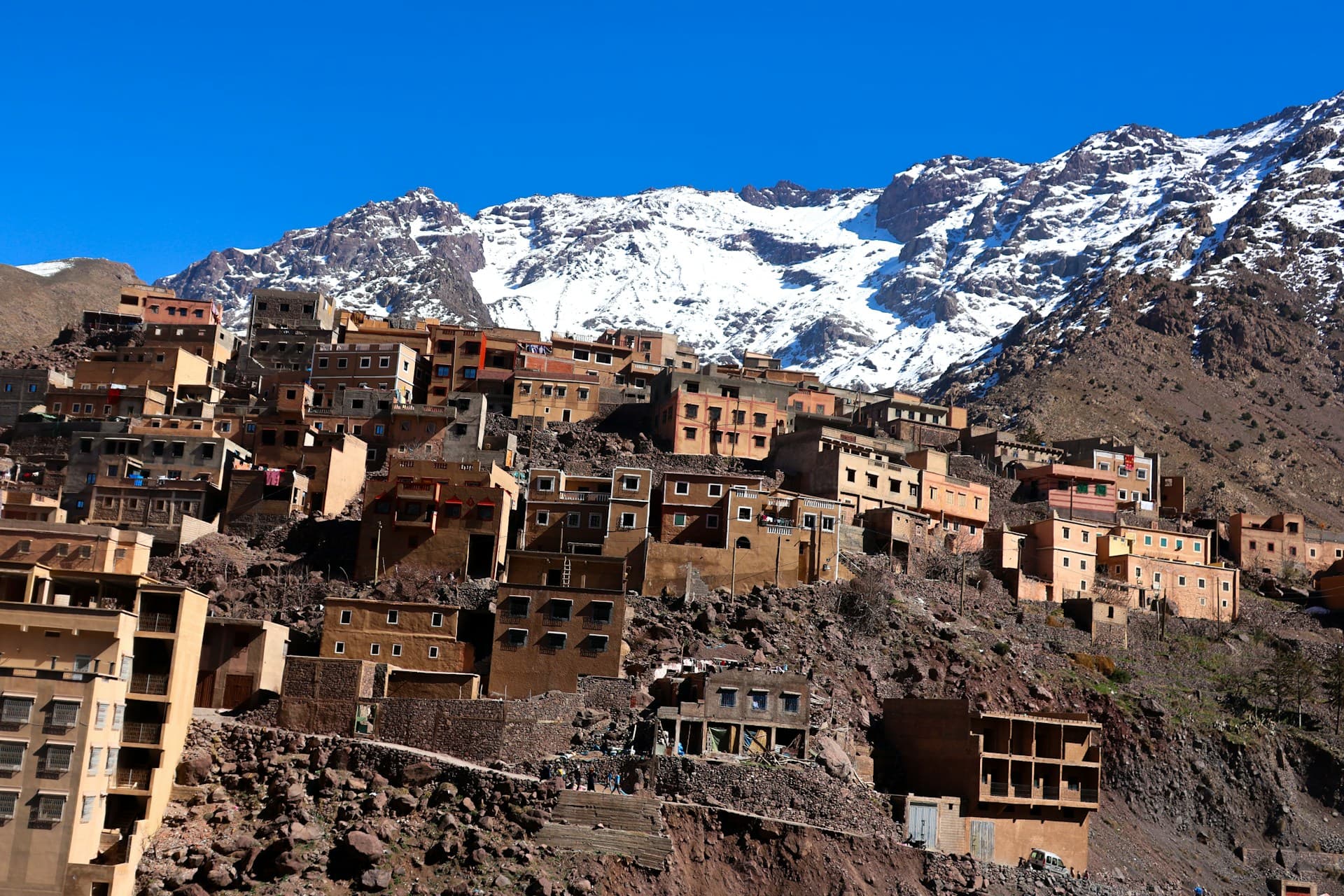
Jebel Toubkal stands at 4,167 m, making it the highest peak in North Africa and the Arab world. It sits inside Toubkal National Park in the High Atlas range, roughly 60 km south of Marrakech. The trailhead is the Berber village of Imlil at about 1,740 m, reached in around 1.5 hours by road from the city. From Imlil you gain nearly 2,430 m of total elevation to reach the summit — which is precisely why altitude, not terrain, defines the climb. The mountain is snow-capped for much of the year, but the summit itself is bare rock and scree in the warm months. If you want to understand the wider range first, read our guide to trekking the High Atlas with Berber guides, then come back to the summit specifics here. The setting is dramatic: terraced walnut groves below, then bare ridgelines, then a final summit panorama that on a clear day reaches the Sahara's edge.
How fit do you need to be to climb Mount Toubkal?
Here's the honest answer to the question everyone asks: you do not need to be "super crazy fit." You need to be a comfortable, regular hill walker. If you can hike 6–8 hours over uneven ground carrying a daypack and still function the next morning, you have the engine for Toubkal. The summit day is the test — about 5–7 hours up and 3–4 hours back, on loose scree, starting before dawn. What catches unfit climbers isn't the distance, it's the combination of altitude above 3,200 m and a long, relentless day. I tell every client the same thing: train with weekend hikes that include real ascent, get used to walking for hours, and arrive rested. You don't need a gym body. You need stamina, patience, and a head that copes with going slow. Plenty of first-timers in their 50s and 60s summit every season.
What is the standard route up Toubkal?
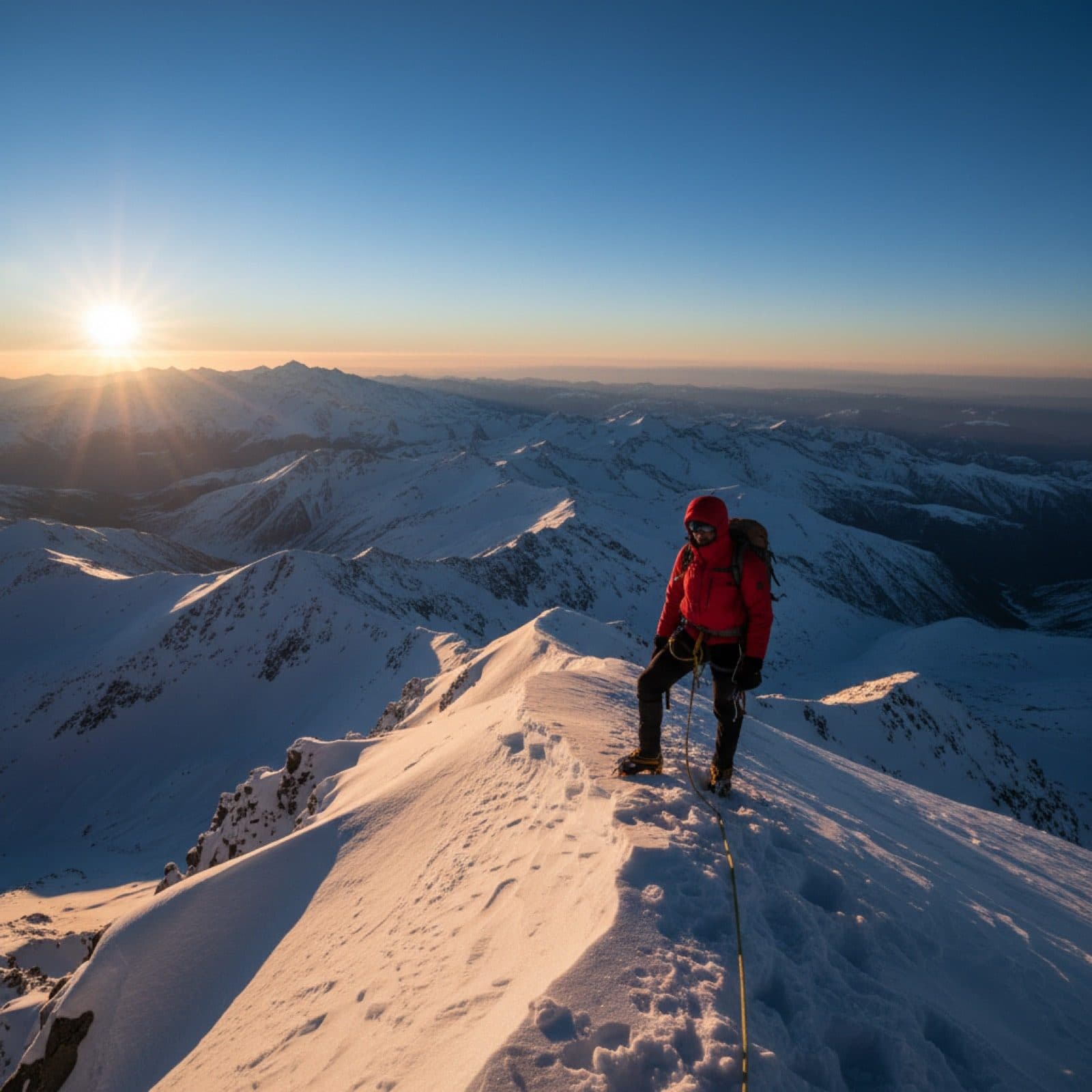
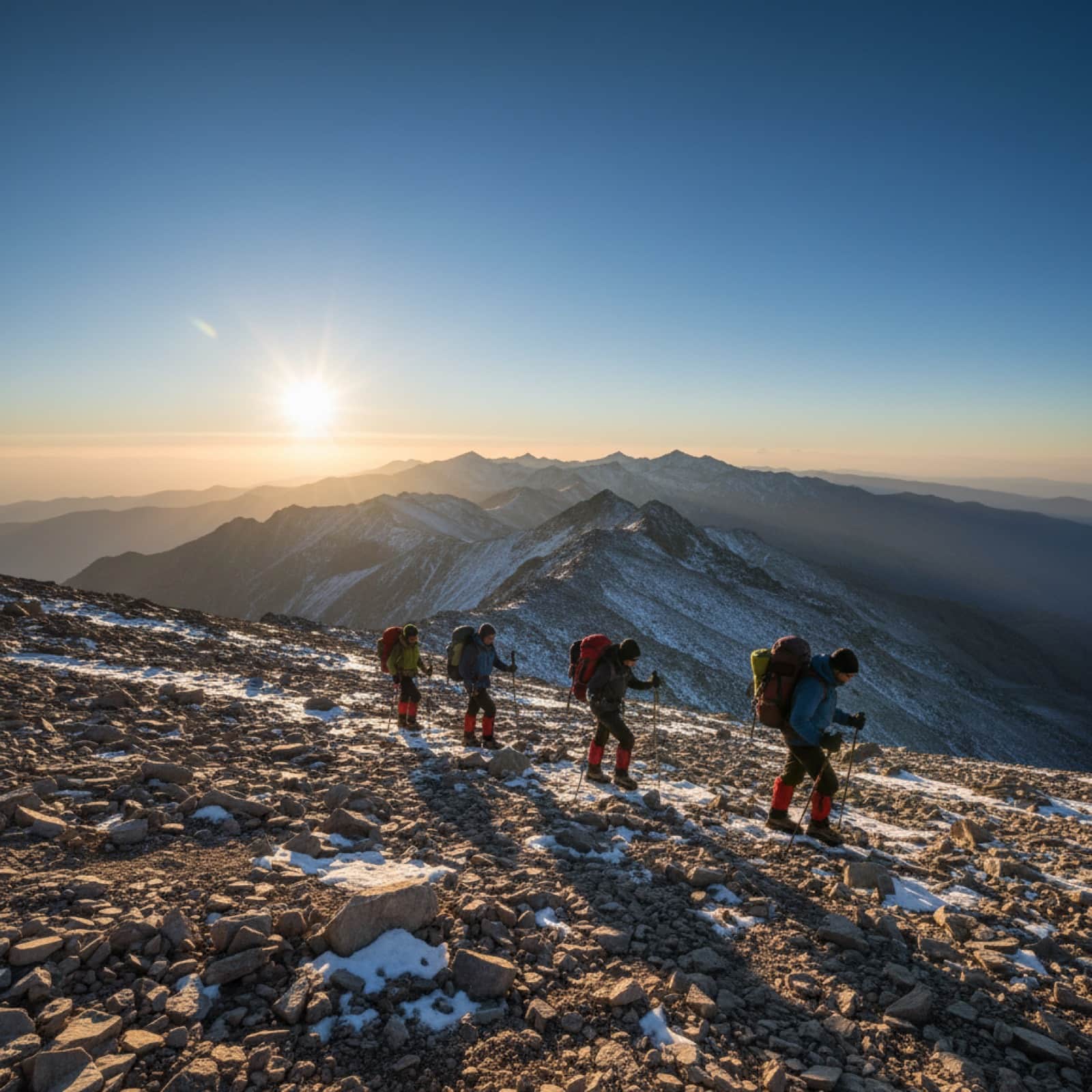
The classic ascent is a two-day round trip. Day one is the walk from Imlil (1,740 m) up the Mizane valley, past the shrine of Sidi Chamharouch, to the cluster of refuges at around 3,200 m — five to six hours of steady uphill. You sleep at altitude, eat an early dinner, and rest. Day two starts in the dark, usually around 5 a.m., to reach the summit (4,167 m) for sunrise and to descend before afternoon weather builds. The final section is a long zig-zag up scree and boulders to a ridge, then a short walk to the summit pyramid. After photos you reverse the whole route back to Imlil — a big day, often 10 hours of moving in total. There's no scrambling or exposure that requires ropes in summer; it's relentless walking on rough ground.
Should you do the 2-day or 3-day Toubkal trek?
The two-day version works, but the three-day version summits more people. The difference is acclimatisation. On a two-day trip you go from 1,740 m to 4,167 m in barely 24 hours — fast, and the reason some people turn back with headaches and nausea. A three-day itinerary adds an acclimatisation day or a gentler approach, letting your body adjust before the summit push. If you've never been above 3,000 m, or you simply want the best odds and a less brutal schedule, I steer you firmly toward three days. The table below lays out both.
| Element | 2-day classic | 3-day acclimatised |
|---|---|---|
| Day 1 | Imlil (1,740 m) → refuge (3,200 m), 5–6 hrs | Imlil → refuge (3,200 m), with rest stops |
| Day 2 | Pre-dawn summit (4,167 m) + full descent to Imlil | Acclimatisation walk to ~3,800 m, sleep at refuge |
| Day 3 | — | Pre-dawn summit + descent to Imlil |
| Altitude gained/day | ~1,460 m then ~950 m | Spread over 3 days — gentler |
| Best for | Fit, altitude-tested trekkers | First-timers, better summit odds |
Do you need a guide for Mount Toubkal?
Yes — in practice, and increasingly in law. Since the December 2018 murder of two Scandinavian hikers near Imlil, Moroccan authorities strongly enforce the hiring of a licensed mountain guide for Toubkal, and solo or unguided trekking is discouraged and often not permitted on the ground. Beyond the legal reality, a guide is a genuine safety and quality decision: a licensed High Atlas guide reads the weather, paces you correctly at altitude, knows the route in the dark, handles permits and refuge bookings, and gets you down fast if altitude sickness strikes. I've turned clients around 200 m below the summit because the mountain told me to — that judgement is what you're paying for. Don't think of the guide as a bureaucratic box to tick. On a 4,167 m peak with pre-dawn starts and fast-changing conditions, it's the single biggest factor in whether your climb is safe and successful.
What is the best season to climb Toubkal?
For most trekkers, April to October is the window. In those months Toubkal is a non-technical walk-up: stable weather, snow-free summit slopes by late spring, and long daylight for the summit day. July and August are hot in the valleys but fine high up — just start early. Spring (April–May) gives you wildflowers and lingering snow on the peaks; autumn (September–October) brings crisp, clear air and the year's best visibility. Roughly November to April is a different mountain entirely: winter conditions with snow and ice that demand crampons, an ice axe, and mountaineering skill. If your goal is simply to summit comfortably with no technical kit, aim for late spring through early autumn. For the wider picture of when to visit the country, see our breakdown of the best time to visit Morocco.
How hard is Toubkal in winter?
Winter Toubkal is a serious mountaineering objective, not a hike. From roughly November to April the upper mountain holds snow and ice, and the summit slopes that are easy scree in July become firm, sometimes icy ground where a slip has consequences. You need crampons, an ice axe, the skills to use both, and a guide qualified for winter conditions. The reward is real — a white High Atlas, far fewer people, and a genuine alpine summit — but the margin for error narrows sharply. Avalanche risk, sub-zero temperatures, and short daylight all stack against the unprepared. If you've done winter walking in the Alps, Scotland, or similar, Toubkal in winter is a superb objective. If your mountain experience is summer trails only, do it in summer first and come back for the winter ascent once you have the skills.
What gear and supplies do you need?
Even in high summer, the summit can sit below freezing before dawn at 4,167 m, so the cardinal rule is layers. Pack a base layer, an insulating mid-layer, a windproof shell, hat and gloves, plus shorts and a sun layer for the warm valley walk-in — Toubkal demands both on the same day. Sturdy, broken-in hiking boots are non-negotiable on the scree. Bring a headtorch for the pre-dawn start, sunglasses and high-factor sun cream (UV is fierce at altitude), trekking poles for the long descent, and a 30–40 L daypack. On water: natural sources exist on the lower route, but always carry enough and treat anything you collect. The refuges provide meals and basic dormitory bunks. Below is the core summer kit list.
- Layers: base layer, fleece/insulation, windproof shell, warm hat and gloves
- Footwear: sturdy broken-in boots plus good socks
- Sun protection: sunglasses, high-factor sun cream, sun hat
- Pre-dawn kit: headtorch with spare batteries
- Descent aid: trekking poles for the long, loose downhill
- Water: 2–3 L capacity plus purification for collected water
- Pack: 30–40 L daypack; refuges supply bedding and meals
How do you handle altitude sickness on Toubkal?
Altitude is the genuine risk on Toubkal, far more than the terrain. Above 3,000 m, mild altitude sickness — headache, nausea, poor sleep, breathlessness — is common, and the refuges sit at 3,200 m with the summit at 4,167 m. The fix is almost always the same: go slow, hydrate hard, and gain height gradually, which is exactly why the three-day itinerary summits more people. The golden rule is climb high, sleep low where you can, and never push upward if symptoms are worsening. Serious altitude illness is rare on Toubkal but real, and the only reliable treatment is to descend. A good guide watches the whole group for warning signs and makes the call early — another reason the licensed-guide requirement works in your favour rather than against it.
In summary: is Toubkal right for you?
Mount Toubkal, at 4,167 m, is the highest peak in North Africa and — in the April-to-October window — a non-technical, two-to-three-day walk-up that a fit, regular hill walker can summit. You don't need to be elite; you need stamina, sensible acclimatisation, and respect for the altitude. Choose three days over two if you've never been high, pack warm summit kit even in summer, and time your trip for late spring through early autumn unless you're equipped and skilled for a winter ascent. And plan around the reality that you'll climb with a licensed mountain guide — both because the law now requires it near Imlil and because, on a high peak with pre-dawn starts, it's the smartest call you can make. Get those pieces right and Toubkal becomes one of the most accessible 4,000 m summits anywhere.
When you're ready, we'd love to take you up. Because a licensed guide is now the practical and legal norm on Toubkal anyway, the honest move is to climb it properly: we run it privately with built-in acclimatisation, refuge logistics handled, and a qualified High Atlas guide who knows the mountain in every season — see our Toubkal climb. It begins from Marrakech and unfolds across the Atlas Mountains, tuned to your fitness and your timeline rather than a fixed group schedule.
Written by
Youssef El Alaoui
Lead Morocco Specialist
Born in Fes, based in Marrakech. Designs private itineraries for Morocco Beauty Spots and still argues mint tea is best in the Atlas.