Buy a local prepaid SIM (Maroc Telecom, Orange, or inwi) or an eSIM — data is cheap, city coverage is strong. The honest 2026 guide to networks, where to buy, prices in dirham, and where the signal actually drops.
Buy a local prepaid SIM — Maroc Telecom, Orange, or inwi — or load an eSIM before you fly. Data is cheap, city coverage is strong, and your passport is all you need to register. Maroc Telecom has the widest rural reach.
I run private trips across Morocco, and "how do I get internet?" is one of the first questions guests message me before they land. The honest answer is that staying connected here is easy and cheap — far cheaper than the EU or the US — but there are a few local quirks worth knowing so you don't overpay at a street stall or expect five bars on a dune in the deep Sahara. Below is exactly what I tell my own travellers, with the trade-offs laid out. If you want someone to simply handle the SIM (and the airport pickup, and the next ten days), our private trip planner is built for that — but you absolutely do not need us to get online.
What are the three mobile networks in Morocco?
Morocco has three licensed mobile operators: Maroc Telecom (IAM), Orange Maroc, and inwi. All three sell prepaid tourist SIMs with generous data bundles, and all three run 4G/LTE across the country with growing 5G in major cities.
Maroc Telecom is the former state incumbent and has the deepest network — it reaches the most villages, mountain passes, and desert outposts, which is why the drivers we work with almost all carry a Maroc Telecom line. Orange (formerly Méditel) and inwi compete hard on price and data volume, and in cities like Marrakech, Casablanca, Fes, and Tangier you genuinely won't notice a difference between any of the three. The practical rule I give guests: if you're staying mostly in cities and along the main roads, pick whichever kiosk is in front of you; if you're heading into the Atlas or out past Merzouga, lean Maroc Telecom.
Should I buy a physical SIM or an eSIM for Morocco?
Both work well. A physical local SIM is cheapest and gives the most data per dirham; an eSIM (Airalo, Holafly, Saily and similar) lets you arrive already connected without finding a shop. Most of our guests who want zero friction choose an eSIM for day one, then decide whether to add a local SIM.
An eSIM is a software profile you install before you fly — you scan a QR code, land, toggle it on, and you have data the moment the plane doors open. That's a real comfort if you're arriving late, don't speak French or Arabic, and want maps working before you reach the taxi rank. The trade-offs: eSIMs are pricier per gigabyte than a local SIM, and many of them are data-only (no local Moroccan phone number for calls or SMS). They also require an eSIM-compatible phone — most iPhones since the XS and recent Google Pixel and Samsung Galaxy flagships qualify; check your device first. My usual advice: eSIM for arrival peace of mind, physical Maroc Telecom SIM if you're here a week or more and want the cheapest heavy data.
Where should I buy a SIM card in Morocco?
Buy from an official operator kiosk at the airport, or a branded operator store in town — both register your SIM properly and on the spot. Marrakech Menara and Casablanca Mohammed V airports both have staffed Maroc Telecom, Orange, and inwi counters in the arrivals hall.
The airport kiosks are the fastest path: hand over your passport, pick a bundle, and you're walking out activated in a few minutes. Prices at the airport are broadly fair, though in-city branded stores occasionally bundle a touch more data for the same money. One heads-up worth carrying for early-2026 trips: the Maroc Telecom (IAM) airport stall has at times been cash-only, so have a few dirham on you rather than relying on a card, and some airport SIM prices can run a little higher than the in-town shops — neither is a dealbreaker, just something to weigh against the convenience of grabbing one the moment you land. What I tell every guest to avoid is the informal seller — the person on a medina corner or outside the terminal offering a "ready to go" SIM with no paperwork. Those are often unregistered or pre-used, they can stop working without warning, and you have no recourse. Sticking to a branded counter or store costs you nothing extra and removes the whole risk. If a kiosk is closed when you land, your riad or our team can point you to the nearest official store the next morning.
Do I need my passport to buy a SIM card in Morocco?
Yes. Moroccan law requires every SIM to be registered to an identity document, so you must show your passport to activate any prepaid SIM — at the airport, at an operator store, anywhere legitimate. It takes two minutes and the staff handle it.
This is the single most common surprise for first-timers, so plan for it: keep your passport accessible when you go to buy. The registration requirement is exactly why street-corner SIMs are a bad idea — a SIM sold without taking your ID is, by definition, not properly registered, and unregistered lines get cut off. The flip side is reassuring: the process is standardised, quick, and the same at all three networks. If you're still sorting out entry documents generally, our companion guide on whether you need a passport for Morocco covers the visa and entry-stamp side; for the SIM, the passport you entered on is all that's needed.
How much does a SIM card and data cost in Morocco?
Mobile data in Morocco is cheap by Western standards — a tourist SIM with a chunky data bundle typically runs the equivalent of a few euros or dollars. Prices shift with promotions and the operator, so treat the figures below as approximate ranges, not fixed quotes.
All amounts are in Moroccan dirham (MAD); at the time of writing roughly 10 MAD is around 1 USD / 0.9 EUR, but check the live rate. The SIM card itself is usually free or near-free when you buy a bundle, and you top up (recharge) with scratch cards sold in every corner shop, or in the operator's app.
| Option | Approx. data | Approx. price |
|---|---|---|
| Small tourist data bundle | ~5–10 GB | ~50–100 MAD |
| Standard tourist data bundle | ~15–25 GB | ~100–200 MAD |
| Large / monthly data bundle | ~30 GB+ | ~200–300 MAD |
| eSIM (Airalo & similar), data-only | ~5–20 GB | ~$10–30 USD |
| Top-up scratch card (recharge) | n/a | 10–100 MAD denominations |
For context on overall trip costs and how cheap on-the-ground services really are here, our guide on whether Morocco is expensive puts data prices in perspective — connectivity is one of the genuinely inexpensive parts of a Morocco trip.
What are the best eSIM options for arriving connected?
The most popular international eSIMs for Morocco are Airalo, Holafly, and Saily, all of which sell a Morocco data plan you install before departure. They're the simplest way to step off the plane already online without queuing at a kiosk.
Airalo is the best known and tends to be the most competitively priced per gigabyte; Holafly markets unlimited-data plans (with fair-use throttling) that suit heavy streamers; Saily and a handful of others fill similar niches. They typically run on one of the local Moroccan networks behind the scenes, so coverage mirrors the host operator. Two honest caveats I always flag: most of these are data-only — fine for WhatsApp calls and maps, but you won't get a Moroccan number for the rare SMS verification — and per-gig they cost more than a physical local SIM. If your trip is short, or you simply value zero hassle on arrival, that premium is worth it. If you're staying two weeks and burn a lot of data, buy an eSIM for day one and add a local SIM once you've found your feet.
Where does mobile coverage actually drop in Morocco?
Coverage is strong across cities, towns, and the main highways, but it thins out in the deep Sahara, remote High Atlas valleys, and long empty stretches between desert outposts. Expect a reliable signal everywhere you'll realistically spend time, and patches of nothing on the wildest legs.
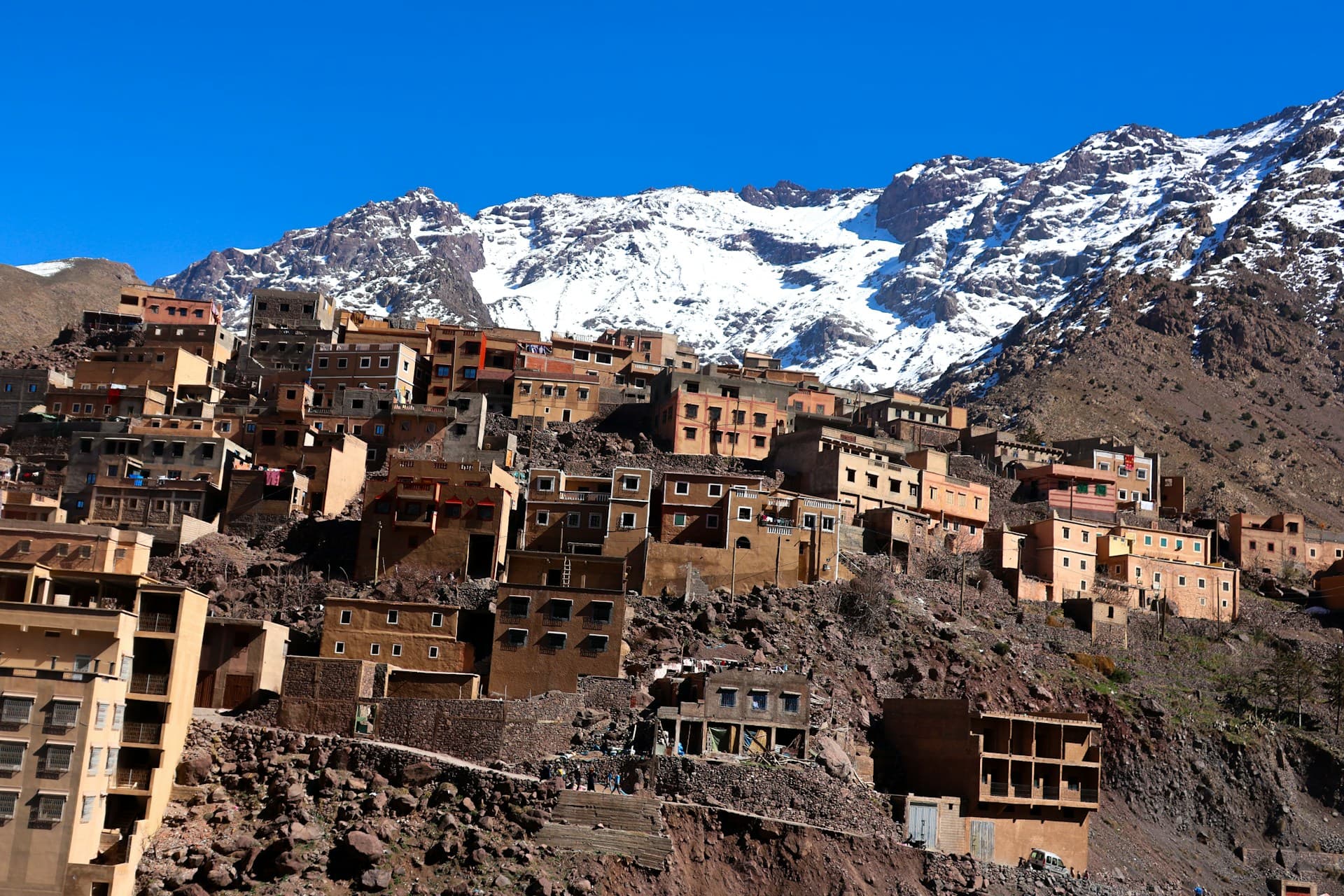
In practice: Marrakech, Casablanca, Fes, Rabat, Tangier, Chefchaouen, Essaouira and the like all have solid 4G, often 5G. The toll motorways and national roads between cities stay connected. Where it gets patchy is exactly where you'd guess — out on the dunes at Erg Chebbi past Merzouga, on the high passes and side valleys of the High Atlas around Toubkal, and on the long dirt approaches to remote kasbahs. Maroc Telecom is the network most likely to hold a bar in those zones, which is one reason it's the local default. Desert camps increasingly offer their own Wi-Fi at the main tent, but I tell guests to treat a night in the dunes as a deliberate disconnect — download your offline maps and playlists before you leave the tarmac. If you're weighing a self-drive against a driver who already knows the dead zones, our breakdown of renting a car versus hiring a driver is worth a read.
Can I use my phone as a hotspot (tethering) in Morocco?
Yes — tethering works on Moroccan SIMs and most eSIMs, so you can share your phone's data to a laptop or a travel companion's device. It draws from the same bundle, so a big data package is worth it if several people will share one connection.
Local prepaid SIMs from all three operators generally allow hotspot use with no separate add-on, and the standard data counts against your bundle as normal. This is how a lot of our couples and families travel: one person buys a generous 25–30 GB SIM, turns on the personal hotspot, and the whole car stays online between stops. eSIM hotspot support varies by provider — Airalo and most data-only plans permit tethering, but a few unlimited-plan eSIMs restrict it, so read the fine print if hotspotting is your main plan. One pragmatic note: tethering burns data faster than you expect (laptop updates, cloud backups), so size the bundle accordingly or keep an eye on the operator app's usage meter.
What about Wi-Fi in riads and hotels?
Nearly every riad, hotel, and café in Morocco offers free Wi-Fi, and in cities it's usually fast enough for video calls and uploading photos. Reliability tapers in remote guesthouses and desert camps, where the connection may be shared and slow.
In the medinas of Marrakech, Fes, and Chefchaouen, the riads we place guests in almost all have solid Wi-Fi in the courtyard and rooms — thick old walls can weaken the signal in a far bedroom, but the main areas are fine. City cafés are reliable backups if you need to get work done. Out in the mountains and the desert, manage expectations: a small auberge may run everything off one modest line, and a luxury desert camp might offer Wi-Fi only at the central tent, often satellite-based and weather-dependent. That's why I never rely on hotel Wi-Fi alone for a trip — a cheap local SIM or eSIM as your always-on backstop means you're never stranded when the riad router has an off day. Between a SIM and riad Wi-Fi, you'll have continuous coverage everywhere it matters.
Do I still need a SIM if I'm using ride-hailing apps?
Yes — apps like inDrive, Careem, and (in limited cities) Uber all need live mobile data to work. Hotel Wi-Fi won't summon a car once you're standing on the street, so a local SIM or eSIM is what makes ride-hailing usable on the move.
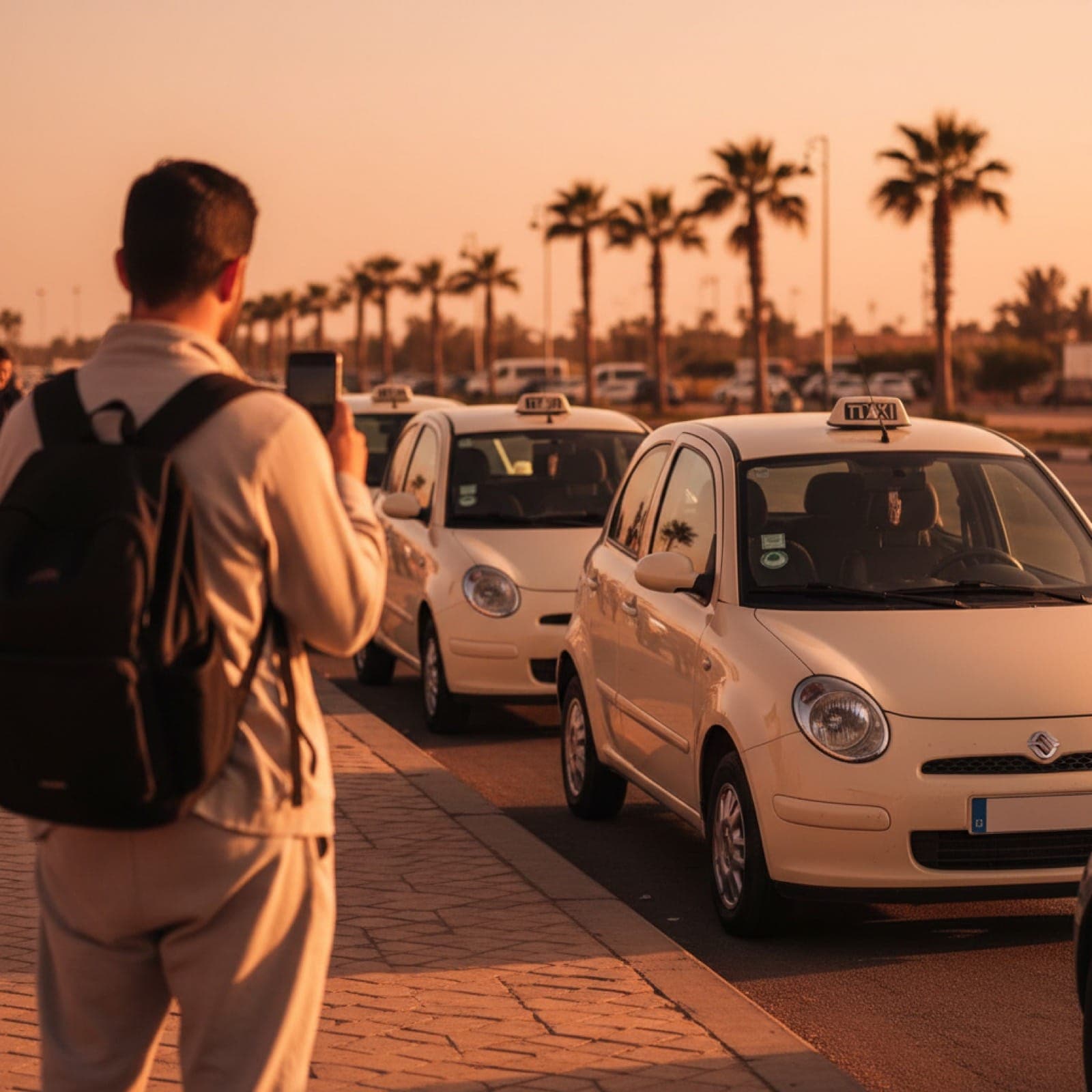
Ride-hailing in Morocco is genuinely city-by-city, and it lives or dies on your having data. To order a car, track its arrival, message the driver, or negotiate a fare in inDrive, you need a connection the moment you're outside. This is one more reason most of our independent-minded guests grab a SIM on day one even when they've got us handling the big legs. For the full picture of which app works where, see our guides on whether there's Uber in Morocco and whether Careem operates in Morocco — and if you'd rather skip the apps entirely on arrival, a pre-booked Marrakech airport private transfer meets you with a name sign so connectivity isn't a worry the second you land.
In summary: how to stay connected in Morocco
Staying online in Morocco is cheap and straightforward. Buy a prepaid SIM from an official airport kiosk or a branded operator store — Maroc Telecom, Orange, or inwi — with your passport in hand, and you'll have a generous data bundle for the equivalent of a few euros. Lean Maroc Telecom if you're heading into the High Atlas or deep Sahara, where it holds a signal best. If you want to land already connected, install an Airalo (or similar) eSIM before you fly, accepting a small price premium for the convenience. City and highway coverage is strong, tethering works, and riad Wi-Fi fills the gaps — only the dunes and the highest mountain valleys go truly quiet, and honestly, a night offline out there is part of the appeal.
If the SIM run is one more thing you'd rather not think about, that's exactly the kind of detail we fold into a private trip — your driver carries a local line, knows the dead zones, and we can have a SIM ready at pickup. It's one option with real trade-offs against doing it yourself (you'll pay for the service, and a self-organised SIM is dirt cheap), but if a seamless arrival matters more than saving a few dirham, tell us your dates and we'll handle the logistics.

Written by
Youssef El Alaoui
Lead Morocco Specialist
Born in Fes, based in Marrakech. Designs private itineraries for Morocco Beauty Spots and still argues mint tea is best in the Atlas.