Taroudant is the walled Souss-valley town locals call 'Little Marrakech': 16th-century ramparts, two unhurried souks, and Atlas views without the crowds.
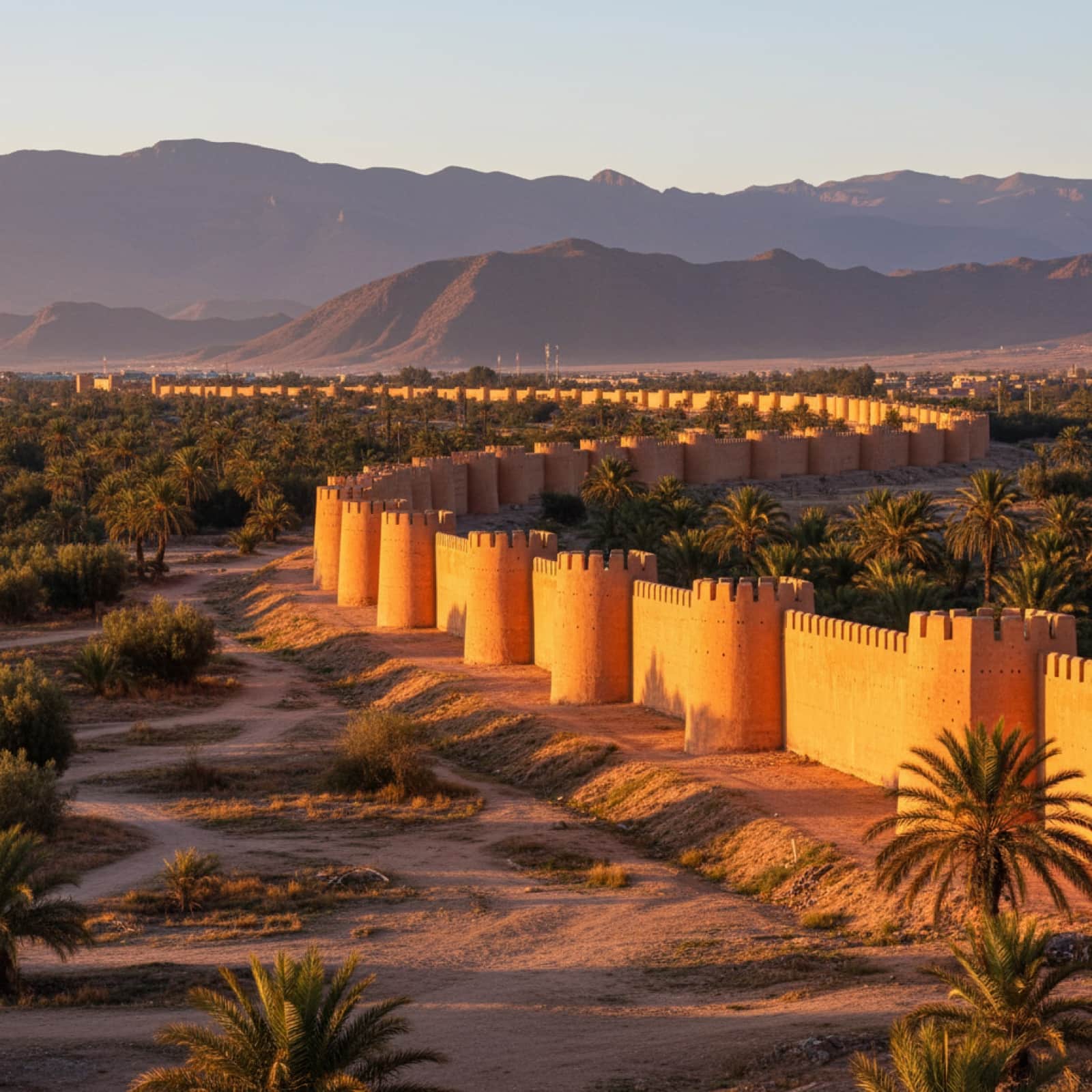
Taroudant is a walled town in Morocco's Souss valley that locals call "Little Marrakech" — roughly 7.5 km of ochre 16th-century ramparts ring a medina of two unhurried souks, set against the High Atlas. You get the atmosphere of Marrakech's old city without the crowds or the hard sell. It sits about 3 hours from Marrakech, or 1.5 hours from Agadir.
Think of it the way seasoned travelers think of Italy beyond Rome, or Japan beyond Kyoto: the famous hub teaches you the country's headline, but the second city is where you actually relax into it. Taroudant is that second city for Morocco's south. After fifteen years guiding people through both, I send the ones who want the soul of a Moroccan medina — minus the elbows — here.
It was briefly the capital of the Saadian dynasty in the 16th century before the court moved north to Marrakech, which earns it a second, fonder nickname: "Grandmother of Marrakech." That history is written into the walls you still walk beneath today.
Where is Taroudant and why "Little Marrakech"?
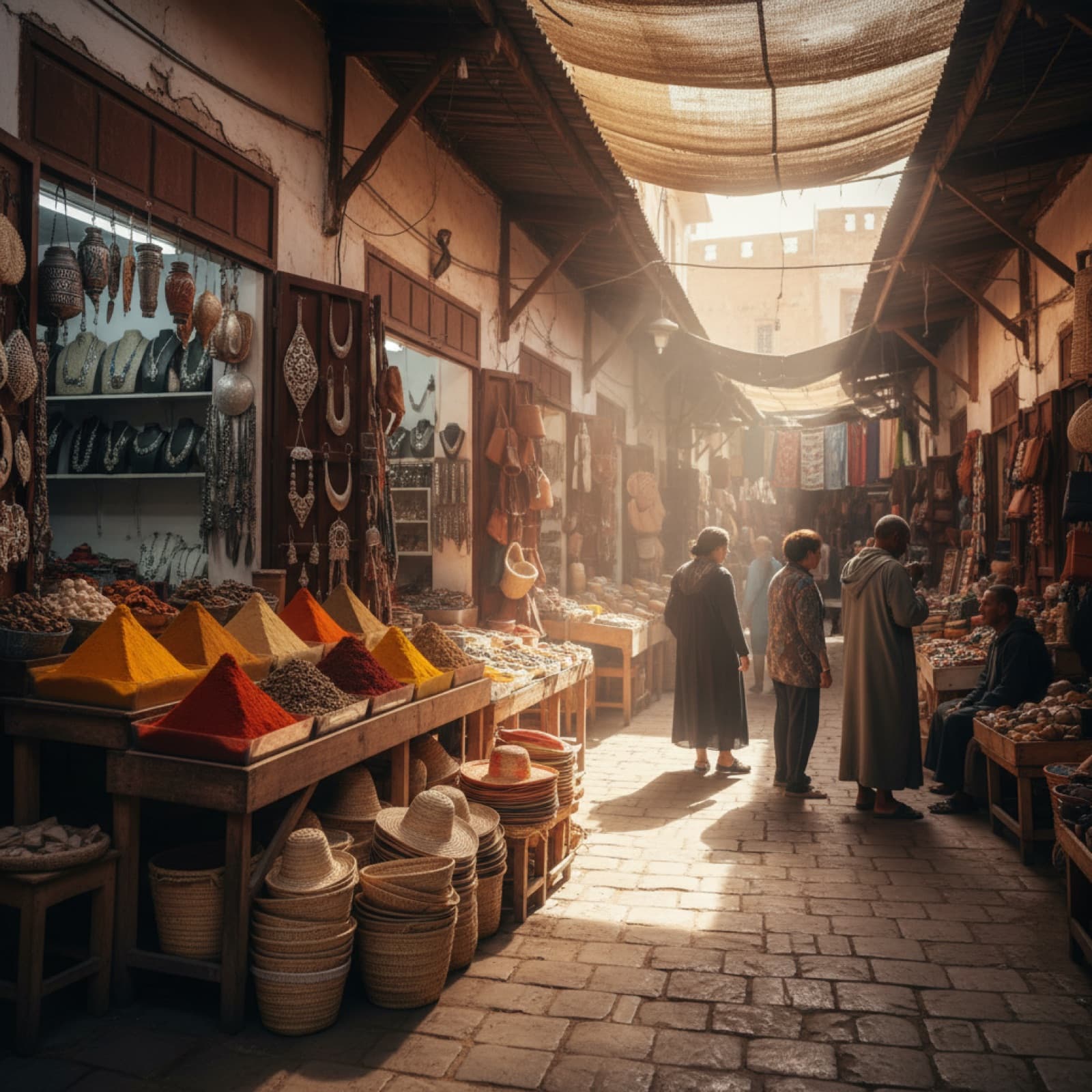
Taroudant (also spelled Taroudannt) sits in the fertile Souss valley, about 80 km east of Agadir, hemmed by the western High Atlas to the north and the Anti-Atlas to the south. The "Little Marrakech" tag comes from the obvious family resemblance: imposing adobe ramparts studded with square towers, a maze-like walled medina, bustling squares, and souks selling the same crafts — all at perhaps a tenth of the scale and a fraction of the foot traffic.
The difference you feel within ten minutes is the absence of pressure. There are no scooters tearing through the lanes, far fewer touts, and a pace that lets you actually look up at the architecture. CNN ran a 2025 feature calling it "the hidden 'Little Marrakech' oasis town that most tourists don't know about" — which, for better or worse, is exactly the point of coming.
What is there to do in Taroudant?
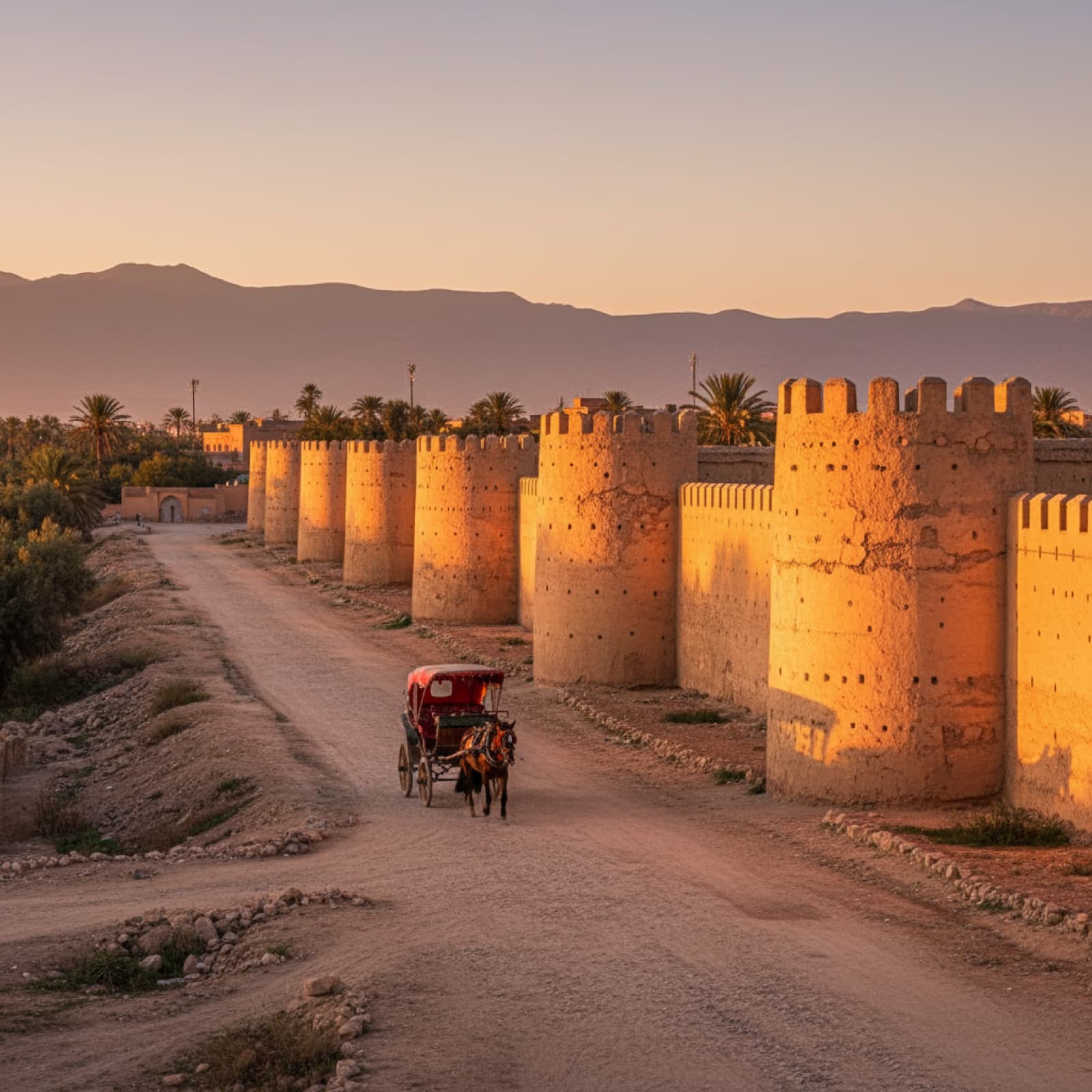
The headline experience is the ramparts themselves. Roughly 7.5 km of well-preserved rammed-earth walls — much of the current structure 18th-century work built on Saadian foundations — encircle the medina, and you can hire a calèche (horse-drawn carriage) to ride the full circuit. Do it near sunset, when the mud-brick glows from golden brown to deep red.
Inside the walls, two souks anchor daily life:
- Souk Arabe (the Arab souk) — near Place Assarag, leaning toward crafts: silver and Berber jewellery, leather, carpets, pottery, and argan-oil products.
- Souk el Khemis (the Berber market) — near Place Talmoklate, more of a working market for spices, produce, and everyday goods.
- Place Assarag (Alaouyine) — the main square and the spot to sit with a mint tea and watch the town go by, especially in the early evening.
- Tanneries — small, low-key versions of the famous ones up north, easy to visit without a guided gauntlet.
Crucially, the haggling here is gentler. Vendors expect a negotiation but rarely chase you down the lane — you can browse silver and saffron at your own speed, which is the whole reason discerning shoppers prefer it. The argan oil and saffron sold here come from the surrounding Souss valley and the Taliouine highlands respectively, so you are buying close to the source rather than from a re-seller several markets removed.
Beyond the souks, the town itself is the attraction. Wander the residential lanes and you pass small mosques, mud-brick homes, and workshops where leather and metal are still worked by hand. The medina is compact enough that getting pleasantly lost never turns stressful — you are rarely more than a few minutes from a recognisable gate or square, which is its own quiet luxury after the labyrinth of Marrakech or Fes.
“Taroudant is where I send travelers who loved the idea of Marrakech's medina but found the real thing exhausting. Same walls, same crafts, same call to prayer over the rooftops — but you can hear yourself think. It's the most underrated walled city in the south.”
— Amina Benkirane, Destination Editor
How long do you need in Taroudant?
The town itself is a comfortable one-day visit: a morning in the souks, lunch on Place Assarag, and a late-afternoon calèche loop around the walls. That is enough to feel like you have understood the place.
But Taroudant rewards a slower stay. Book two nights and you can use it as a relaxed base for the Souss valley and argan country — see the "What's nearby" section below. Many travelers fold it into a southern loop rather than treating it as a single tick-box stop, and that is where it earns its keep.
There is also a small but genuine luxury layer here. A handful of converted riads and a famous palace-hotel just outside the walls draw a quieter, design-minded crowd who come specifically for the calm. So Taroudant works at two speeds: a half-day medina stop on a faster trip, or a two-to-three-night decompression stay where the point is to do very little beyond the morning souk run and an evening on the square.
| Feature | Taroudant | Marrakech |
|---|---|---|
| Crowds | Light; locals outnumber tourists | Heavy, year-round |
| Hassle / touts | Gentle, low-pressure | Intense, persistent |
| Ramparts | ~7.5 km, calèche-friendly loop | ~19 km, harder to circle on foot |
| Souks | Two compact, walkable souks | Vast, easy to get lost in |
| Atmosphere | Unhurried, lived-in | Electric, theatrical |
| Best as a base for | Souss valley, argan country, Atlas trailheads | Sahara, Essaouira, Atlas day trips |
How do you get to Taroudant?
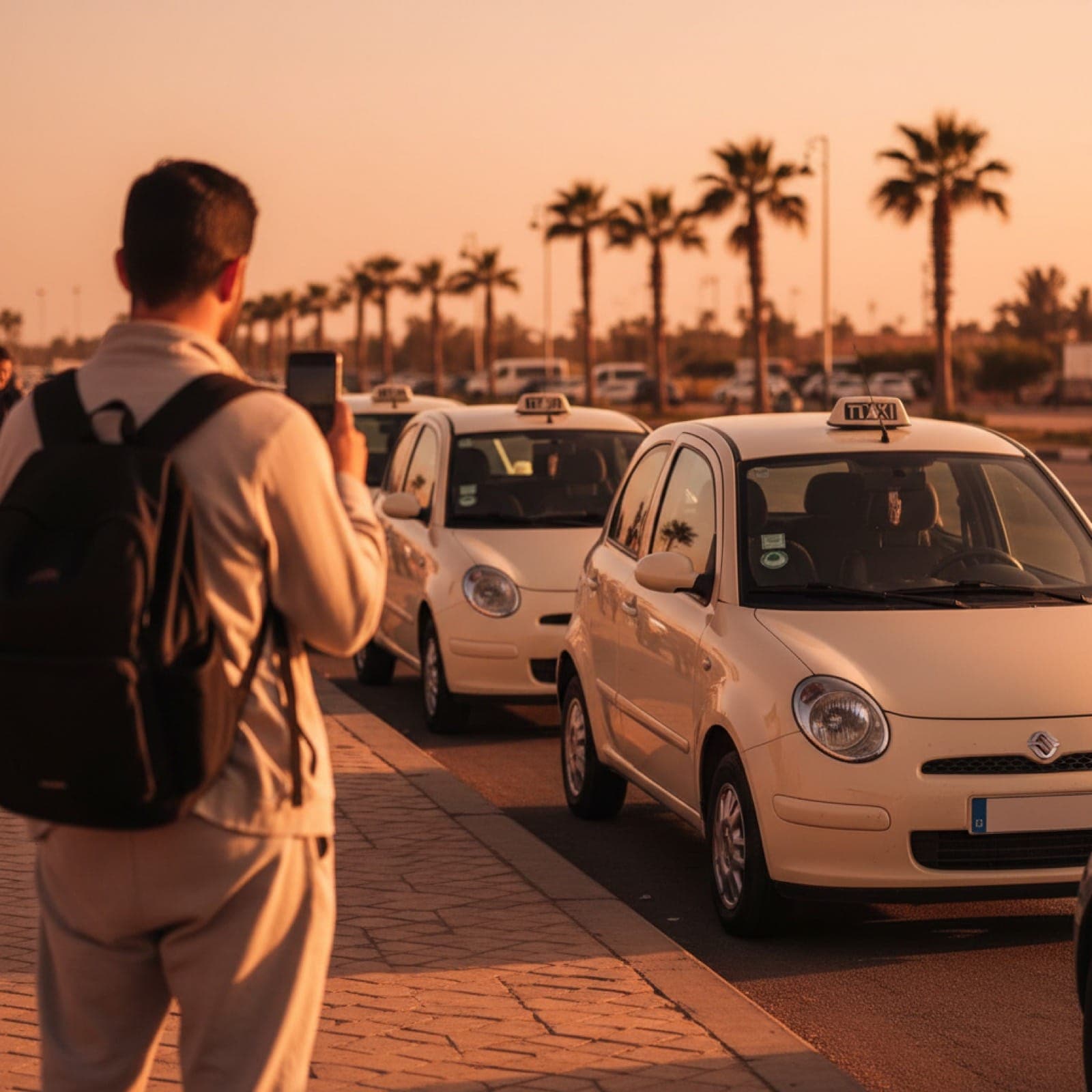
The fastest approach is from Agadir — about 80 km and roughly 1.5 hours by road, which makes Taroudant an easy day trip or first stop for anyone flying into Agadir's airport.
From Marrakech you have two routes. The practical one runs west toward Agadir then inland (via the Imintanoute corridor), about 3 hours of straightforward driving. The spectacular one crosses the High Atlas over the Tizi n'Test pass — around 5 to 6 hours of switchbacks and staggering views. The Tizi n'Test is narrow, high, and best driven in daylight; it is not the road for nervous drivers, which is one reason many visitors take it with a local driver rather than a rental.
When is the best time to visit Taroudant?
Spring (roughly March to May) and autumn (September to November) are the sweet spots. The Souss valley is genuinely hot in high summer — comfortable inside the thick-walled buildings, but punishing for walking the souks or riding the ramparts midday — so those shoulder seasons give you the warm, dry weather without the heat penalty.
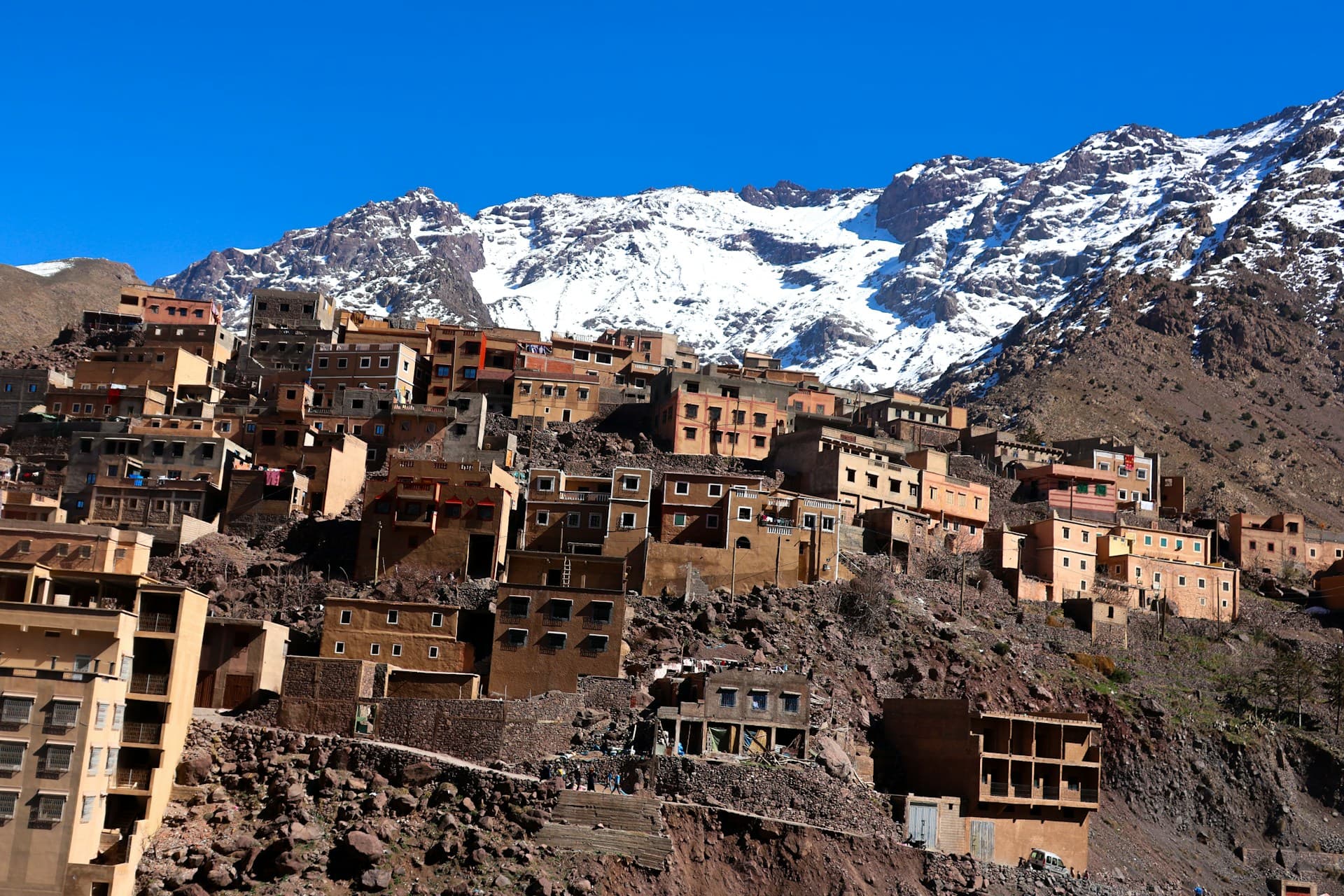
Winter is mild and perfectly pleasant for the town itself, and it pairs well with the snow-dusted Atlas backdrop to the north. Note that the Tizi n'Test pass route from Marrakech can be affected by snow or rock-fall in the coldest months, so if you are crossing the mountains in deep winter, build in flexibility. For an overview of how the seasons play out across the country, our best time to visit Morocco guide breaks it down region by region.
Is Taroudant worth it vs Marrakech?
It is not an either/or. Marrakech is unmissable on a first trip — the energy, the Jemaa el-Fnaa, the depth of monuments. But if Marrakech is the only walled medina you experience, you leave with a slightly distorted picture: you remember the hustle as much as the beauty.
Taroudant is worth it precisely because it shows you the other half of the story. It is the answer for repeat visitors, for travelers who find big-city Morocco overwhelming, and for anyone who wants to shop and wander without a running negotiation. If your priority is headline sights and nightlife, lead with Marrakech. If it is atmosphere, authenticity, and breathing room, Taroudant out-delivers its bigger sibling. The honest move is to do both — and let Taroudant be the place you slow down.
What's nearby — Souss, the Atlas, and argan country?
This is where a stay in Taroudant pays off. Within easy reach:
- Tioute kasbah & palm grove — about 25 km southeast, a grand hilltop Glaoui kasbah overlooking a lush oasis fed by traditional khettara channels.
- Argan cooperatives — the Souss is the heart of argan country, and women's cooperatives near Taroudant let you watch the oil pressed by hand and buy direct.
- Western High Atlas trailheads — the mountains rising north of town are a gateway for walkers and a scenic backdrop to everything.
- Taliouine saffron country — head east and you reach Morocco's saffron capital, where the "red gold" is harvested each autumn on the high plateau.
From Taroudant it is also a natural pivot west to the Atlantic. If the coast tempts you, our piece on Essaouira's wind, waves and Gnawa covers the laid-back port city, and our best cities to visit in Morocco guide places Taroudant in the wider map. First-timers heading to the big hub first should pack our Marrakech first-timer playbook, and if you are still shaping the route, the Morocco itinerary guide shows how the south stitches together. When you are ready to build a trip that threads Taroudant into the Souss and the coast at your own pace, our trip planner is the easiest place to start.
Written by
Amina Benkirane
Destination Editor
Writer and photographer covering the Maghreb. Ten years of wandering souks, kasbahs, and back roads most guidebooks miss.