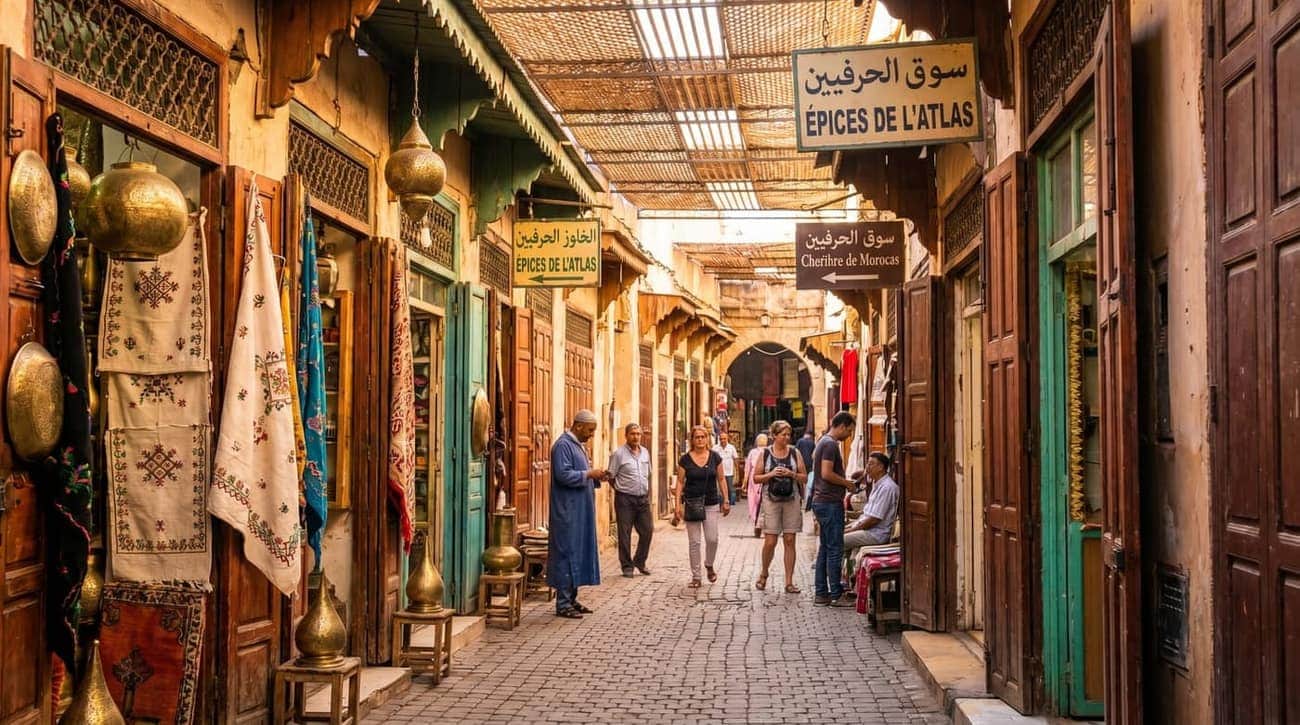
Moroccans speak Darija (Moroccan Arabic) day to day, alongside Tamazight (Berber); the official languages are Arabic and Tamazight, French is widely spoken in cities and business, Spanish in the north, and English is commonly used in tourism. Here's what you'll actually hear, and which words help most.
Short answer: Moroccans speak Darija (Moroccan Arabic) in daily life and Tamazight (Berber) across large regions; the two official languages are Arabic and Tamazight; French is widely used in cities, business and education; Spanish lingers in the north; and English is commonly used in tourism. For a traveller that means: French is the most useful second language, English will get you by in tourist areas and with younger Moroccans, and a few words of Darija open doors everywhere. You will never be stuck — Morocco is one of the most multilingual countries you'll visit.
Which language will you use in Morocco?
| Language | Where you will hear it | Usefulness for travellers |
|---|---|---|
| Darija (Moroccan Arabic) | Everyday conversation across most of the country | The best language for greetings, markets and local connection |
| Modern Standard Arabic | Government, formal writing, news and religious contexts | Useful for reading formal signs; less common in casual speech |
| Tamazight (Amazigh) | Atlas, Rif, Souss and other Amazigh-speaking regions | Valuable regionally; official alongside Arabic |
| French | Business, banking, higher education, menus and tourism | The most broadly useful second language |
| Spanish | Especially Tangier, Tetouan, Chefchaouen and parts of the north | Helpful in northern Morocco; limited elsewhere |
| English | Hotels, riads, tours and conversations with many younger Moroccans | Usually enough in major tourist areas |
What language do Moroccans actually speak day to day?
Darija — Moroccan Arabic — is the everyday spoken language of most Moroccans. Morocco's 2024 census found that 91.9% of the population uses Darija, while 24.8% uses an Amazigh language; the figures overlap because multilingualism is normal. Darija mixes Arabic with Tamazight, French and Spanish vocabulary and differs noticeably from formal Arabic. In practice, many Moroccans move between Darija, Tamazight and French in the same conversation.
“Watch a shopkeeper in Fes go from Darija to French to English to a little Spanish in one breath. That everyday fluency is the thing first-time visitors never expect.”
— Youssef El Alaoui, Lead Morocco Specialist
What are Morocco's official languages?
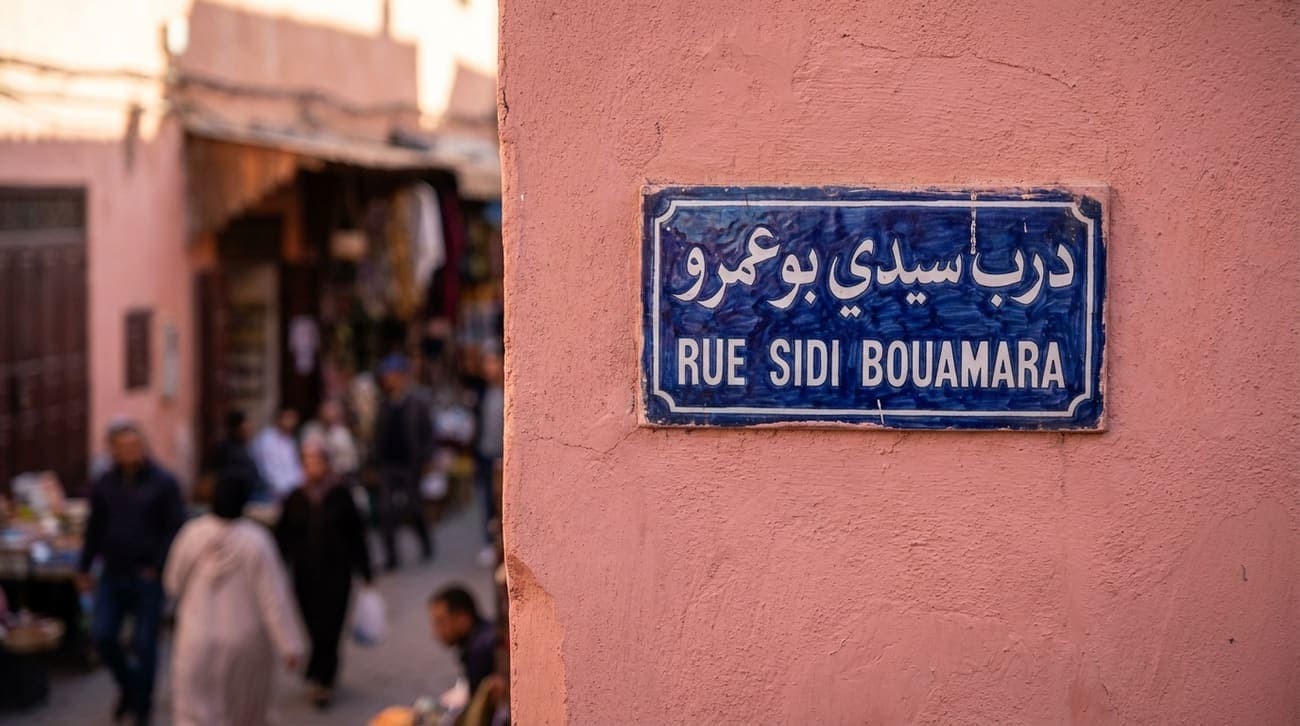
Two: Modern Standard Arabic and Tamazight (Amazigh/Berber), which became an official language under the 2011 constitution. Standard Arabic is the language of government, news and the mosque; Tamazight now appears on official signage and in schools. Neither is quite what you'll hear in the street (that's Darija), but both are what's written officially.
Do they speak French in Morocco?
Yes — widely. Morocco was a French protectorate, and French remains the language of business, higher education, and much of the middle class. It is used on menus, in banks and by many people in tourism. If you have any French at all, it is the single most useful second language to bring — far more useful to a traveller than Standard Arabic.
Where is Spanish spoken in Morocco?
In the north — Tangier, Tetouan, Chefchaouen and the former Spanish-protectorate areas — Spanish is still understood and spoken by many older people and in commerce, a legacy of Spanish rule. Elsewhere it's much rarer. If you're Spanish-speaking and travelling in the north, you'll get by surprisingly well.
Will English get you by in Morocco?
In tourist areas — yes, increasingly so. In Marrakech, Fes, riads, hotels and the tour trade, English is commonly used, especially by younger Moroccans. Off the tourist track and with older people, French or a few words of Darija will serve you far better. You will not be stranded as an English speaker, but you will travel more smoothly with a handful of local phrases.
Useful Darija phrases for travellers
| English | Darija (phonetic) | Note |
|---|---|---|
| Hello / peace | Salam (or: s-salamu ʿalaykum) | Universal greeting |
| How are you? | La bas? | Also means 'all good?' |
| Thank you | Shukran | 'Barakallahu fik' = warmer thanks |
| Yes / No | Iyeh / La | |
| Please | ʿafak | |
| No, thank you | La, shukran | Polite refusal to touts/sellers |
| How much? | Bshhal? | Useful in the souk |
| Goodbye | Bslama |
A smile and 'salam, la bas?' genuinely changes how you're treated. For more on navigating Morocco as a visitor, see things to do in Morocco and is Morocco safe for Americans — and when you're planning the trip, we're here to help.
Written by
Youssef El Alaoui
Lead Morocco Specialist
Born in Fes, based in Marrakech. Designs private itineraries for Morocco Beauty Spots and still argues mint tea is best in the Atlas.