Os dois grandes festivais de música sacra de Marrocos — o Festival de Música Sacra Mundial de Fes e o Festival Gnaoua e Músicas do Mundo de Essaouira — estão separados por três semanas e por uma grande distância no país. Aqui está o que cada um é, as datas confirmadas para 2026 (e as ainda pendentes), a diferença entre a música Sufi e Gnaoua, e como participar do ritual de transe lila com respeito.
Marrocos tem dois festivais de música sacra de classe mundial, e são coisas muito diferentes. O Festival Gnaoua e Músicas do Mundo de Essaouira é o mais famoso — a 27ª edição acontece de 25 a 27 de junho de 2026, com entrada gratuita no palco principal, por vezes chamado de 'Woodstock da África'. O Festival de Música Sacra Mundial de Fes é o mais antigo e contemplativo — as suas datas para 2026 (a 29ª edição) não tinham sido oficialmente confirmadas no momento da redação, com edições recentes a ocorrer entre meados de maio e junho. Estão separados por cerca de três semanas e por uma grande distância no país, por isso, participar em ambos numa só viagem é raramente possível. Este guia explica ambos, a música por trás deles e como ser um convidado respeitoso.
Já estive presente em ambos — as noites Sufi silenciosas e à luz de velas em Fes e o transe Gnaoua noturno no Atlântico — e o que ninguém lhe diz é que isto não é entretenimento. É adoração. Compreender isso é a diferença entre um turista e um convidado.
Quando são os festivais de música de Fes e Essaouira em 2026?
O Festival Gnaoua e Músicas do Mundo de Essaouira está confirmado para 25–27 de junho de 2026 (a sua 27ª edição), com concertos gratuitos no palco principal na Praça Moulay Hassan e concertos íntimos pagos em zaouias. As datas para 2026 do Festival de Música Sacra Mundial de Fes ainda não foram oficialmente publicadas — o festival tinha anunciado apenas o tema da sua 29ª edição. Edições recentes ocorreram de meados de maio a junho (a 28ª, em 2025, foi de 16 a 24 de maio). Tenha cuidado: vários sites de turismo listam datas de Fes para 2026 confiantes, mas conflitantes (4–7 de junho, 7–15 de junho, 13–22 de maio) — nenhuma oficial. Verifique fesfestival.com para as datas confirmadas antes de planear a sua viagem a Fes.
| Fes — Música Sacra Mundial | Essaouira — Gnaoua | |
|---|---|---|
| Datas 2026 | 29ª ed; ainda não confirmada (recentemente meados de maio–junho) | 27ª ed; 25–27 de junho (confirmado) |
| Música | Tradições Sufi e sacras mundiais | Transe Gnaoua + fusão mundial |
| Local | Bab al-Makina e locais da medina, Fes | Praça Moulay Hassan e zaouias, Essaouira |
| Acesso | Concertos maioritariamente pagos | Palco principal gratuito + concertos íntimos pagos |
| Ambiente | Contemplativo, refinado | Comunitário, extático ('Woodstock da África') |
Qual é a diferença entre a música Sufi e a música Gnaoua?
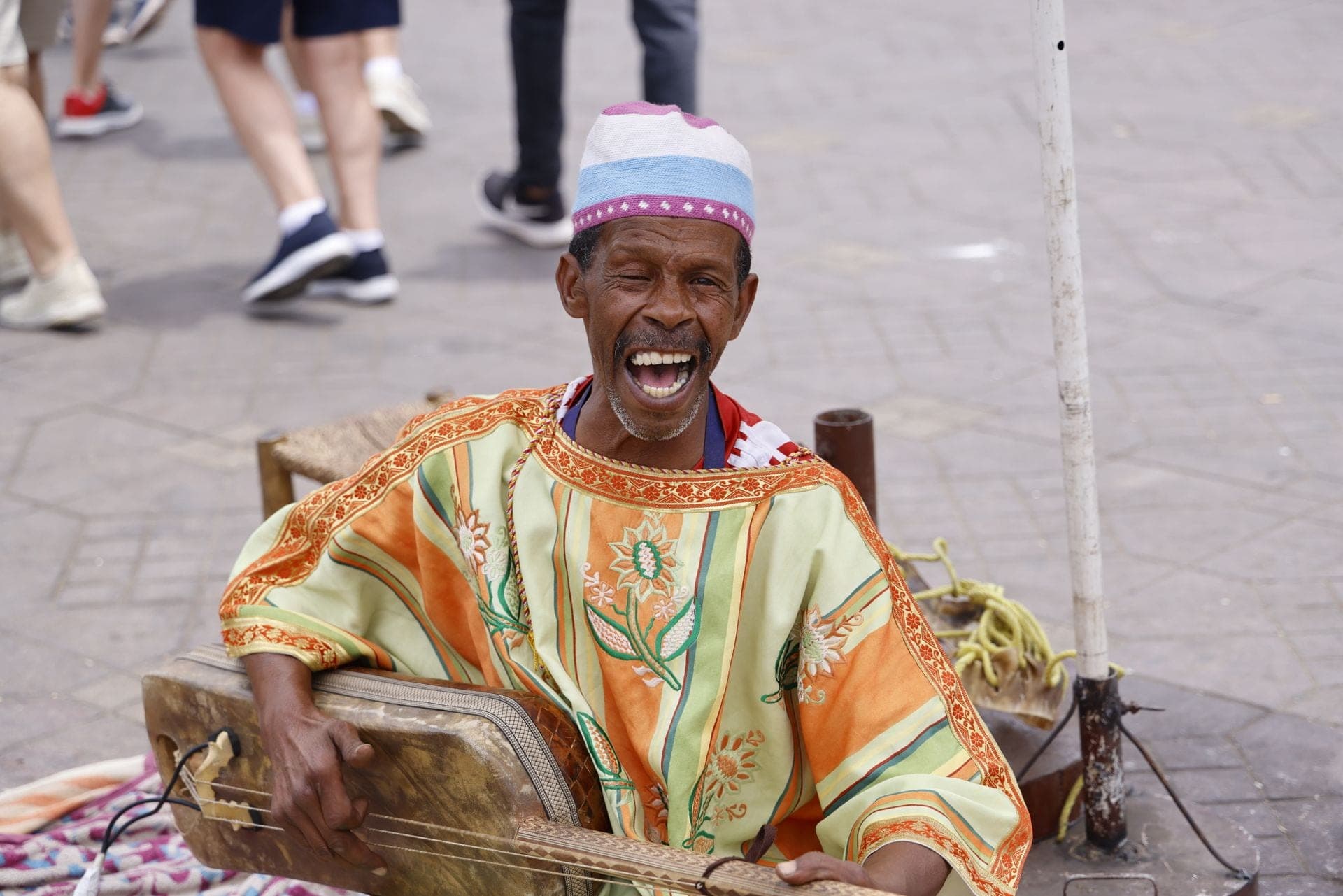
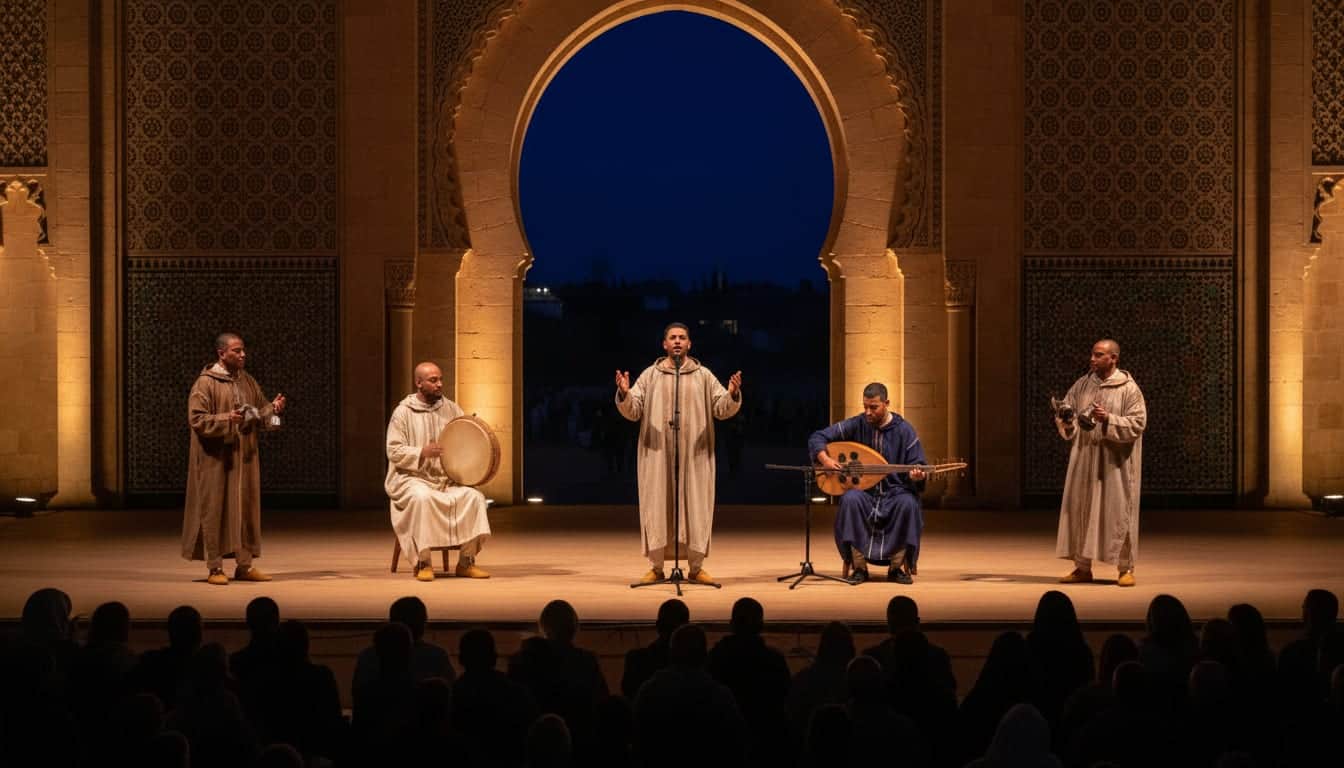
A música sacra Sufi é música devocional islâmica — as irmandades (os Aïssawa, os Hamadcha e outros, fortes em Fes) realizam cerimónias rítmicas e crescentes chamadas hadra que levam os participantes a estados espirituais. A música Gnaoua é outra coisa: uma tradição de transe descendente de africanos ocidentais trazidos para Marrocos através do Saara séculos atrás, baseando-se na herança Hausa, Fulani e Bambara. É construída sobre o guembri (um alaúde baixo de três cordas coberto de pele) e o qraqab (castanholas de ferro), e as suas cerimónias noturnas — a lila — invocam sete espíritos. Ambas são sagradas e orientadas para o transe; as suas raízes, instrumentos e rituais diferem. O festival de Fes inclina-se para o Sufi e 'sagrado mundial'; Essaouira é o lar do Gnaoua.
Por que a música Gnaoua é importante — e qual é a conexão com a UNESCO?
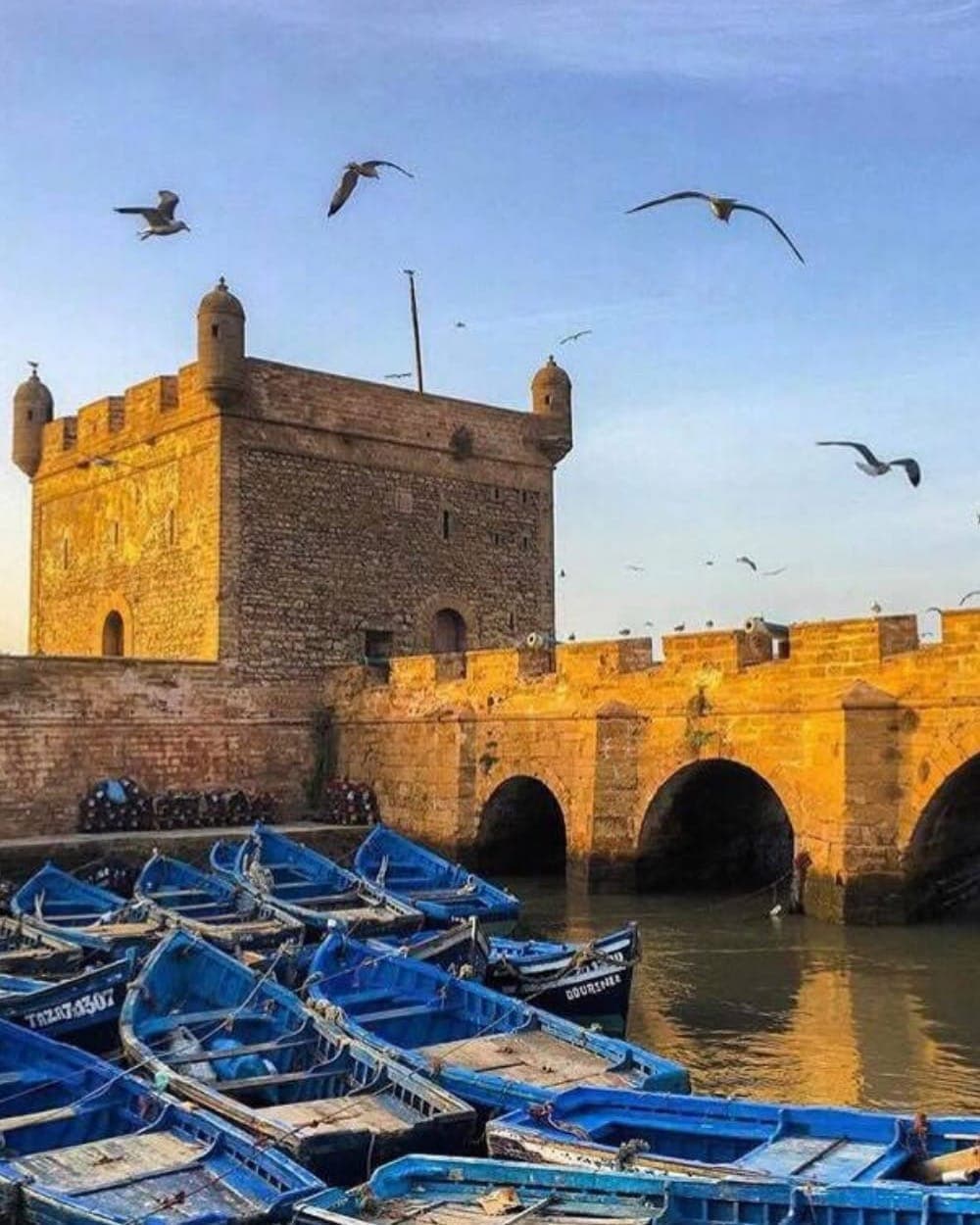
Gnaoua foi inscrita na Lista Representativa do Património Cultural Imaterial da Humanidade da UNESCO em 12 de dezembro de 2019. Esse reconhecimento é para a prática cultural — a música, os rituais, as irmandades — não para o festival em si (uma distinção que vale a pena manter clara). Essaouira, o lar espiritual do Gnaoua, é separadamente um Património Mundial da UNESCO: a sua medina fortificada do século XVIII (a antiga cidade de Mogador) foi inscrita em 2001. Assim, uma viagem ao festival Gnaoua é uma visita a duas camadas de reconhecimento da UNESCO ao mesmo tempo — a música viva e a cidade que a acolhe.
O que é uma cerimónia lila, e como participar dela com respeito?
Uma lila é o ritual Gnaoua noturno no cerne da tradição — uma cerimónia estruturada de música, cor e incenso que invoca sete espíritos (mlek), cada um com a sua própria cor e aroma, destinada a curar e a alcançar o transe. É sagrada, não uma performance. Se tiver a sorte de participar numa (os concertos públicos do festival são diferentes de uma verdadeira lila ritual), a etiqueta importa: não filme durante a cerimónia, siga a orientação do maâlem sobre o que está aberto aos convidados, vista-se modestamente e trate os músicos como os praticantes espirituais que são. O maior erro que os viajantes cometem é tratar uma lila como uma oportunidade fotográfica. Não é.
Como ver ambos os festivais — ou ambas as tradições — numa só viagem?
Honestamente, geralmente não se consegue ver ambos os festivais numa só viagem — estão separados por semanas e as datas de Fes mudam. Mas pode-se experimentar ambas as tradições numa só jornada, o que é o melhor objetivo de qualquer forma: ouvir a música da irmandade Sufi na sua origem em Fes, depois viajar para Essaouira para o festival Gnaoua. É exatamente assim que o nosso tour de música sacra Sufi e Gnaoua é construído — sessões da irmandade de Fes, o caminho pela cena Gnawa de Marrakech, e o festival de Essaouira como o final, com sessões privadas de maâlem e hadra para que a música o alcance independentemente da programação do festival.
Se Essaouira estiver no seu roteiro mais amplo por Marrocos de qualquer forma, o nosso guia sobre Essaouira — vento, ondas e Gnawa cobre a própria cidade para além da semana do festival. De qualquer forma: venha pela música, mas venha como um convidado, não como um espectador.

Escrito por
Amina Benkirane
Destination Editor
Writer and photographer covering the Maghreb. Ten years of wandering souks, kasbahs, and back roads most guidebooks miss.