Morocco Beauty Spots
Tour Privado em Marrocos · Cultural

Bloom Chaser

Marrakech → Anti-Atlas • 7 Days

Cultural7 dias
De$1190por pessoa
4.9Planeje esta viagem

Resposta em 24hSem depósito4×4 privado durante toda a viagem

A 7-day private slow-travel tour from Marrakech into the Anti-Atlas to chase Morocco's two great blooms: almond blossom around Tafraoute in mid-February, and the Damask rose harvest at Kelaat M'Gouna in early May. Two annual seasonal departures, dawn rose-picking or blossom walks with growers, the Jean Vérame painted rocks, small groups (max 6), and a real local-grower partnership rather than a coach-stop photo op.

Bloom Chaser

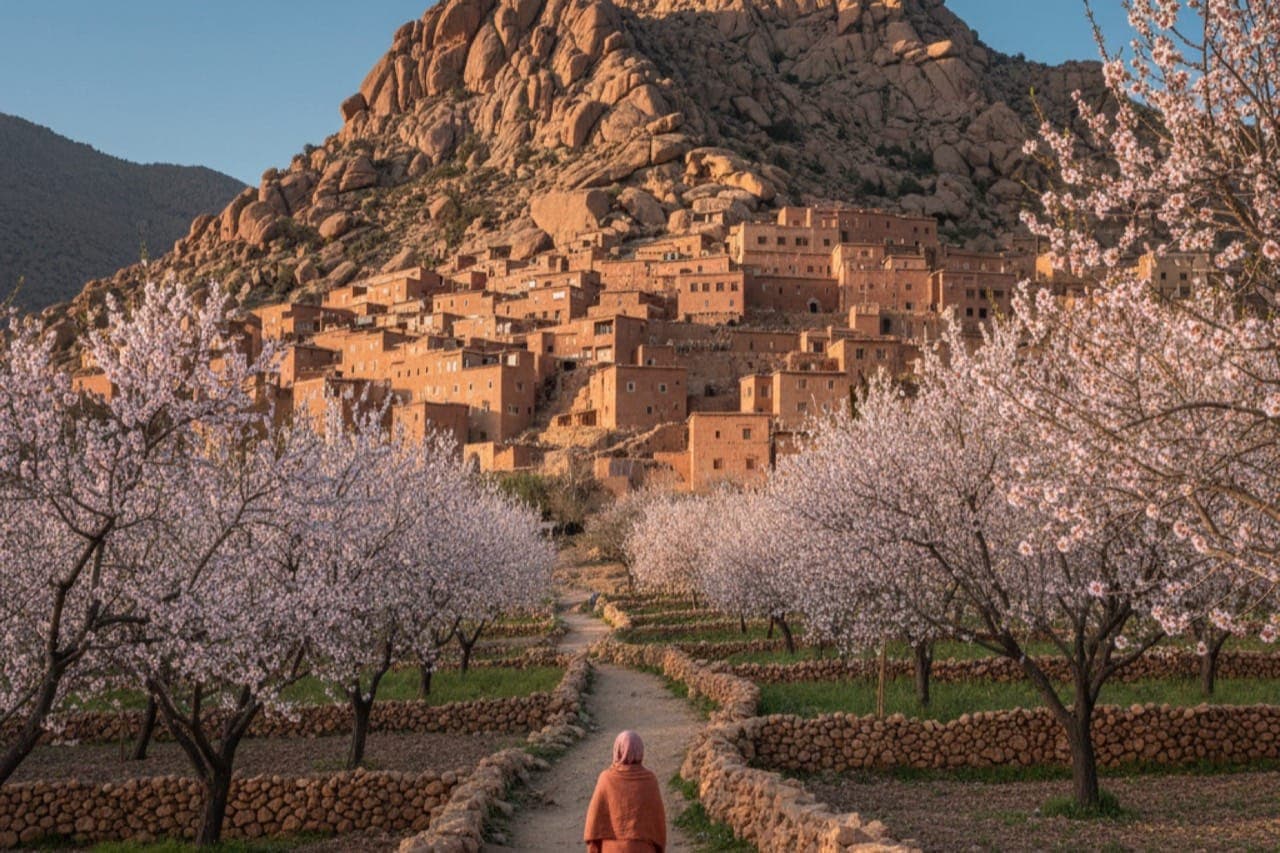
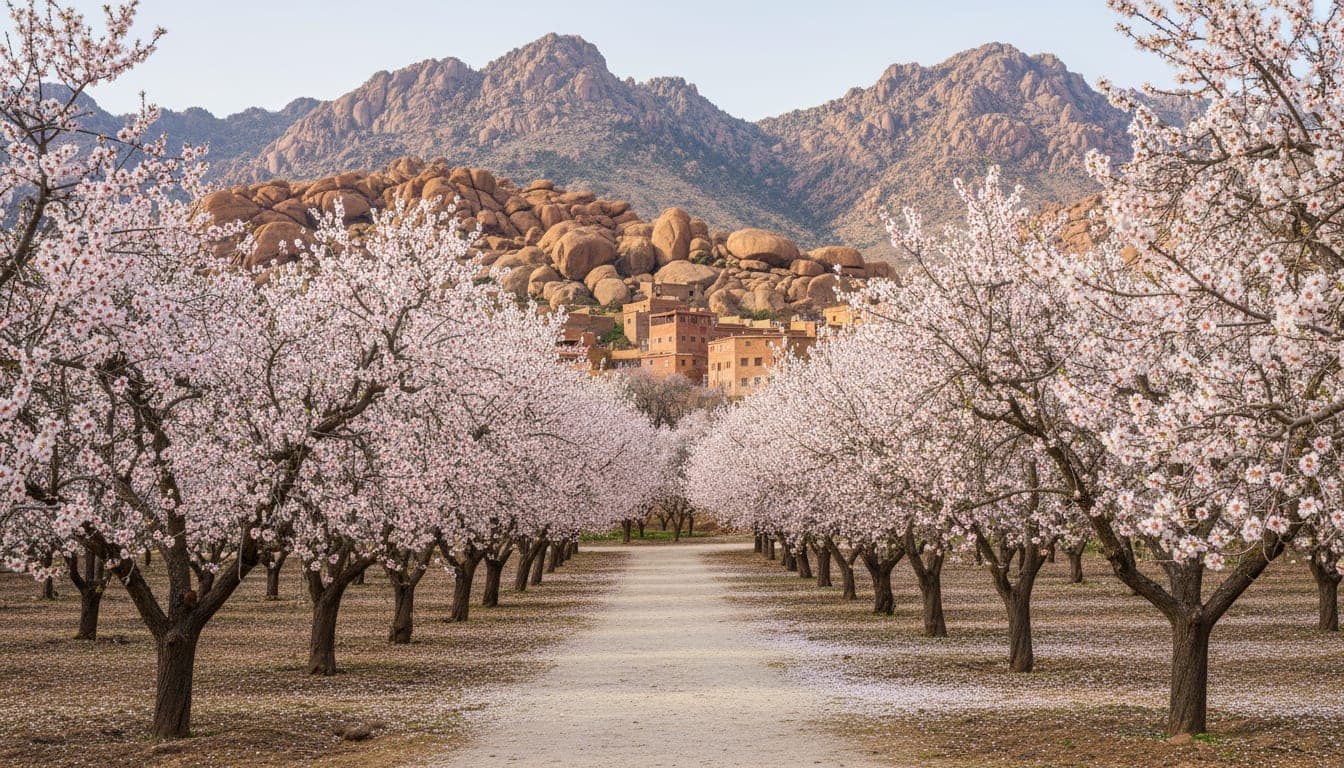
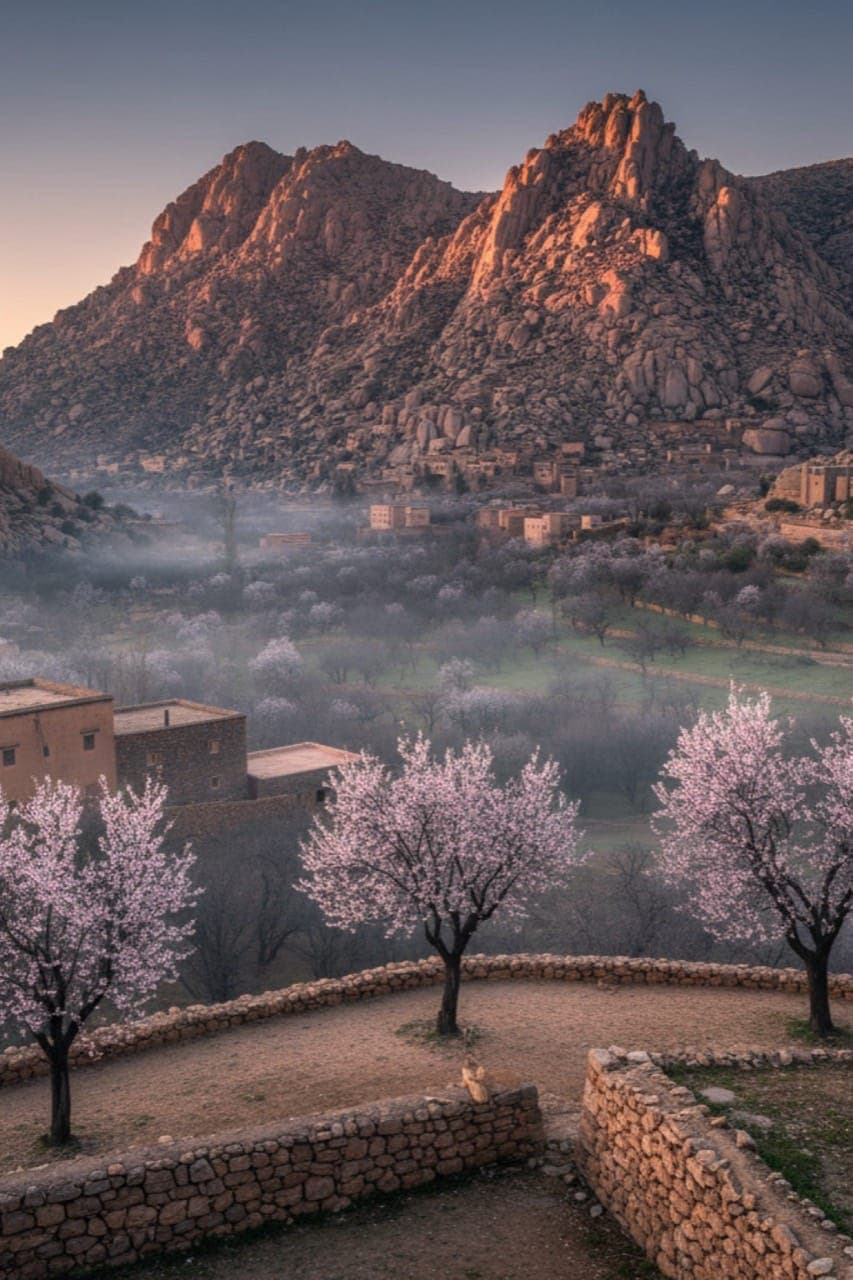
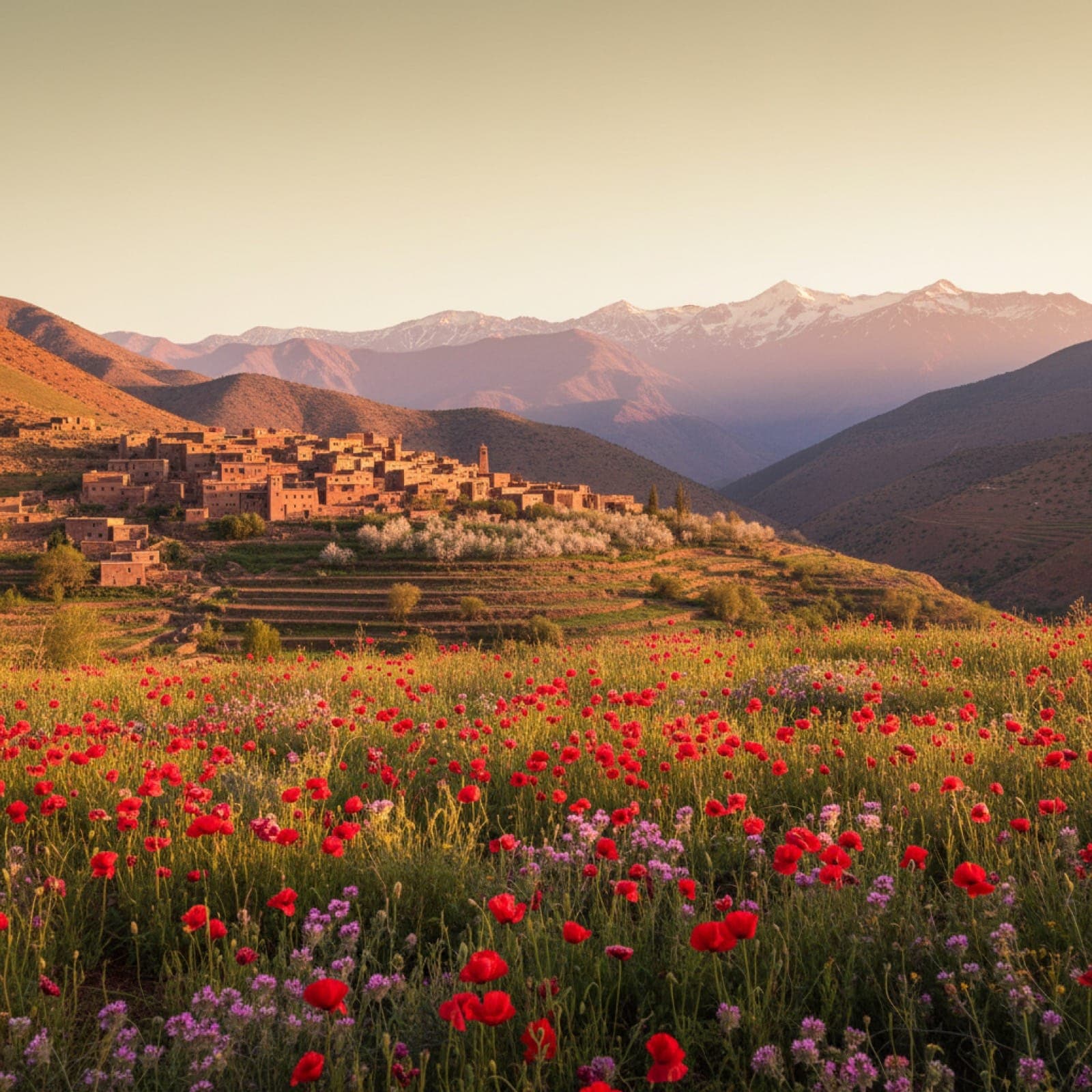
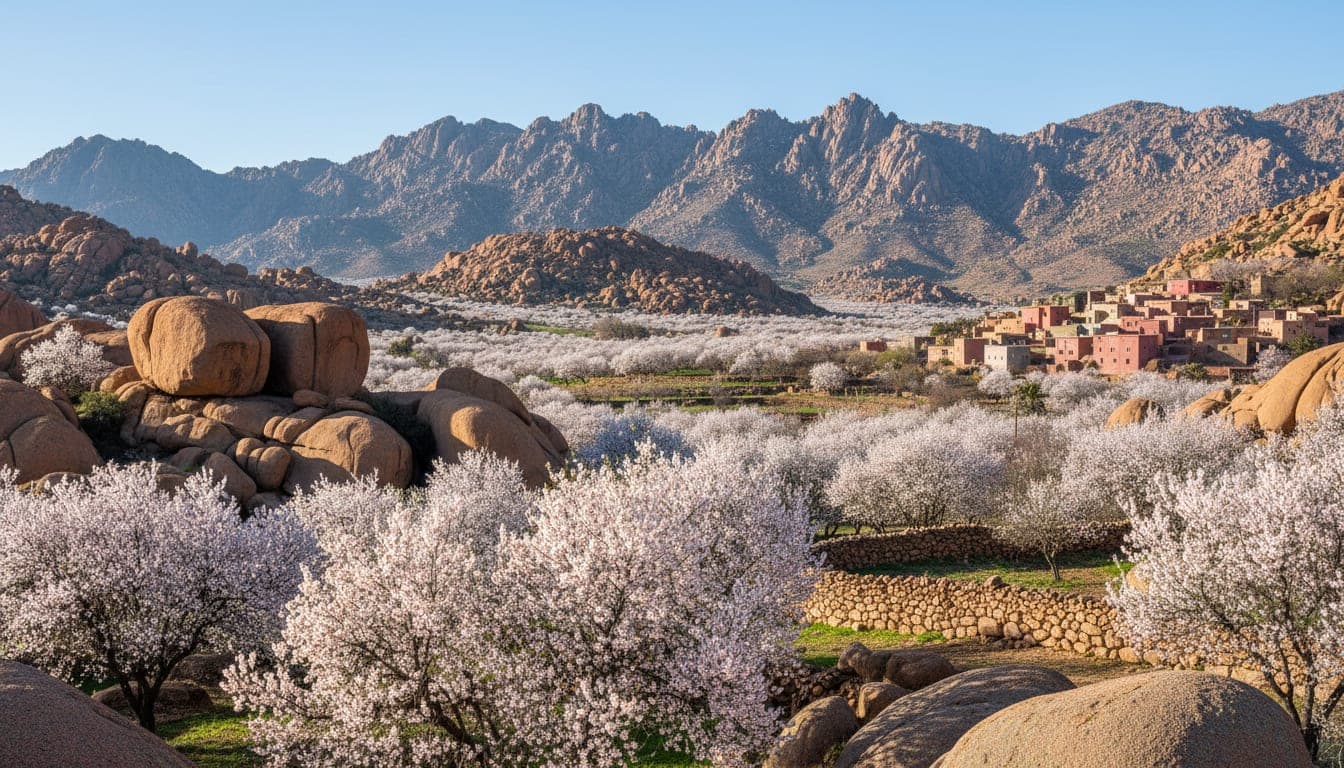
Bloom Chaser is a 7-day private tour built around the two weeks of the year that the Anti-Atlas is most worth seeing — and it runs twice, once for each bloom. The February departure follows the almond blossom around Tafraoute, when the Ameln Valley fills with white-and-pink trees against the region's signature rust-pink granite. The May departure follows the Damask rose harvest at Kelaat M'Gouna in the Valley of Roses, three months and three hundred kilometres east, where families pick petals at dawn before the heat draws out the fragrance. They are the same tour in spirit — slow, sensory, grower-led — and you choose the season that calls you.

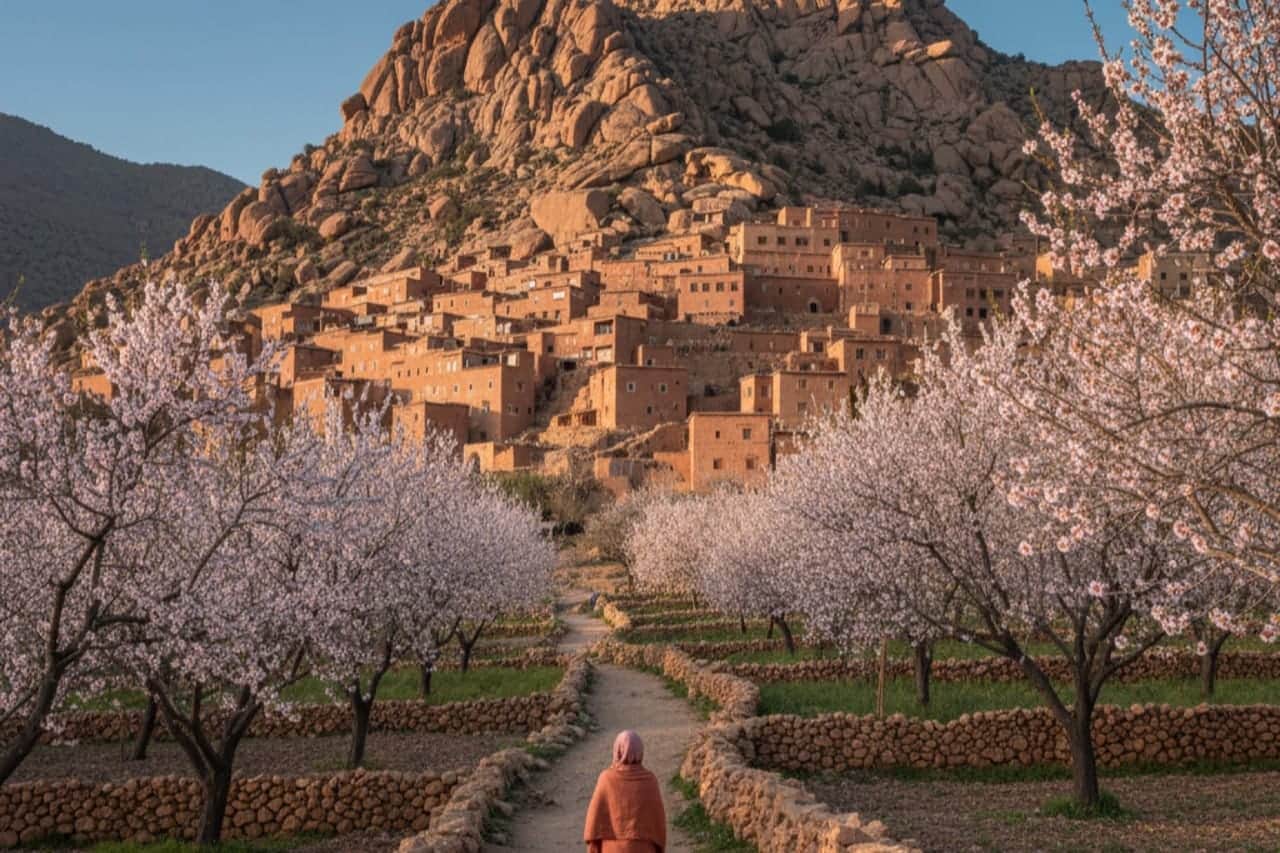
The almonds come first in the calendar. Bloom begins in the Anti-Atlas in late January and peaks in mid-February; the flowers last two to three weeks, weather depending. Tafraoute holds an Almond Blossom Festival in the second week of February — Berber music, dance, local almond sweets — but the festival is the excuse, not the point. The point is walking the orchards in the Ameln Valley with someone whose family planted them, learning why this granite basin grows almonds at all, and standing among the trees in the half-hour after sunrise when the light is low and the petals glow.

The roses come in May. The Damask rose (Rosa damascena) was brought to the Kelaat M'Gouna area around 1938, and the valley now harvests up to 4,000 tonnes of petals a year from thousands of kilometres of rose hedges dividing the fields. The Rose Festival — first held in 1969 — crowns a Rose Queen and fills the small town to bursting, so we base nearby and bring you in for the harvest at its best hour: dawn, when the flowers are still closed and holding their scent. You pick alongside the growers, then follow the petals to a working distillery to watch them become rose water and oil.

Both departures move at a deliberately slow pace — this is a Connoisseur's tour, not a checklist. Max six guests, a private 4×4, an English-speaking driver-guide who knows the back roads, and unhurried lunches with the people who grow what you've come to see. We don't do the coach-stop version where you photograph a field from the roadside and leave; the whole tour is the time spent inside the bloom, with the makers.

A note on honesty: the exact festival dates are confirmed only a few weeks ahead, because they are pegged to the harvest, which is pegged to the weather. We lock your travel week once local growers confirm the bloom is on, and we build the itinerary around the real peak rather than a fixed calendar date. If the season runs early or late, we move with it.

Destaques da viagem
  • Almond blossom across the Ameln Valley near Tafraoute in mid-February — the Souss-Massa region is Morocco's largest almond producer, around 27,600 tonnes a year (≈17% of the national crop)
  • Damask rose harvest at Kelaat M'Gouna in early May (the May departure) — dawn picking with growers in the Valley of Roses, where it takes roughly 3–4 tonnes of petals to distil a single litre of rose water
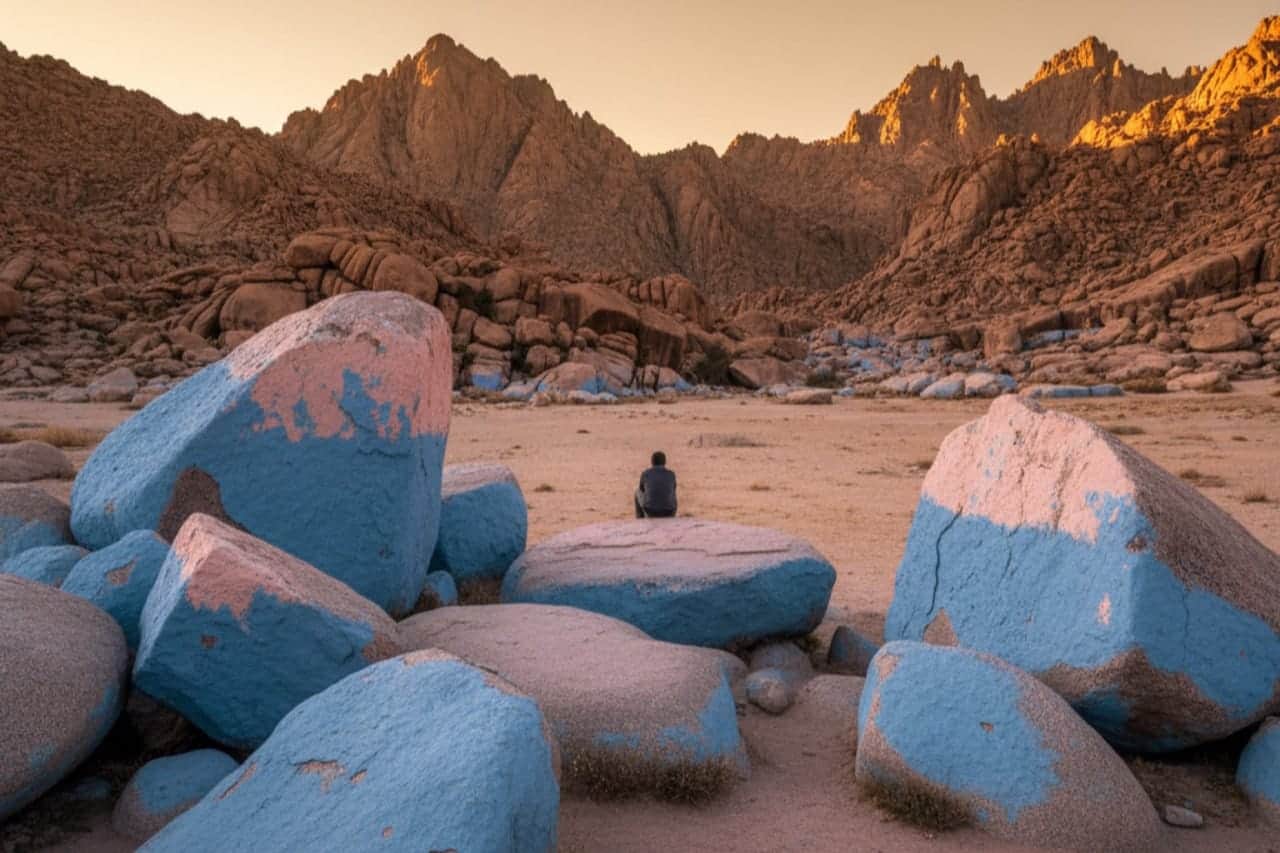
  • The Jean Vérame painted rocks near Aguerd-Oudad — ~18 tonnes of blue, pink and red paint poured over the granite boulders by the Belgian artist in 1984
  • Pink-granite boulder landscapes of the Anti-Atlas — the Ameln Valley villages of pink-ochre mud-brick stepping up the slopes
  • A working rose distillery and an almond cooperative visit — the craft behind the bloom, not just the photo
  • Small group (max 6) in a private 4×4 with an English-speaking driver-guide — slow pace, grower lunches, no commission stops
  • Dawn light in the orchards and rose fields — the tour is built around the two hours of the day the bloom actually photographs
Dia a dia

Dia a dia

  1. Dia 1

    Marrakech → Taroudant

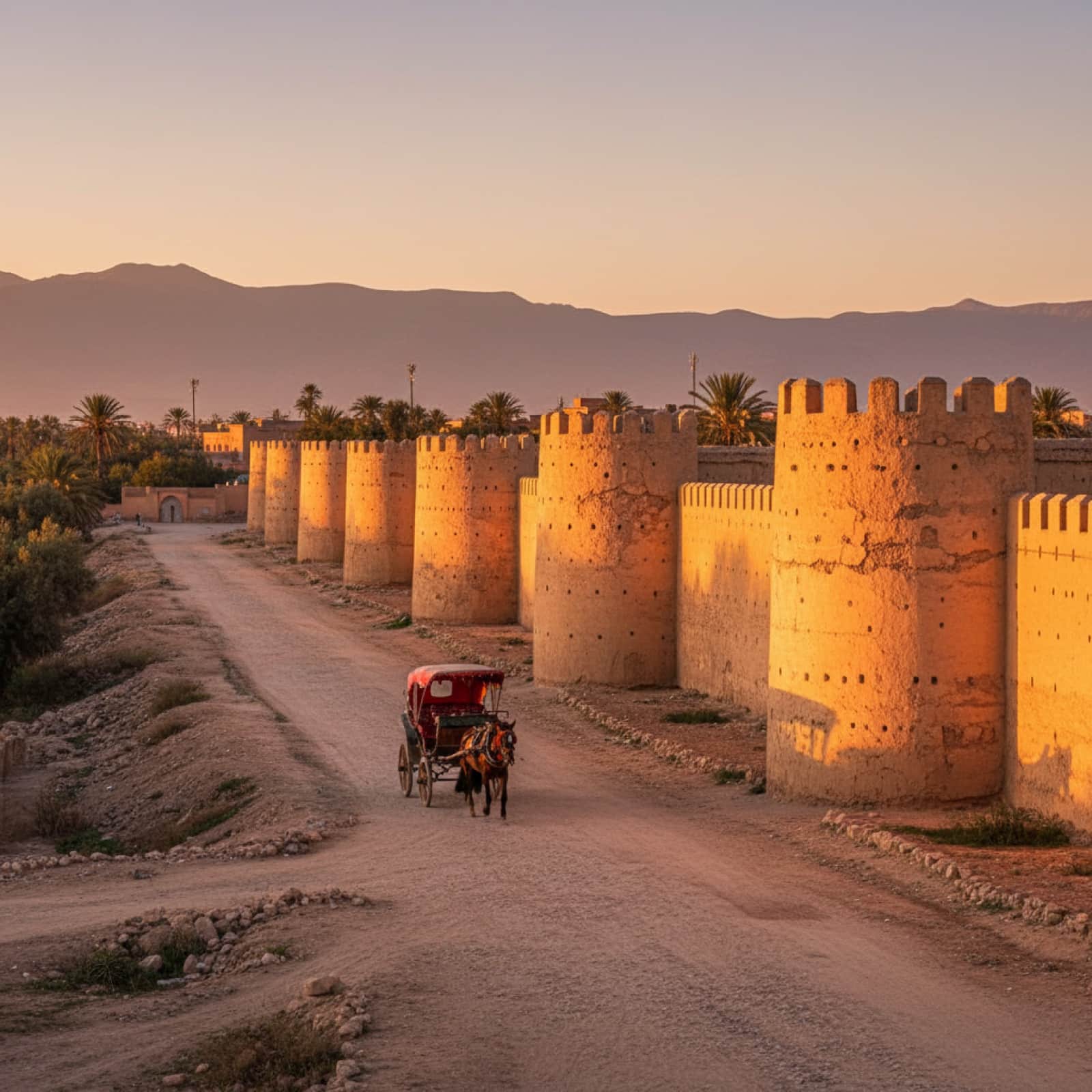
    Morning pickup from your Marrakech riad. Drive south over the Tizi n'Test or via the Agadir road toward Taroudant, the walled 'little Marrakech' of the Souss plain. Afternoon walk inside the ramparts — the souks here are calm, working markets, not tourist bazaars. Overnight in a Taroudant riad. The Souss valley around you is the heart of Morocco's almond and argan country.

    Estrada · 5h

  2. Dia 2

    Taroudant → Tafraoute (Ameln Valley)

    Drive into the Anti-Atlas, climbing onto the pink-granite plateau, to Tafraoute in the Ameln Valley. In February the valley floor is white with almond blossom. Afternoon orientation walk among the nearest orchards with a local guide. Settle into a Tafraoute guesthouse for two nights. Evening: the granite peaks turn red at sunset — the famous 'Napoleon's Hat' rock above Aguerd-Oudad catches the last light.

    Estrada · 4h

  3. Dia 3

    Tafraoute: almond orchards, Ameln villages, painted rocks

    Dawn in the orchards for the low light (this is the photograph you came for). Breakfast, then a day among the Ameln Valley villages — pink-ochre mud-brick houses stepping up the slopes, almond groves between them, walks with growers who explain the harvest. Afternoon at the Jean Vérame painted rocks near Aguerd-Oudad, the smooth granite boulders the Belgian artist coated in blue and pink in 1984. Back to Tafraoute for dinner.

    Noite no destino

  4. Dia 4

    Tafraoute → Aït Mansour gorge → Tafraoute

    South into the Aït Mansour gorge — a green ribbon of date palms and small almond plots threading between high red walls, some of the most photogenic and least-visited country in the Anti-Atlas. Lunch with a family in a palmerie hamlet. Slow afternoon; an optional easy hike among the painted boulders or the blossom, depending on the light and your legs. Second night in Tafraoute.

    Noite no destino

  5. Dia 5

    Tafraoute → Tiznit → coast

    Descend the Anti-Atlas to Tiznit, the silver-working town with its red pisé walls. Time in the jewellers' souk (Tiznit silver is a real craft, not a tourist invention), then on toward the Atlantic for the change of pace. Overnight near the coast — the contrast between the granite highlands and the ocean light is part of the point.

    Estrada · 3h

  6. Dia 6

    Coast → Marrakech (via the Souss almond country)

    Return north toward Marrakech across the Souss plain, with a stop at an almond cooperative to see the post-harvest side of the crop — the sorting, the oil-pressing, the amlou (almond-argan-honey paste that is the region's gift to breakfast). Long scenic drive; arrive Marrakech by evening. Final-night riad in the medina.

    Estrada · 5h

  7. Dia 7

    Marrakech → departure

    Slow morning in Marrakech — a last walk in the medina, a hammam, or simply mint tea on a riad terrace. Transfer to Marrakech-Menara airport on your schedule. (The May departure swaps the Anti-Atlas almond legs for the Dades/Valley of Roses harvest route via Ouarzazate and Aït Benhaddou; ask for the May itinerary.)

    Fim da viagem

O que está incluído

  • Private 4×4 with English-speaking driver-guide for all 7 days (fuel, tolls, driver costs included)
  • Six nights accommodation — Taroudant riad, two nights Tafraoute guesthouse, coast, Marrakech (mid-range; luxury on request)
  • Daily breakfast + most dinners (half-board through the Anti-Atlas)
  • Grower-led orchard walks and an almond cooperative visit (Feb) / dawn rose-picking and a working distillery visit (May)
  • Local Anti-Atlas guide for the Ameln Valley and Aït Mansour gorge days
  • All site entries (painted rocks area, festival access where ticketed)

Não incluído

  • International flights to/from Marrakech
  • Lunches (kept flexible so we can stop with growers and at markets)
  • Travel insurance (recommended)
  • Personal shopping — Tiznit silver, rose products, amlou (you will want some)
  • Festival-week single-supplement on Kelaat M'Gouna lodging for the May departure (the town sells out; we base in Skoura or Ouarzazate and quote the supplement transparently)
Almond bloom window
Late Jan–mid Feb peak; lasts 2–3 weeks (weather-dependent)
Rose harvest window
Early May; Kelaat M'Gouna Rose Festival ~6–9 May 2026
Almond production (Souss region)
≈27,600 tonnes/yr (~17% of Morocco's crop)
Rose yield
≈3–4 tonnes of petals per litre of rose water
People think the bloom is a backdrop you drive past. It isn't — it's a half-hour of light and a family who has worked that orchard for four generations. We built Bloom Chaser around the two weeks a year the Anti-Atlas actually glows, and around the growers, because that's the part a coach tour can never give you. Come for the photo; leave with the amlou and the names of the people who made it.
Amina Benkirane· Destination Editor, Morocco Beauty Spots
Resposta em menos de 24 horasBaseado em Marrakech, MarrocosFalar com Youssef →
Histórias de viajantes

O que dizem os viajantes

  • Sophie & Marc

    Sophie & Marc

    Paris, France

    The best trip of our lives. Our guide knew every village, every viewpoint, every hidden riad. Seven days in Morocco felt like a month somewhere else.
  • James H.

    James H.

    London, UK

    Everything was seamless from landing in Fes to the Sahara camp and back to Marrakech. The night under the stars is something I'll never forget.
  • Ana Rodrigues

    Ana Rodrigues

    Lisbon, Portugal

    Organized, warm, professional. They built the itinerary around what we loved and gave us complete freedom to stop anywhere along the way.
Antes de reservar

Leia isso primeiro se ainda está pesquisando

Perguntas, respondidas

Bloom Chaser - perguntado frequentemente

When is the Almond Blossom Festival in Tafraoute in 2026?
It's held in the second week of February, timed to the almond bloom peak — recent years have run around 18–21 February. Because the festival is pegged to the harvest, which is pegged to the weather, the exact dates are confirmed only a few weeks ahead. The bloom itself begins in late January and lasts two to three weeks, so the travel window is more forgiving than a single festival weekend.
When is the Rose Festival at Kelaat M'Gouna in 2026?
Most operators list 6–9 May 2026 for the Kelaat M'Gouna Rose Festival, with the perfume-rose exhibition running around 7–10 May. As with the almonds, organisers confirm the dates only a few weeks out because the festival follows the rose harvest. The festival, first held in 1969, lasts about a week and draws large crowds — we base nearby and time your visit to the harvest's best hour.
Can I do both the almond blossom and the roses on one trip?
No — they're three months apart (almond mid-February, roses early May) and 300 km apart, so a single trip can't catch both blooms. Bloom Chaser runs as two separate annual departures: the February almond version through the Anti-Atlas, and the May rose version through the Dades Valley of Roses. They share the same slow, grower-led spirit; you pick the season.
Are the tour dates fixed?
We hold a target week for each departure, then lock the exact dates roughly 3–4 weeks out once local growers confirm the bloom or harvest is on. If the season runs early or late, we move the departure with it rather than have you arrive to bare branches. This flexibility is the whole reason to travel with a local operator for a bloom tour.
Is this a photography tour?
It's built for photographers without being only for them. We start at dawn in the orchards and rose fields because that's the half-hour the bloom actually photographs — low light, closed roses, glowing petals. Bring a tripod and a fast lens if you have them. If you don't shoot, the same dawn hour is simply the best time to be there.
What's the difference between the festival and the bloom?
The festival is a few days of music, dance and local food in town; the bloom is two to three weeks of orchards and fields in flower across the valley. The festival is fun but crowded and town-bound; the value of the tour is the time spent among the trees and roses with growers, away from the festival crush. We give you a taste of the festival and the depth of the bloom.
Where do we stay for the Rose Festival if Kelaat M'Gouna is full?
The town is small and sells out fast during the festival, so for the May departure we base in Skoura (about an hour away) or Ouarzazate (about 90 minutes) and bring you into Kelaat M'Gouna for the dawn harvest and the festival highlights. It means better rooms, calmer nights, and an earlier, quieter arrival at the rose fields than the festival-week crowd gets.
How fit do I need to be?
Not very. The walking is gentle — orchard paths, village lanes, the flat floor of the Aït Mansour gorge. The early starts are the only demand. The tour is comfortable for most ages; tell us if you'd like to add or drop any of the optional walks.
Paradas neste passeio

Para onde você irá

Ver tudo

Quer essa viagem sob medida para você?

Diga-nos as suas datas e ritmo. Nossos especialistas em Marrocos respondem em 24 horas com um plano diário privado.

Planeje esta viagem