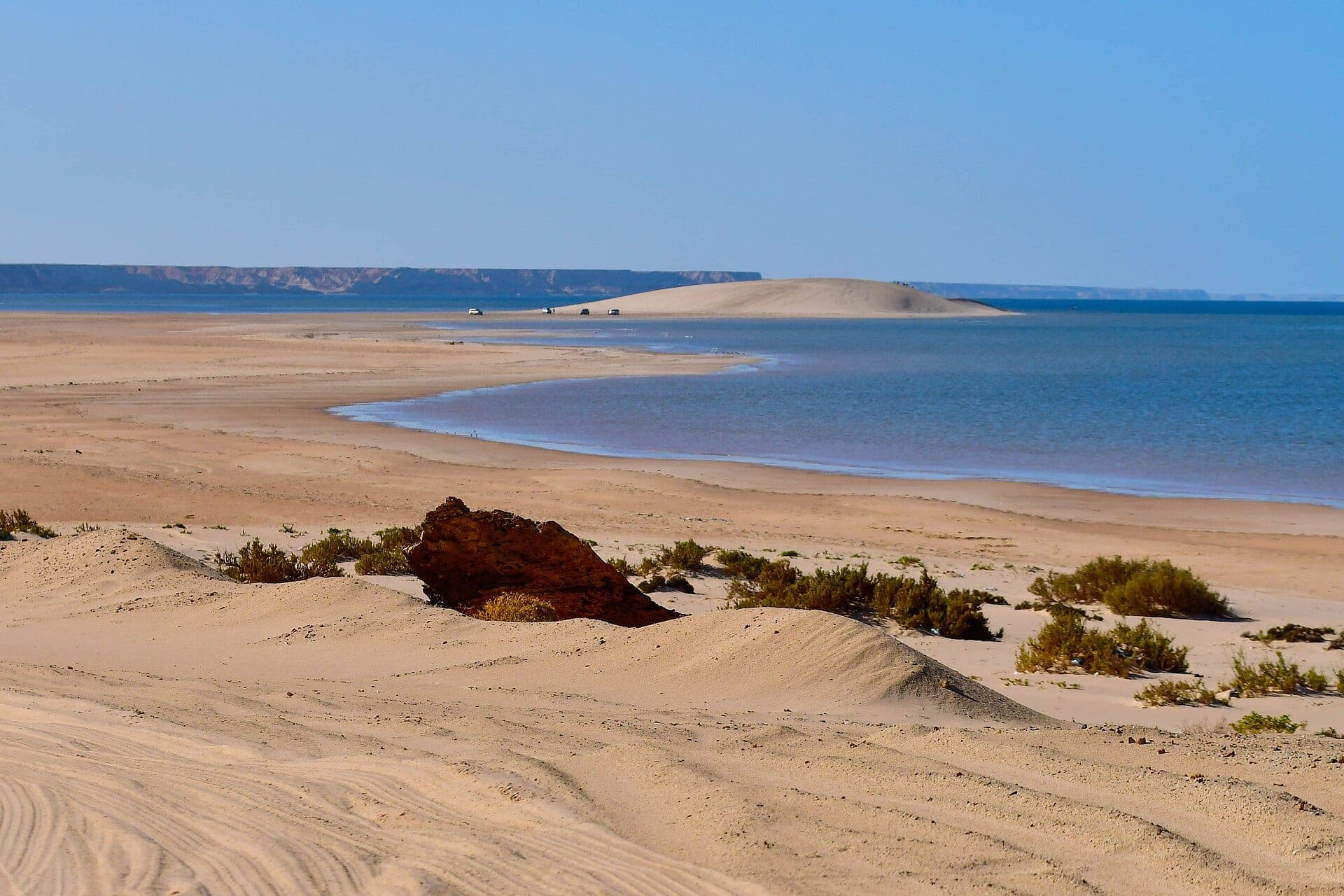
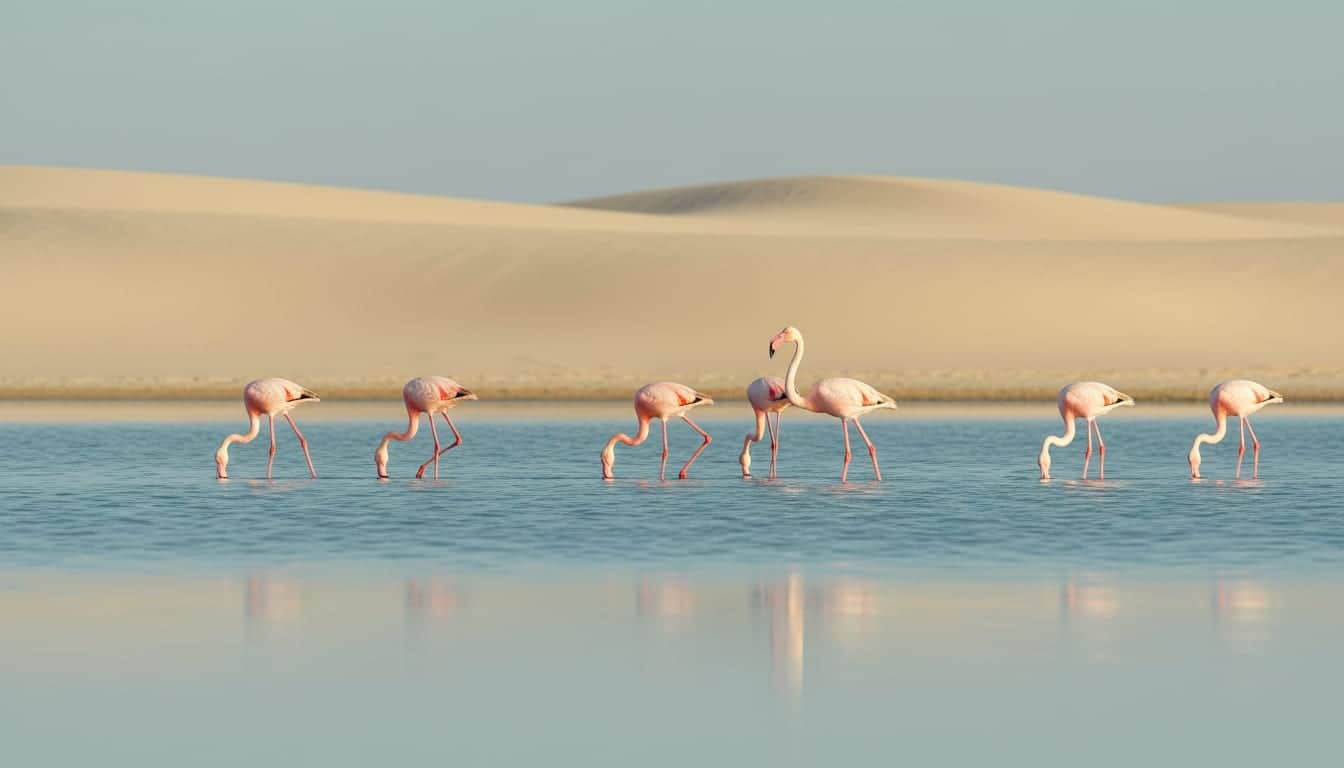
Залив Дахла — это Рамсарская лагуна площадью 40 000 гектаров на краю Сахары, где обитают фламинго, афалины и десятки тысяч зимующих птиц. Это также последнее марокканское убежище атлантического горбатого дельфина, находящегося под угрозой исчезновения. Вот что вы действительно можете увидеть, чего не можете, когда приезжать и почему честность здесь важна.
Залив Дахла, расположенный в Атлантической Сахаре Марокко, является Рамсарским водно-болотным угодьем площадью 40 000 гектаров (Участок 1470) и одним из двух наиболее важных мест зимовки перелетных водоплавающих птиц в стране — здесь было зарегистрировано почти 60 000 птиц. Вы можете с уверенностью увидеть больших фламинго (лучше всего с ноября по март), большие стаи куликов и чаек, а также постоянно обитающих обыкновенных афалин. Чего вы почти наверняка не увидите — и почему это важно — так это находящегося под угрозой исчезновения атлантического горбатого дельфина, популяция которого в заливе, возможно, сократилась до одной особи. Это честный путеводитель по дикой природе самого дикого побережья Марокко.
Большая часть написанного о Дахле посвящена кайтсерфингу — это одно из величайших мест для кайтинга в мире. Дикой природе уделяется одно предложение. Именно этот пробел заполняет данный путеводитель, и именно поэтому я считаю Дахлу одним из самых незаметно важных участков побережья Африки. Но это работает только в том случае, если вы честны в отношении того, что там действительно есть.
Какую дикую природу вы действительно можете увидеть в Дахле?
Надежно: большие фламинго, которые собираются в неглубокой бирюзовой лагуне (лучше всего с ноября по март); большие стаи куликов, чаек Одуэна и малых черноголовых чаек, а также чеграв; и постоянно обитающие обыкновенные афалины в заливе. Заросли морской травы и приливные отмели залива Дахла поддерживают 41 вид рыб и более 120 видов моллюсков, что является пищей для птиц. Пустыня Аусcерд внутри страны добавляет особенности для серьезных орнитологов — золотистый козодой, суданский золотой воробей, длиннохвостый сверчок. Это действительно богатый, малоизученный уголок Восточно-Атлантического пролетного пути.
Можно ли увидеть атлантического горбатого дельфина в Дахле?
Реалистично, нет — и любой тур, который это обещает, вводит вас в заблуждение. Залив Дахла является самой северной точкой во всем мировом ареале атлантического горбатого дельфина (Sousa teuszii), который находится под критической угрозой исчезновения. Ближайшая известная популяция находится более чем в 400 км к югу в Мавритании. Популяция в Дахле сократилась: по данным недавних исследований, возможно, остался один одинокий взрослый самец, впервые зарегистрированный как детеныш в 1995 году. Дельфины, которых вы увидите в заливе, — это обыкновенные афалины. Почти полное исчезновение горбатого дельфина — это сердце природоохранной миссии любой честной поездки по дикой природе Дахлы — вы можете быть одними из последних, кто узнает, что это был его дом.
| Вид | Статус здесь | Честные ожидания |
|---|---|---|
| Большой фламинго | Оседлый/зимующий | Надежно, ноябрь–март |
| Обыкновенная афалина | Обитает в заливе | Надежно во время лодочных прогулок |
| Кулики, чайки, крачки | Зимуют тысячами | Надежно, ноябрь–март |
| Атлантический горбатый дельфин | Под критической угрозой; ~1 особь | Не ожидайте увидеть |
| Средиземноморский тюлень-монах | Колония на мысе Кап-Блан ~400 км к югу | Не встречается в заливе Дахла |
Есть ли тюлени-монахи в Дахле?
Не в заливе, регулярно. Ближайшая колония средиземноморских тюленей-монахов находится на мысе Кап-Блан, примерно в 400 км к югу, недалеко от мавританской границы — это крупнейшая в мире колония, которая за два десятилетия выросла со 100 до более чем 350 тюленей. Наблюдения тюленей-монахов в заливе Дахла редки и случайны. Однако в этой истории есть и хорошие новости: в июне 2023 года МСОП понизил статус средиземноморского тюленя-монаха с «находящегося под угрозой исчезновения» до «уязвимого», что является настоящей победой в сохранении самого исчезающего тюленя в мире. Мы рассказываем эту историю; мы не продаем ее как встречу в Дахле.
Когда лучше всего посещать Дахлу для наблюдения за дикой природой?
С ноября по март для фламинго и самых больших стай зимующих куликов; с октября по апрель в целом для лучшего ветра, погоды и активности птиц. Раннее утро — лучшее время на мелководной лагуне. Лето жаркое, и количество птиц уменьшается. Если дикая природа является вашим приоритетом, выбирайте зимний период — он также более комфортен, чем сахарское лето.
Как добраться до Дахлы, и стоит ли оно того?
Дахла находится примерно в 1400 км к югу от Марракеша — полет является единственным разумным способом добраться туда. Royal Air Maroc и Air Arabia летают напрямую из Агадира (менее 2 часов) и через Касабланку с севера (около 2 часов 20 минут, примерно 290–300 долларов туда и обратно). Это долгий путь ради лагуны, и стоит ли оно того, зависит от вас: если вы хотите увидеть фламинго, диких дельфинов, Рамсарские водно-болотные угодья и историю сохранения природы на самом краю Марокко — и вы цените честность в отношении того, что увидите — тогда да. Если вы хотите гарантированную харизматичную мегафауну, то нет. Наш тур по дикому побережью Дахлы проводится с акцентом на натуралиста, вдали от толпы кайтсерферов, с вкладом в местное морское природоохранное дело — и с той же честностью, с которой написан этот путеводитель.
Написал
Youssef El Alaoui
Lead Morocco Specialist
Born in Fes, based in Marrakech. Designs private itineraries for Morocco Beauty Spots and still argues mint tea is best in the Atlas.