Bloom Chaser is a 7-day private tour built around the two weeks of the year that the Anti-Atlas is most worth seeing — and it runs twice, once for each bloom. The February departure follows the almond blossom around Tafraoute, when the Ameln Valley fills with white-and-pink trees against the region's signature rust-pink granite. The May departure follows the Damask rose harvest at Kelaat M'Gouna in the Valley of Roses, three months and three hundred kilometres east, where families pick petals at dawn before the heat draws out the fragrance. They are the same tour in spirit — slow, sensory, grower-led — and you choose the season that calls you.
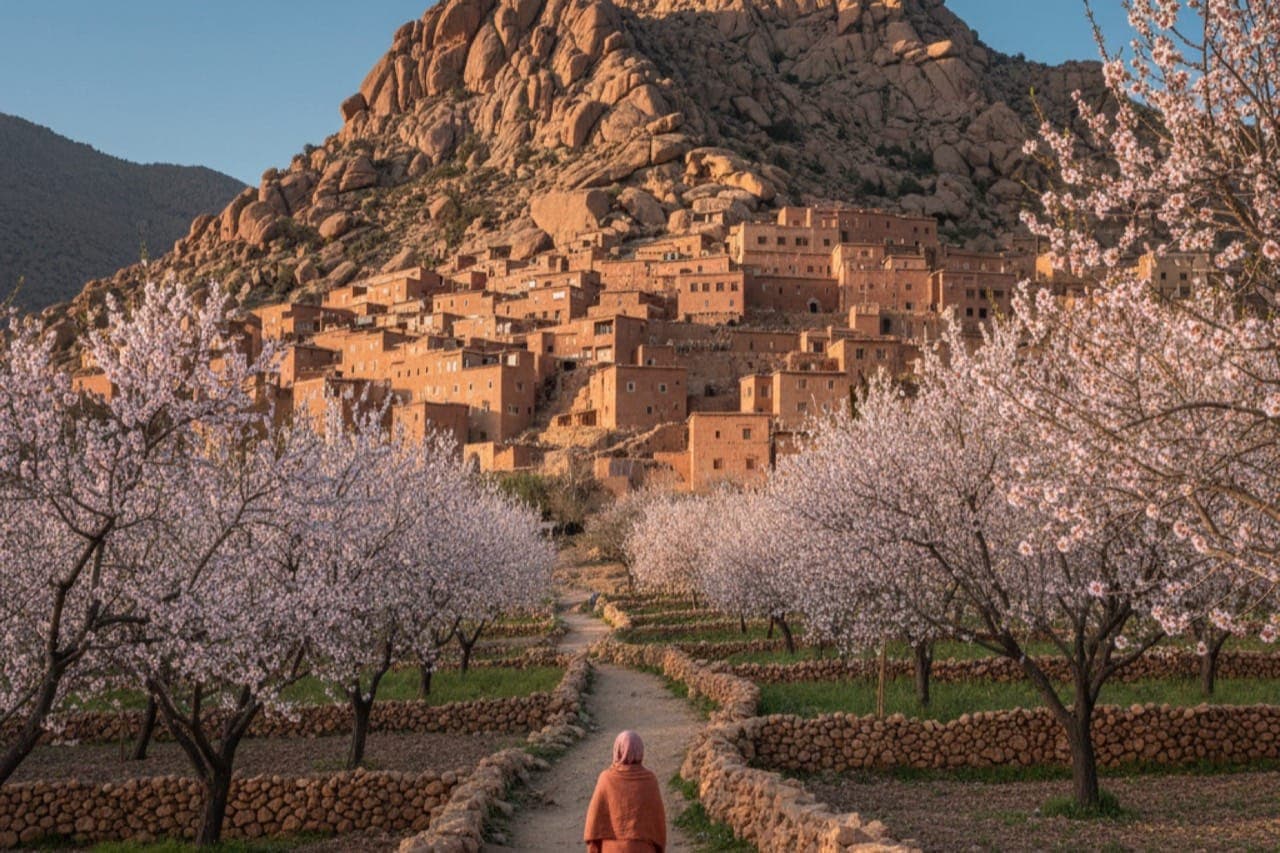
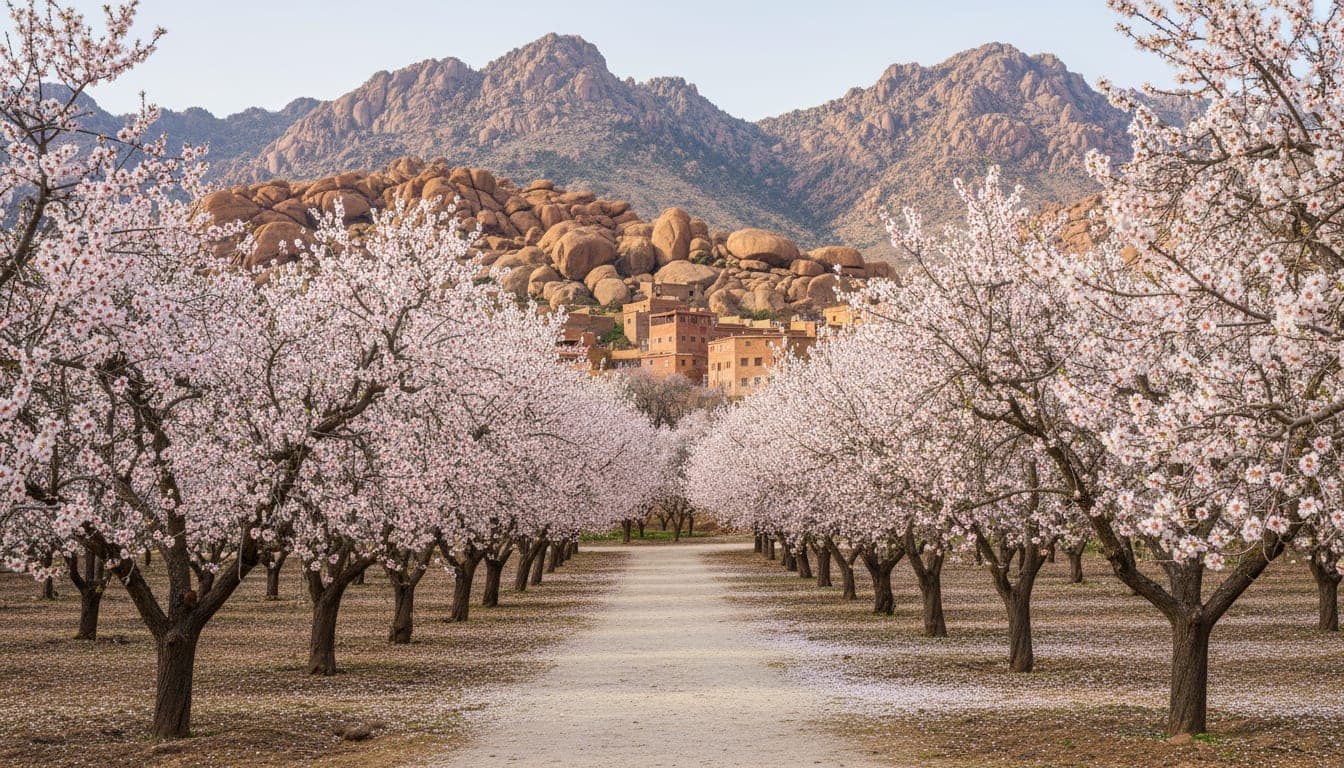
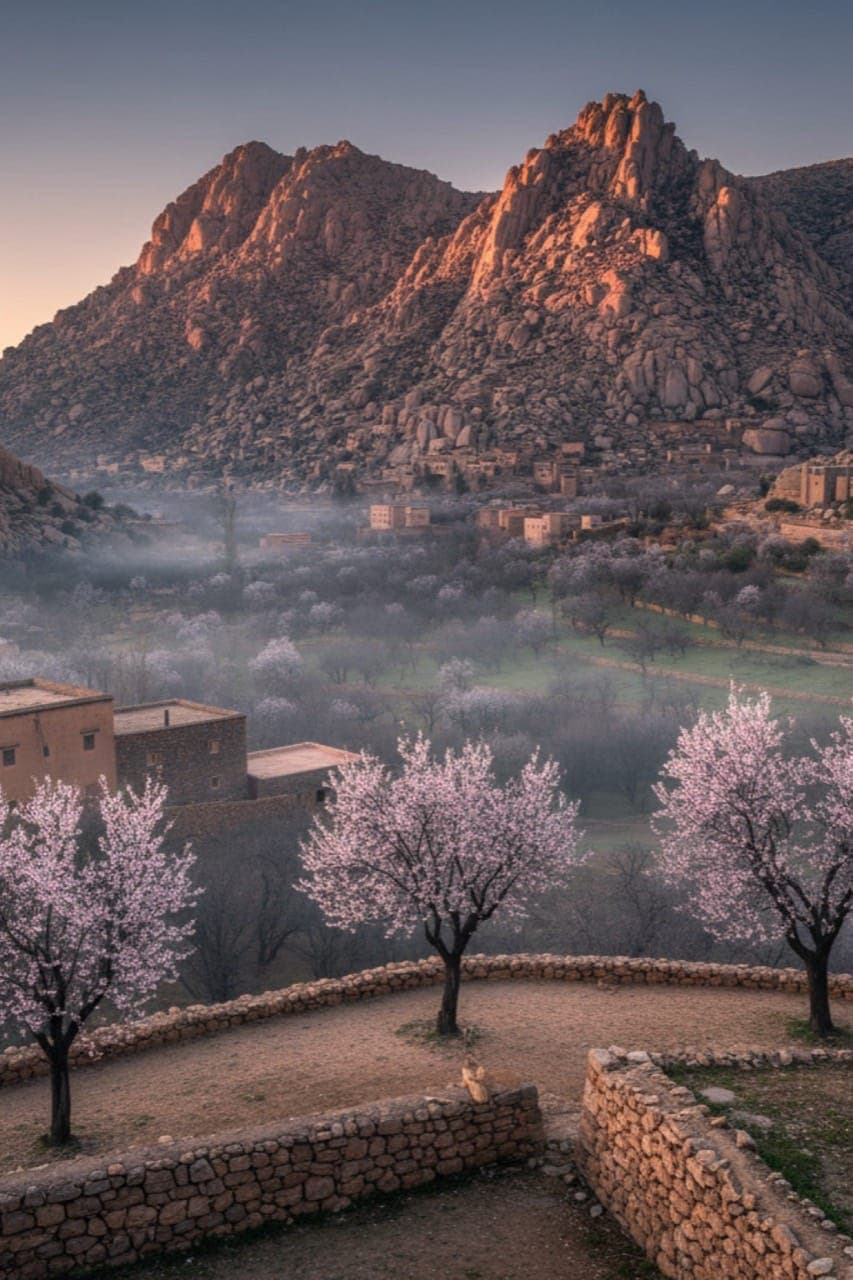
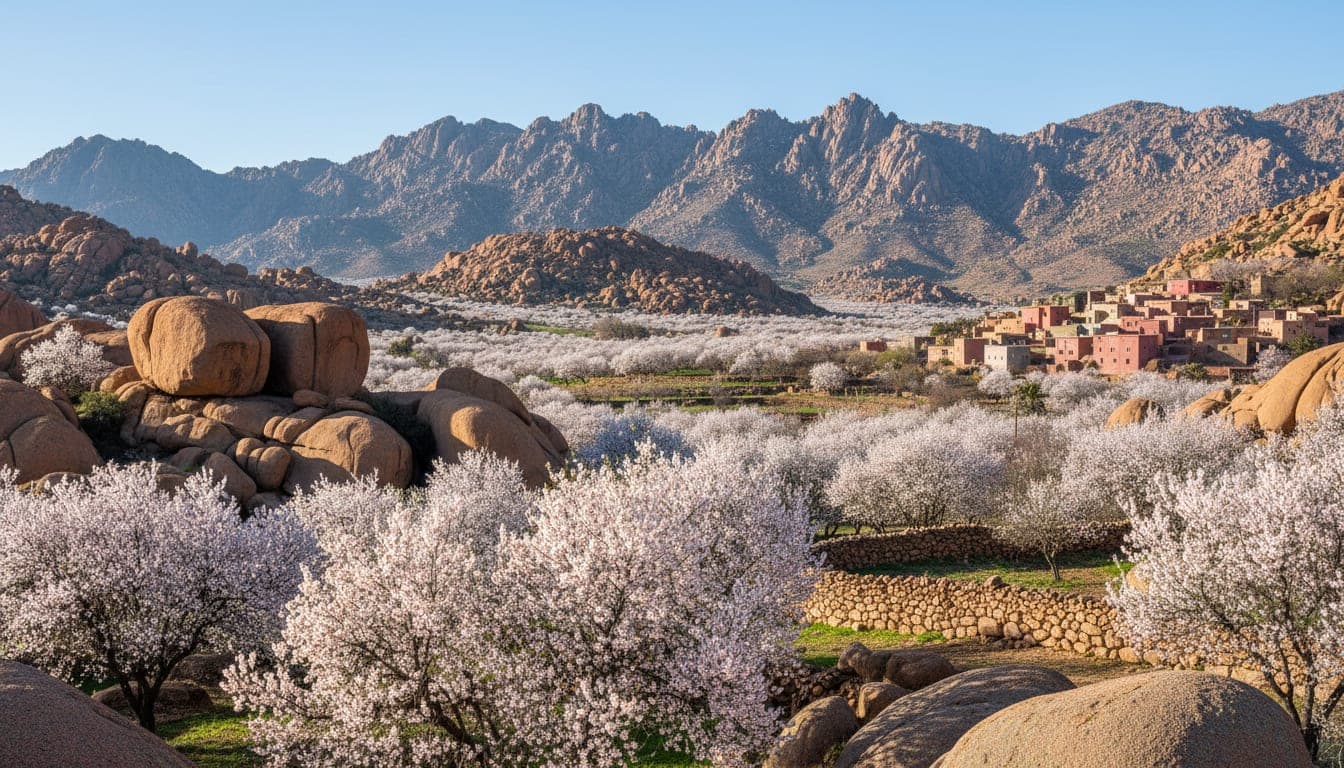
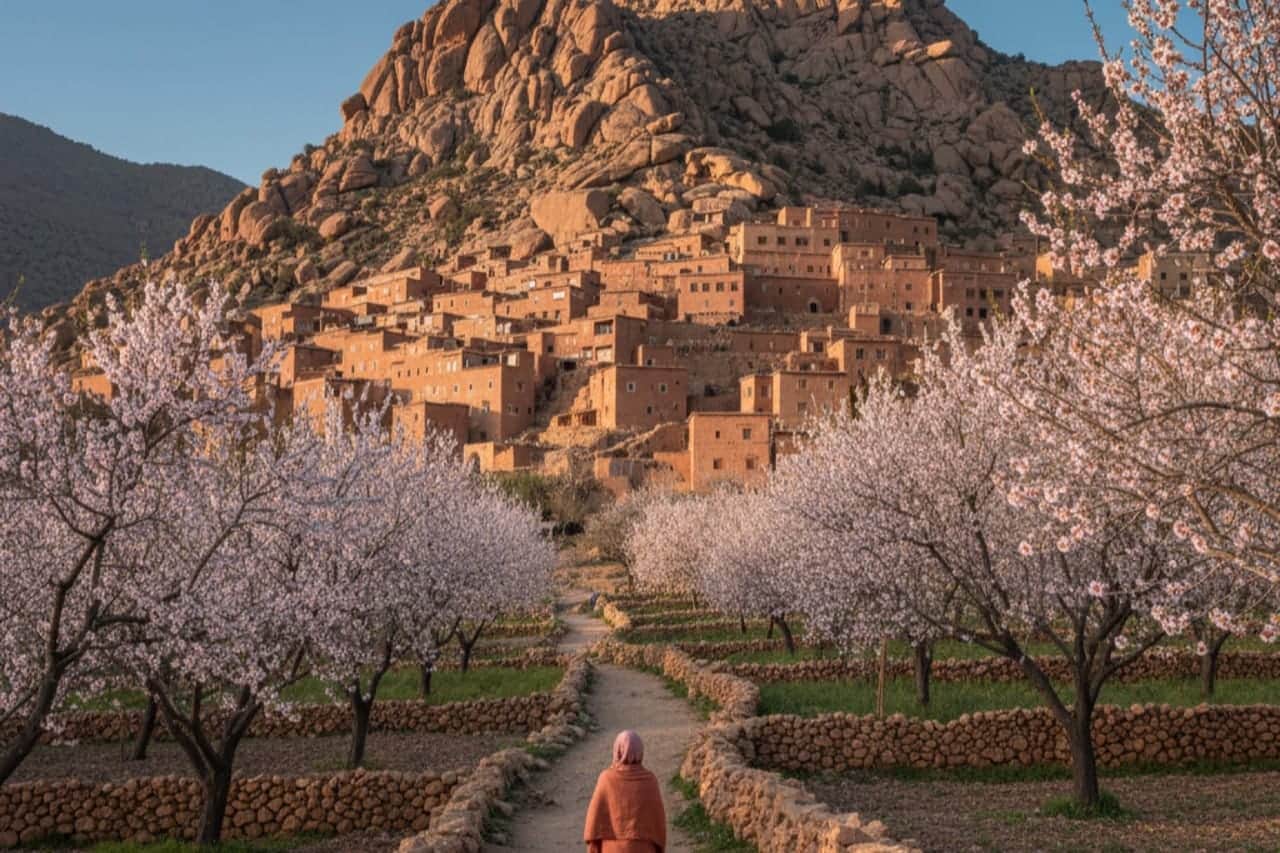
The almonds come first in the calendar. Bloom begins in the Anti-Atlas in late January and peaks in mid-February; the flowers last two to three weeks, weather depending. Tafraoute holds an Almond Blossom Festival in the second week of February — Berber music, dance, local almond sweets — but the festival is the excuse, not the point. The point is walking the orchards in the Ameln Valley with someone whose family planted them, learning why this granite basin grows almonds at all, and standing among the trees in the half-hour after sunrise when the light is low and the petals glow.
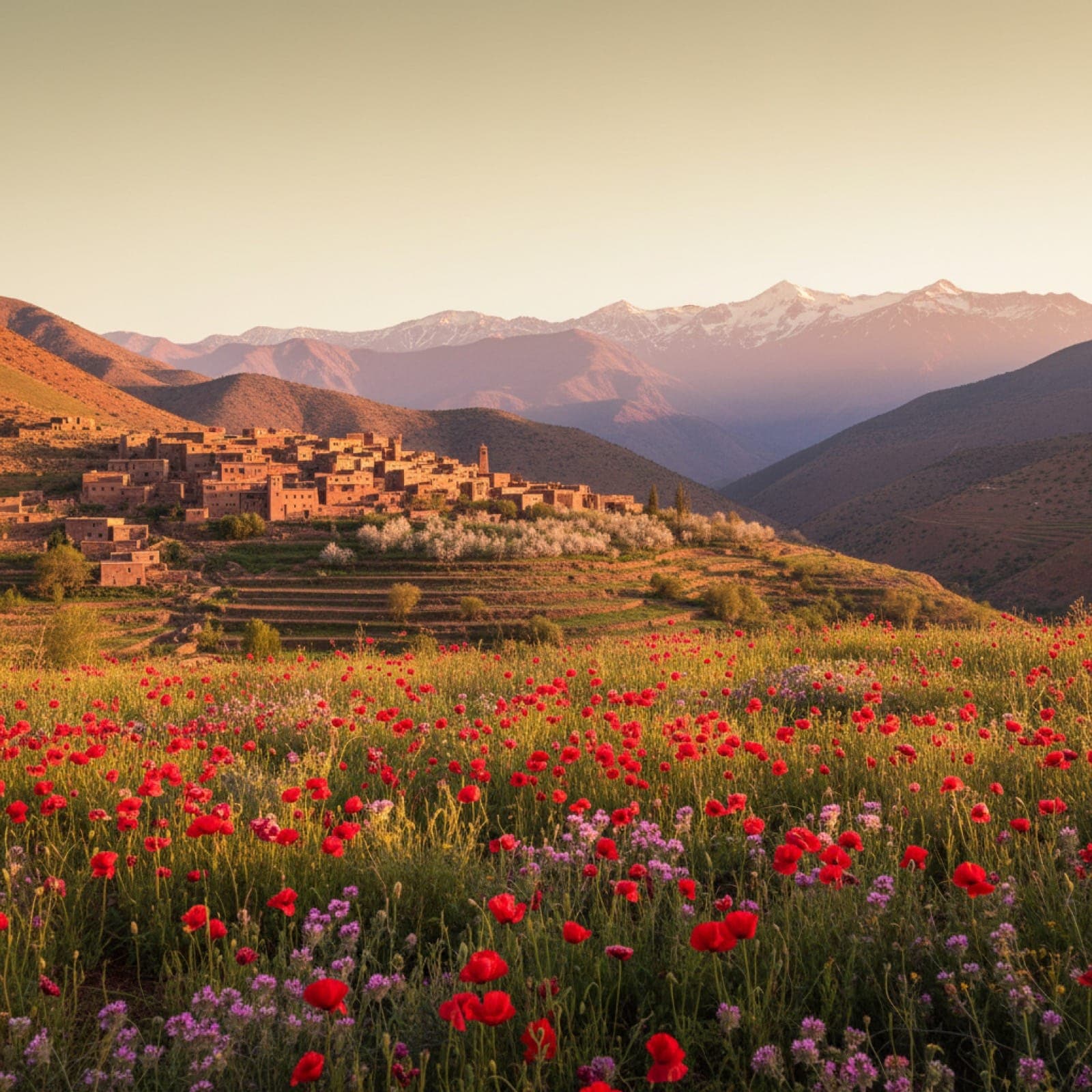
The roses come in May. The Damask rose (Rosa damascena) was brought to the Kelaat M'Gouna area around 1938, and the valley now harvests up to 4,000 tonnes of petals a year from thousands of kilometres of rose hedges dividing the fields. The Rose Festival — first held in 1969 — crowns a Rose Queen and fills the small town to bursting, so we base nearby and bring you in for the harvest at its best hour: dawn, when the flowers are still closed and holding their scent. You pick alongside the growers, then follow the petals to a working distillery to watch them become rose water and oil.
Both departures move at a deliberately slow pace — this is a Connoisseur's tour, not a checklist. Max six guests, a private 4×4, an English-speaking driver-guide who knows the back roads, and unhurried lunches with the people who grow what you've come to see. We don't do the coach-stop version where you photograph a field from the roadside and leave; the whole tour is the time spent inside the bloom, with the makers.
A note on honesty: the exact festival dates are confirmed only a few weeks ahead, because they are pegged to the harvest, which is pegged to the weather. We lock your travel week once local growers confirm the bloom is on, and we build the itinerary around the real peak rather than a fixed calendar date. If the season runs early or late, we move with it.
Why we built this trip
Amina Benkirane
Destination Editor, Morocco Beauty Spots
- 01Almond blossom across the Ameln Valley near Tafraoute in mid-February — the Souss-Massa region is Morocco's largest almond producer, around 27,600 tonnes a year (≈17% of the national crop)
- 02Damask rose harvest at Kelaat M'Gouna in early May (the May departure) — dawn picking with growers in the Valley of Roses, where it takes roughly 3–4 tonnes of petals to distil a single litre of rose water
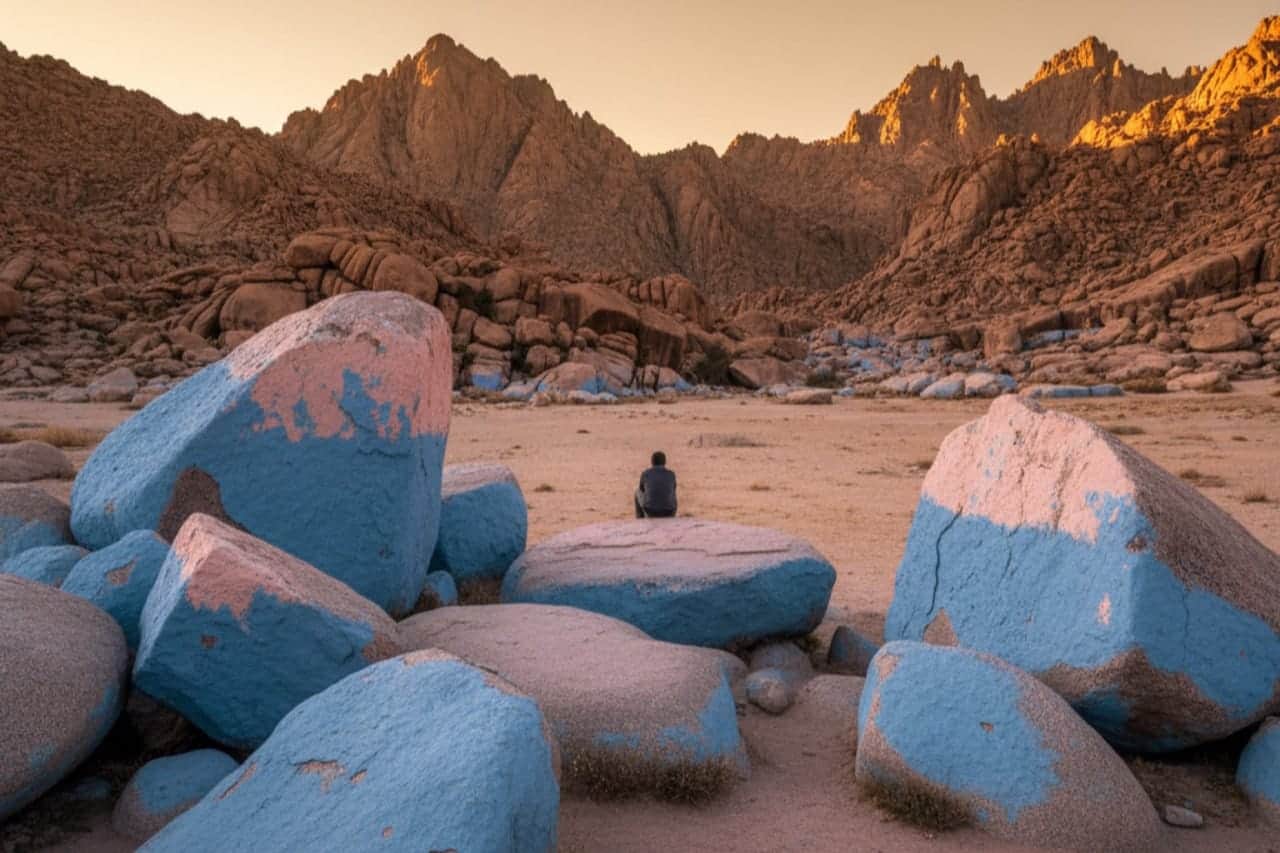
- 03The Jean Vérame painted rocks near Aguerd-Oudad — ~18 tonnes of blue, pink and red paint poured over the granite boulders by the Belgian artist in 1984
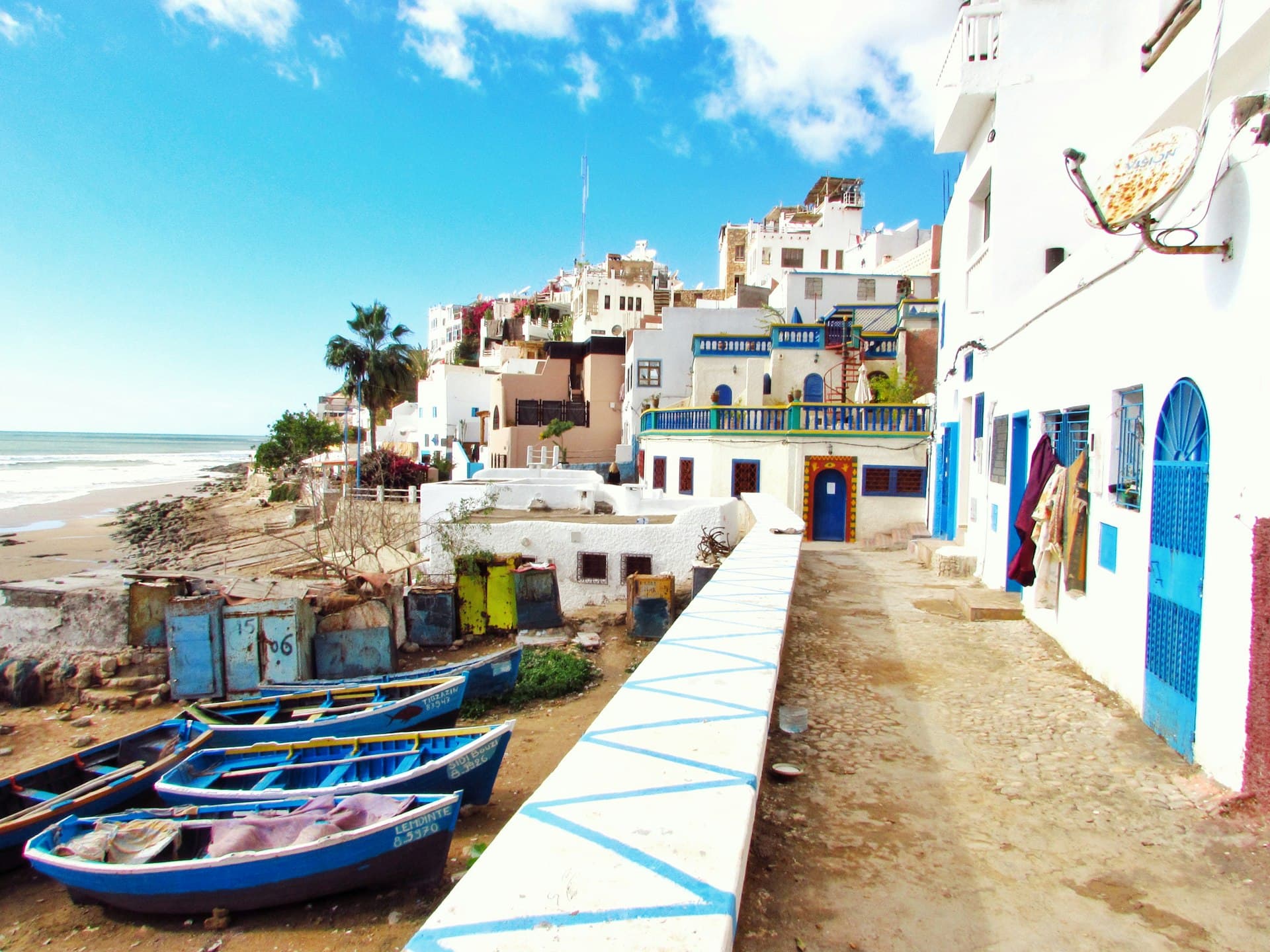
- 04Pink-granite boulder landscapes of the Anti-Atlas — the Ameln Valley villages of pink-ochre mud-brick stepping up the slopes
- 05A working rose distillery and an almond cooperative visit — the craft behind the bloom, not just the photo
- 06Small group (max 6) in a private 4×4 with an English-speaking driver-guide — slow pace, grower lunches, no commission stops
- 07Dawn light in the orchards and rose fields — the tour is built around the two hours of the day the bloom actually photographs
“People think the bloom is a backdrop you drive past. It isn't — it's a half-hour of light and a family who has worked that orchard for four generations. We built Bloom Chaser around the two weeks a year the Anti-Atlas actually glows, and around the growers, because that's the part a coach tour can never give you. Come for the photo; leave with the amlou and the names of the people who made it.”