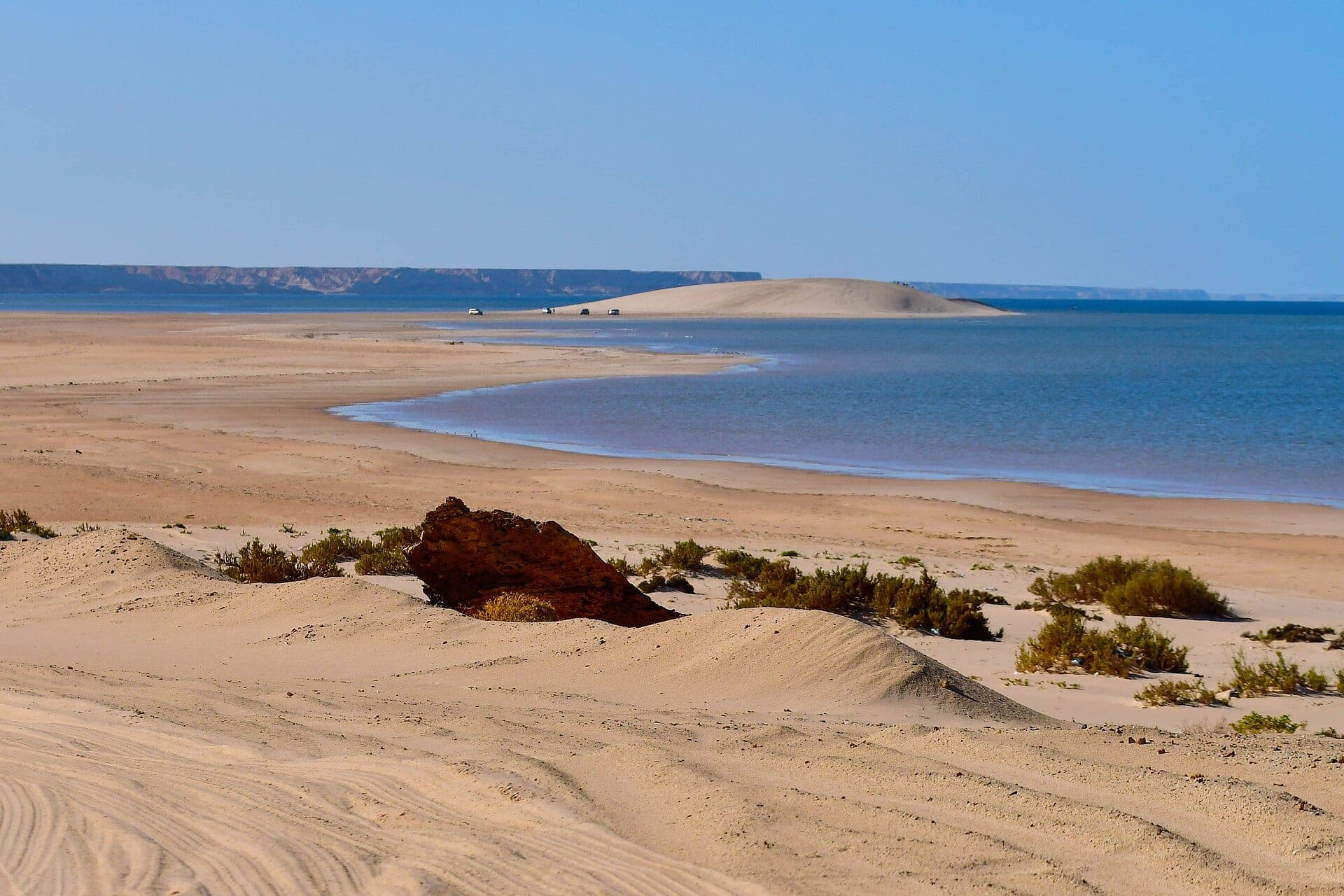
Dakhla is as far off the standard Morocco map as it's possible to get — 1,400 kilometres south of Marrakech, deep in the Atlantic Sahara, where a 37-kilometre lagoon of turquoise water meets white dunes and almost nothing else. This 5-day tour is a naturalist's read of that lagoon: its flamingos and waders, its dolphins, and the conservation story that makes it one of the most quietly significant stretches of coast in Africa. It's the geographic white space the playbook is built on — a place with real wildlife and almost no naturalist tourism.
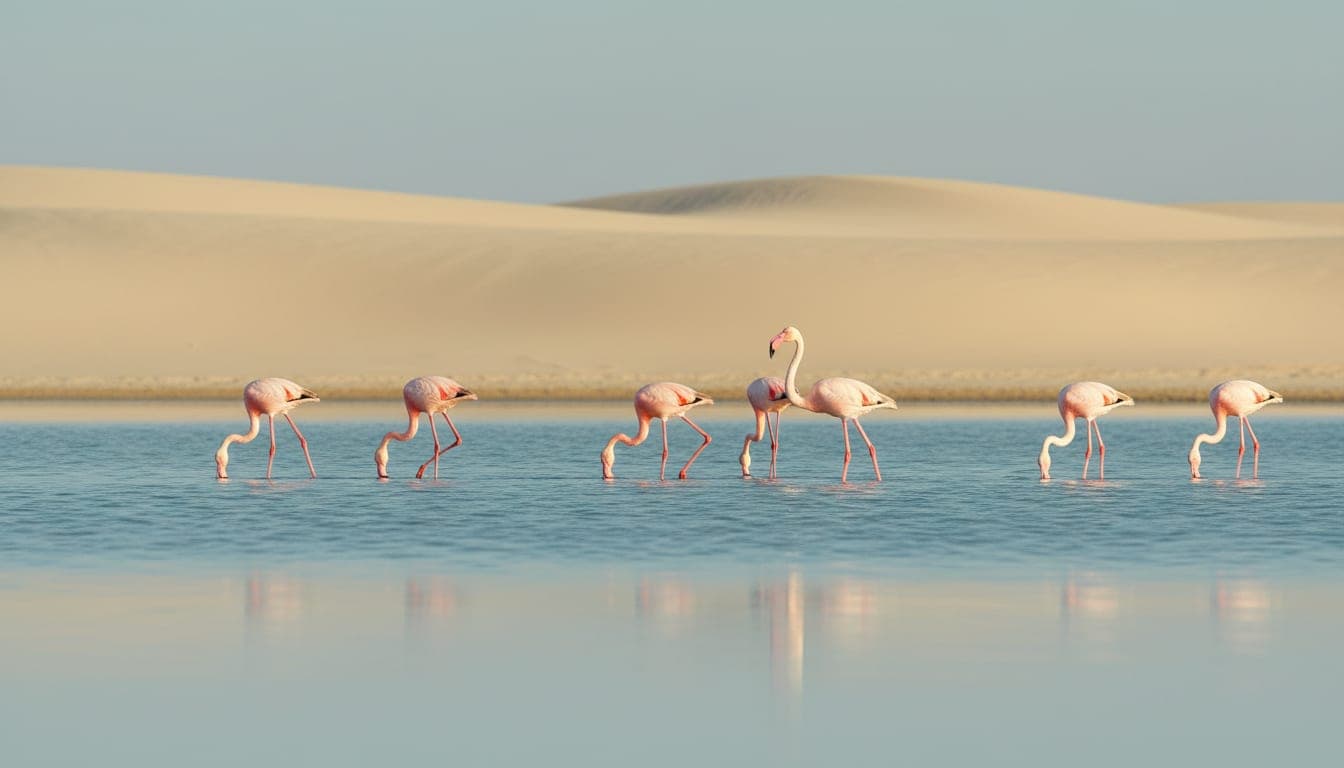
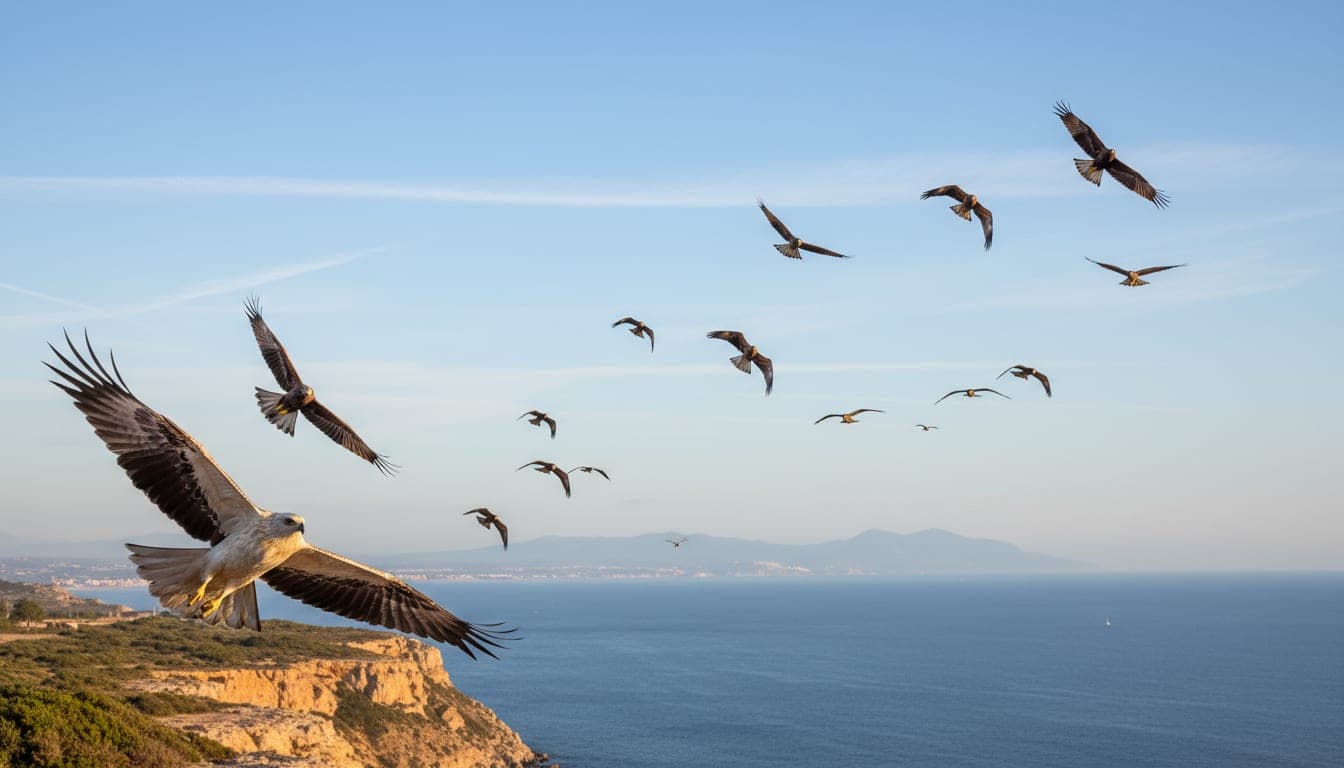
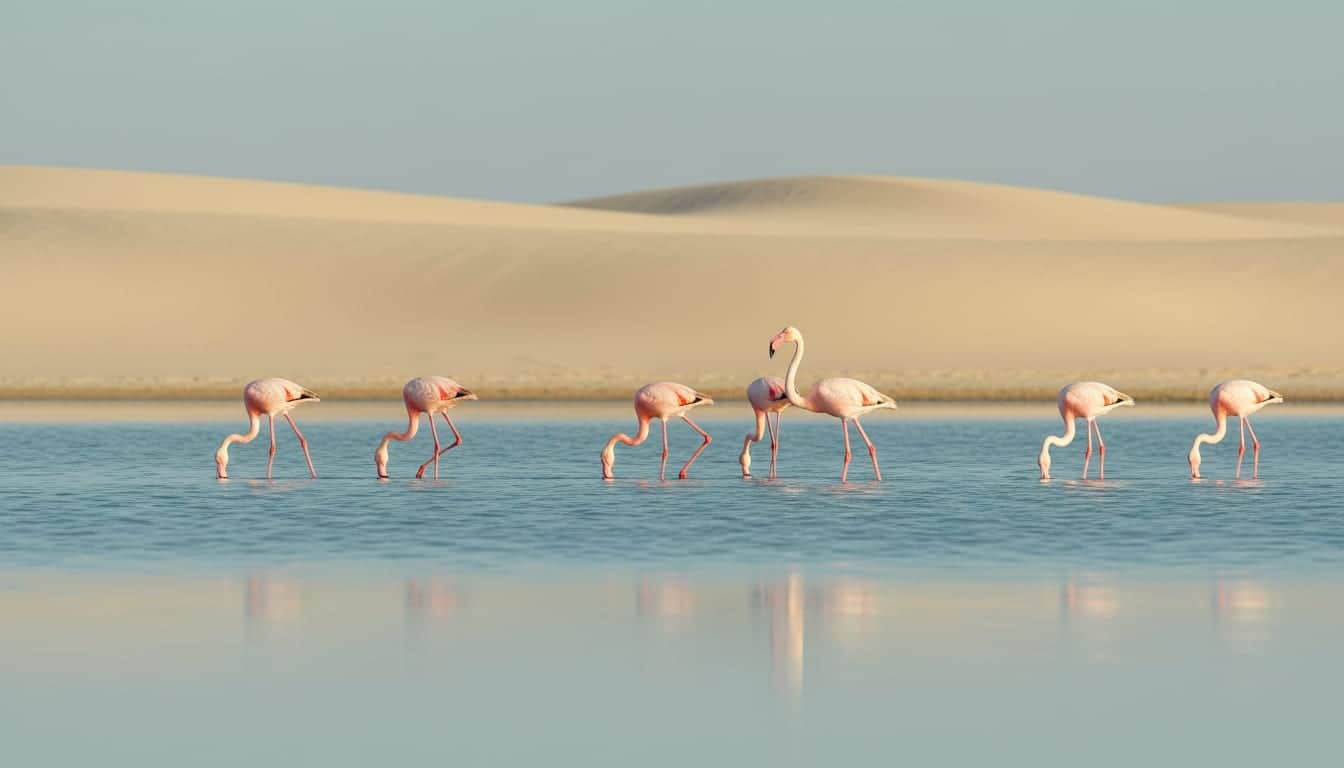
The bay is a Ramsar Wetland of International Importance (Site 1470, 40,000 hectares, designated in 2005) and one of Morocco's two most important wintering sites for migratory waterbirds — nearly 60,000 birds have been recorded here. From November to March the shallows fill with greater flamingos, Audouin's and lesser black-backed gulls, Caspian terns and big flocks of waders; the seagrass beds and tidal flats feed them all. We bird the lagoon from the shore and from the water, with a naturalist who knows the sites — La Sarga, Punta Sarga, the flats — and the seasons.
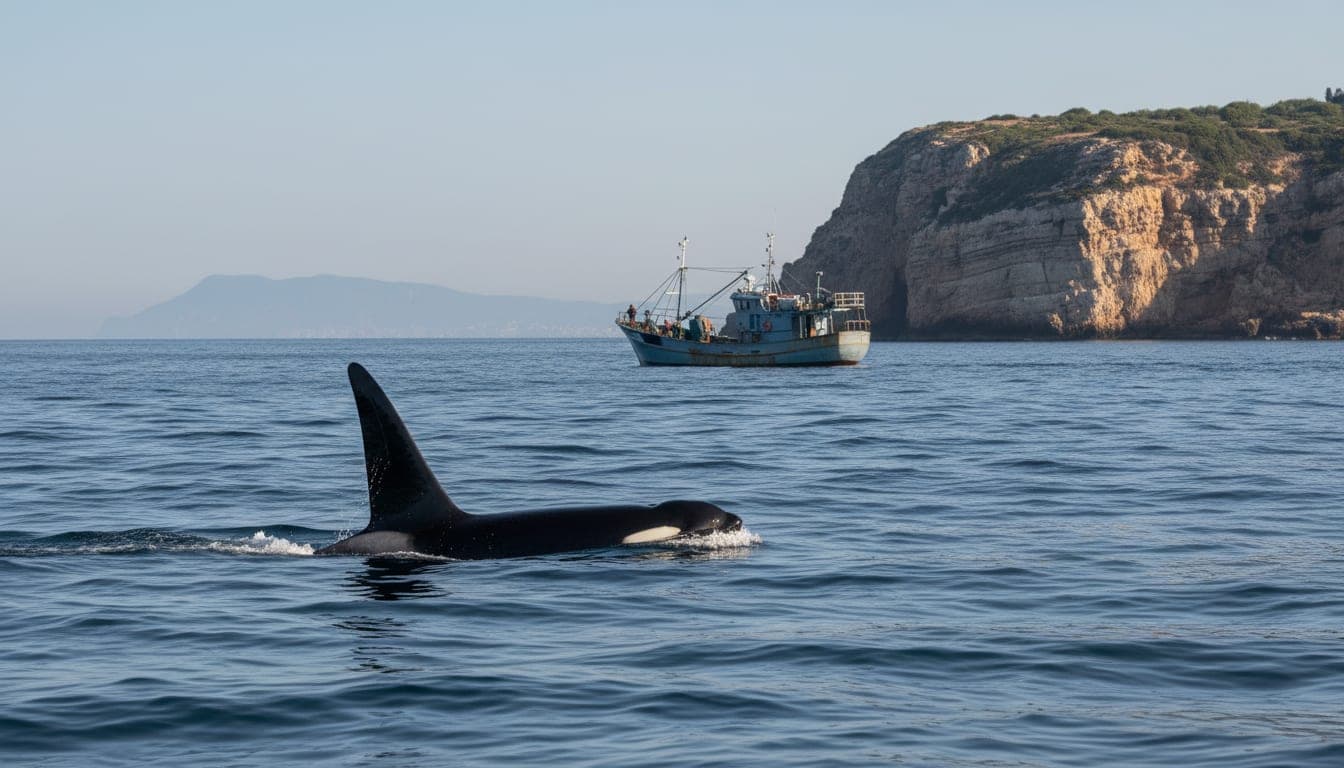
Then the cetaceans, and here we are careful to be honest. Common bottlenose dolphins are resident in the bay and are the dolphins you'll realistically see. Dakhla Bay is also the northernmost point in the world range of the Atlantic humpback dolphin (Sousa teuszii), which is Critically Endangered — and the bay's population has collapsed to possibly a single animal as of recent surveys. We do not promise a humpback dolphin sighting; we'd be lying if we did. What we offer is the chance to watch wild bottlenose dolphins responsibly and to understand, on the water, why the humpback dolphin's near-disappearance here matters. Likewise the Mediterranean monk seal: its nearest colony is at Cap Blanc, about 400 km south near the Mauritanian border, not in Dakhla Bay — we tell the seal's story but don't pretend it's a routine sighting.
That honesty is the tour. Dakhla's wildlife is under real pressure — the bay's intense kitesurfing and windsurfing traffic is named as a likely driver pushing the shy humpback dolphins out — so we run the wildlife days at the quiet hours, keep a respectful distance and engines down around the dolphins, and put a fixed contribution into a local marine-conservation NGO, the Trouk Youth Association, founded by Dakhla operators to protect the bay. We deliberately position away from the kite-resort scene. Naturalist-led, small group, and built around the living lagoon rather than a guaranteed checklist.
- Dakhla Bay — a 40,000-hectare Ramsar wetland (Site 1470) and one of Morocco's two most important wintering sites for migratory waterbirds, with nearly 60,000 birds recorded
- Greater flamingos, Audouin's gulls, Caspian terns and large wader flocks on the lagoon — best November to March
- Common bottlenose dolphins in the bay, watched from a licensed boat with engines respectful of the animals
- The conservation story of the Critically Endangered Atlantic humpback dolphin (Sousa teuszii) — Dakhla is the northernmost edge of its range, and possibly its last Moroccan refuge
- The famous White Dune and the wild, almost empty Atlantic-Sahara coastline — landscapes most travellers never reach
- A naturalist guide and a contribution to a local marine-conservation NGO (the Trouk Youth Association) — and a deliberate distance from the kitesurf-resort crowd
Dia a dia
- Dia 1
Arrive Dakhla → the lagoon at dusk
Fly in from Casablanca (the flight is booked separately — see below) and transfer to a lagoon-side ecolodge. An easy first afternoon on the bay's edge for an introduction to the lagoon — flamingos and waders in the shallows, the white dunes across the water — and a briefing from your naturalist on the week, the species, and the responsible-viewing protocol.
Noite no destino
- Dia 2
Lagoon wildlife by boat — bottlenose dolphins + waterbirds
Out on the bay by licensed boat (engines kept respectful, distance kept) to watch the resident common bottlenose dolphins and to read the lagoon from the water — flamingos, Audouin's gulls, terns, the seagrass beds that feed it all. Your naturalist frames the conservation story of the Atlantic humpback dolphin, whose last Moroccan refuge this is. Afternoon birding on the flats.
Noite no destino
- Dia 3
The White Dune + Sebkha Imlili
A 4×4 day into the wild edges of the bay: the famous White Dune rising from the turquoise shallows, and — about 50 km south — Sebkha Imlili, a strange Ramsar oasis of 160 permanent saltwater pools in the desert that shelter a dwarfed, salt-adapted fish found almost nowhere else. Vast, empty, lunar country. Picnic in the field; back to the lodge by evening.
Noite no destino
- Dia 4
Dawn birding + the bay's south shore
An early start for the best bird activity along the shallow lagoon — the waders and flamingos at first light — then the bay's quieter southern shore and its gull and tern roosts. Time in the afternoon for the lagoon itself: this is also a world kitesurfing capital, and you can try it if you like, though our tour's heart is the wildlife, kept to the calm, kite-free hours.
Noite no destino
- Dia 5
Final morning → departure
A last dawn on the lagoon, then transfer to Dakhla airport for your flight north. Final species list compiled and sent on afterward. Flexible departure window around the Casablanca flight schedule.
Fim da viagem
O que está incluído
- Naturalist guide for all wildlife days (pre-trip species checklist provided)
- Licensed boat excursions on the lagoon (dolphins + waterbirds), with a responsible-viewing protocol
- 4×4 excursions to the White Dune and Sebkha Imlili
- Four nights at a Dakhla lagoon-side ecolodge
- Most meals (ecolodge half-board + excursion lunches)
- A fixed conservation contribution to the Trouk Youth Association (local marine NGO)
- All ground transport in and around Dakhla
Não incluído
- Round-trip domestic flight Casablanca ↔ Dakhla (≈$300; book separately or we'll arrange at cost — see FAQ)
- International flights into Morocco
- Travel insurance (recommended)
- Optional kitesurf lessons / equipment
- Single-room supplement
- Dakhla Bay
- Ramsar Site 1470 — 40,000 ha; ~60,000 wintering waterbirds recorded
- Reliable wildlife
- Greater flamingos (Nov–Mar), waders, common bottlenose dolphins
- The conservation story
- Northernmost range of the Critically Endangered Atlantic humpback dolphin (Sousa teuszii)
- Monk seals
- At Cap Blanc ~400 km south — a story we tell, not a bay sighting we promise
“Dakhla is the wildest coast in Morocco and almost nobody runs a proper naturalist tour here. We do — and we do it honestly. We won't promise you a humpback dolphin, because the bay may be down to one, and we won't promise monk seals, because the colony is 400 kilometres south. What we promise is flamingos, wild bottlenose dolphins, a Ramsar lagoon at the edge of the Sahara, and the truth about a place that's under real pressure. That's worth more than a checklist.”
O que dizem os viajantes

Sophie & Marc
Paris, France
“The best trip of our lives. Our guide knew every village, every viewpoint, every hidden riad. Seven days in Morocco felt like a month somewhere else.”

James H.
London, UK
“Everything was seamless from landing in Fes to the Sahara camp and back to Marrakech. The night under the stars is something I'll never forget.”

Ana Rodrigues
Lisbon, Portugal
“Organized, warm, professional. They built the itinerary around what we loved and gave us complete freedom to stop anywhere along the way.”
Leia isso primeiro se ainda está pesquisando
Dakhla: The Wild Atlantic Sahara - perguntado frequentemente
- What wildlife can you actually see in Dakhla?
- Reliably: greater flamingos (best November–March), big flocks of waders and gulls (Audouin's, lesser black-backed), Caspian terns, and resident common bottlenose dolphins in the bay. Dakhla Bay is a Ramsar wetland with nearly 60,000 wintering birds recorded. The rarer species — the Atlantic humpback dolphin and the Mediterranean monk seal — are part of the conservation story we tell, not sightings we promise (see below).
- Can you see the Atlantic humpback dolphin in Dakhla?
- Almost certainly not, and we won't pretend otherwise. Dakhla Bay is the northernmost edge of this Critically Endangered species' range, but its local population has collapsed to possibly a single animal in recent surveys. The dolphins you'll realistically watch are common bottlenose dolphins, which are resident. The humpback dolphin's near-disappearance is exactly why this coast matters — that story is central to the tour.
- Are there monk seals in Dakhla Bay?
- Not routinely. The nearest Mediterranean monk-seal colony is at Cap Blanc, about 400 km south near the Mauritanian border — not in Dakhla Bay itself. Sightings in the bay are rare and incidental. We tell the monk seal's story (it was downlisted from Endangered to Vulnerable in 2023, a conservation bright spot) but we don't market it as a Dakhla encounter.
- When is the best time to see flamingos in Dakhla?
- November to March is best for flamingos and the largest wintering wader flocks; October to April is the best overall window for weather, wind and bird activity. Early morning is the prime time on the shallow lagoon, when the light is good and the birds are most active. We run the tour mainly in the cooler Oct–Apr season.
- How do I get to Dakhla, and is the flight included?
- The round-trip domestic flight from Casablanca (about 2h20 each way, typically $290–300 return) is not included in the tour price — we hold it as a separate line so the headline price is honest, and we'll either book it for you at cost or you book it yourself. There are also direct flights from Agadir (under 2 hours). Dakhla is about 1,400 km south of Marrakech; flying is the only sensible way in.
- Is Dakhla safe to visit?
- Yes. Dakhla is a calm, growing tourism town — it's one of the world's top kitesurfing destinations and is well set up for visitors. The wildlife areas are remote but accessed with a guide and 4×4. As anywhere remote, you travel with a local operator who knows the logistics; that's exactly what this tour provides.
- What is the White Dune and Sebkha Imlili?
- The White Dune is the iconic pale sand peninsula that rises straight out of Dakhla's turquoise lagoon — the signature Dakhla landscape. Sebkha Imlili, about 50 km south, is a strange Ramsar-listed depression holding 160 permanent saltwater pools in the desert, home to a dwarfed, salt-adapted fish found almost nowhere else. We visit both on the 4×4 day.
- How is this different from a Dakhla kitesurf trip?
- Completely. Most Dakhla tourism is kitesurf-first, with wildlife as an afterthought. Ours is wildlife-first: a naturalist guide, the Ramsar lagoon, the dolphins and flamingos, the conservation story, run at the quiet hours and away from the kite-resort scene. You can try kitesurfing if you want — but the tour is built around the living bay, not the wind.