An operator's honest map of getting around Morocco: when the train wins, when you need a grand taxi, bus, rental car, or a private driver — with a clear cost comparison.
On the Tangier–Casablanca–Marrakech spine, the train is the best way to get around Morocco — fast, cheap, comfortable. Off that spine, you choose between a grand taxi, a CTM or Supratours bus, a rental car, or a private driver. Everything below is how to pick.
I move guests around this country for a living, so I see what actually works and what quietly ruins a day. The honest truth is that Morocco gives you a genuinely excellent option for one half of the map and a patchwork of trade-offs for the other half. Nobody tells you that cleanly, so here it is. This is the pillar I point people to before we ever talk routes — the full menu, with the catches stated plainly, so you can read your own trip onto it.
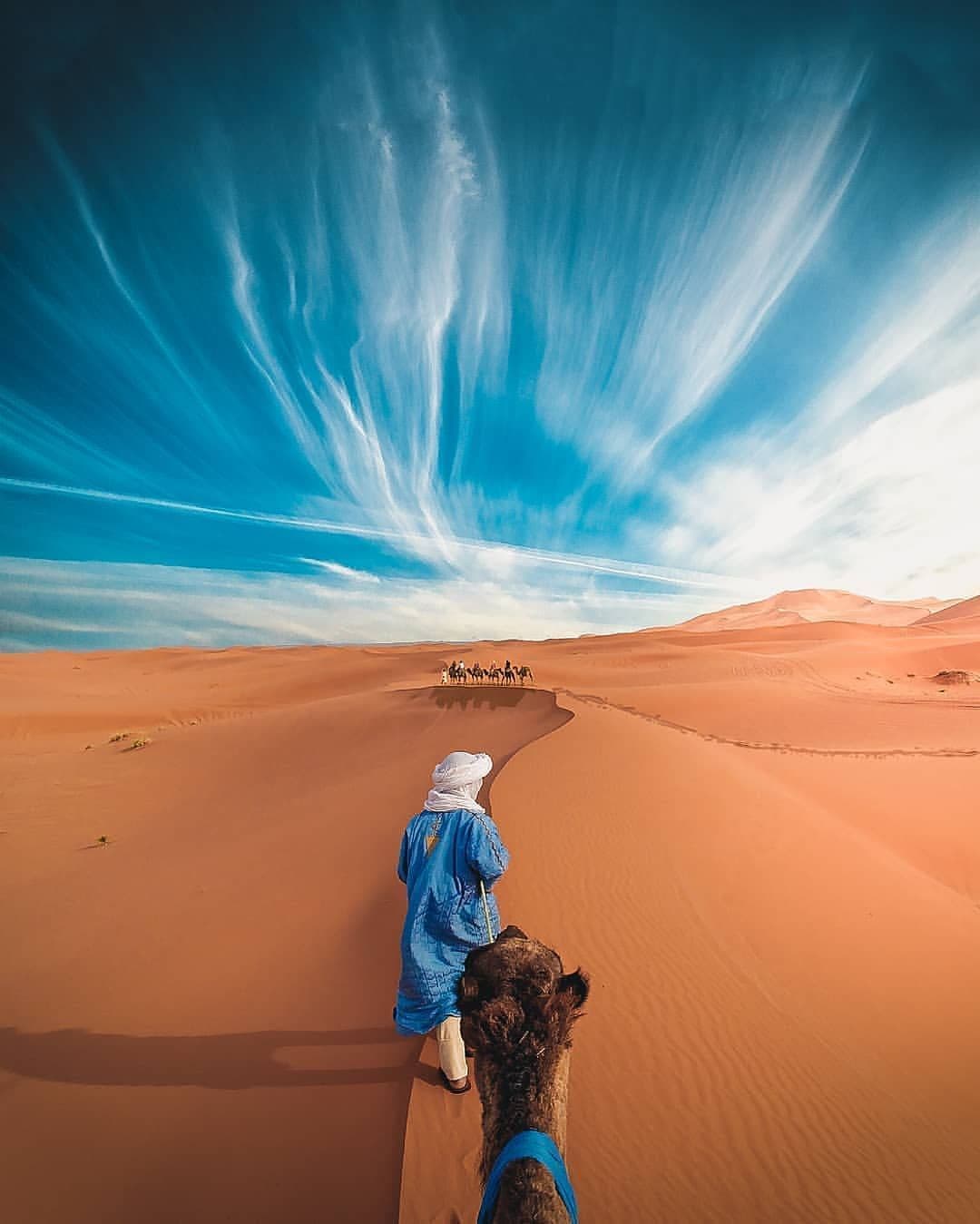
Think of the country in two layers. There is the populated Atlantic belt and the imperial cities, stitched together by rail and motorway, where independent travel is easy and cheap. Then there is everything that made you want to come — the Sahara, the High Atlas passes, the blue lanes of the Rif, the small coastal towns — none of which a train will ever reach. Match the right tool to each layer and the whole trip gets simpler.
What is the fastest, easiest way to get around Morocco?
For the big cities on the rail line — Tangier, Rabat, Casablanca, Marrakech, Fes — the train, run by the national operator ONCF, beats every other option on time, cost, and comfort. Off the line, it's road transport, and the choice is about how much control you want.
Here's the mental model I give first-timers. If both ends of a journey are cities on the train map, take the train and don't overthink it — the motorway parallels the line, so you skip the traffic and arrive in the city centre. The moment one end is a desert, a mountain pass, or a small town, the rails stop being an option and you're choosing between a shared grand taxi, an intercity coach, a rental car, or a private driver. Almost every Morocco trip is a hybrid of those two worlds, and the people who travel well are the ones who stop trying to force a single mode to do everything. The desert leg and the city leg are different problems with different right answers.
How good are Morocco's trains, really?
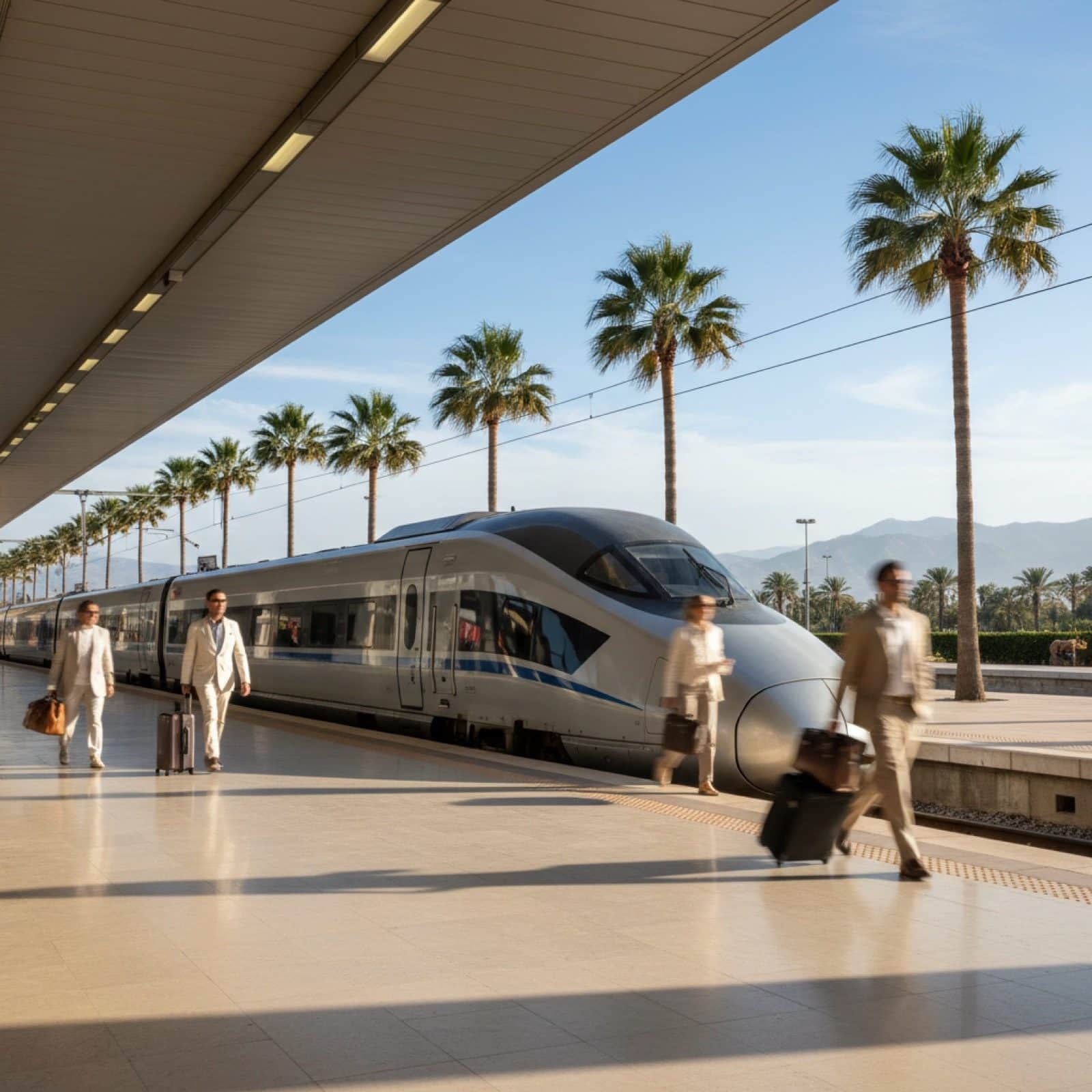
Genuinely excellent, and the best rail network in Africa. The headline is Al Boraq, the continent's first high-speed train — in service since November 2018, running up to 320 km/h between Tangier and Casablanca. The rest of the network is modern intercity service, mostly branded "Al Atlas."
Al Boraq cut the Tangier–Casablanca run from a grinding five hours to about 2h10, with departures as often as every 30 minutes at peak. The high-speed line runs Tangier–Kenitra–Casablanca, and it's the first high-speed rail in Africa. South and east of Casablanca you ride classic Al Atlas expresses — Casablanca to Marrakech in about three hours, Casablanca to Fes in about 3h45 — on air-conditioned trains with reserved seats and a refreshment trolley. Worth knowing: a Kenitra–Marrakech high-speed extension is under construction (it broke ground around 2025 and is due later this decade), so for now the Marrakech leg is regular intercity, not high-speed. Fares are absurdly cheap by European standards. I tell people to ride Al Boraq once just for the experience; the full picture is in our guide to Morocco by train and riding Al Boraq.
When do CTM and Supratours buses make sense?
Intercity coaches win when you want budget travel to a town the train doesn't reach and you don't mind a fixed timetable. The two names that matter are CTM and Supratours — both reputable, air-conditioned, and bookable online or at the terminal.
CTM (Compagnie de Transports au Maroc) is the country's oldest line and has the widest national network, reaching small towns in the north and south that nothing else serves. Supratours is ONCF's own coach arm, and it exists specifically to plug the gaps the rail map leaves — the classic examples are Marrakech to Essaouira and Marrakech to Agadir, where the Supratours coach effectively continues your train journey to the coast. Both are safe, comfortable, and cheap. The catch is rigidity: you go when the timetable says, you stop where it stops, and on a scenic route like the road over the Atlas a coach blows past every viewpoint without slowing. For a single A-to-B hop to a beach town, a coach is the right, frugal call. For a journey where the landscape is the point, it's the wrong tool.
What is a grand taxi, and should I use one?
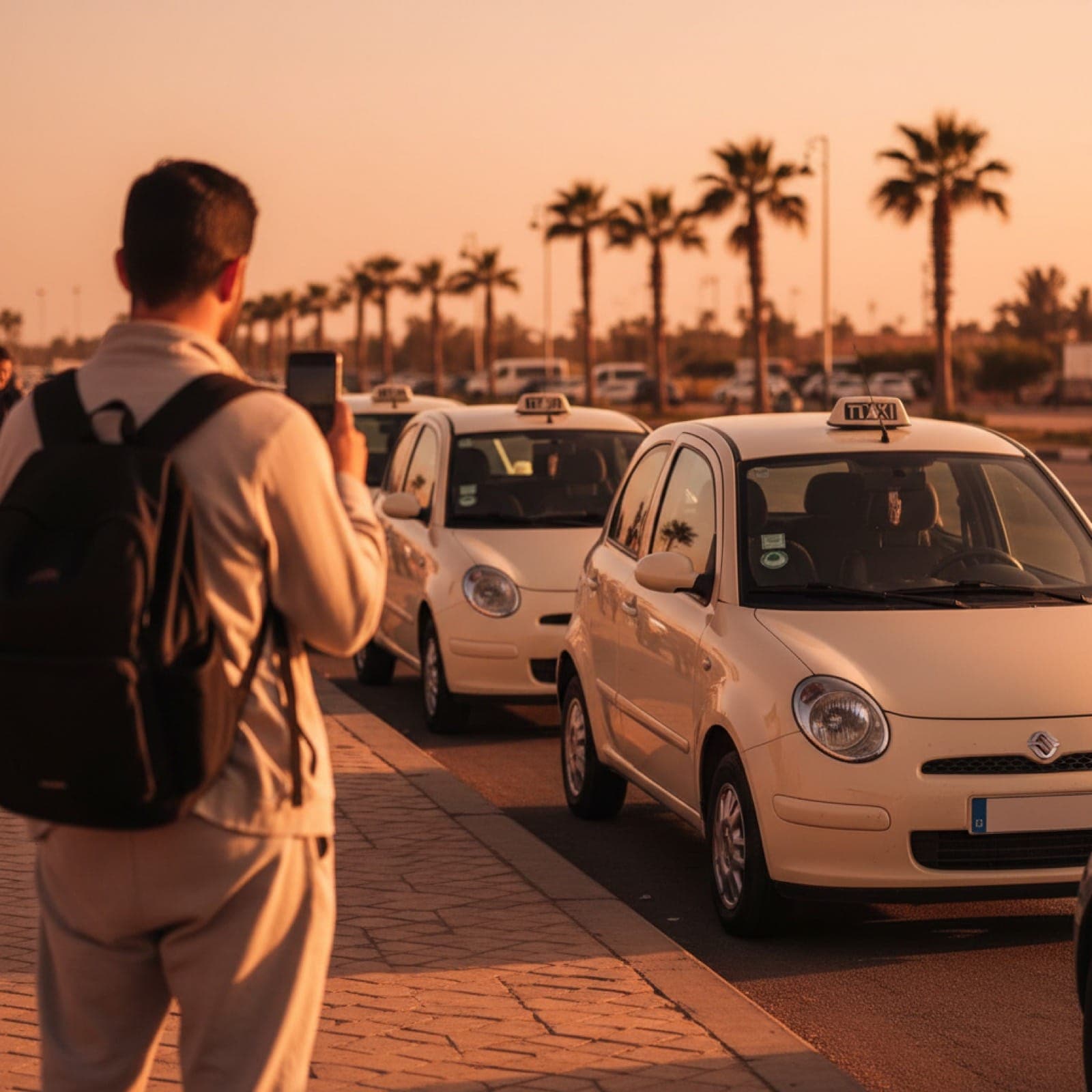
A grand taxi is a shared, fixed-route car — usually an ageing Mercedes or Peugeot — that seats six paying passengers and leaves when it's full. It's the workhorse that connects towns with no train station, and it's cheap, frequent, and very local.
Here's how it actually works. Grand taxis wait at a designated rank, normally near the main bus terminal or a city gate, and each route has a roughly standardised per-seat fare. You pay for one seat and squeeze in — two passengers up front beside the driver, four across the back — or you can "buy out" the empty seats to leave immediately and travel in comfort, which is what many of our guests do for short hops. Fares aren't metered, so confirm the per-seat price before you get in; mild haggling is normal for visitors. Grand taxis are perfect for a 30-to-90-minute link between nearby towns. For a long cross-country leg they're cramped, the driving can be assertive, and there are no seatbelt guarantees — which is exactly why most travellers step up to a bus, a rental, or a driver once the distance grows.
How do petit taxis work inside the cities?
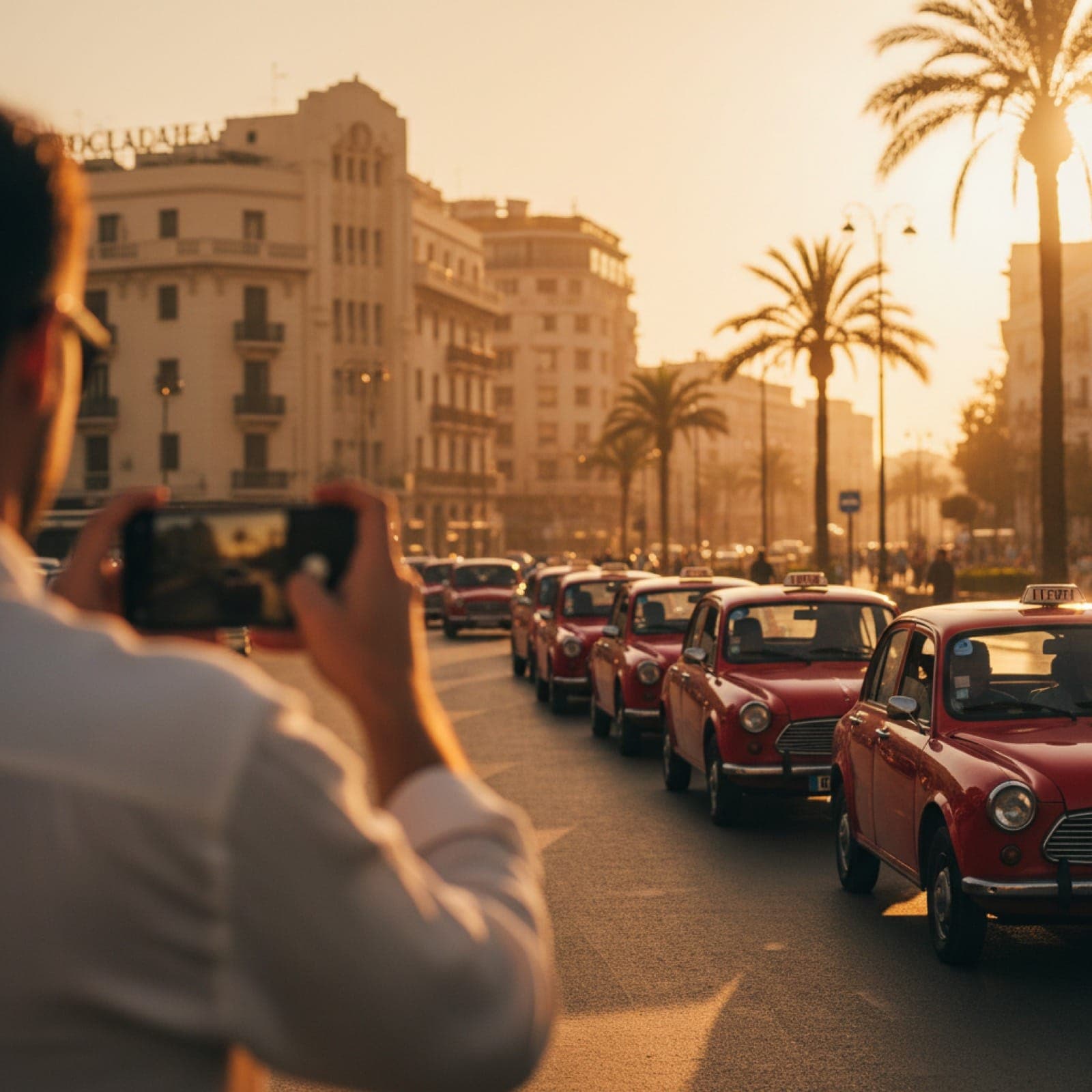
Petit taxis are the small, metered, colour-coded cabs that handle short trips inside a single city — red in Casablanca, ochre in Marrakech, blue in Rabat. They take a maximum of three passengers and, by law, can't leave the city limits.
For getting across town — station to neighbourhood, hotel to restaurant — the petit taxi is the everyday tool, and it's inexpensive. The one rule that saves you money and friction: insist on the meter ("compteur," please) at the start of the ride. Most drivers use it without prompting; a few will quote a flat tourist price instead, which is usually higher. Because petit taxis are capped at three passengers and can't cross municipal boundaries, two things trip people up. A family of four needs two cabs or a grand taxi. And no petit taxi can take you from one city to the airport of another, or out to a site beyond the city edge — that's grand-taxi or private-transfer territory. Inside the walls, though, they're the quick, cheap default.
Should I rent a car in Morocco?
Rent a car if you're a confident driver who wants total independence and you're sticking mostly to open roads and the coast. It's freeing and affordable. It's the wrong call if your route runs through high mountain passes, car-free medinas, or long unlit rural stretches at night.
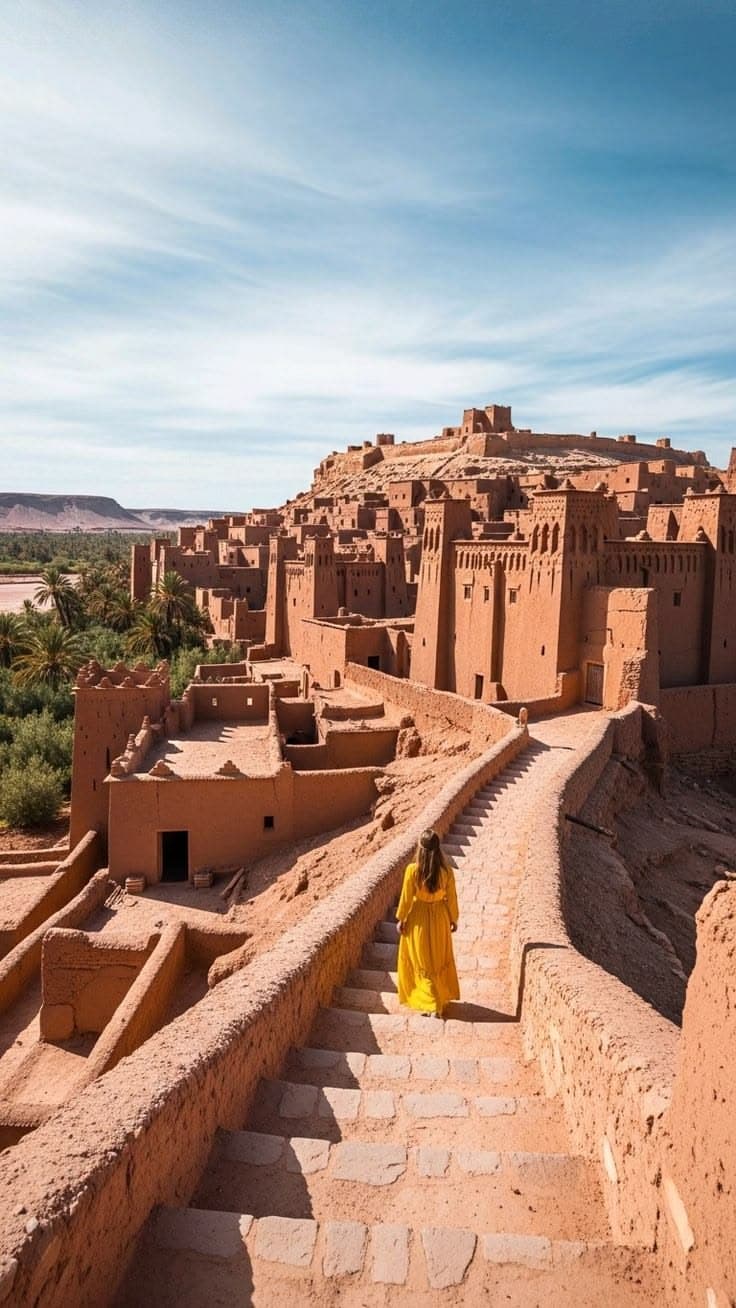
The roads themselves are largely good — the main passes are paved and the motorways modern. What catches people is everything around the driving: hairpin bends with real drop-offs, livestock and pedestrians on rural roads, frequent police checkpoints with sudden speed-limit drops, dark and often unmarked roads after sunset, and the simple fact that your car cannot enter Fes el-Bali or the Marrakech medina — it stops at the gate and you walk or hire a porter. The hidden costs — fuel, motorway tolls, and paid parking on the edge of every medina — also add up beyond the day rate. We lay out the road conditions in full in whether it's safe to drive in Morocco, and the true all-in cost against a driver in renting a car versus hiring a driver. For a relaxed coastal loop, a rental is great. For the Atlas-and-desert grand tour, most of our guests are happier not behind the wheel.
When is a private driver actually worth it?
A private driver-guide earns its place when the drive itself is the experience, when you're crossing terrain that's hard or stressful to self-drive, or when you simply don't want to manage logistics. It's not worth paying for on the easy city-to-city legs the train already does well.
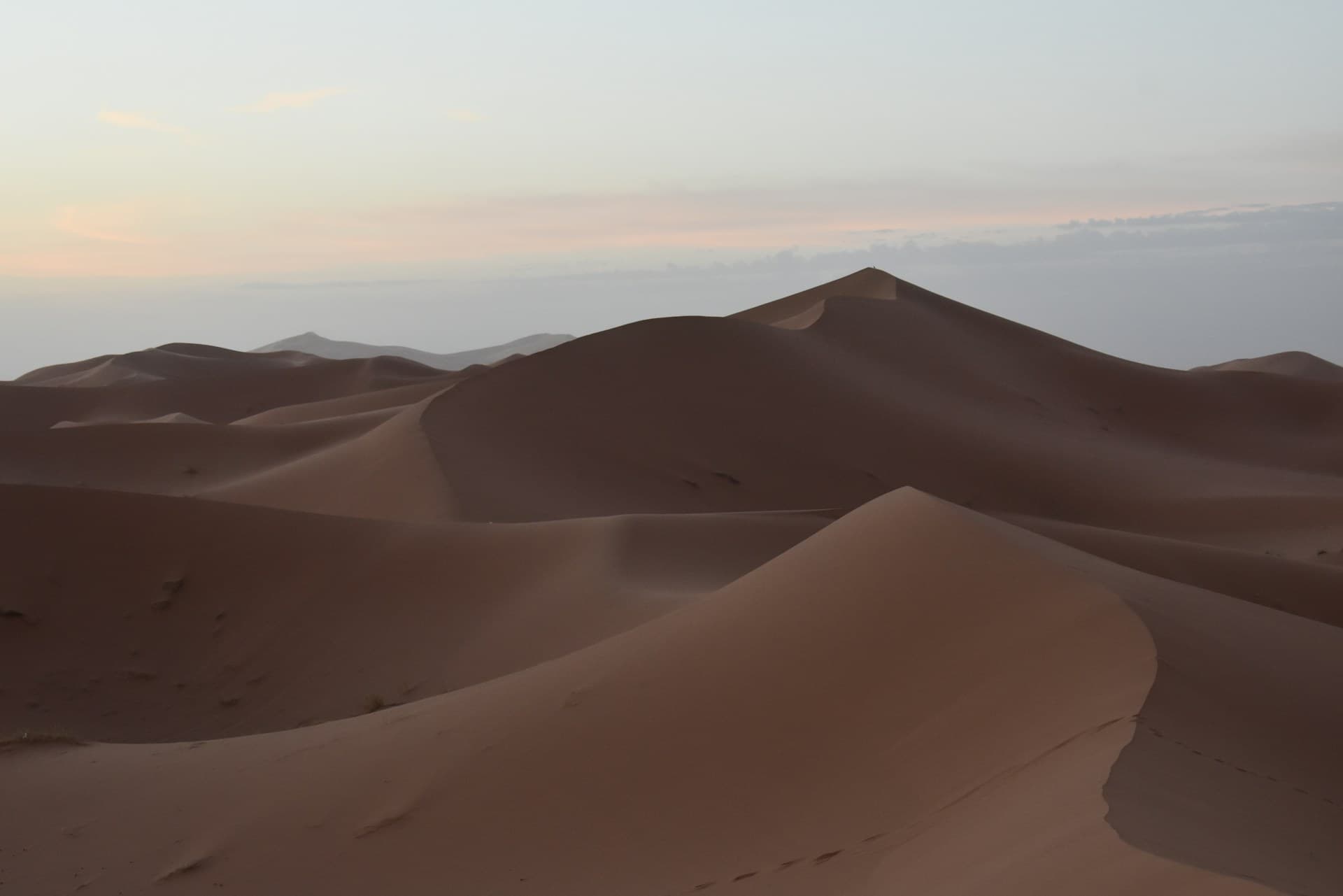
I'll be straight about this, because we sell driver-led trips and I still don't think you need one everywhere. On the northern spine, the train is better and cheaper — take it. Where a driver genuinely changes the trip is the route that made you book Morocco in the first place: the Tizi n'Tichka pass, the Road of a Thousand Kasbahs, the long run out to Merzouga or Zagora for the Sahara. Those are four-to-nine-hour mountain-and-desert days with a dozen stops worth making, car-free towns a taxi can't reach, and roads you'd rather watch than wrestle. The drivers we work with read the checkpoints, take the cliff edge so you watch the view, know which viewpoint is worth stopping for, and get you to the dunes fresh instead of wrung out. As guests put it afterwards, you get far more than transport. The cleanest version of all this is the Marrakech-to-Fes desert route, where a driver turns a tedious transfer into the best days of the trip.
Do Uber and Careem work in Morocco?
Not reliably — don't build a plan around either. Uber pulled out of Morocco in 2018 and has not returned as of 2026. Careem, the Dubai-based app, has only ever operated intermittently and in a legal grey zone, mostly in Casablanca and Rabat. In practice, ride-hailing is not something a tourist can count on, so treat it as a maybe at best, never your default.
What this means on the ground: there is no dependable ride-hailing app you can open the way you would at home, and there is none at all once you leave the big cities — nothing in Chefchaouen, Merzouga, or the medinas. The real in-city option is the metered petit taxi. Hail one on the street, insist on the meter ("compteur"), or agree the fare before you set off, and it does exactly what a ride app would, for less. We keep two honest, regularly updated breakdowns for the detail: whether Uber works in Morocco and whether Careem works in Morocco. For intercity travel, ride apps are simply the wrong tool — that's trains, buses, and drivers.
Are domestic flights worth it in Morocco?
Only for one or two specific long hops — chiefly to or from the far south, like Dakhla or Laayoune, where driving would eat a day or more. For the classic northern circuit, flying usually costs you more time than it saves once you count airport faff.
Royal Air Maroc and budget carriers like Air Arabia Maroc link the main airports, and on paper a 75-minute flight beats a seven-hour drive. In practice, the check-in, security, and the transfers to and from two airports often erase the saving on anything but the longest routes — Casablanca or Marrakech down to the deep south being the obvious exception. For everything inside the imperial-cities-and-desert core, you'll move more smoothly, and see more, by combining the train for the city legs with a car for the landscapes. I almost never route guests onto a domestic flight unless they're tacking on the Atlantic far south or are genuinely short on days and willing to trade scenery for speed.
How should I handle airport transfers?
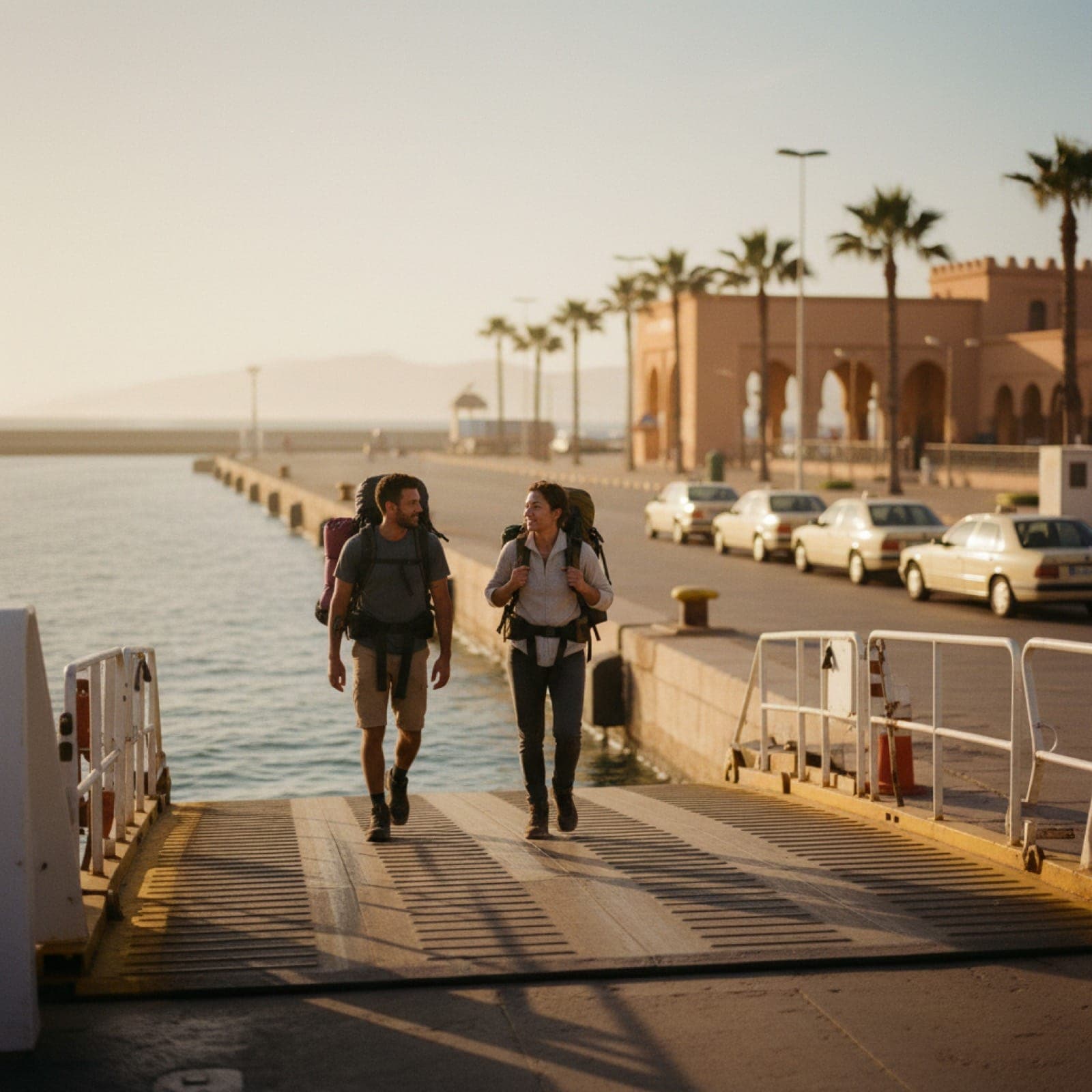
For your very first ride and your last, book a private transfer in advance — it's the cheapest insurance on the trip. Arriving jet-lagged into a new-country airport and negotiating a fare in a language you don't speak is where good trips get a sour first hour.
The friction is real and specific. At Marrakech's Menara airport, the medina is only about six kilometres away, but no taxi can drive to a riad's door inside the car-free old town — so you're often dropped at a gate to find the rest on foot with luggage, after haggling. A pre-arranged driver who meets you by name, has a fixed price, and walks you to the riad removes the whole problem at the moment you're least equipped for it. After that first ride, the city's petit taxis are fine. We cover why that first transfer matters in our guide to Marrakech airport private transfers. It's the one piece of ground transport I'd never wing on arrival day.
| Mode | Best for | Rough cost | The honest caveat |
|---|---|---|---|
| Train (Al Boraq / ONCF) | City-to-city on the Tangier–Casa–Marrakech–Fes spine | ~90–210 MAD per leg, 2nd class | Doesn't reach the desert, Atlas, or small coastal towns — at all |
| CTM / Supratours bus | Budget hops to towns off the rail line (e.g. Essaouira, Agadir) | Low — often under ~150 MAD | Fixed timetable; blows past every scenic stop |
| Grand taxi (shared) | Short links between nearby towns, no station | A few MAD per seat; more to buy out the car | Six to a car, no meter, assertive driving; confirm price first |
| Petit taxi (in-city) | Short trips inside one city | Usually well under ~50 MAD metered | Max 3 passengers; can't leave city limits; insist on the meter |
| Rental car | Confident drivers, coastal loops, full independence | ~Mid range/day plus fuel, tolls, parking | Hard passes, night roads, car-free medinas; one-way drops cost a lot |
| Private driver + car | Atlas, Sahara, multi-region loops, families | Premium — but close to a rental's true all-in | Overkill on the easy train legs you could ride cheaply |
| Uber / Careem | Not a reliable option for tourists | n/a | Uber left in 2018; Careem intermittent/grey-zone — use a metered petit taxi instead |
| Domestic flight | Far-south long hauls (Dakhla, Laayoune) | Varies by carrier/season | Airport time erases the saving on shorter routes |
| Private airport transfer | Arrival and departure day | Fixed quoted fare | Worth booking ahead; not needed for routine city trips |
In summary
Getting around Morocco isn't one decision, it's a series of small ones, and the map makes most of them for you. On the Tangier–Casablanca–Marrakech–Fes spine, take the train — it's fast, cheap, comfortable, and a pleasure in its own right. Inside a city, use metered petit taxis. For short links to off-rail towns, a grand taxi or a CTM/Supratours coach does the job on a budget. And for the parts that made you fall for this country — the Sahara, the Atlas passes, the Road of a Thousand Kasbahs, the small coastal and mountain towns — a private driver stops being a luxury and starts being the thing that turns transit into the trip. Match each leg to the right tool and Morocco gets dramatically easier to travel.
If you'd rather not assemble all of that yourself, that's the whole case for handing the moving parts to someone who does it daily — not because you couldn't, but because the desert-and-Atlas legs are genuinely where a local driver-guide earns it, while you keep the train for the easy city hops. It's one option with real trade-offs, not the only way to see Morocco. When you're ready to map your own version, tell us your dates and who's travelling and we'll sequence the hybrid route for you with our trip planner.
Written by
Youssef El Alaoui
Lead Morocco Specialist
Born in Fes, based in Marrakech. Designs private itineraries for Morocco Beauty Spots and still argues mint tea is best in the Atlas.