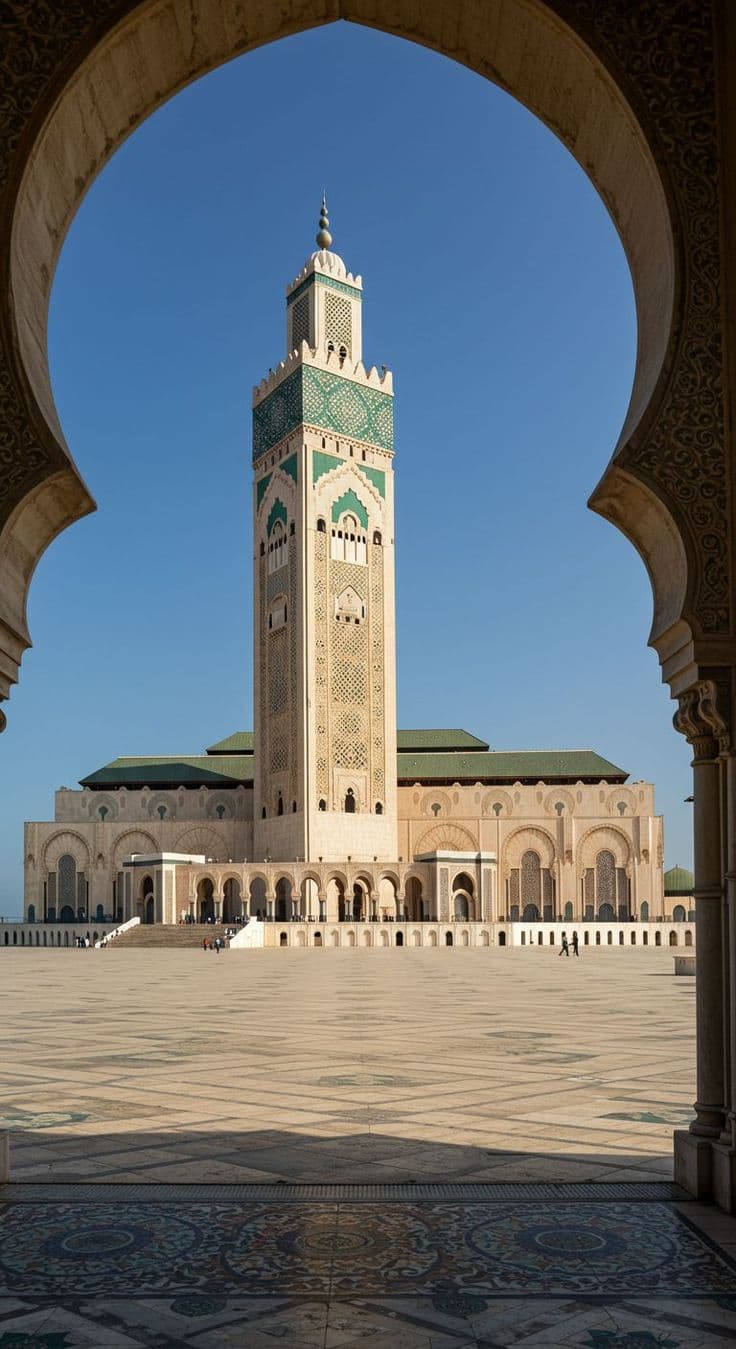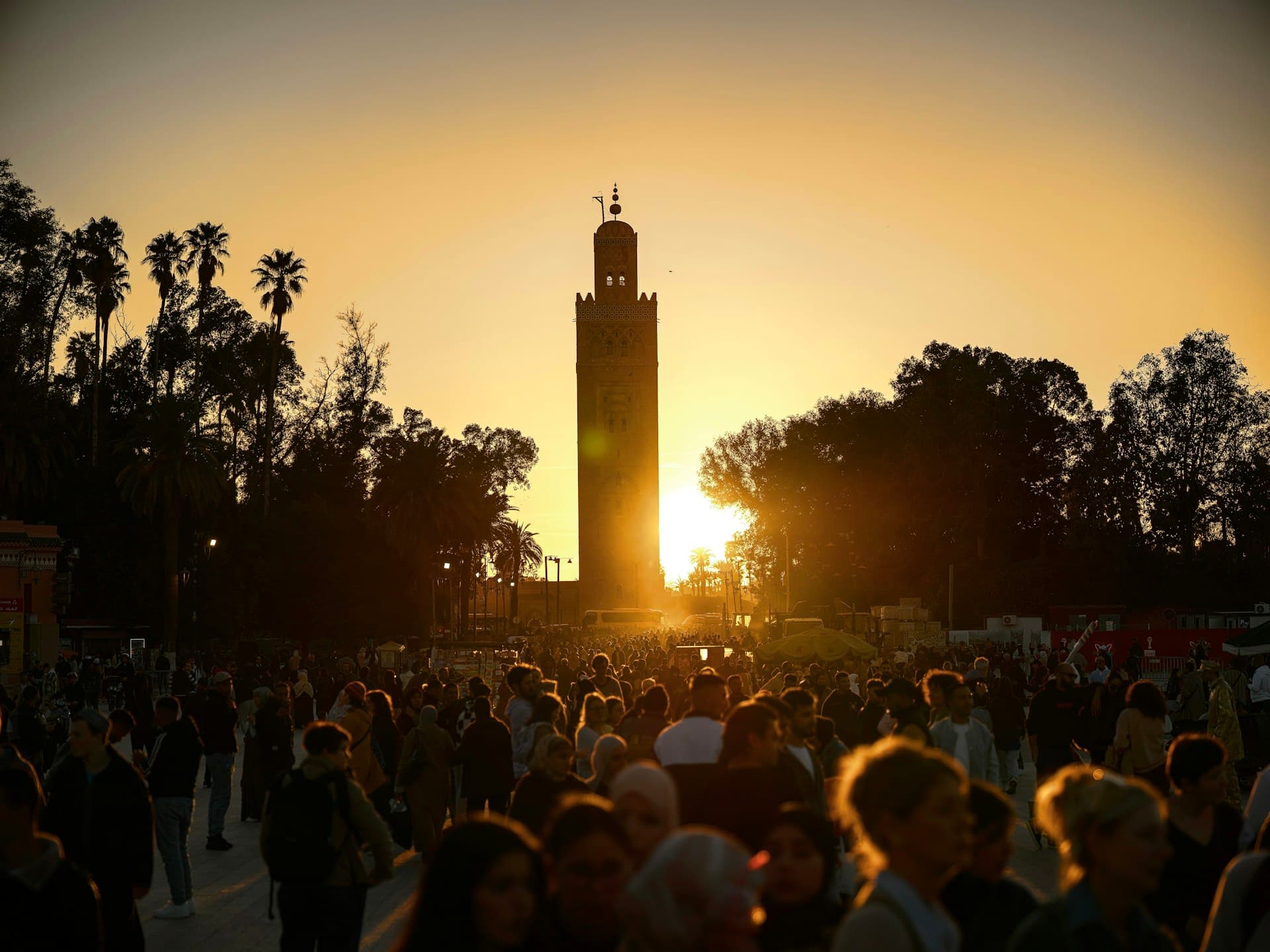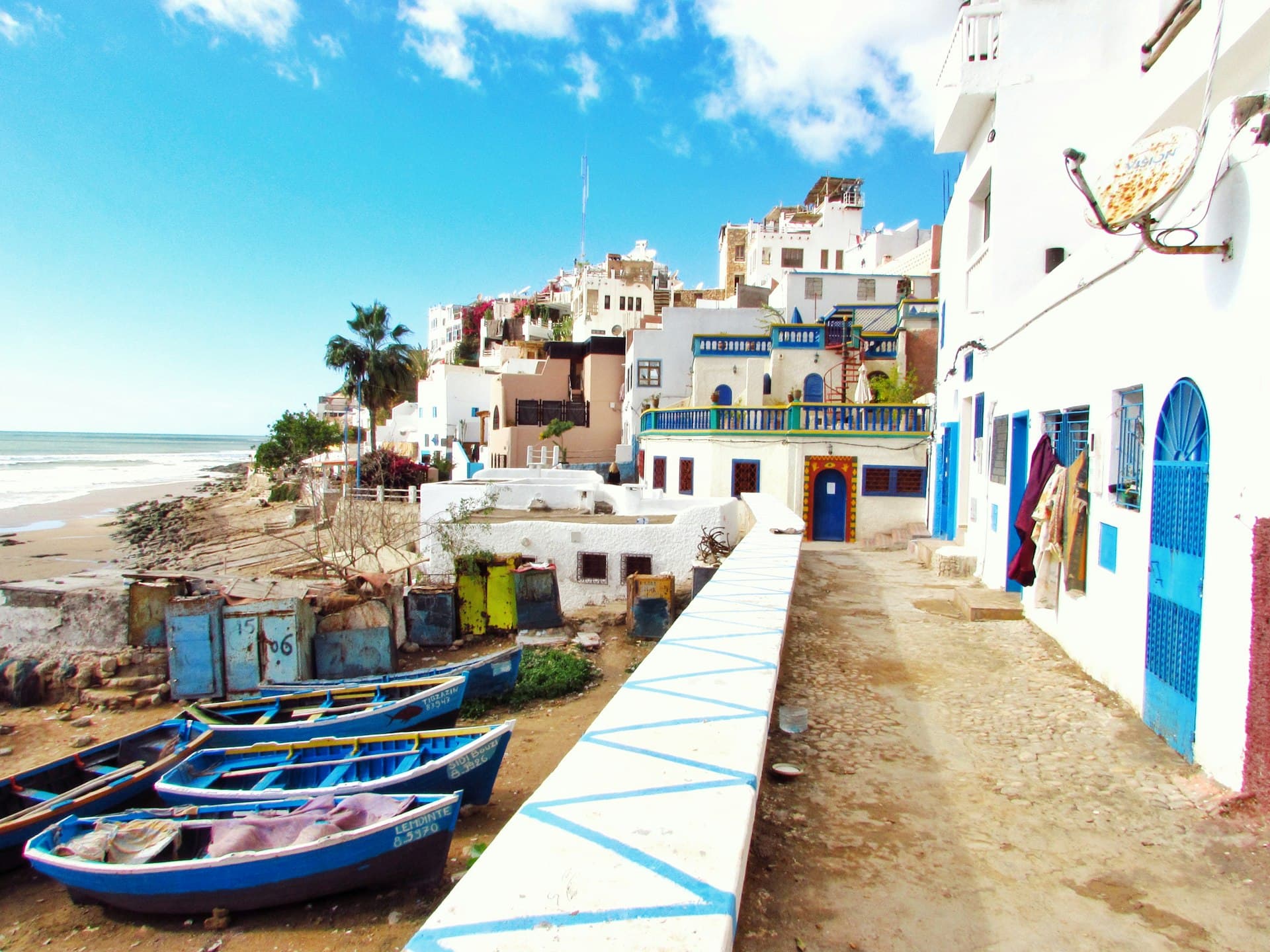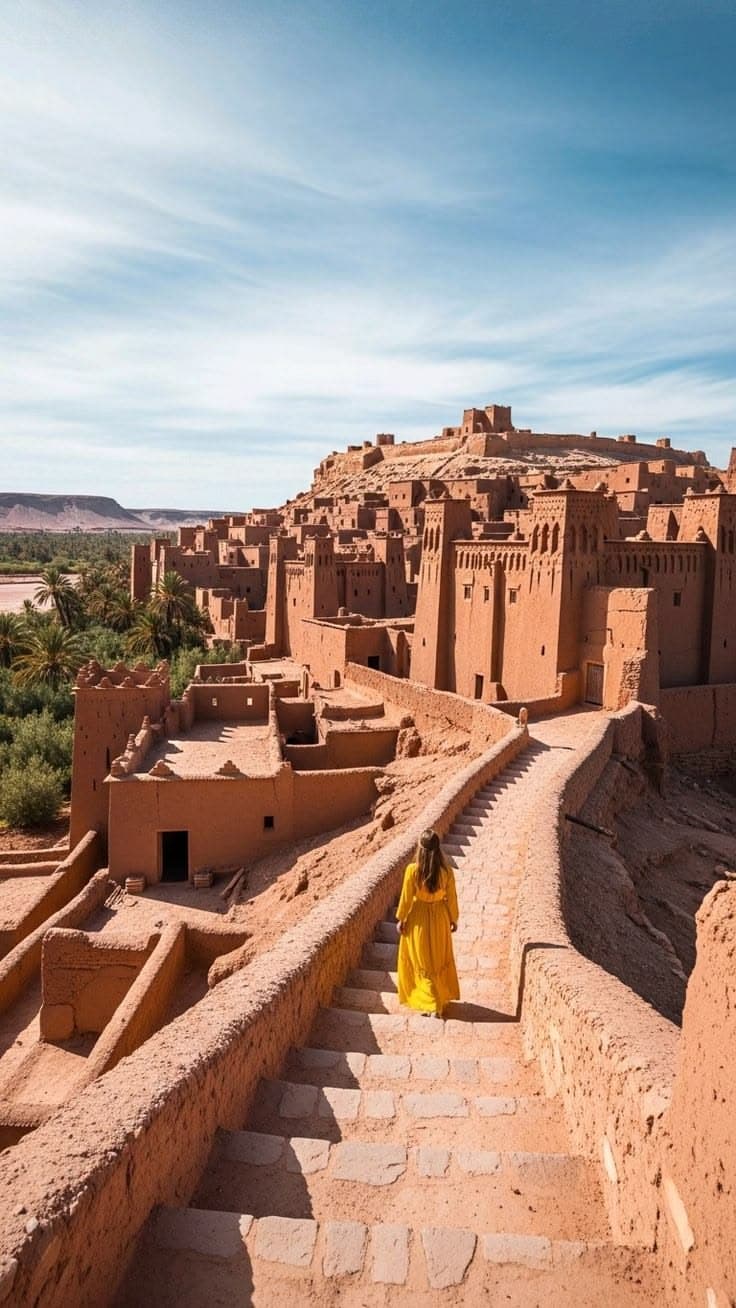
Train travel in Morocco is the best in Africa: ride Al Boraq at 320 km/h, learn the scenic routes worth taking, and when a private driver wins instead.
Morocco has the best rail network in Africa, run by the national operator ONCF, and its crown jewel is Al Boraq — the continent's first high-speed train, in service since November 2018 and running up to 320 km/h. Trains are genuinely excellent along the Tangier–Casablanca–Marrakech spine: fast, cheap, and comfortable. But there are no trains to the Sahara, the Atlas Mountains, Essaouira, or Chefchaouen — and that is exactly where a private driver wins.
Most travelers think of Moroccan trains as a way to save money. The smarter framing is the one used in Switzerland or Japan: the train ride is part of the trip. Watching the Atlantic coast slide past at speed, or the olive groves of the Saiss plain on the way to Fes, is an experience in itself — not just a transfer between two hotels. This guide covers what the network does brilliantly, how to ride Al Boraq, and the honest line where rails stop being useful.
We run private trips for a living, so we have no incentive to oversell the train. Our job is to tell you when the train is the better choice — and on the northern spine, it very often is. Here is how to read the map.
Does Morocco have trains?
Yes — and they are the best on the African continent. ONCF (Office National des Chemins de Fer) operates a modern network linking the major imperial and coastal cities. The system has two layers: the high-speed Al Boraq line in the north, and a web of classic intercity express trains — most now branded "Al Atlas" — covering everything else. Coaches are air-conditioned, a trolley sells tea, coffee, and snacks, and a reserved seat is included with every Al Atlas and Al Boraq ticket.
The catch is geography. The rail map covers the populated Atlantic belt and the imperial cities, but it stops well short of Morocco's most famous landscapes. The Sahara, the High Atlas passes, and the small coastal towns are simply not on the line — and never will be. So the train is a superb tool for one half of a Morocco trip and irrelevant for the other half.
What is Al Boraq, Africa's high-speed train?
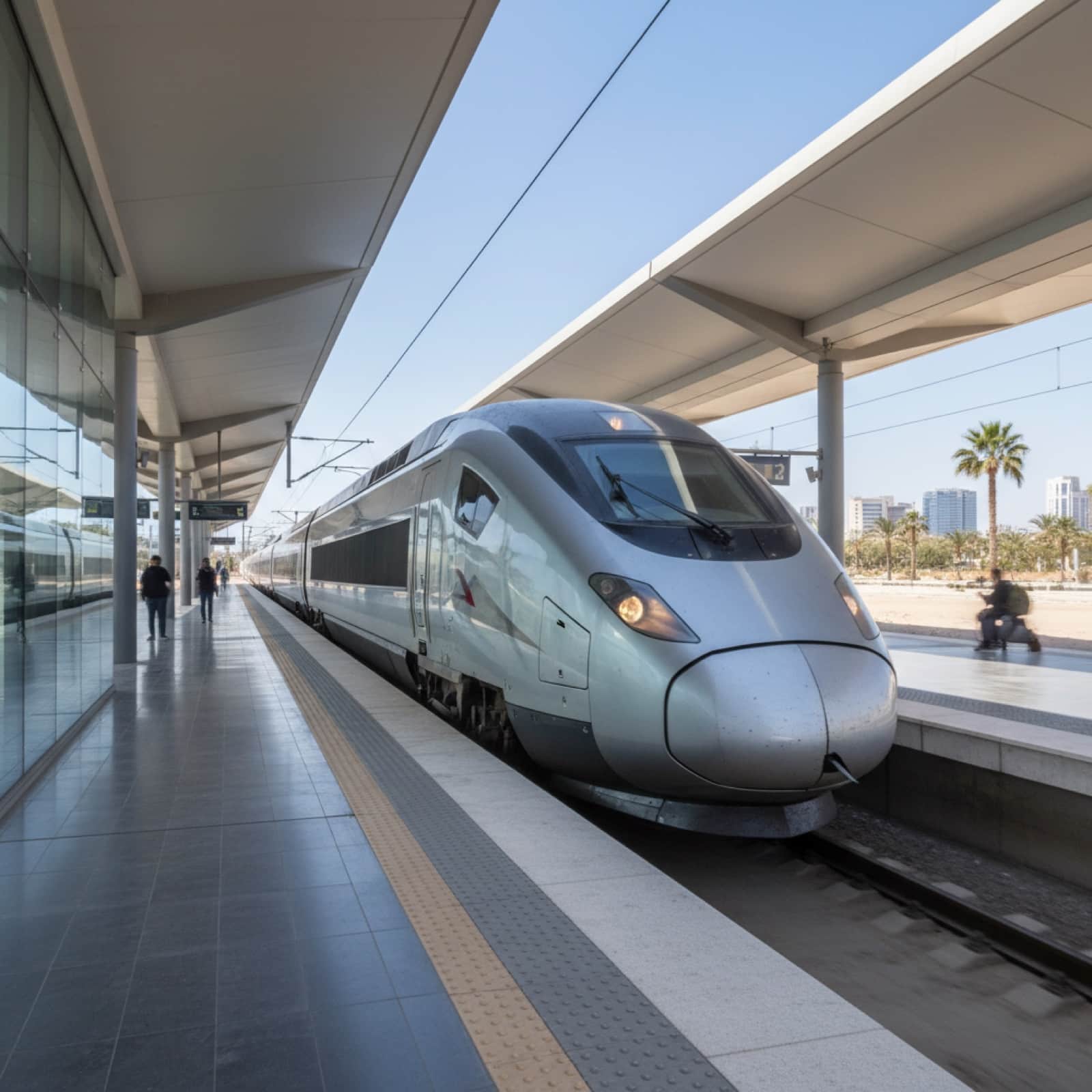
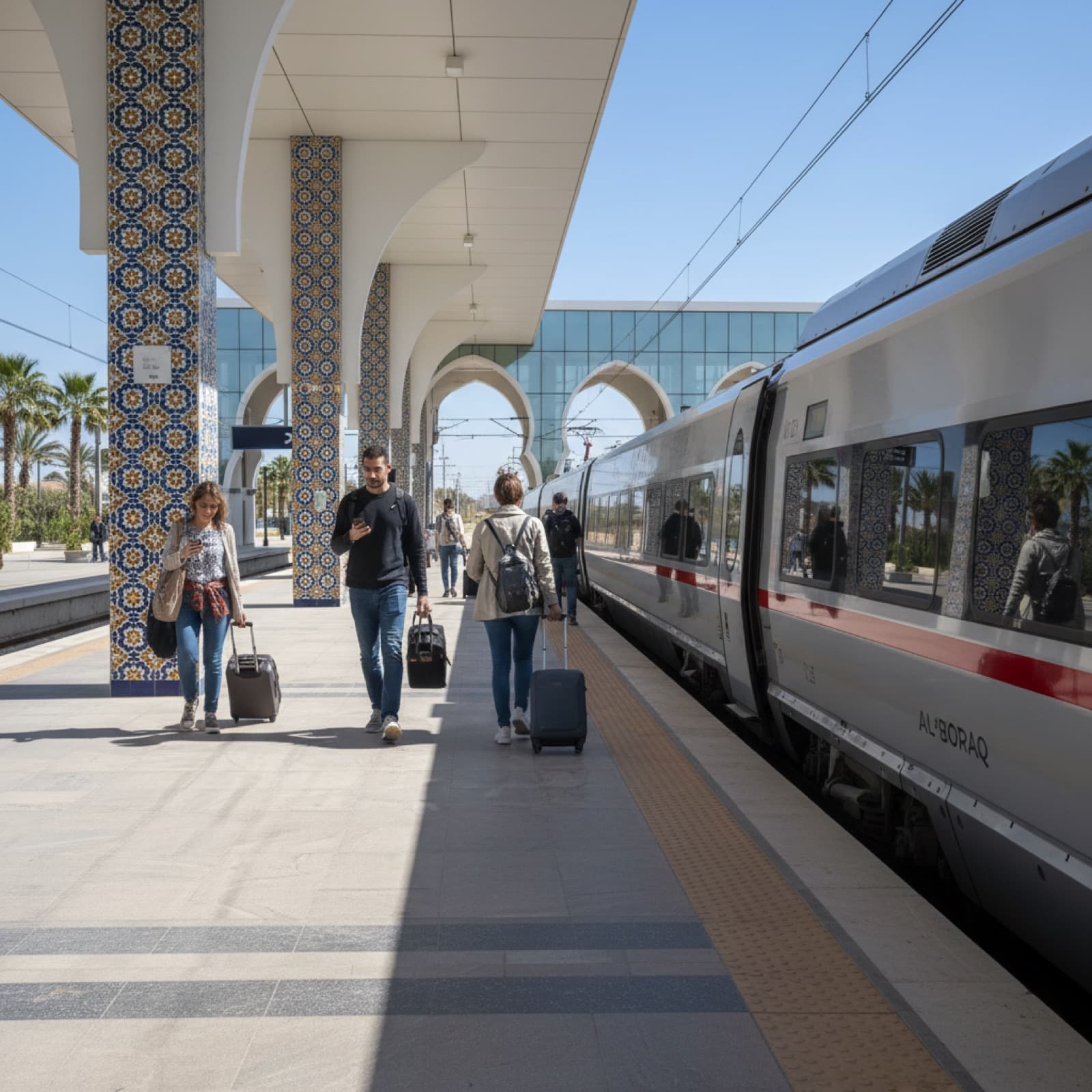
Al Boraq is Africa's first and only high-speed rail line, launched in November 2018 by ONCF using TGV-derived trainsets built with French rolling-stock technology. It runs Tangier–Kénitra–Rabat–Casablanca, hitting a top speed of 320 km/h on the dedicated high-speed section. The name comes from Al-Burāq, the mythical winged steed of Islamic tradition — a fitting badge for a train that cut the Tangier–Casablanca journey from a grinding five hours to about 2 hours 10 minutes.
During peak hours (roughly 7am to 9pm) departures run as often as every 30 minutes, with intermediate stops at Kénitra, Rabat-Agdal, and Skhirat. The seats are wide, the ride is smooth and quiet, and there is space for luggage. If your itinerary touches Tangier, Rabat, or Casablanca, riding Al Boraq once is worth doing for its own sake.
“I tell first-time clients to take Al Boraq at least once, even if it's a short hop. It reframes the whole country — people arrive expecting chaos and instead glide along the coast at 320 in a quiet, modern carriage. Then I meet them with the car for the parts no train can reach.”
— Youssef El Alaoui, Lead Morocco Specialist
Which train routes are worth taking?
The northern spine is the sweet spot. Tangier down to Casablanca on Al Boraq is the headline ride. From Casablanca, classic Al Atlas expresses continue south to Marrakech in about 2h40, and east to Fes in roughly 3h45. These three legs — Tangier, Casablanca, Marrakech, Fes — are where the train beats a car on time, cost, and comfort, because the motorway parallels the line and you skip the traffic.
Longer hauls work too, via a connection. Marrakech to Tangier is a single through journey of around 5h30–6h, changing trains (or simply staying aboard a connecting service) at Kénitra or Casablanca. The Fes–Marrakech run is long, near 7 hours, so most people split it or fly. As a rule: if both endpoints are cities on the map below, take the train; the scenery on the coastal and Saiss-plain stretches is a bonus you do not get behind a windscreen on the highway.
| Route | Journey time | Approx 2nd-class fare | Service |
|---|---|---|---|
| Tangier → Casablanca | ~2h10 | ~150 MAD | Al Boraq (high-speed) |
| Casablanca → Marrakech | ~2h40 | ~90 MAD | Al Atlas intercity |
| Casablanca → Fes | ~3h45 | ~95 MAD | Al Atlas intercity |
| Marrakech → Tangier | ~5h30–6h | ~210 MAD | Intercity + Al Boraq connection |
| Fes → Marrakech | ~7h | ~210 MAD | Al Atlas intercity |
How do you book ONCF trains?
Book online at oncf.ma or the dedicated booking portal oncf-voyages.ma, through the ONCF Voyages mobile app, or in person at any station counter or machine. For Al Boraq and Al Atlas services, your ticket comes with a reserved seat, so booking a day or two ahead guarantees you a place — useful on Friday evenings, Sunday returns, and around national holidays when locals travel.
Fares are inexpensive by European or North American standards: a high-speed Al Boraq second-class seat runs roughly 150 MAD (about USD 15), and first class around 240 MAD. You generally do not need to book weeks ahead — these are turn-up-and-go prices, not airline-style yield management. Bring your passport; on some services staff check ID against the booking.
A quick word on the other operator names
You will see "Supratours" mentioned often. Supratours is ONCF's coach (bus) subsidiary, and it exists precisely to plug the gaps the rail map leaves. Supratours coaches connect the train network to places with no station — most famously Marrakech to Essaouira and Marrakech to Agadir — and tickets can often be bought through ONCF. CTM is the other reputable long-distance bus line. Both are fine for budget travel, but neither replaces a private car for flexibility.
First class or second class?
First class buys you a guaranteed reserved seat in a quieter, six-seat compartment or open carriage with more space — worth it on long legs or at peak times. Second class is cheaper and perfectly comfortable, but on busy departures it can fill up and feel crowded, and on some classic services the reservation guarantee is weaker. The price gap is small in absolute terms: often only the equivalent of a few US dollars.
Our rule of thumb: for a short Al Boraq hop, second class is fine. For a 3–7 hour intercity journey, or any travel on a Friday, Sunday, or holiday, pay the small premium for first class. The guaranteed seat and the calmer carriage make a long ride far more pleasant, and it is still a fraction of what you would pay for the same comfort in Europe.
Where do trains stop being useful (and a driver wins)?
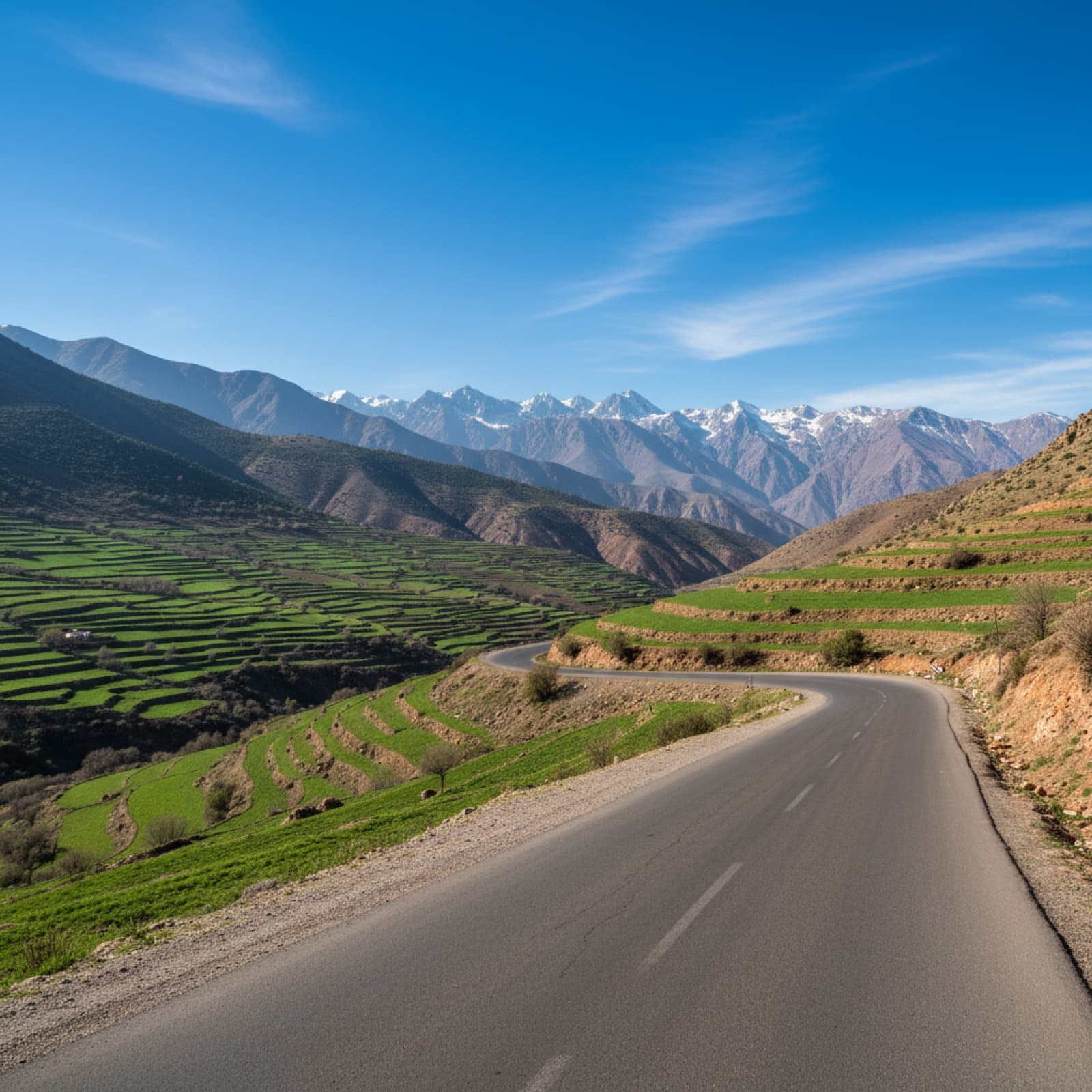
Here is the honest line, and it is a hard one. There are no passenger trains to Merzouga or the Sahara, to the High Atlas and the Tizi n'Tichka pass, to Ouarzazate and the kasbah country, to Essaouira on the coast, or to Chefchaouen in the Rif mountains. These are, for most visitors, the entire point of a Morocco trip — the dunes, the mountain passes, the blue city, the Road of a Thousand Kasbahs. None of them is reachable by rail.
For those routes you have three options: a long-distance coach (CTM or Supratours), a guided group tour, or a private car and driver. A driver wins whenever the journey itself is the experience — the Tizi n'Tichka is a four-hour cinematic climb with a dozen viewpoints worth stopping for, and a coach blows past every one of them. A driver also wins when you are traveling as a family, carrying luggage between riads, or want to leave when you choose rather than when the timetable allows. The math is simple: trains are for getting between cities; a private driver is for the landscapes between them.
The trip that works best for most of our clients is a hybrid. Ride Al Boraq and the intercity trains for the city-to-city legs along the northern spine — Tangier, Rabat, Casablanca, Fes, Marrakech — then switch to a private car for the desert, the Atlas, and the coast. You get the best of both: the speed and novelty of the rails where they shine, and door-to-door freedom where they cannot reach.
Is the train comfortable and safe?
Yes on both counts. Carriages on Al Boraq and the Al Atlas intercity services are modern, air-conditioned, and well maintained, with a refreshment trolley and luggage space. Petty theft is rare but, as on any train anywhere, keep valuables in sight and a hand on your bag in crowded second-class carriages and at busy stations. Solo and women travelers consistently report Moroccan trains as one of the easier, lower-stress ways to move around the country.
Punctuality is generally good on Al Boraq and reasonable on the classic lines, though delays happen — build a little buffer if you have a connecting flight or a fixed riad check-in. Stations in Tangier, Rabat, Casa-Voyageurs, Fes, and Marrakech are clean, modern, and easy to navigate, with clear signage in Arabic, French, and often English.
In summary
Morocco by train is a genuine pleasure on the Tangier–Casablanca–Marrakech–Fes spine, with Al Boraq delivering a world-class high-speed experience for the price of a sandwich back home. Treat the train as part of the trip, not just transport. But once your route bends toward the desert, the Atlas, or the smaller coastal and mountain towns, the rails run out — and that is where a private driver earns its place.
If you are mapping out logistics, see our guides on how to get from Marrakech to Fes, the scenic Road of a Thousand Kasbahs, airport private transfers in Marrakech, and whether Uber works in Morocco. For the bigger picture, our Morocco itinerary guide and best time to visit Morocco tie it all together. When you are ready to combine the train with a private driver for the parts no rail can reach, our trip planner builds the hybrid route for you.
Written by
Youssef El Alaoui
Lead Morocco Specialist
Born in Fes, based in Marrakech. Designs private itineraries for Morocco Beauty Spots and still argues mint tea is best in the Atlas.