The Road of a Thousand Kasbahs is Morocco's greatest road trip — Tizi n'Tichka, Dadès, Todra, Sahara. Here is the route, and why we drive it for you.
The Road of a Thousand Kasbahs is Morocco's greatest drive — a roughly 300 km arc from Ouarzazate east along the N10 through the Dadès and Todra valleys to the dunes of Merzouga, past mud-brick fortresses, palm oases and gorge walls 300 metres tall. The honest hook: reaching it means crossing the Tizi n'Tichka pass (~2,260 m of hairpins), and the rural legs are long and unlit after dark — which is exactly why most of our clients let a private driver take the wheel.
What is the Road of a Thousand Kasbahs?
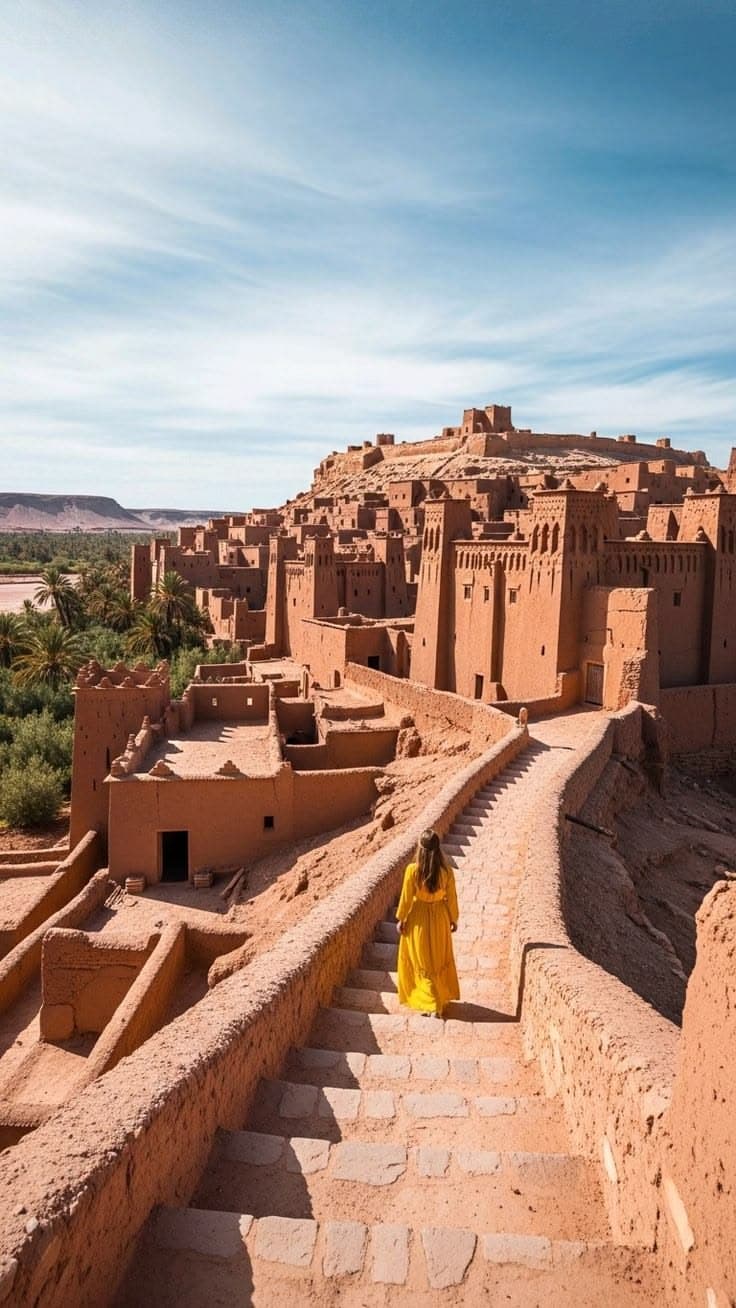
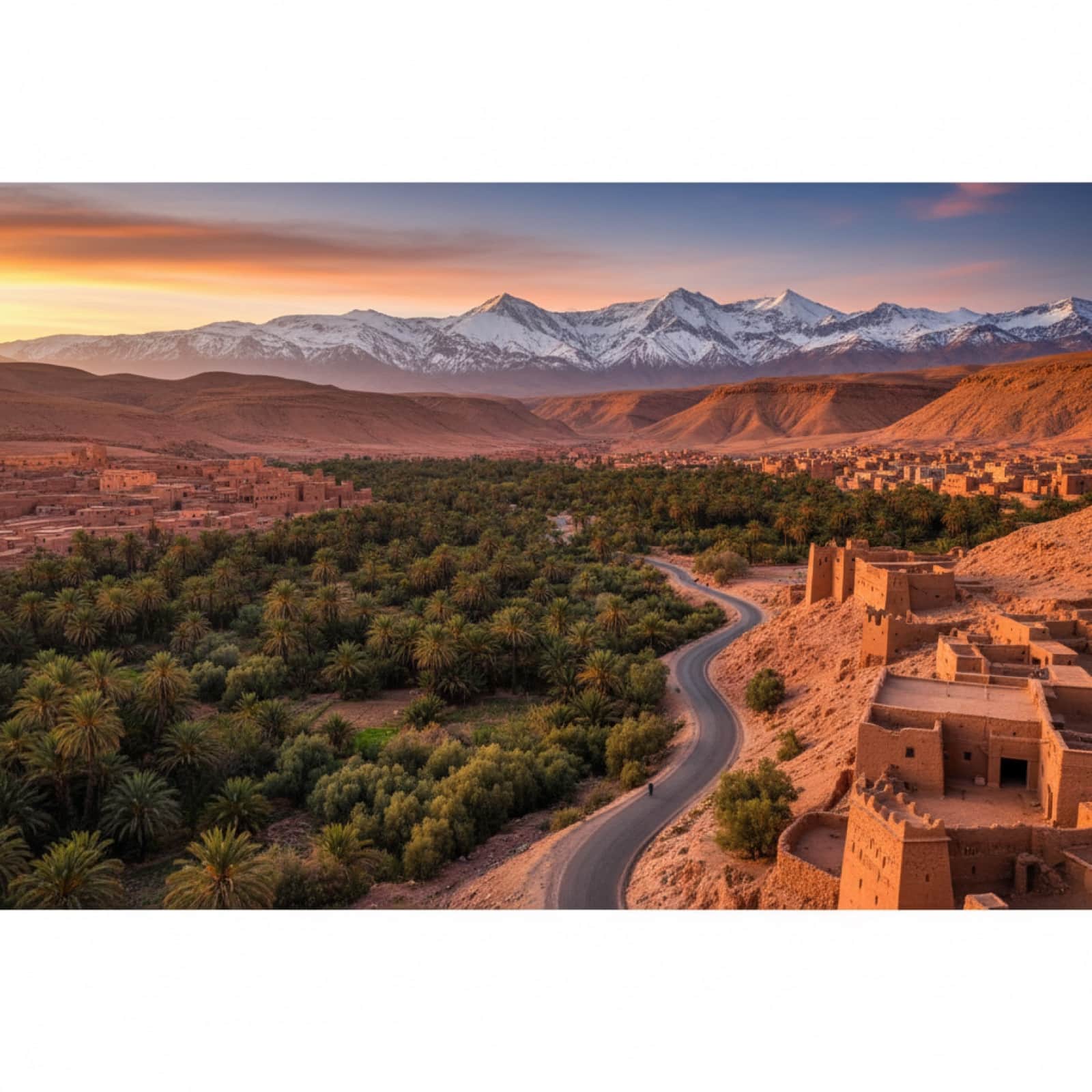
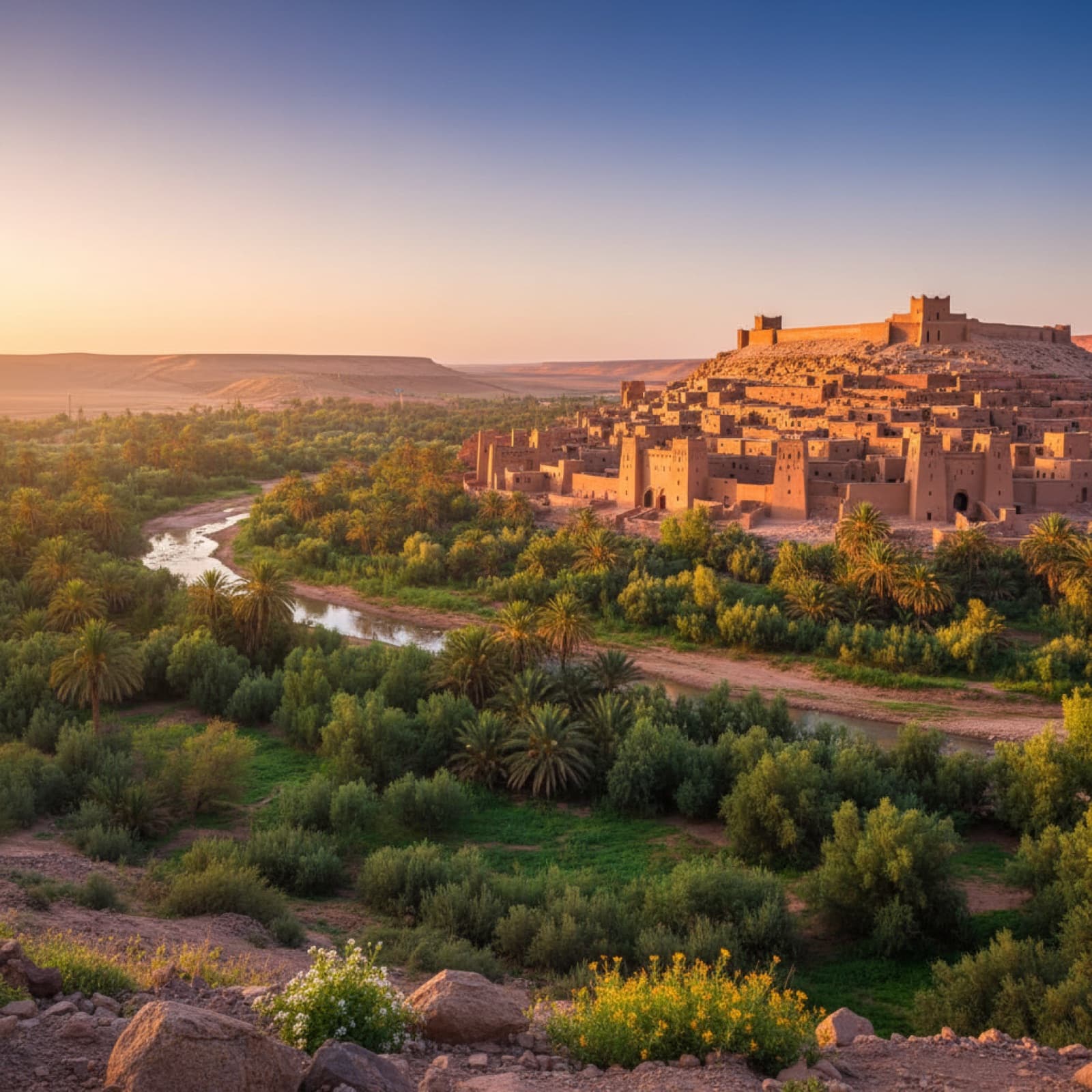
It is a named scenic route, not a single road sign. The classic line runs from Ouarzazate — the "door of the desert" and Morocco's film capital — eastward through the Dadès Valley, the Valley of Roses at Kelaat M'Gouna, the town of Tinghir and the Todra Gorge, then on toward Erfoud and the great dunes of Erg Chebbi near Merzouga. The name comes from the dense chain of kasbahs (fortified earthen homes) and ksour (walled villages) that the Berber clans built along the old caravan tracks linking Marrakech to the far side of the Sahara.
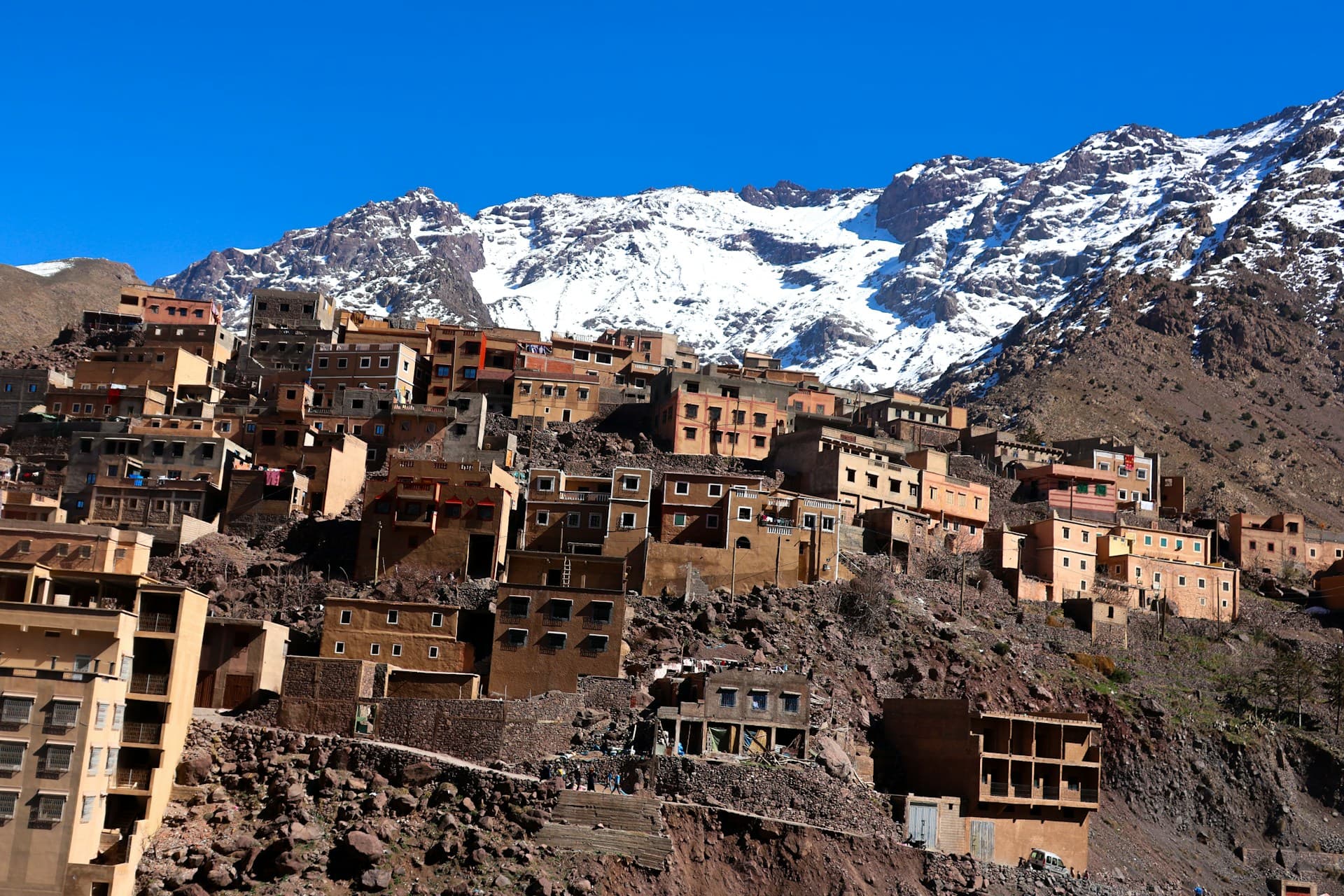
Most travellers approach it from Marrakech, which adds the showpiece overture: the Tizi n'Tichka pass over the High Atlas, the highest major mountain pass in North Africa, with the UNESCO ksar of Aït Ben Haddou waiting on the far side. By the time you reach Ouarzazate the formal "Thousand Kasbahs" route begins — but in practice the whole Marrakech-to-desert journey is what people mean when they talk about it.
Historically this was a trade artery, not a tourist trail. The Draa, Dadès, Todra and Ziz valleys were the most favourable natural corridors for caravans crossing between Marrakech and the far side of the Sahara, and the kasbahs you photograph today were built as defensive homes and storehouses by the Berber families who served those routes. That lineage is why the architecture feels so coherent for 300 km: the same red pisé (rammed earth), the same crenellated towers, the same palm-shaded riverbeds, repeated village after village.
What do you see along the route?
More in a day than most countries give you in a week. The drive stacks UNESCO history, palm oases and raw geology one after another:
- Tizi n'Tichka pass (~2,260 m) — the snaking High Atlas crossing, recently widened, with viewpoints over bare red ridgelines and tiny terraced villages.
- Kasbah Telouet — a short detour off the pass to the half-ruined palace of the Glaoui lords, hiding some of the finest tilework and carved plaster in the Atlas.
- Aït Ben Haddou — the iconic ksar of stacked earthen towers, a UNESCO World Heritage Site since 1987 and a backdrop for Lawrence of Arabia, Gladiator and Game of Thrones.
- Skoura oasis — a sea of date palms threaded with kasbahs, the photogenic Kasbah Amerhidil among them.
- Valley of Roses (Kelaat M'Gouna) — Damask rose fields that bloom and are harvested around May, with the rose festival in early May.
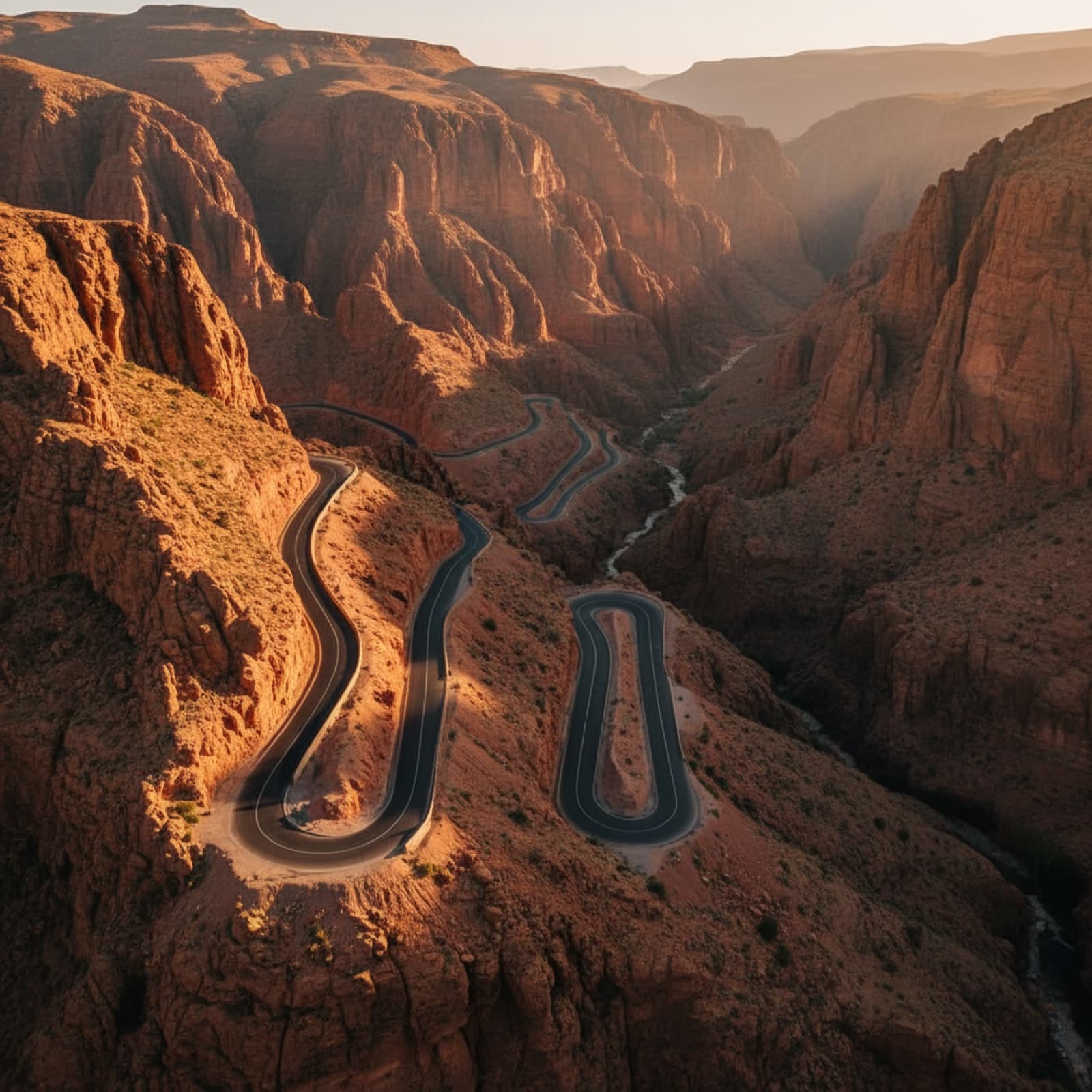
- Dadès Gorges — red and orange cliffs, the eroded "Monkey Fingers" rock formations near Tamellalt, and a famous switchback road that corkscrews up the canyon wall.
- Todra Gorge (Tinghir) — a slot canyon where walls climb up to 300 metres and narrow to about 10 metres, with a road and stream running through the floor.
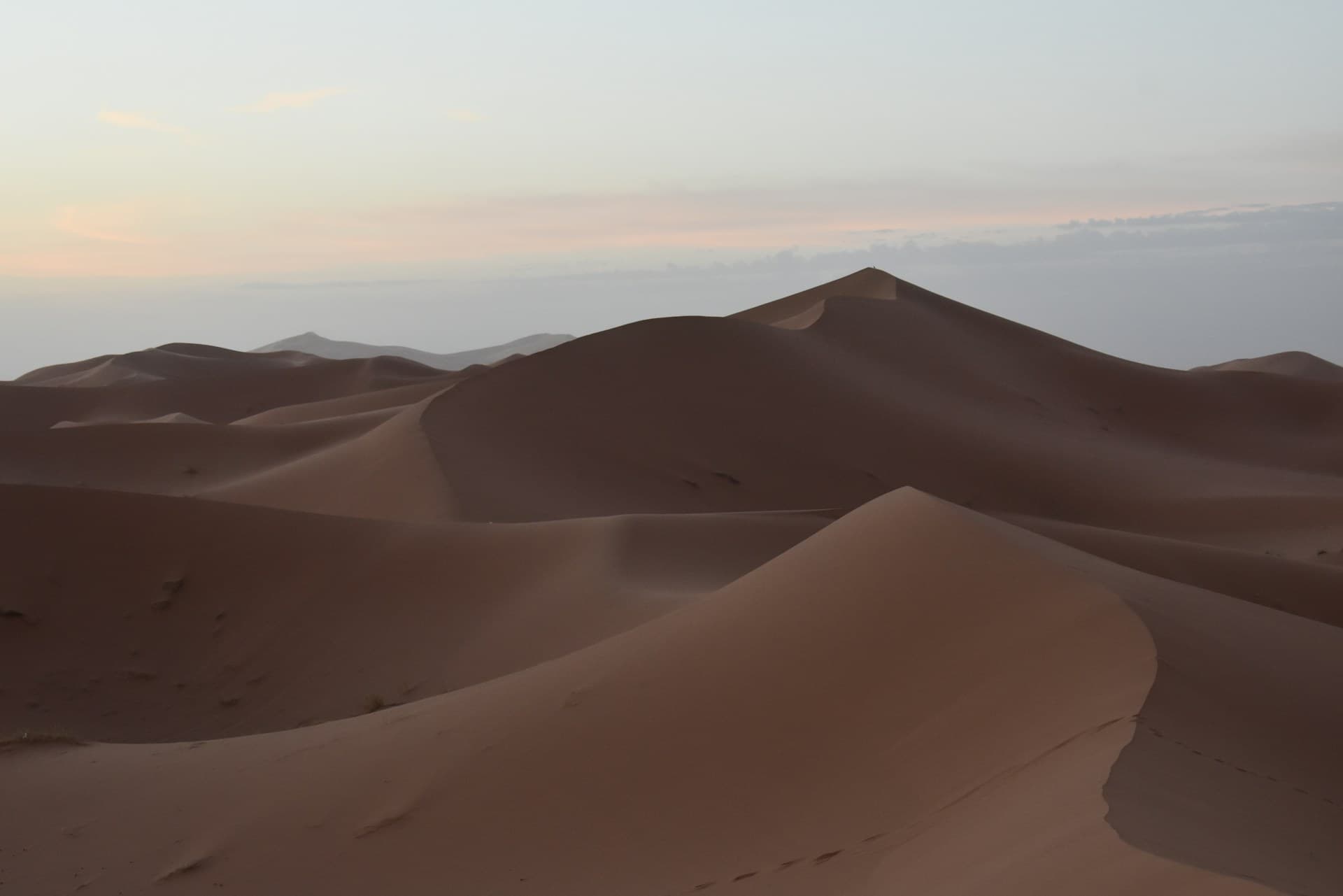
Then the mountains release you. After Tinghir the land flattens, goes ochre, and the date palms thin out; Erfoud and Rissani slip past, and the first golden ridge of Erg Chebbi rises on the horizon — the payoff at the end of the drive. From a viewpoint over a 300-metre gorge wall to a 150-metre dune in the same afternoon is the kind of contrast few road trips on earth can offer.
How many days do you need?
You can technically blitz Marrakech to Merzouga in one very long day, but that turns Morocco's greatest drive into a blur of car windows. The route rewards a slower hand. Three to four days is the sweet spot: enough to sleep under the kasbahs, walk a gorge, and reach the dunes with daylight to spare.
| Day | Route leg | Key stop | Approx. drive |
|---|---|---|---|
| 1 | Marrakech to Aït Ben Haddou via Tizi n'Tichka | Telouet, Aït Ben Haddou ksar | ~4 hours |
| 2 | Aït Ben Haddou / Ouarzazate to Dadès Valley | Skoura oasis, Valley of Roses, Dadès Gorges | ~2.5 hours |
| 3 | Dadès to Todra Gorge (Tinghir) | Monkey Fingers, Todra Gorge walls | ~1.5 hours |
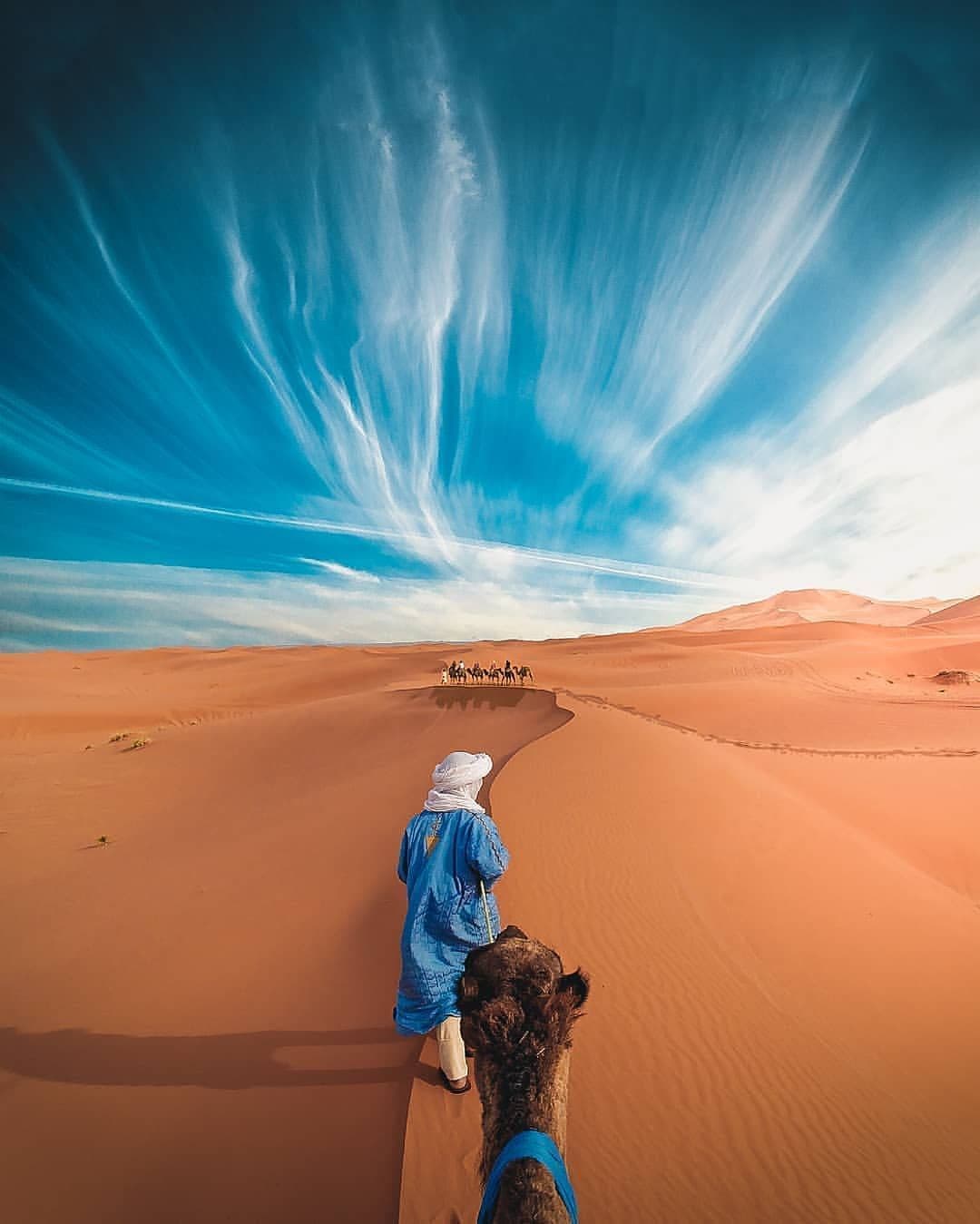
| 4 | Tinghir to Merzouga (Erg Chebbi) | Erfoud, Sahara dunes, sunset camel ride | ~3.5 hours |
Add a fifth day if you want a full morning in the Todra walls or a second night in the dunes. With a private journey we tune the pace to you — more photo stops here, an earlier start there — rather than forcing the route to fit a fixed coach schedule. For the bigger picture, our Morocco itinerary pillar shows how this leg slots into a full loop.
Should you self-drive or hire a driver?
This is the real decision, and it comes down to one question: do you want to drive Morocco's greatest drive, or see it? On these roads the two are not the same thing.
Self-driving gives you total freedom and is the cheaper option per day if you are confident. But the person at the wheel spends the Tizi n'Tichka switchbacks and the Dadès hairpins watching the tarmac, not the scenery — and the scenery is the entire point. A private driver flips that: everyone in the car gets the window, the photo stops, and a local who knows which kasbah to pull over for and which roadside café actually cooks.
“On the Thousand Kasbahs route I tell clients the truth: the driving is the least interesting part of the day, and the most demanding. Hand it to someone who has done the Tichka a hundred times, and the road stops being a task — it becomes the view. That is the whole reason this drive exists.”
— Youssef El Alaoui, Lead Morocco Specialist
We break down the full cost-and-control trade-off — fuel, insurance, parking, the freedom premium — in renting a car vs hiring a driver, so we won't repeat the numbers here. The short version: for this particular route, the landscape is the experience, and a driver buys all of you a front-row seat.
Is it safe or hard to drive?
The roads themselves are paved and in good shape — the Tizi n'Tichka was recently widened — but the conditions are demanding: mountain hairpins with drop-offs, livestock and pedestrians on rural roads, slow trucks to overtake, and crucially, very dark and often unmarked roads after sunset. The single firmest rule is to avoid driving these stretches at night. We cover road conditions, night driving and the practicalities in full in is it safe to drive in Morocco; for this post the takeaway is simple — it is doable for a confident driver, and it is precisely the kind of route where many travellers decide a driver is worth it.
When is the best season to drive it?
Spring (March-May) and autumn (September-November) are the sweet spots. Spring is the showpiece: the Valley of Roses blooms and is harvested around May, the gorges run with snowmelt, and the High Atlas still wears snow on the peaks above green valleys. Autumn brings warm, stable, clear days ideal for the desert end of the route.
Summer (June-August) is harsh — Ouarzazate and the desert regularly push past 40°C, which is punishing on dunes and gorge walks. Winter is quiet and beautiful but cold at altitude, and the Tizi n'Tichka can occasionally close briefly after heavy snow. If you have to pick one month, late April or early May gives you roses, snow-capped peaks and bearable desert heat in a single trip. Pair this with our best time to visit Morocco guide if your dates are still open.
How we run it as a private journey
We treat the Road of a Thousand Kasbahs as a story with a beginning, middle and end, not a transfer to get over with. A typical private version pairs a fluent local driver-guide with a comfortable vehicle, kasbah and oasis guesthouses chosen for the view, and a pace set by you — sunrise at Aït Ben Haddou, a long lunch in Skoura, a gorge walk before the crowds, and the dunes reached with light to spare for the camels.
Because the driving is handled, the route opens up to travellers who would never attempt the Tichka hairpins themselves: multigenerational families, honeymooners who want to be in the same photo, and anyone who simply doesn't want to lose a day's scenery to the road. The guide also unlocks the quiet half of the route — a rose-water cooperative in Kelaat M'Gouna, a Berber family's tea in Skoura, the path through the Todra walls that the coach groups never walk — the moments that turn a great drive into the trip people talk about for years.
It folds naturally into our wider routes: many travellers join it to the desert via our Marrakech-to-Merzouga desert playbook, or build it into the full country loop with the 10-day Grand tour. If your time is tighter, the 3-day Fes–Sahara trip reaches the same dunes from the north. And if you are still weighing Erg Chebbi against the closer dunes, Merzouga vs Zagora settles which desert is worth the extra hours.
If you'd rather skip the kasbah route entirely and arrive rested, Morocco's high-speed line is covered in Morocco by train — and the film-and-history backstory of the route's signature stop is in Aït Ben Haddou. When you're ready to turn this into real dates, tell us who's travelling and how long you have, and we'll map your version of the drive: start with our trip planner.
Written by
Youssef El Alaoui
Lead Morocco Specialist
Born in Fes, based in Marrakech. Designs private itineraries for Morocco Beauty Spots and still argues mint tea is best in the Atlas.