Aït Ben Haddou is Morocco's most-filmed ksar — the UNESCO clay city near Ouarzazate that played Yunkai and Zucchabar on screen. How to visit it well.
Aït Ben Haddou is a fortified clay city (ksar) about 30 km northwest of Ouarzazate, and the most-filmed location in Morocco. It has been a UNESCO World Heritage Site since 1987 (inscription ref 444), it sits on the old caravan route between Marrakech and the Sahara, and its earthen towers have doubled for ancient Rome, Jerusalem, and Daenerys Targaryen's Yunkai.
I have walked its lanes at dawn and at the worst of the midday crush, and the difference is the whole visit. This guide is the honest version — what the ksar actually is, every film worth knowing about, and how to see it without joining the 11 a.m. coach scrum.
What is Aït Ben Haddou?
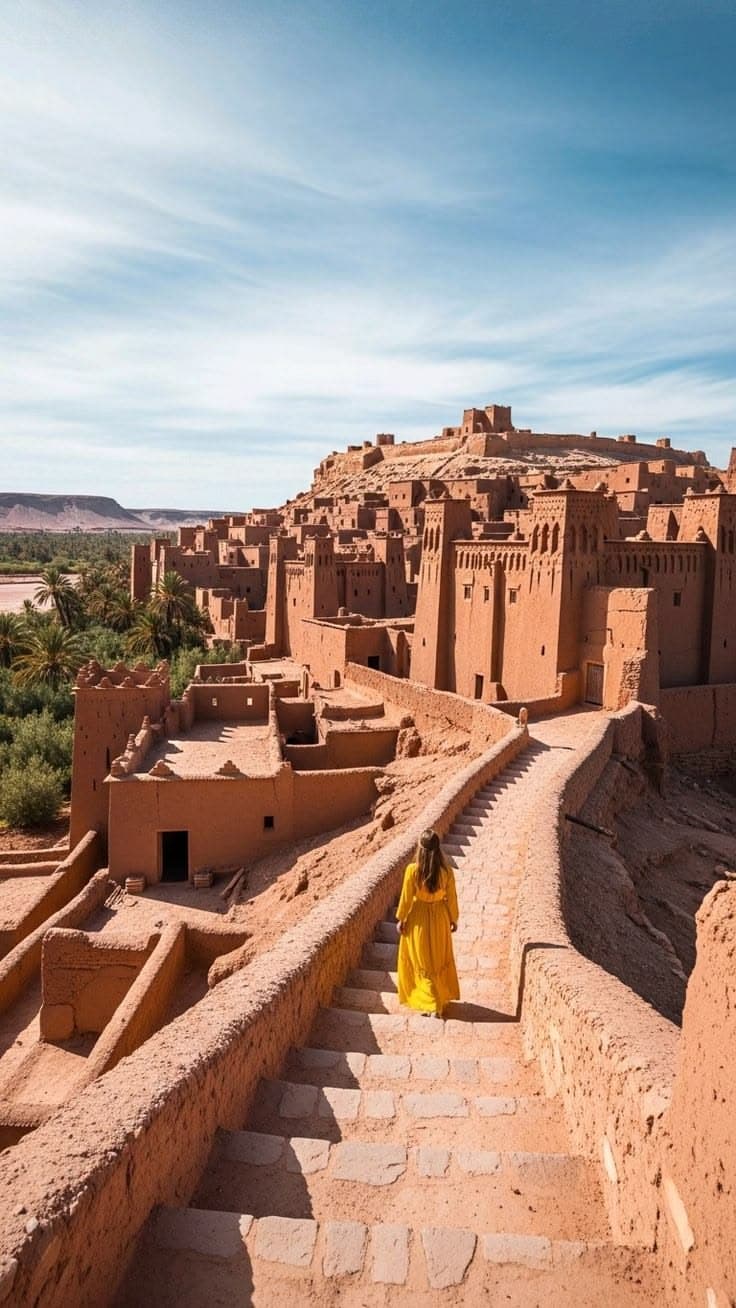
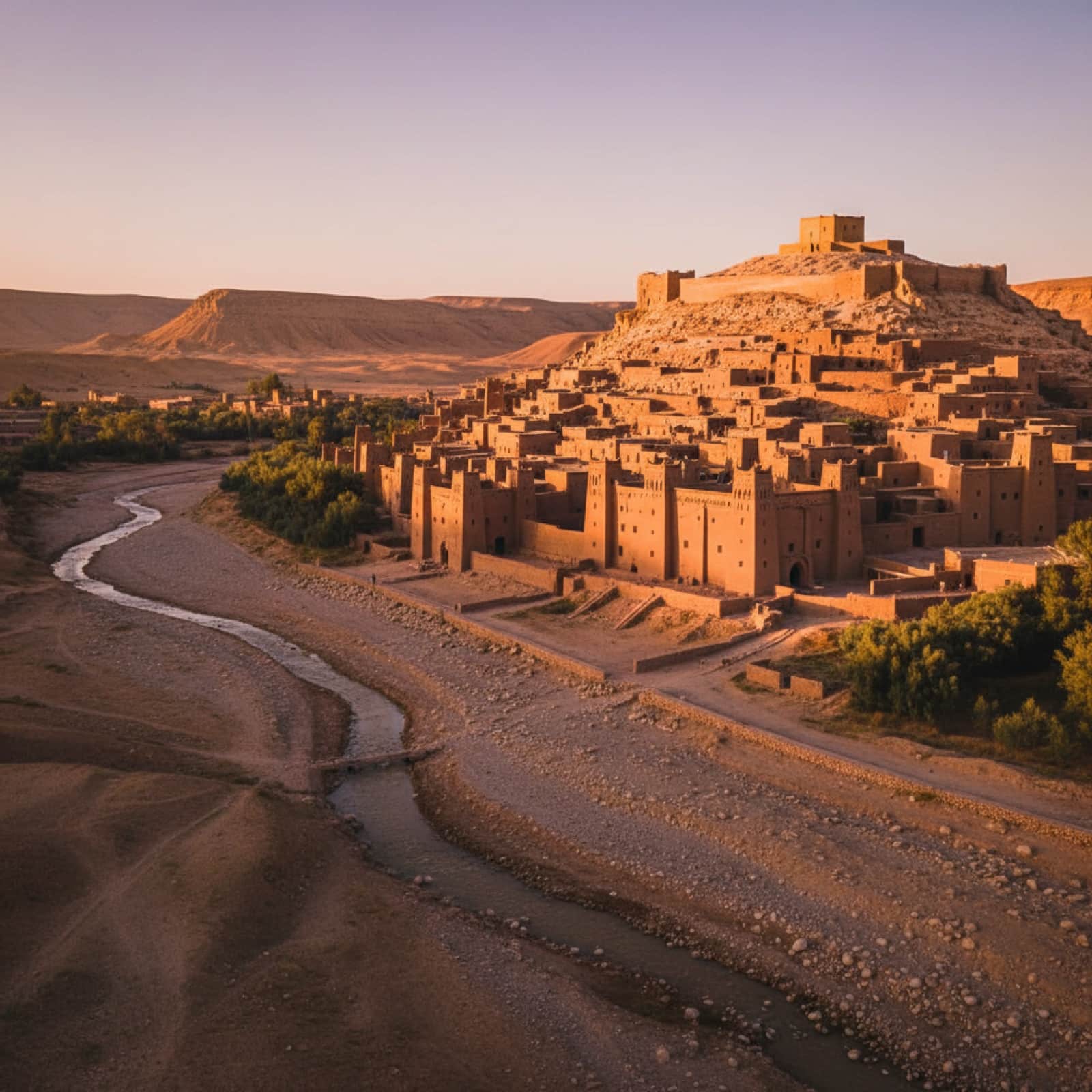
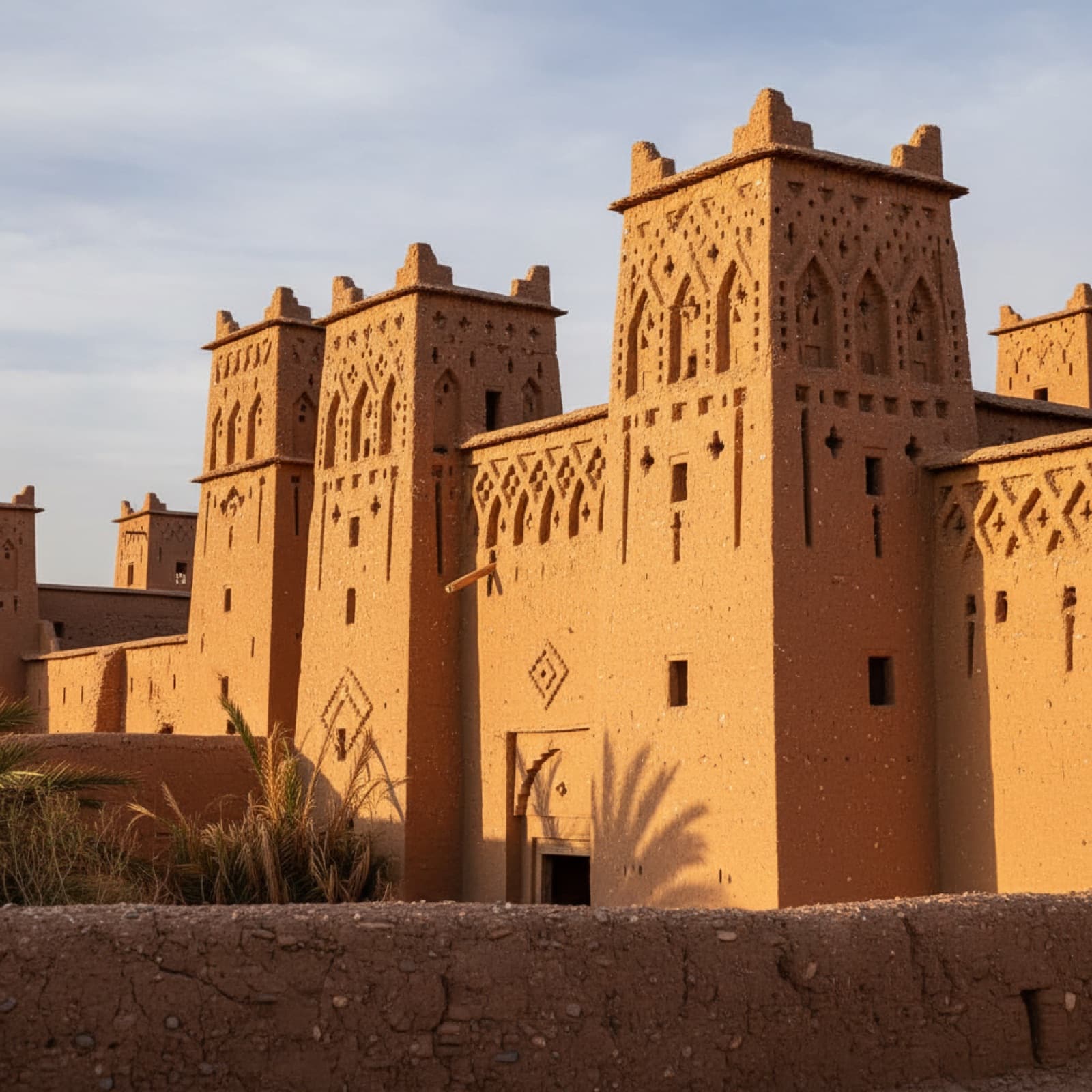
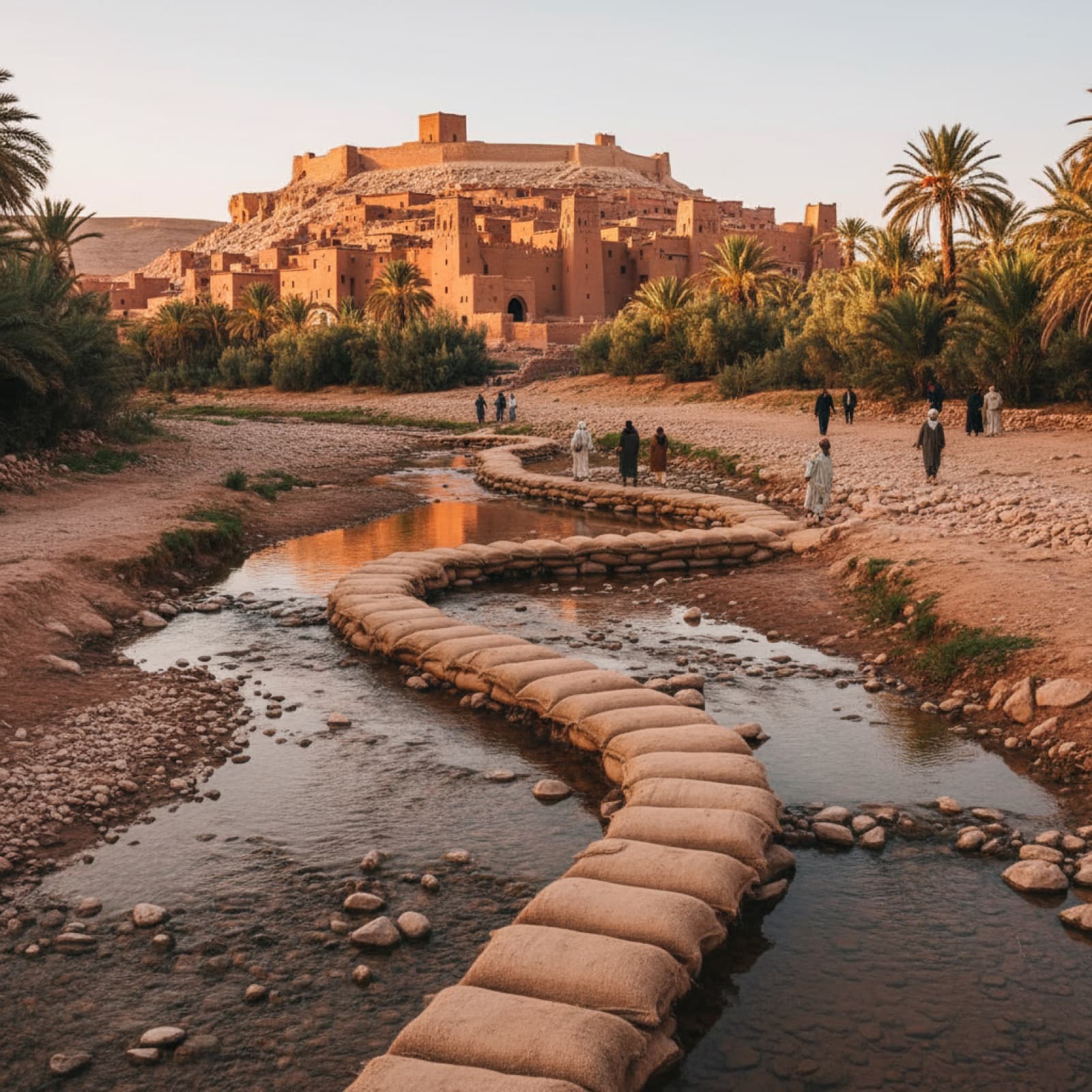
Aït Ben Haddou (also spelled Aït Benhaddou) is a ksar — a fortified village of packed-earth houses (pisé) stacked up a hillside above the Ounila valley, in Ouarzazate Province. The walls are raw clay, straw, and stone, the same palette as the ground they rise from.
It sat on the caravan route that linked the Sahara and ancient Sudan to Marrakesh, with goods crossing the High Atlas by the Tizi-n'Telouet pass. Most of the standing structures date from the 17th century onward, though the building technique itself is far older across southern Morocco.
The ksar is laid out as a tight cluster of homes inside defensive walls with corner towers, climbing the hill to a communal agadir (fortified granary) at the summit. UNESCO inscribed it under criteria (iv) and (v) as an outstanding example of the earthen pre-Saharan habitat — a building style perfectly adapted to a harsh climate but acutely vulnerable to neglect, which is why ongoing restoration matters so much here.
Which movies and TV shows were filmed here?
More than almost anywhere else in Africa. Directors keep coming back for the authentic pre-modern look, the dramatic silhouette, and the fact that Ouarzazate's Atlas Studios and hotels are a short drive away. The ksar has stood in for ancient Rome, biblical Jerusalem, Persia, and Westeros.
The two most-asked-about credits: in Gladiator (2000) it played the slave city of Zucchabar, where Maximus fights his first arena bouts; in Game of Thrones it doubled for the slaver city of Yunkai (and stood in for Pentos). For the full set-jetting map of the country, see our guide to movies filmed in Morocco.
| Film / Series | What it played | Year |
|---|---|---|
| Lawrence of Arabia | Desert and Arab Revolt scenes | 1962 |
| The Man Who Would Be King | Kafiristan | 1975 |
| The Living Daylights (Bond) | Afghan setting | 1987 |
| The Last Temptation of Christ | Jerusalem / Judea | 1988 |
| The Mummy | Ancient Egypt backdrops | 1999 |
| Gladiator | Zucchabar (slave city) | 2000 |
| Kingdom of Heaven | Jerusalem area | 2005 |
| Babel | Moroccan village | 2006 |
| Game of Thrones | Yunkai / Pentos | 2011 |
| Prince of Persia | Persian city | 2010 |
| Gladiator II | Roman-era city | 2024 |
One thing first-time visitors miss: some of the walls you photograph today are film-set additions, not 17th-century fabric. Gladiator II (2024) built new structures on top of the existing ksar, and earlier productions left their own marks. Part of the ksar's silhouette is, quite literally, Hollywood.
And Aït Ben Haddou is not the only Moroccan Game of Thrones location — the coastal city of Essaouira played Astapor, where Daenerys takes the Unsullied. Both are worth pairing if you are following the screen trail.
Why this ksar specifically? Four things stack up that no soundstage can fake: real earthen architecture that reads as genuinely ancient on camera; a hilltop silhouette that fills a wide shot; open desert ground just outside the walls for large battle and crowd scenes; and Ouarzazate 30 km away, with Atlas Studios, crews, and hotels to base a production. David Lean used it for Lawrence of Arabia as far back as 1962, and directors have been returning for more than sixty years since.
Is Aït Ben Haddou worth visiting?
Yes — with one caveat. As a piece of living earthen architecture and a UNESCO site, it is genuinely extraordinary; standing inside walls that have played a dozen civilizations on screen is a rare thing. The caveat is timing. By late morning it can feel like a film-set theme park, thick with day-trip coaches from Marrakech.
“The ksar I love is the one at 7 a.m., when the only sound is a broom on a clay step and the towers turn from grey to amber. The ksar most people see is the one at noon, full of selfie sticks. Same walls — completely different visit.”
— Amina Benkirane, Destination Editor
If you can only give it a couple of hours mid-day, it is still worth the stop. But if you can sleep nearby and walk it at first light or last light, it moves from 'nice photo' to one of the most memorable mornings of a Morocco trip.
Worth managing expectations on one point: the climb to the agadir at the top is on uneven clay steps and ramps, and there is little shade. It is not a hard hike, but it is not stroller- or wheelchair-friendly either. Bring water, wear grippy shoes, and budget the cool hours for the climb.
How do you get there, and how long do you need?
Aït Ben Haddou sits about 30 km northwest of Ouarzazate, roughly a 4-hour drive from Marrakech over the Tizi n'Tichka pass (often longer in winter snow or summer roadworks). To reach the ksar itself you cross the usually-dry Ounila riverbed on stepping stones or a footbridge from the modern village.
For the visit alone, 1.5 to 2 hours is enough to climb to the agadir (granary) at the top and back. But the smart play is to stay overnight in or near the modern village so you get the empty-ksar light. Driving the High Atlas yourself is doable but demanding — read our take on whether it is safe to drive in Morocco before you decide.
It is also a natural hinge in a southern loop: combine it with Ouarzazate's Atlas Studios, the Telouet kasbah up the old road, and then push on along the Road of a Thousand Kasbahs toward the dunes — see the full Marrakech to Merzouga desert route.
A common mistake is trying to do Aït Ben Haddou as a single day return from Marrakech. It is possible, but it means roughly eight hours in the car for a rushed midday hour at the ksar — the worst light and the worst crowds. If your itinerary only allows a day trip, treat it as a scenic Tichka-pass drive with a photo stop, not a proper visit, and slot the real experience into a longer southern route instead. Our broader Morocco itinerary guide shows how the pieces fit together.
When is the best time to visit?
By light: early morning or late afternoon, every time. Midday is hot, flat, and crowded. The first coaches tend to arrive late morning, so the window before about 9 a.m. and after about 4 p.m. is when the ksar is yours.
By season: spring (March-May) and autumn (September-November) are the sweet spots — warm, clear, and comfortable for climbing. Summer is genuinely hot in this pre-Saharan zone; winter mornings can be cold and the Tichka pass occasionally snows shut. For the country-wide picture, see the best time to visit Morocco.
Does anyone still live inside the ksar?
A handful of families do — but only a few. Over the decades most residents moved across the river to the modern village of Aït Ben Haddou, which has the shops, guesthouses, and the road. The old ksar is now largely given over to visitors, a few artisan stalls, and film crews.
That is part of the bittersweet truth of the place: the thing that keeps it standing — tourism and film money funding restoration — is also what emptied it of daily life. The few remaining households, and the guardians who maintain it, are why the clay does not simply wash away in the rare hard rains.
How do we take clients there?
We build Aït Ben Haddou as an overnight, not a drive-by. Clients sleep at a kasbah-style guesthouse facing the ksar, walk it at dawn with a local guide who knows which walls are real and which are film sets, and continue south the next day toward Ouarzazate and the desert — exactly the rhythm in our 10-day Grand Tour and the 3-day Fes-to-desert route.
If you are mapping your own route, pair this with the Road of a Thousand Kasbahs, the movies filmed in Morocco set-jetting guide, and our look at Merzouga vs Zagora for the dunes. When you are ready, tell us your dates and pace and we will build the southern loop around them — start with the trip planner.
Written by
Amina Benkirane
Destination Editor
Writer and photographer covering the Maghreb. Ten years of wandering souks, kasbahs, and back roads most guidebooks miss.