Gladiator, Game of Thrones and more: the movies filmed in Morocco ran through Ouarzazate, nicknamed Ouallywood. Here are the real sets you can visit.
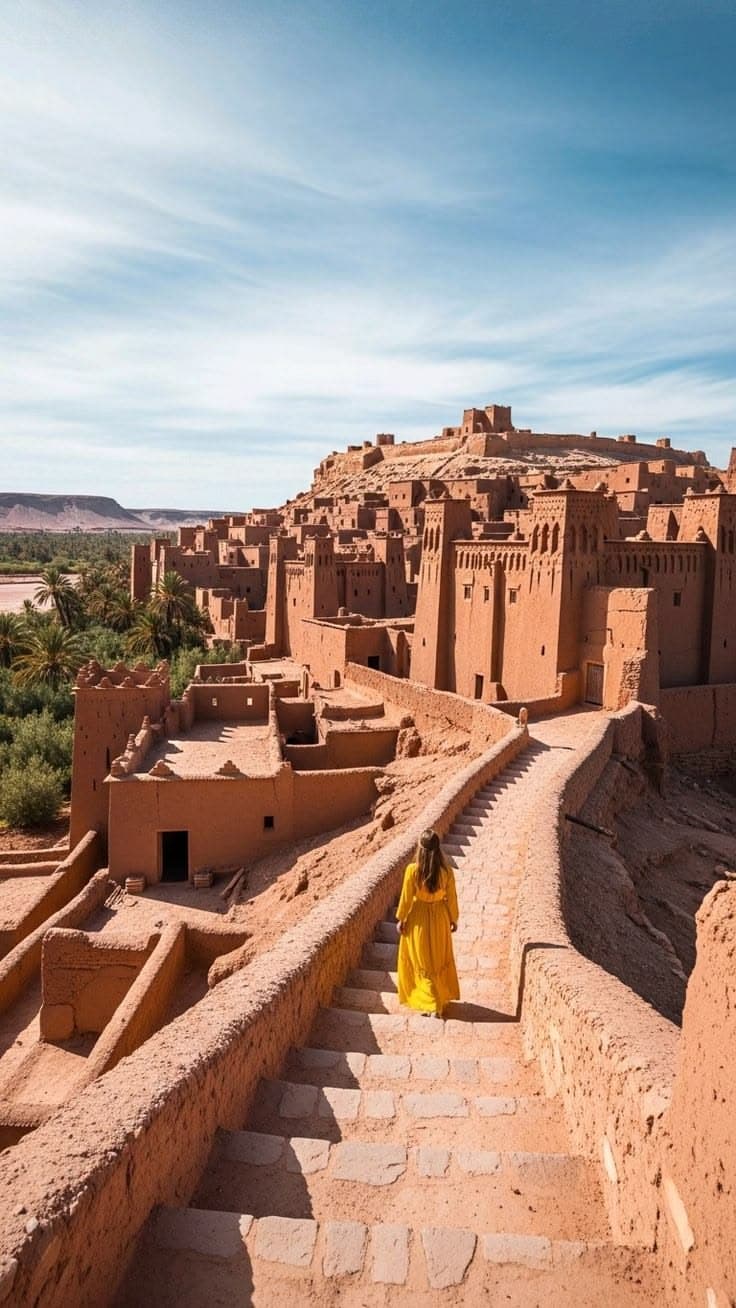
Most of the famous movies filmed in Morocco were shot in or near Ouarzazate, the southern desert town nicknamed Ouallywood, home to Atlas Studios and CLA Studios. Gladiator (2000), Lawrence of Arabia (1962), Black Hawk Down (2001), Kingdom of Heaven (2005) and Game of Thrones all used Moroccan locations to double for ancient Rome, Egypt, the Middle East and fictional worlds. The headline sets, from Aït Ben Haddou to the Essaouira ramparts, are genuinely visitable.
Why do so many films shoot in Morocco?
Three things keep cameras coming: landscape, cost and stability. Within a few hours of Ouarzazate you can film red-rock canyons, Saharan dunes near Merzouga, snow-dusted Atlas peaks and ancient-looking mud-brick kasbahs, so one base can stand in for half the ancient world. The Moroccan Cinematographic Center (CCM), the public body that has regulated the industry since 1944, issues filming permits and coordinates the crews, animals and military extras that big productions need.
The numbers help too. Ouarzazate studios advertise sets and services at roughly 30 to 50 percent of comparable global costs, and the surrounding region offers reliable sun, an international airport eight kilometres from the studios, and decades of trained local crew. For a director recreating Rome or Jerusalem, Morocco is cheaper and faster than building it anywhere else.
There is also a self-reinforcing effect. Once Lawrence of Arabia proved the desert worked on screen in 1962, each big production left behind standing sets, skilled fixers and a reputation that pulled in the next one. The permanent studios did not even exist until 1983, when Moroccan entrepreneur Mohamed Belghmi built Atlas Studios to capture the demand the location was already generating. Today, a producer arriving in Ouarzazate inherits sixty years of accumulated infrastructure.
What major movies were filmed in Morocco?
The list runs from cinema history to modern blockbusters. Lawrence of Arabia (1962) shot desert sequences here; later came The Last Temptation of Christ (1988), Kundun (1997), The Mummy (1999), Gladiator (2000) and its sequel Gladiator II (2024), Black Hawk Down (2001), Kingdom of Heaven (2005) and Babel (2006).
More recent productions include Inception (2010, Tangier), Spectre (2015, Tangier, Erfoud and Oujda) and Mission: Impossible - Rogue Nation (2015, Casablanca and Rabat). Series followed the films: parts of Prison Break used Ouarzazate and Rabat, and Game of Thrones shot across Essaouira, Aït Ben Haddou and Ouarzazate.
The pattern is that Morocco gets cast as somewhere it is not. Black Hawk Down (2001) turned the working-class Sidi Moussa district of Salé, just across the Bou Regreg river from Rabat, into 1993 Mogadishu, with a Bakara Market reconstructed in a Rabat medina courtyard and the Ranger base shot near Kenitra. Spectre blew up a crater set at Gara Medouar near Erfoud. The same country supplies Somalia, Kenya, ancient Rome and the Sahara depending on which way the camera points.
One myth worth correcting: Dune (2021) was not filmed in Morocco. Denis Villeneuve shot it in Jordan, Abu Dhabi and Norway. It is a common mix-up because Morocco looks the part, but the desert in Dune is not Moroccan sand.
Where exactly were they shot?
Morocco rarely plays itself on screen. It usually doubles for somewhere else, so the same kasbah can be Jerusalem in one film and a Free City of Essos in another. The table below maps the best-known titles to their real Moroccan locations and what each place was pretending to be.
| Film or series | Moroccan location | Played / year |
|---|---|---|
| Lawrence of Arabia | Southern desert | Arabian desert (1962) |
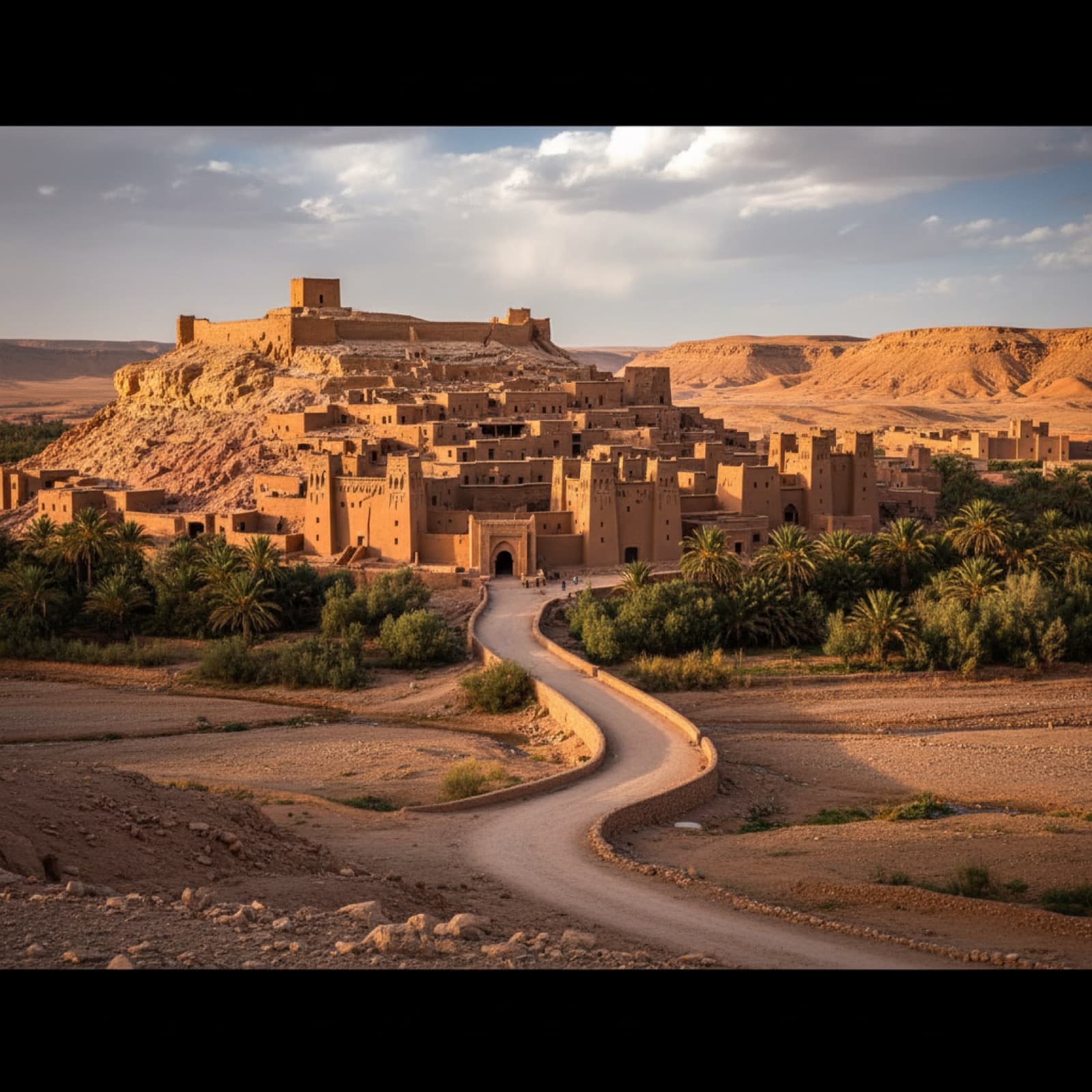
| Gladiator | Aït Ben Haddou & Ouarzazate | Roman province of Zucchabar (2000) |
| Black Hawk Down | Salé & Rabat | Mogadishu, Somalia (2001) |
| Kingdom of Heaven | Ouarzazate / Atlas Studios | Jerusalem & the Crusades (2005) |
| Babel | Ouarzazate region | Rural Morocco itself (2006) |
| Inception | Tangier | Mombasa, Kenya (2010) |
| Spectre | Tangier, Erfoud, Oujda | North Africa & the Sahara (2015) |
| Game of Thrones | Essaouira & Aït Ben Haddou | Astapor, Yunkai, Pentos (2011-2013) |
Can you visit the film studios and sets?
Yes, and this is the part most travellers underrate. Atlas Studios, on the road between Ouarzazate and Marrakech, runs ticketed guided tours that walk you past surviving sets, including Egyptian temples, a Tibetan monastery built for Kundun, and Roman and biblical backlots. CLA Studios, the second major facility in town, is more focused on active production but anchors Ouarzazate firmly as Morocco's film capital.
Atlas Studios is often described as one of the largest studios in the world by surface area, and portions of more than 200 films and series have been shot on site. The sets are weathered plaster and wood rather than stone, so it helps to arrive expecting a working backlot, not a polished theme park, the magic is seeing how flimsy materials become ancient cities on camera.
Practically, a studio visit is a guided loop of roughly an hour to ninety minutes, with a local guide pointing out which films used which set. You will pass the Tibetan monastery built for Martin Scorsese's Kundun, Egyptian columns from Cleopatra-style productions, and Roman walls reused across multiple sword-and-sandal epics. Photography is allowed, the standing sets change as old ones are struck and new ones built for current shoots, so no two visits look quite the same.
“Guests always picture a museum. What they get is a dusty backlot where a plywood temple was Cleopatra's Egypt last year and will be a Roman senate next year. That gap between the trick and the screen is the whole charm, and it lands hardest when you have just driven through the real landscape that framed those shots.”
— Youssef El Alaoui, Lead Morocco Specialist
Which filming locations are actually worth a traveller's day?
Not every set deserves a detour. Three places earn their place on a real itinerary on their own merits, with the film history as a bonus rather than the only reason to go.
- Aït Ben Haddou - a UNESCO-listed fortified ksar that is genuinely beautiful at sunrise, and the single most-filmed spot in the country (Gladiator, Kingdom of Heaven, Game of Thrones).
- Atlas Studios, Ouarzazate - the ticketed studio tour, best as a 60-90 minute stop while passing through, not a destination in itself.
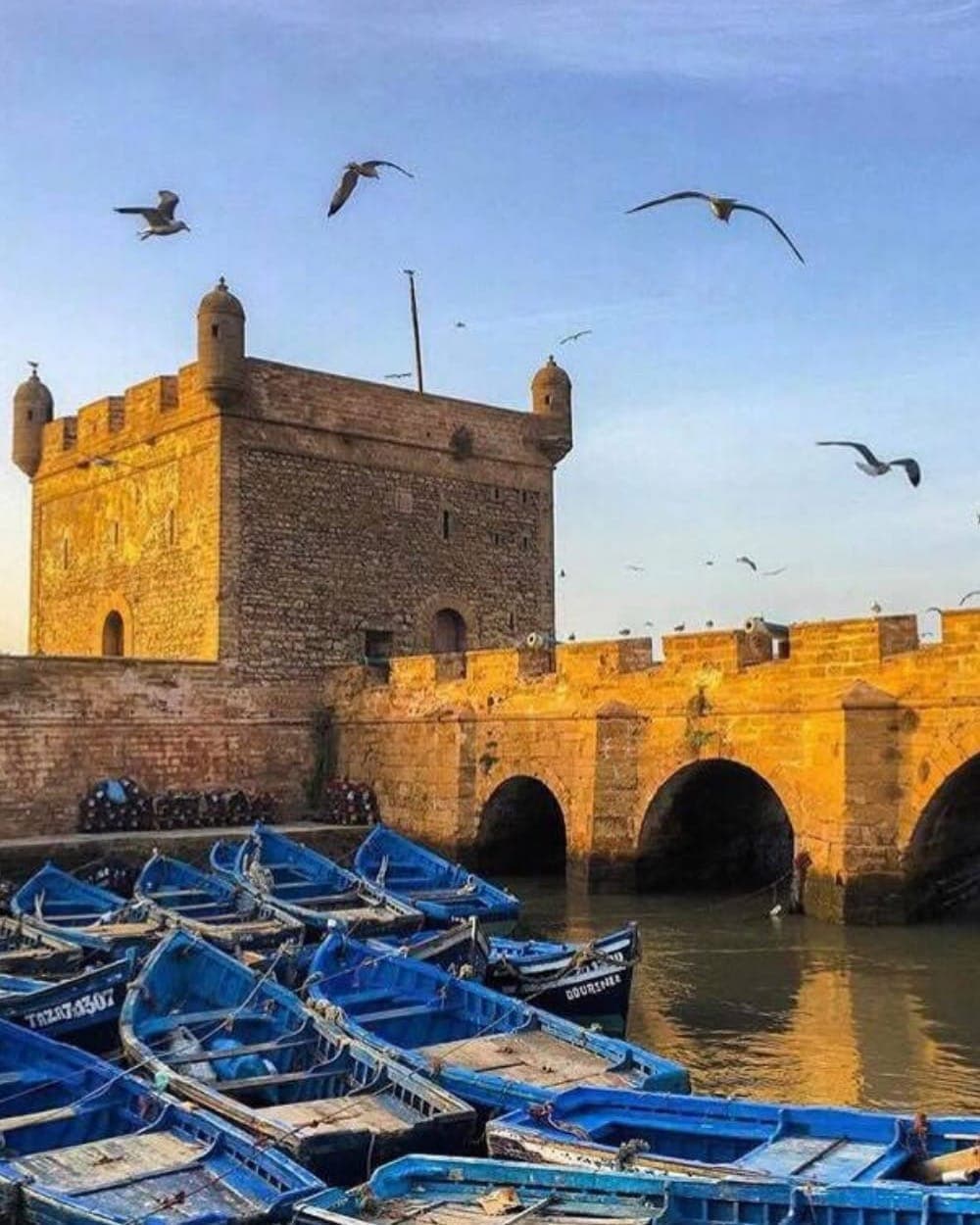
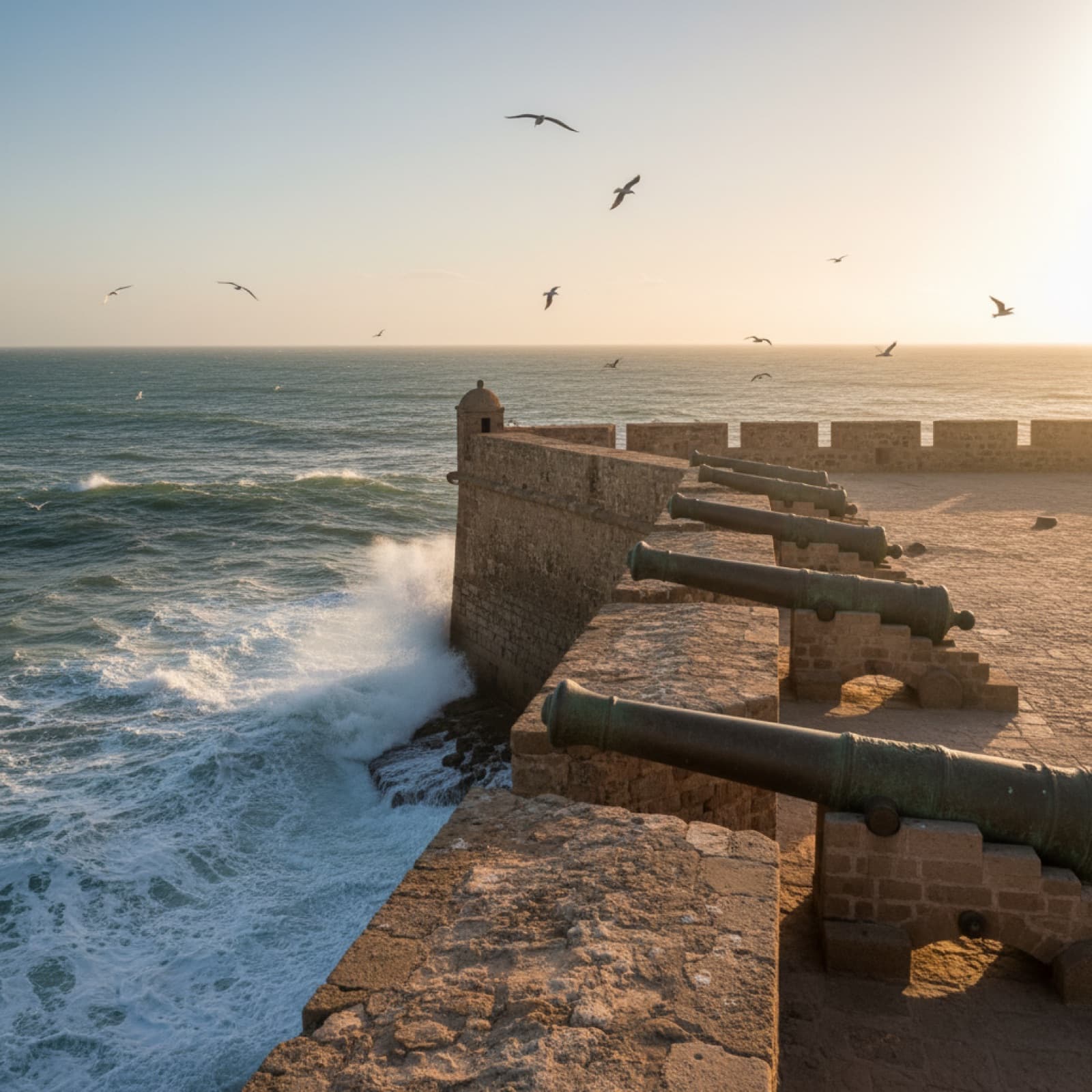
- Essaouira ramparts and Skala du Port - the breezy Atlantic walls that played Astapor in Game of Thrones, worth a full relaxed day for the medina, seafood and wind.
The honest read: Aït Ben Haddou and Essaouira would be on a good Morocco route even if no film crew had ever shown up. The studios are a fun add-on for fans. If you are deciding what to prioritise, lead with the destinations and let the movie trivia ride along. We have stood at Aït Ben Haddou with travellers who came purely for Gladiator and left talking about the light, the river crossing and the Berber families who still live in the ksar, the film was the hook, the place was the payoff.
Was Game of Thrones filmed in Morocco?
Yes. Three Moroccan locations carried the Daenerys storyline that runs from late season two into season three. Essaouira's ramparts and Skala du Port, the 18th-century sea fortifications dating to the 1760s, became Astapor, the city where she frees the Unsullied; the ramparts also stand in for the walk near Pentos. Aït Ben Haddou doubled for Yunkai, the second slaver city she besieges. And sets at Ouarzazate's studios contributed interiors and exteriors for Essos scenes.
If you are travelling for the show specifically, the easiest pairing is Essaouira on the coast plus Aït Ben Haddou inland, both reachable from Marrakech, with the Ouarzazate studios slotted in between if you are crossing the Atlas anyway. Essaouira's walls are an easy day trip west of Marrakech, while Aït Ben Haddou sits on the opposite side of the mountains, so most fans split the two across separate legs rather than trying to chain them in one drive.
How do we build a film-locations trip?
The geography does the planning for you. Aït Ben Haddou and Ouarzazate sit together on the southern side of the High Atlas, an easy first leg out of Marrakech, while Essaouira is a separate coastal hop. A film-leaning route usually threads Marrakech, over the Tizi n'Tichka pass to Aït Ben Haddou and the studios, then onward toward the dunes near Merzouga before looping back, with Essaouira added as a relaxed coastal bookend.
If you want the deeper background on the single most-filmed location, read our spoke on Aït Ben Haddou's film and history, and see how the southern legs link together in the Road of a Thousand Kasbahs guide. For the coastal side, Essaouira's wind, waves and Gnawa covers the Astapor ramparts in context. When you are ready to turn the trivia into an actual route, our Morocco itinerary guide and the planner will shape it around your dates.
Written by
Amina Benkirane
Destination Editor
Writer and photographer covering the Maghreb. Ten years of wandering souks, kasbahs, and back roads most guidebooks miss.