An honest, practical answer on Morocco's tap water: it's chlorinated and treated in the cities, but most visitors should stick to bottled to avoid an unsettled stomach. Here's the real cause of traveller's tummy, what to pack, and the city-versus-rural nuance.
In the cities, Morocco's tap water is chlorinated and municipally treated, and locals drink it — but as a short-term visitor you'll almost certainly feel better sticking to bottled water. The risk is an unsettled stomach from unfamiliar microbiota, not "dirty" water.
That distinction matters, because the fear most first-timers arrive with — that Moroccan water is somehow contaminated or unsafe — is mostly wrong. Urban supply is treated to a standard, the national water utility ONEE runs the network, and millions of Moroccans drink straight from the tap every day with no issue. What trips up travellers is subtler: your gut is simply not adapted to the local mix of harmless microorganisms, and the combination of a long flight, new food, heat, and a different water profile can leave you off-colour for a day or two.
We've guided couples and families across Morocco for years, and this is one of the top three pre-trip worries we hear, usually phrased as "will the water make us sick?" The honest answer is that with a few cheap, easy habits — and bottled water that costs almost nothing and is sold absolutely everywhere — the vast majority of our guests sail through with no stomach trouble at all. This guide walks through exactly how to do that, calmly and without paranoia.
Is the tap water in Morocco actually safe to drink?
In the major cities, yes — the public supply is treated and chlorinated to a recognised standard, managed nationally by the utility ONEE (Office National de l'Électricité et de l'Eau Potable). It is not raw, untreated water. Locals drink it routinely.
The honest nuance for a visitor is that "safe for residents" and "ideal for a two-week tourist" are not the same thing. Chlorination keeps the water microbiologically sound at the treatment plant, but a few real-world factors still matter: older building plumbing and rooftop storage tanks in some medina houses, the chlorinated taste many travellers dislike, and — the big one — the fact that your digestive system has never met the local microbial baseline. None of that makes the water dangerous. It simply means the cautious, comfortable choice for a short trip is bottled or filtered water for drinking. Most government travel-advice pages (the UK's FCDO and the US State Department among them) take exactly this measured line: tap water in cities is generally treated, but visitors commonly prefer bottled to avoid an upset stomach. That's the framing we'd give a friend, too.
What actually causes traveller's diarrhoea in Morocco?
Most traveller's diarrhoea is bacterial, not a sign of poisoned water. The single most common culprit worldwide is a strain of E. coli (enterotoxigenic E. coli), per the World Health Organization — and it more often reaches you through food and food-handling than through a glass of treated tap water.
This is the part that reframes the whole worry. People fixate on the tap, but the more frequent routes are unwashed hands in food prep, salads rinsed in untreated water and eaten raw, food left warm too long, or simply a sudden change in diet and a stressed, jet-lagged gut. Heat plays a role: in a Marrakech summer where afternoons push well past 38°C, food spoils fast and dehydration lowers your resilience. So the smartest defence isn't bottled-water paranoia alone — it's sensible food habits: eat at busy places with high turnover, favour cooked-and-hot over raw-and-room-temperature, peel your own fruit, and wash or sanitise your hands before eating. Get those right and you've addressed the larger share of the actual risk. For the bigger safety picture beyond your stomach, our honest take on whether Morocco is safe for visitors is a useful companion read.
How cheap and available is bottled water in Morocco?
Very. Bottled water is sold on practically every corner — hanouts (corner shops), supermarkets, petrol stations, cafés, and medina stalls — and it is genuinely inexpensive. A 1.5-litre bottle from a shop typically costs only a few dirhams; buying it adds almost nothing to a trip budget.
The familiar local brands are Sidi Ali and Sidi Harazem (still mineral waters) and Oulmès (the well-known sparkling option) — all widely trusted and easy to find. As a rough guide, a 1.5L still bottle runs around 6–10 dirhams in a shop (roughly US$0.60–1.00), a touch more in a tourist café and noticeably more from a hotel minibar, where the same bottle might be 25–40 dirhams. The economical move our drivers use: buy a large multipack from a supermarket like Carrefour or Marjane at the start, keep it in the vehicle, and refill a smaller bottle for the day. Because the unit cost is so low, there's no financial reason to gamble on tap water for drinking — and you'll never be more than a short walk from a fresh bottle. If you're broadly weighing trip costs, our guide to whether Morocco is expensive puts water and the rest in context.
| Source | Typical price (1.5L still) | Notes |
|---|---|---|
| Corner shop / hanout | ≈ 6–10 MAD (US$0.60–1.00) | Cheapest and everywhere; the everyday choice |
| Supermarket multipack (Carrefour, Marjane) | ≈ 4–7 MAD per bottle | Best value; stock up for a road trip |
| Tourist café / restaurant | ≈ 10–20 MAD | Modest markup; perfectly normal |
| Hotel minibar | ≈ 25–40 MAD | Convenient but the priciest per litre |
Can you brush your teeth with tap water in Morocco?
In the cities, brushing your teeth with tap water is generally fine for most visitors — the quantity swallowed is tiny and the water is chlorinated. If you're being extra cautious, or you have a sensitive stomach, just brush with bottled water; it costs almost nothing to play it safe.
We're deliberately undramatic about this because over-caution here makes people anxious for no real gain. The travellers most likely to react to trace amounts are those with a known delicate gut, young children, or anyone already feeling off. In remote rural lodgings, where the supply may be a local well or spring rather than the municipal network, brushing with bottled water is the safer default. A practical rhythm many of our guests settle into: bottled water for drinking and brushing in the desert and deep countryside, and a relaxed attitude to tooth-brushing from the tap in a good city hotel. The mouthful you might swallow is far less of a factor than the salad you eat or the hands that prepared it.
Is ice safe in Morocco, and what about salads and street food?
Ice and raw salads are the classic blind spots — both can be made or washed with untreated water. In established hotels, riads, and tourist-facing restaurants the ice is typically made from treated or bottled water and is fine; at informal street stalls it's harder to know, so use a little judgement.
Here's the calm, practical version we give guests. Ice: in reputable venues, don't worry about it; at a roadside stand in deep heat, you can simply skip it. Salads: cooked vegetables are a safer bet than raw leaves rinsed in tap water, though in good restaurants raw salads are usually prepared carefully and most travellers eat them happily. Street food: Morocco's street food is one of the joys of the trip and we'd never tell you to avoid it — just choose stalls with long queues and fast turnover (high throughput means fresher food and hotter cooking), and lean toward things served piping hot off the grill or out of the pot, like brochettes, harira soup, or freshly fried sfenj. Fruit you peel yourself — oranges, bananas — is always a safe, refreshing option. The goal isn't to eat nervously; it's to eat where the locals eat and favour hot and fresh.
Do riads and hotels in Morocco have filtered water?
An increasing number of better riads and hotels provide filtered drinking water — a carafe in the room, a filtered dispenser in the courtyard, or complimentary bottles — partly for guest comfort and partly to cut single-use plastic. It varies widely by property, so it's worth asking when you book.
On the trips we run, a noticeable share of the boutique riads and upper-tier hotels in places like Marrakech now offer in-room filtered or bottled water as standard, and some have a refill station so you can top up a reusable bottle. This is the genuinely sustainable middle path: you get safe drinking water without buying a fresh plastic bottle every few hours, which matters in a country where waste handling is still developing. If reducing plastic is something you care about, a decent travel filter bottle (the kind with a built-in microbiological filter) is a sound backup — it lets you safely drink from a wider range of taps and saves a small fortune in bottles over a two-week trip. When you book a stay, a simple question — "do you provide filtered drinking water?" — usually gets a clear answer.
Is the water different in rural Morocco and the Sahara?
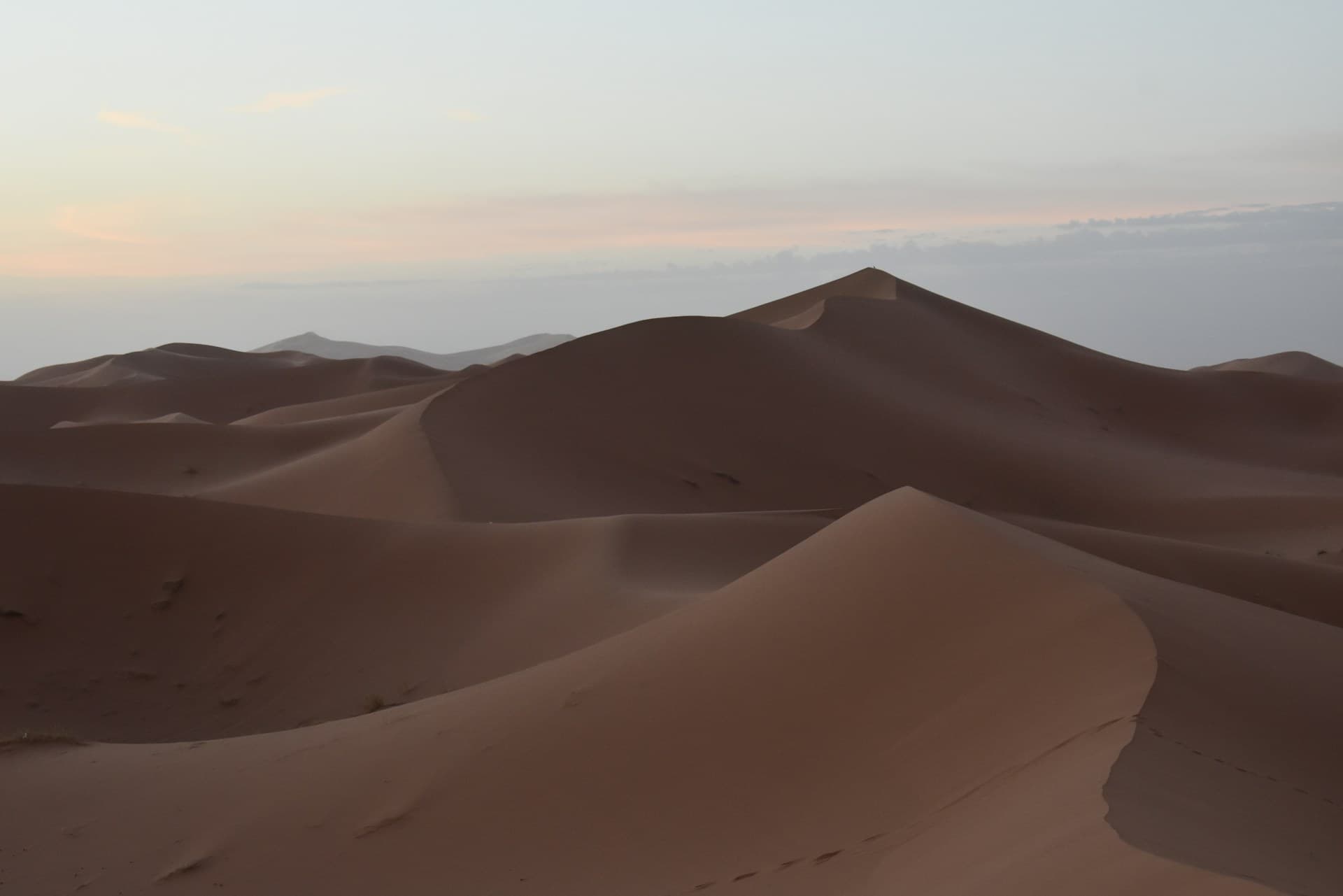
Yes — this is where the city rule bends. Outside the municipal network, in mountain villages, oasis settlements, and desert camps, water may come from a well, spring, or local borehole rather than a chlorinated city supply. In those places, stick firmly to bottled or properly filtered water for everything you drink.
The contrast is real. Tap water in central Marrakech, Fes, Casablanca, or Rabat is treated municipal supply; water at a remote auberge in the High Atlas or a camp out toward Merzouga in the Sahara may not pass through any treatment plant at all. It isn't necessarily bad — countless people drink it daily — but a visitor's gut has even less reason to be acquainted with it, and medical help is further away if you do react. The drivers we work with always carry a stocked cooler of bottled water for desert and mountain legs precisely so guests never have to think about it. If a Sahara night under the stars is on your itinerary, our comparison of the two main desert gateways, Merzouga versus Zagora, helps you plan the logistics — water included.
What should you pack to avoid stomach trouble in Morocco?
A tiny, cheap kit handles almost everything. The single most useful item isn't an anti-diarrhoeal — it's oral rehydration salts (ORS), because the real danger of a tummy upset in a hot climate is dehydration, not the upset itself. The WHO has promoted ORS for exactly this reason for decades.
- Oral rehydration salts (ORS) — sachets you dissolve in (bottled) water; the priority item, especially in heat.
- Hand sanitiser — a small bottle for before meals and after markets, where soap isn't always handy.
- Loperamide (e.g. Imodium) — useful to control symptoms on a long travel day, though it treats the symptom, not the cause.
- A reusable filter water bottle — optional, but cuts plastic and widens your safe-tap options.
- Probiotics — some travellers swear by starting them a few days pre-trip; evidence is mixed but harmless to try.
If you do get caught out, the playbook is simple: rest, sip ORS steadily to stay hydrated, eat plain food, and let it pass — most cases clear within a couple of days. Seek a doctor (Moroccan cities have good private clinics and pharmacies are excellent and ubiquitous) if there's high fever, blood, or symptoms lasting beyond a few days, particularly for children or older travellers.
In summary — should you drink the tap water in Morocco?
For a short trip, the simple answer is: drink bottled or filtered water, and relax about the rest. Morocco's city tap water is treated, chlorinated, and drunk daily by locals — it isn't dirty or dangerous — but your gut isn't adapted to the local microbiota, so bottled is the comfortable choice, and it's so cheap and ubiquitous that there's no reason not to. Brushing your teeth from a city tap is generally fine; in rural areas and the desert, use bottled for everything. Remember that most stomach trouble comes from food and hands, not the tap, so eat where it's busy and hot, peel your own fruit, sanitise before meals, and pack oral rehydration salts. Do that, and water simply stops being something you have to think about.
Should you sort the water-and-food logistics yourself or with help?
You can absolutely manage this solo — most independent travellers do, and a multipack from any supermarket plus a little common sense covers it. The friction is small but real: keeping water stocked across long desert and mountain drives, knowing which rural stops are safe, and judging unfamiliar food stalls in the first jet-lagged days when your guard is lowest.
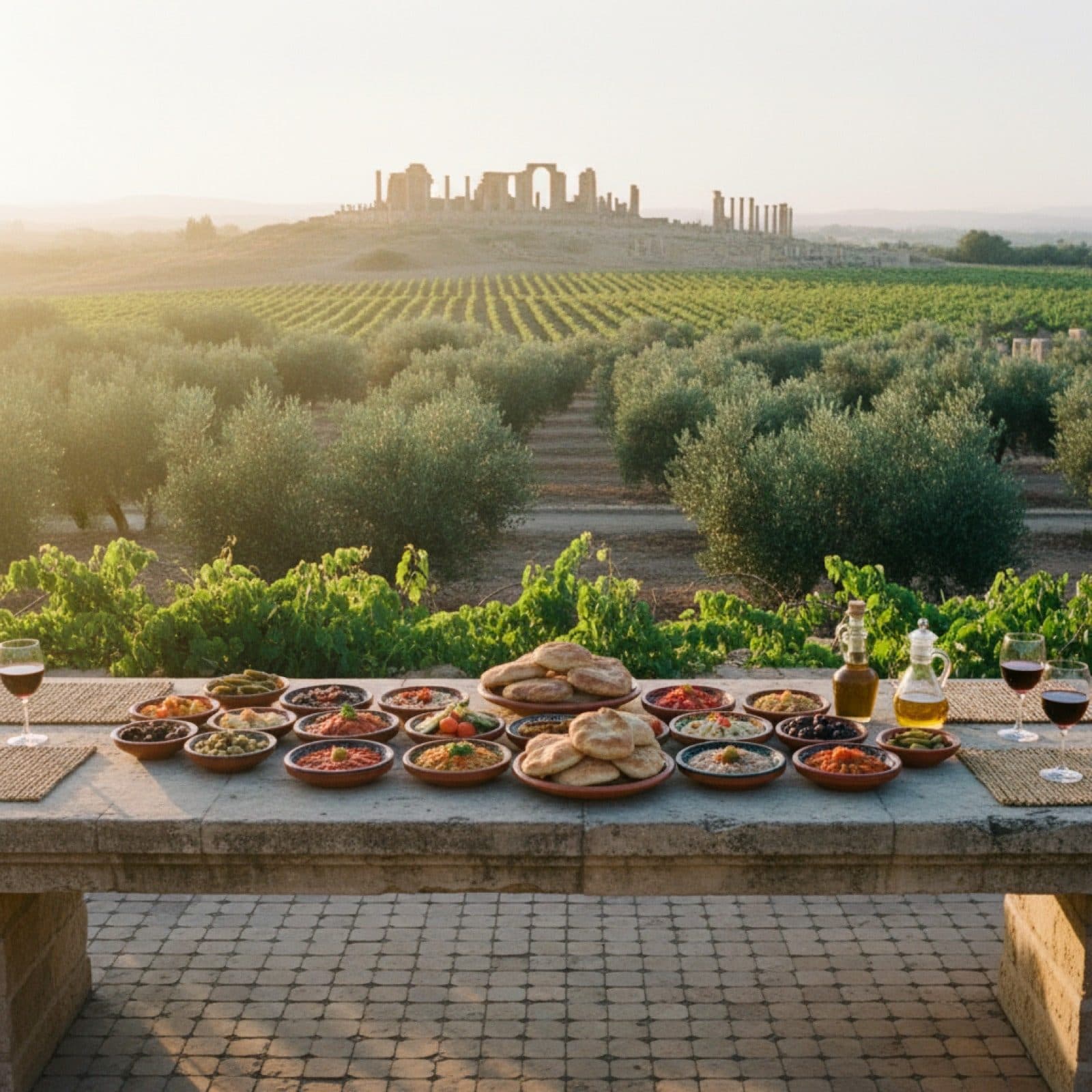
If you'd rather not think about any of it, a private driver-guide quietly removes the whole question — the vehicles we run carry a cold supply of bottled water as standard, and the guide steers you toward the food stalls and tables locals trust, which is where most stomach trouble is actually avoided. For travellers who want to lean into Morocco's food and markets specifically, our private terroir tour through the imperial cities is built around eating well and safely at the country's best tables. It's genuinely just one option with honest trade-offs — independent travel here is very doable — but if a worry-free version appeals, you can plan a private trip with us and we'll handle the small stuff so you can enjoy the big things.
Written by
Amina Benkirane
Destination Editor
Writer and photographer covering the Maghreb. Ten years of wandering souks, kasbahs, and back roads most guidebooks miss.