A first-hand guide to the Moroccan hammam: what to expect, what to wear, etiquette, the step-by-step ritual, and how public baths differ from spas.
A Moroccan hammam is a traditional steam bathhouse where you sweat, get scrubbed head-to-toe with a coarse glove, and rinse clean — and yes, you keep your underwear on. There are two kinds: the cheap neighbourhood (public) hammam locals use weekly for around 10-20 MAD, and the booked spa hammam in riads and hotels (roughly 150-600 MAD). Both share the same ritual roots: steam, black soap, and exfoliation.
If the idea of being scrubbed by a stranger sounds intense, you are not alone — most first-timers feel that way. But the hammam is the most ordinary, beloved part of Moroccan life, and once you understand how it works, the nerves usually melt in the steam. This is the guide I give my own guests before their first visit.
What is a Moroccan hammam?
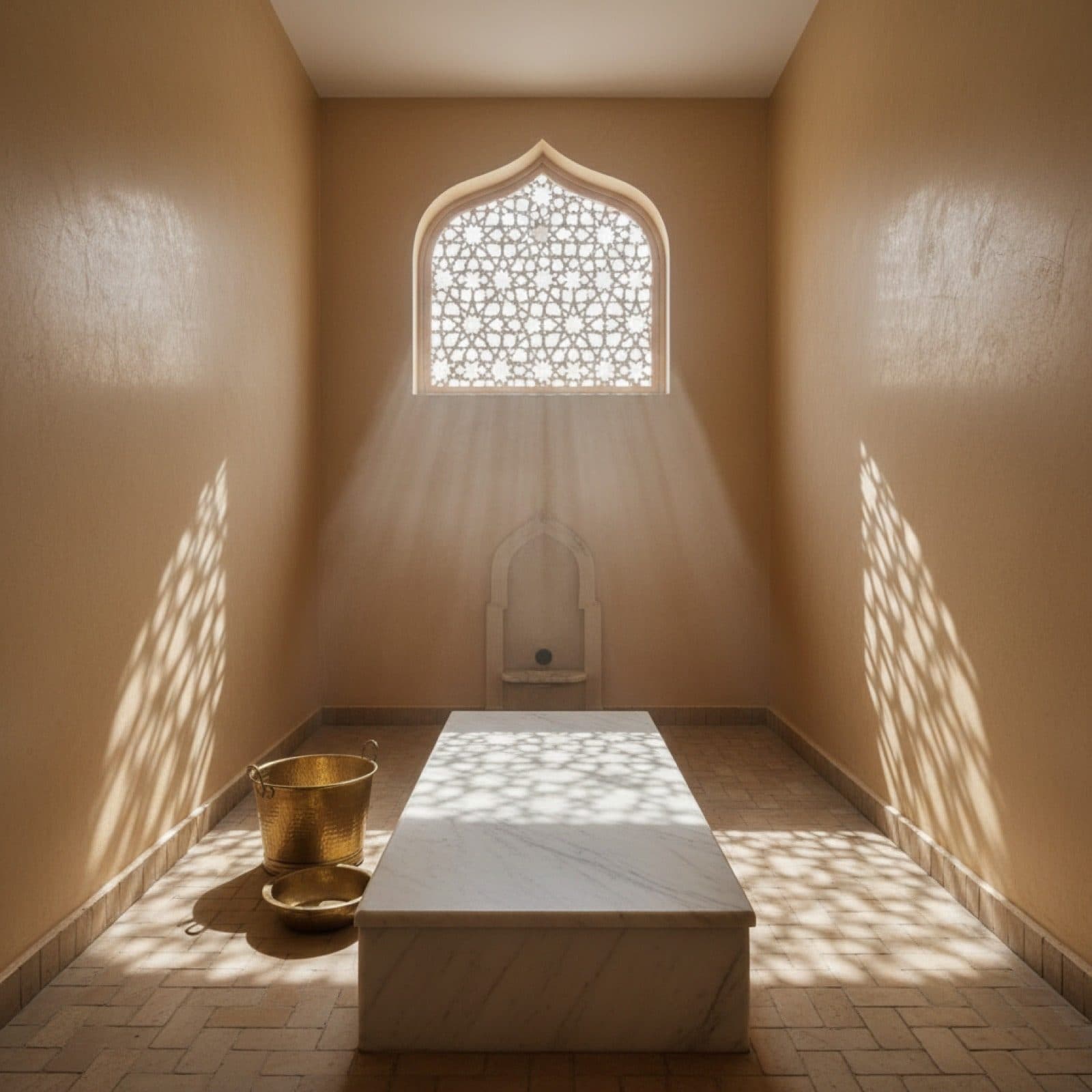
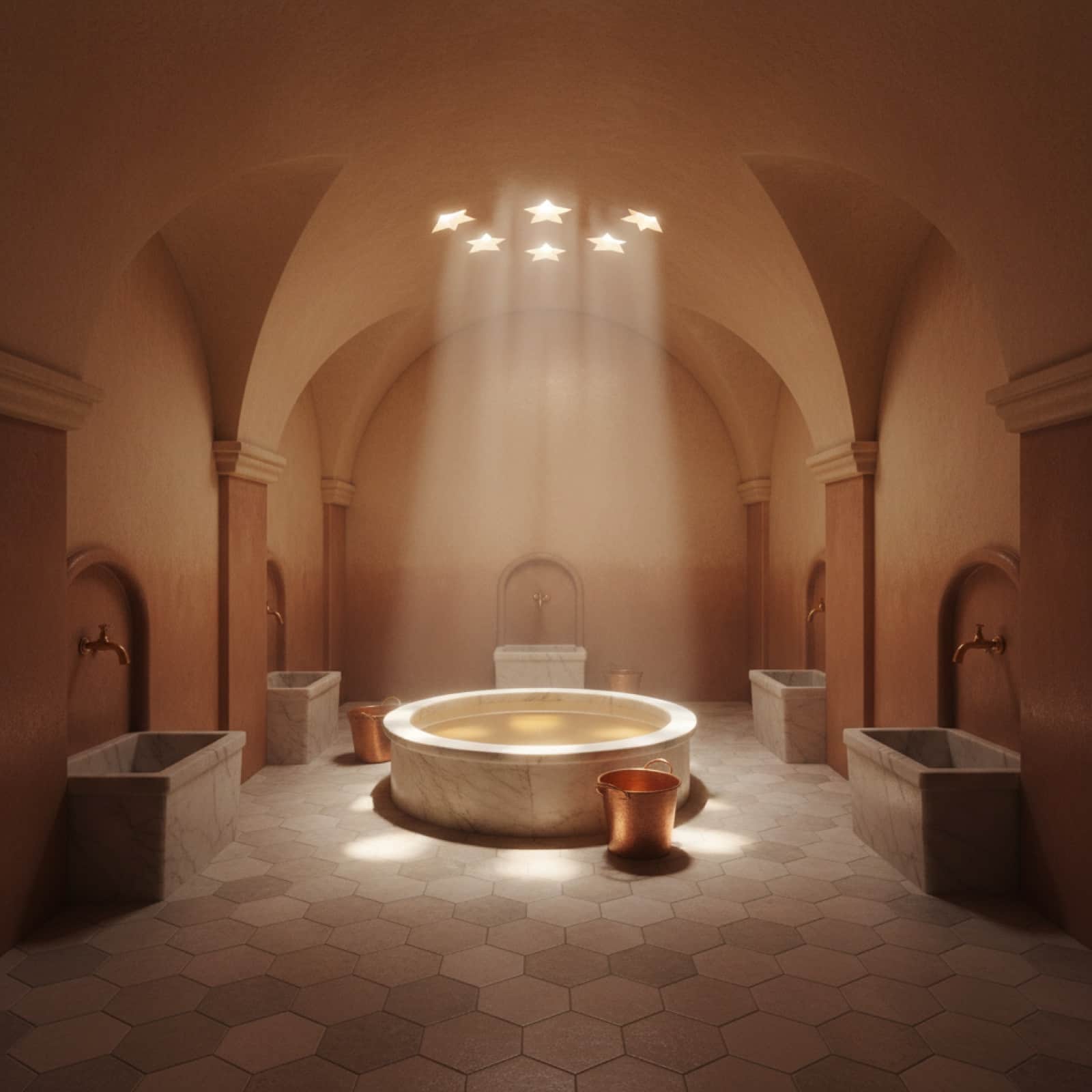
A hammam is a Maghrebi steam bathhouse — a sequence of warm, humid rooms where you bathe, exfoliate, and relax. The word comes from the Arabic root for 'heat.' It is both a place to get clean and, for centuries, a place to gather, gossip, and mark life events.
The form descends directly from the Roman thermae and merges with the Islamic tradition of ritual washing (ablution) before prayer. As the Metropolitan Museum of Art notes, the hammam served both religious and civic needs in an era before homes had private plumbing.
Historically, houses inside the medinas of Marrakech and Fes had no bathrooms, so families walked to the neighbourhood hammam each week. That weekly rhythm still shapes Moroccan life today, and many traditional hammams were built beside a mosque, sharing its furnace and water supply.
Public hammam vs spa hammam — which to choose?
This is the first decision, and it changes everything about the experience. A public (neighbourhood) hammam is raw, communal, and authentic — you bring your own supplies and bathe alongside locals. A private or spa hammam is booked, calmer, and includes everything, often with a massage.
Neither is 'better.' The public hammam is a cultural plunge; the spa hammam is a treat. If it is your very first time and you want comfort and English-speaking staff, start with a riad spa. If you want the real social ritual, find a neighbourhood bath.
| Public (neighbourhood) hammam | Private / spa hammam | |
|---|---|---|
| Price | ~10-20 MAD entry; +~50 MAD for a scrub | ~150-600 MAD per treatment |
| Atmosphere | Communal, lively, no-frills, local women or men | Quiet, candle-lit, often private or in pairs |
| What's included | Just the room; you bring soap, glove, clay, bucket | Towels, robe, all products, scrub + often massage |
| Staff | A tayyaba/attendant scrubs you for a tip (~10-15 MAD) | Trained therapist, booking, fixed price |
| Best for | Cultural immersion, repeat visitors, budget travellers | First-timers, couples, those wanting privacy |
What actually happens, step by step?
The ritual is the same skeleton everywhere, whether you scrub yourself in a public bath or a tayyaba (attendant) does it for you in a spa. It is a slow, deliberate sequence — not a quick shower.
- 1. Steam: You sit in a hot, humid room for 10-15 minutes so the heat opens your pores and softens your skin.
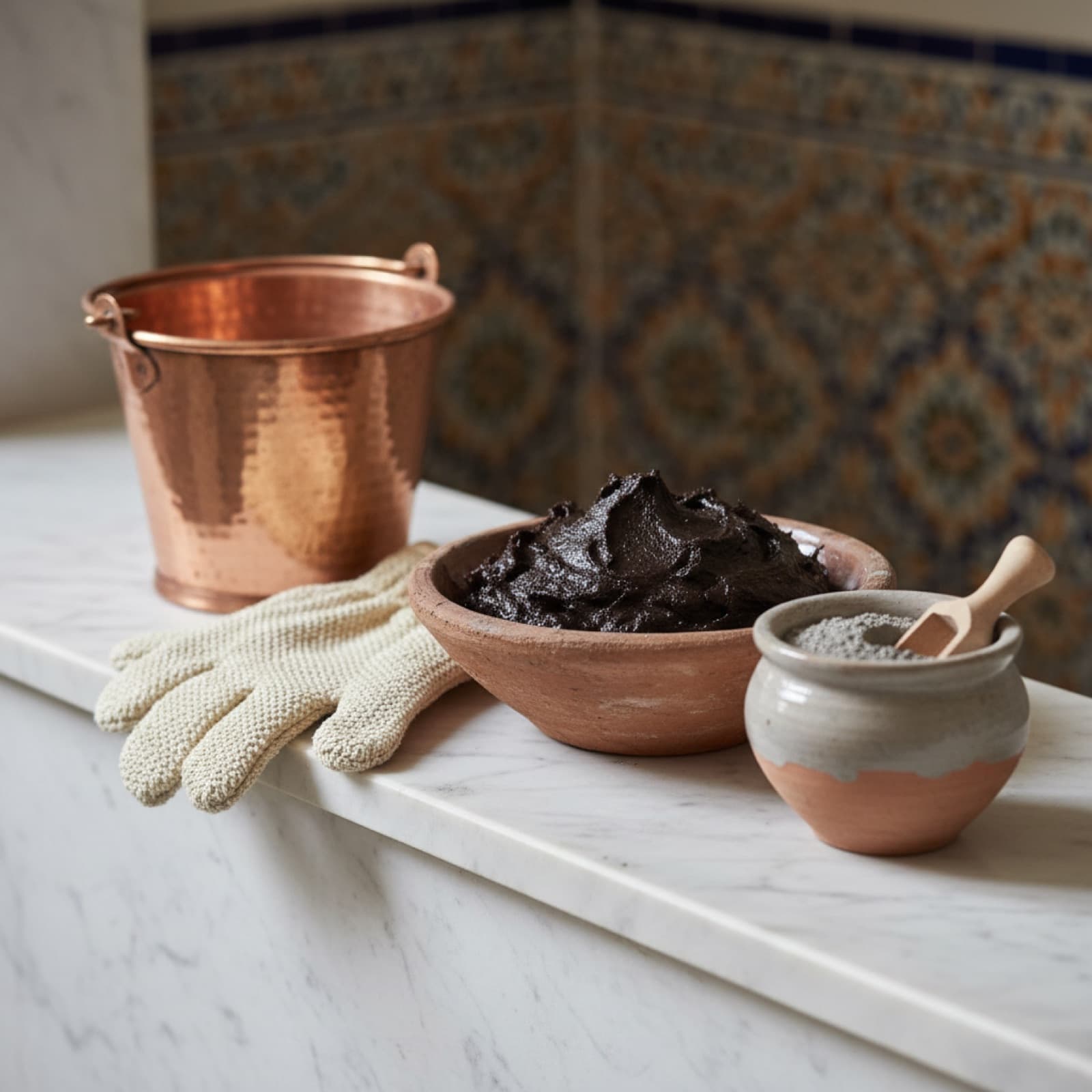
- 2. Savon beldi: Dark, buttery black olive soap is spread over your whole body and left to sit for 5-10 minutes.
- 3. Gommage (kessa exfoliation): A coarse kessa/kis glove is rubbed over your skin in firm strokes, lifting off rolls of grey dead skin. (This is the famous part — see below.)
- 4. Rhassoul clay: A mineral clay from the Atlas Mountains is sometimes applied to skin and hair to detoxify and soften.
- 5. Rinse: You pour warm water over yourself with a bucket, or are rinsed, until everything is washed away.
- 6. Optional massage: In a spa, the ritual often ends with an argan-oil massage.
About that dead skin: when the kessa glove comes off your forearm in little grey rolls, that is completely normal and the entire point. Everyone's does it — even people who shower daily. It is sloughed-off dead skin, not dirt, and your skin feels astonishingly smooth afterward.
What do you wear (and what to bring)?
You keep your underwear or swimwear bottoms on — full nudity is not the norm. In the women's section, women are often topless but always keep their bottoms on; men keep shorts or underwear on. Bring a dry change of underwear for afterward, because the pair you wear in will get soaked.
For a public hammam you bring everything yourself; a spa provides it all. My packing list for a neighbourhood bath:
- Flip-flops or sandals (the floors are wet and hot)
- A towel — sometimes two (one to sit on, one to dry)
- Savon beldi and a kessa glove (buy both in any souk or pharmacy)
- Optional rhassoul clay
- A small plastic mat or stool and a bucket (often rentable for a few dirhams)
- A dry change of underwear
- Shampoo and a comb
- Small dirham coins for the entry fee and the attendant's tip
“I tell every guest the same thing: do not over-think the outfit. Bottoms stay on, that is the only rule that matters. Bring flip-flops, two towels, and a dry pair of underwear, and you are ready. The first thirty seconds feel strange; by minute five you will understand why we have done this for a thousand years.”
— Amina, Morocco Beauty Spots travel host
Are men and women separated?
Yes. Public hammams are strictly gender-separated — either by having two sections, or, more often, by time of day: men in the early morning and late evening, women through the middle of the day. The schedule is posted at the door or known to the neighbourhood.
Spa hammams in riads and hotels are different: they are usually private or couples' rooms, so mixed-gender couples can do the ritual together. If sharing the experience with a partner matters to you, book a private spa rather than walking into a public bath.
Is it worth it for first-timers?
Honestly, yes — and I say that as someone who watches nervous guests go in and walk out grinning. There is nothing quite like the cleanness and lightness afterward, and the public hammam is one of the few ways to step into ordinary Moroccan life rather than the tourist version of it.
If you are anxious, ease in. Book a riad spa hammam for your first time, where staff speak English, the pace is gentle, and you are not navigating an unfamiliar social space naked-ish in a crowd. Save the public bath for a return visit, once you know the rhythm.
A practical tip: plan your hammam for the afternoon or early evening, then keep the rest of the day soft. You will feel deeply relaxed, a little sleepy, and you will not want a packed sightseeing schedule straight after. Many of my guests now treat it as the gentle bookend to a long travel day rather than a quick errand.
How much does it cost & how often do locals go?
A public hammam costs about 10-20 MAD to enter — under two dollars. A scrub from the on-site tayyaba adds roughly 50 MAD, and a small tip of 10-15 MAD is customary. Most locals go weekly; it is part hygiene, part ritual, part catching up with neighbours.
Spa hammams are a different economy. A basic riad treatment starts around 150-250 MAD, and full packages with multiple scrubs, clay, and a massage can reach 450-600 MAD or more. You are paying for privacy, products, towels, and a trained therapist — not the same product at all.
Hammam etiquette: the unwritten rules
The hammam has its own quiet code. Following it marks you as a respectful guest rather than a gawking tourist, and it genuinely makes the experience smoother for everyone in the room.
- Keep your bottoms on — always. Nudity from the waist down is not done.
- No photos. Phones stay in your bag; the hammam is a private, intimate space.
- Keep your voice low and your gaze to yourself. Do not stare.
- Rinse your area and bucket before you leave so the next person finds it clean.
- Tip the tayyaba who scrubs you (~10-15 MAD in a public bath).
- Do not shave or do heavy grooming in a shared bath.
- Move slowly — the floors are wet, hot, and slippery.
- Drink water and rest afterward; the heat is more dehydrating than it feels.
One last note on respect: the hammam is a place locals treat almost reverently. Arrive curious and humble, and you will be welcomed warmly — Moroccan bath culture is famously generous to a polite first-timer.
Want to weave a hammam into a wider trip? The ritual pairs beautifully with the thermal springs and slow-living rhythm of our Healing Waters tour, or a single restorative afternoon inside a longer route like the 10-day Grand Tour. For planning around it, see our notes on the best time to visit Morocco, the wider list of things to do in Morocco, our Marrakech first-timer playbook, and the etiquette of tipping in Morocco so you arrive with the right small coins. When you are ready to build a trip that includes a proper hammam afternoon in Marrakech or Fes, tell us how you like to travel and we will plan it with you.
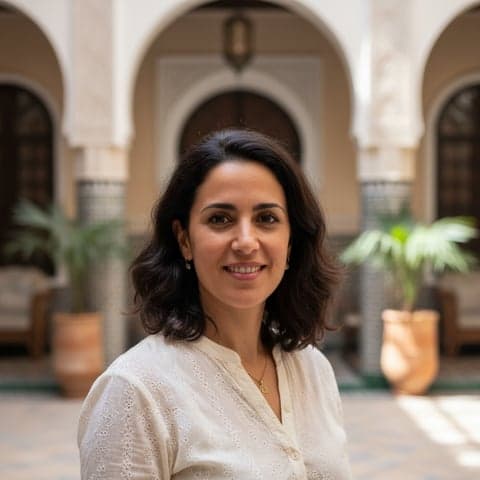
Written by
Amina Benkirane
Destination Editor
Writer and photographer covering the Maghreb. Ten years of wandering souks, kasbahs, and back roads most guidebooks miss.