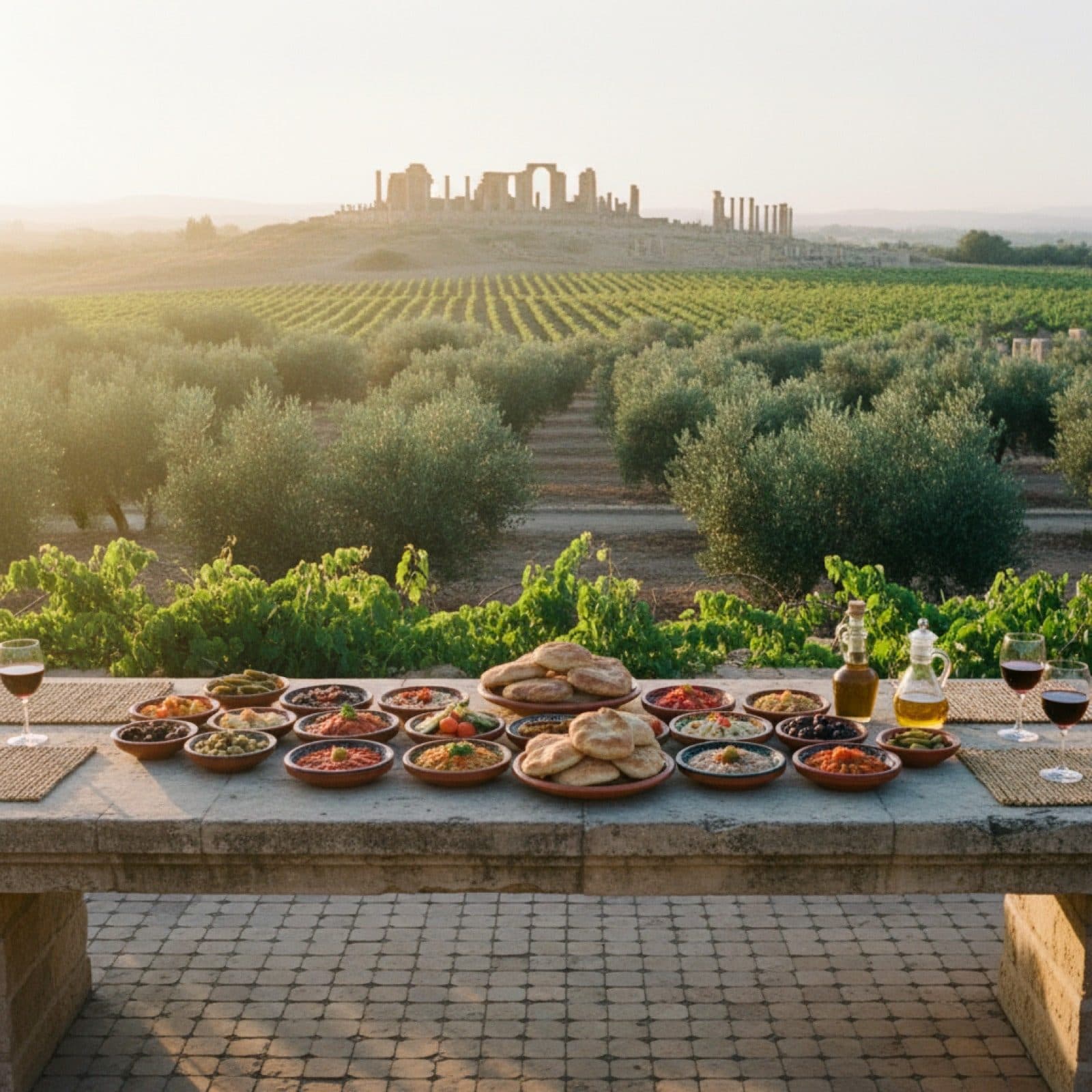
The Healing Waters retreat is a five-day Morocco hammam and thermal-springs journey for travellers who want to come back softer than they left. You move between two natural hot springs near Fes — Moulay Yacoub and Sidi Harazem — take the full ritual hammam in two cities, and spend the long middle of each day doing very little. The point is restoration, not sightseeing, so the schedule stays loose and the quiet stays protected.
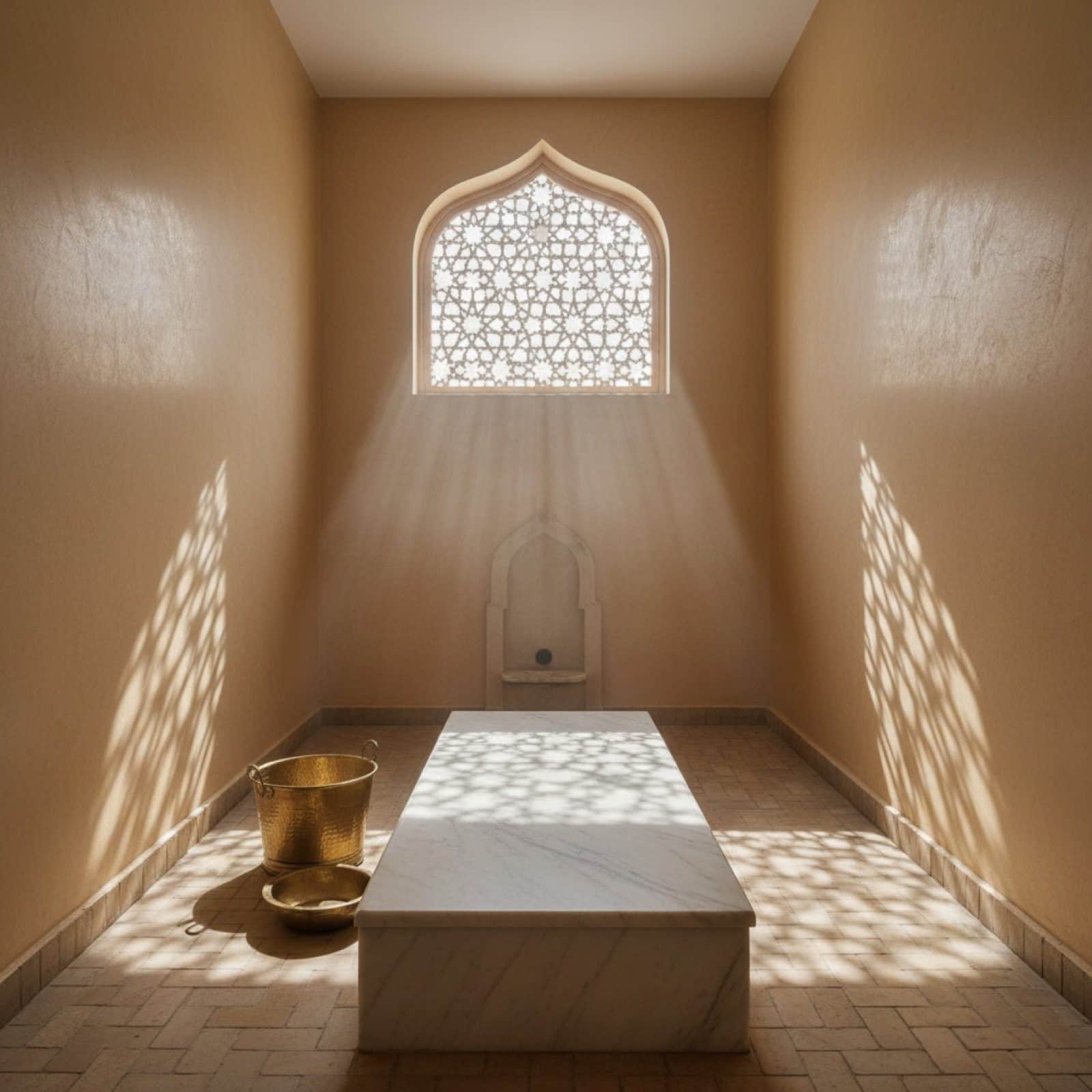
Water carries the week. At Moulay Yacoub, 21 km northwest of Fes, sulphurous water surfaces from 1,500 metres down at 54°C and is cooled to a soakable 38°C; an hour east, the springs of Sidi Harazem run cooler and mineral-soft. Between them sits the hammam itself — not a hotel spa treatment but the older ritual: the heat room, the steam, savon beldi worked into the skin, the kessa glove, a ghassoul-clay wrap, argan oil to close. You do it once in Fes and again, slower, in Marrakech.
We build the days around stillness on purpose. Mornings hold an optional dawn yoga or meditation window; afternoons are yours, in a riad courtyard, with no group itinerary pulling at you. There are no obligatory communal meals — eat with the others or eat alone with a book, as the day asks. A small group, capped at six, keeps the rooms from filling with noise.
One craft visit anchors the week without rushing it: a women's argan cooperative on the road toward Essaouira, where the nuts are still cracked by hand, stone on stone — a practice UNESCO recognised as Intangible Cultural Heritage in 2014. It is slow work, and watching it is its own kind of rest.
An honest note on what this is not. It is not a clinical thermal cure, and it is not a packed cultural tour — if you want kasbahs and dunes, this is the wrong week. The springs are public bathing sites, simple rather than luxurious, and the real luxury here is unstructured time. Best taken in spring (March–May) or autumn (September–November), when the gardens bloom and rooftop afternoons are mild.
- Soak at Moulay Yacoub, 21 km northwest of Fes, where sulphur-rich water (about 33 mg/L) rises from 1,500 m below ground and is cooled from 54°C to a bearable 38°C
- Bathe at Sidi Harazem, a calcium-rich magnesium-bicarbonate spring used since Roman times and bottled commercially since 1968, emerging at 34–38°C
- A full ritual hammam in the Fes medina — UNESCO-listed since 1981 and over 1,200 years old — where Hammam Saffarin has run since the 14th-century Marinid era
- The complete three-room hammam sequence: savon beldi black-olive soap, the kessa exfoliating glove, a ghassoul-clay wrap, and an argan-oil finish
- A women's argan cooperative on the Marrakech–Essaouira road where the fruit is still hand-cracked stone-on-stone — a craft on UNESCO's Intangible Cultural Heritage list since 2014
- Two quiet riads with deliberately empty afternoons, optional dawn yoga and meditation windows, and no obligatory group meals
- A second, unhurried hammam in Marrakech to close the week, followed by a rooftop tea and an early night
- Private transfers throughout and a small group capped at six, so the silence stays intact
Day by day
- Day 1
Arrive Fes — settling into quiet
Private transfer to a riad inside the Fes medina, the UNESCO-listed old city that has stood for more than 1,200 years and remains one of the largest car-free urban zones in the world. No agenda today beyond arriving. Tea on the roof, an early dinner if you want one, and a long first night of rest.
Stay overnight
- Day 2
Moulay Yacoub thermal springs
A short drive to Moulay Yacoub, 21 km northwest of Fes, where sulphur-rich water rises from 1,500 metres below ground at 54°C and is cooled to about 38°C for bathing. The thermal centre opened in 1993 beside the older traditional baths. We keep the afternoon open — back to the riad to do nothing, or linger in the warm water longer.
Stay overnight
- Day 3
Ritual hammam in the medina, then Sidi Harazem
Morning brings the full ritual hammam in the Fes medina — savon beldi, the kessa glove, a ghassoul-clay wrap, argan oil — in a tradition the medina's 14th-century Marinid baths have carried for centuries. Later, the calcium-rich magnesium-bicarbonate springs of Sidi Harazem, in use since Roman times. An optional dawn meditation window opens the day for those who want it.
Stay overnight
- Day 4
South to Marrakech — argan cooperative en route
Transfer toward Marrakech, stopping at a women's argan cooperative where the fruit is hand-cracked stone-on-stone, a craft on UNESCO's Intangible Cultural Heritage list since 2014. Arrive at a garden riad in the late afternoon with nothing scheduled. Optional sunset yoga on the roof.
Drive · 7h
- Day 5
A second, slower hammam — then depart
Close the week with an unhurried Marrakech hammam, slower than the first now that your body knows the rhythm: steam, scrub, clay, oil, rest. A final rooftop tea before your private transfer to the airport. You leave with softer skin and a quieter head.
End of journey
What's included
- 4 nights in two quiet riads (Fes medina and a Marrakech garden riad)
- Entry and bathing at Moulay Yacoub and Sidi Harazem thermal springs
- Two full ritual hammam sessions (Fes and Marrakech) with savon beldi, kessa, ghassoul and argan oil
- Guided visit to a women's argan cooperative
- All private transfers, including airport pick-up and drop-off
- Daily breakfast and optional dawn yoga / meditation windows
Not included
- International and domestic flights
- Lunches and dinners (kept à la carte so you can eat alone or with the group)
- Travel and medical insurance
- Optional spa add-ons (massage, private yoga instructor)
- Gratuities and personal purchases at the cooperative
- Thermal springs visited
- 2 (Moulay Yacoub & Sidi Harazem)
- Ritual hammam sessions
- 2 (Fes & Marrakech)
- Spring water temperature
- Cooled from 54°C to ~38°C
- Max group size
- 6 travellers
“People arrive wanting to see everything, and by day three they stop asking what's next. That's the moment the week is built for. The water does some of the work — Moulay Yacoub, the hammam, the long afternoon with nowhere to be — and the quiet does the rest.”
What past travellers say

Sophie & Marc
Paris, France
“The best trip of our lives. Our guide knew every village, every viewpoint, every hidden riad. Seven days in Morocco felt like a month somewhere else.”

James H.
London, UK
“Everything was seamless from landing in Fes to the Sahara camp and back to Marrakech. The night under the stars is something I'll never forget.”
Ana Rodrigues
Lisbon, Portugal
“Organized, warm, professional. They built the itinerary around what we loved and gave us complete freedom to stop anywhere along the way.”
Healing Waters: A Morocco Hammam & Thermal-Springs Wellness Retreat — frequently asked
- What is a Moroccan hammam and what happens during one?
- A hammam is a traditional steam bath built around three rooms — hot, warm and cool. You begin in the heat to open the pores, then savon beldi (a soft black-olive soap) is worked into the skin and left to soften it. A kessa glove scrubs away dead skin, a ghassoul-clay mask draws out impurities, and argan oil closes the ritual. It is communal, unhurried, and quietly social.
- Are the thermal springs at Moulay Yacoub and Sidi Harazem safe to bathe in?
- Yes. Both are long-established public bathing sites near Fes. Moulay Yacoub's sulphur-rich water rises at 54°C and is cooled to roughly 38°C before use; Sidi Harazem is gentler, a calcium-rich magnesium-bicarbonate spring used since Roman times and bottled since 1968. If you have heart conditions or are pregnant, check with your doctor first, as with any hot soak.
- Is this a clinical thermal cure or a relaxation retreat?
- It is a relaxation and wellness retreat, not a medical programme. The springs in Morocco are genuinely therapeutic and locals use them for rheumatism and skin conditions, but we treat the soak as restoration rather than treatment. If you need a supervised balneotherapy cure, you would want a dedicated thermal clinic, not this itinerary.
- Will there be forced group meals and a packed schedule?
- No — that is deliberately designed out. Afternoons are unscheduled, and meals beyond breakfast are à la carte, so you can eat with the group or alone with a book. There is an optional dawn yoga or meditation window each morning. The retreat suits people who want solitude as much as company; the group is capped at six to keep it that way.
- What is the best time of year for a Morocco wellness retreat?
- Spring (March to May) and autumn (September to November) are ideal. The weather is mild, riad gardens are in bloom, and rooftop afternoons are comfortable rather than baking. Summer in Fes and Marrakech can climb past 38°C, which makes hot springs and steam rooms less appealing, while deep winter evenings turn cool for open courtyards.
- Can you arrange private yoga or extra spa treatments?
- Yes. The dawn yoga and meditation windows are included as optional, but we can add a private instructor, additional massage, or a longer spa session at either riad on request. Tell us when you book and we will fold it into the quiet structure of the week rather than cramming the calendar.
- What is the argan cooperative visit, and why include it?
- On the drive south to Marrakech we stop at a women's cooperative where argan fruit is still cracked by hand, stone on stone — a craft UNESCO inscribed as Intangible Cultural Heritage in 2014. It is slow, rhythmic work, and watching it fits the mood of the week. You can buy hand-pressed oil directly, supporting the women who made it.
- Is this Moroccan spa itinerary suitable for solo travellers?
- Very much so. The slow pace, optional solo dining and unscheduled afternoons were designed with solo restoration in mind. The hammam is communal but gentle, and the small group of up to six means you are never lost in a crowd nor forced into constant company. Many guests come alone precisely for the quiet.