Morocco Beauty Spots
Circuito privado por Marruecos · Adventure

The Bald Ibis Quest

Agadir → Souss-Massa • 4 Days

Adventure4 días
Desde$850por persona
4.9Planificar este viaje

Respuesta en 24 hSin depósito4×4 privado en todo el viaje

A 4-day birding tour from Agadir into Souss-Massa National Park and the Tamri coast to see the Northern Bald Ibis (Geronticus eremita) — one of the world's rarest birds, of which Souss-Massa and Tamri hold about 95% of the truly wild breeding population. Led by a credentialed bird guide, with a no-approach ethic at the cliff colonies, plus 250+ other species including Marbled Duck and the endemic Moussier's Redstart. Small groups, max 6.

The Bald Ibis Quest

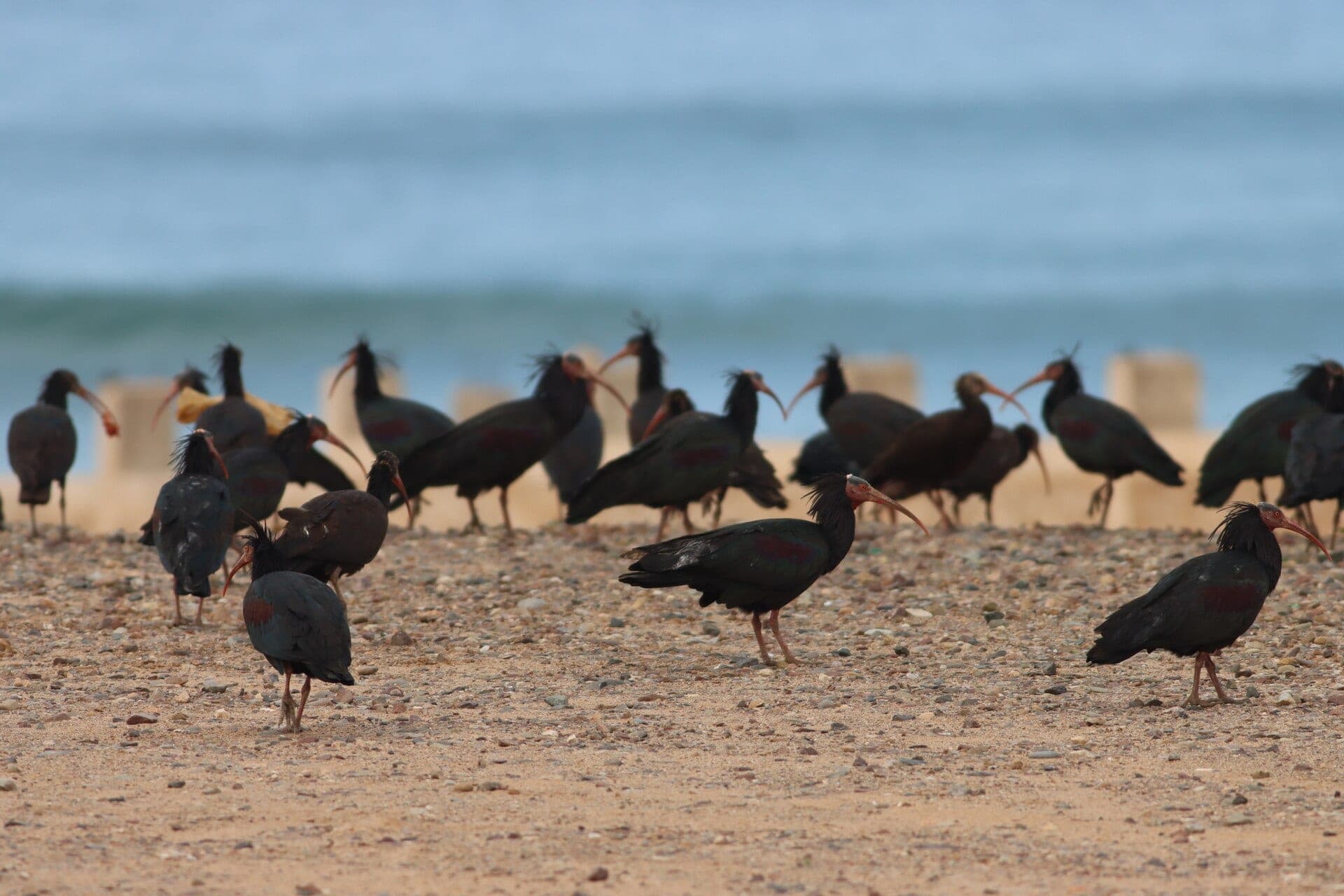
The Bald Ibis Quest is a 4-day birding tour out of Agadir built around one of the great conservation success stories in the world — and one of its rarest birds. The Northern Bald Ibis was, for most of the 20th century, sliding toward extinction; it vanished as a breeding bird from Europe more than 300 years ago and declined roughly 98% between 1900 and 2002. Today the only place on Earth you can reliably watch a truly wild population is here, on the Atlantic coast of Morocco: Souss-Massa National Park and the nearby Tamri colony together hold about 95% of the world's wild breeding birds.

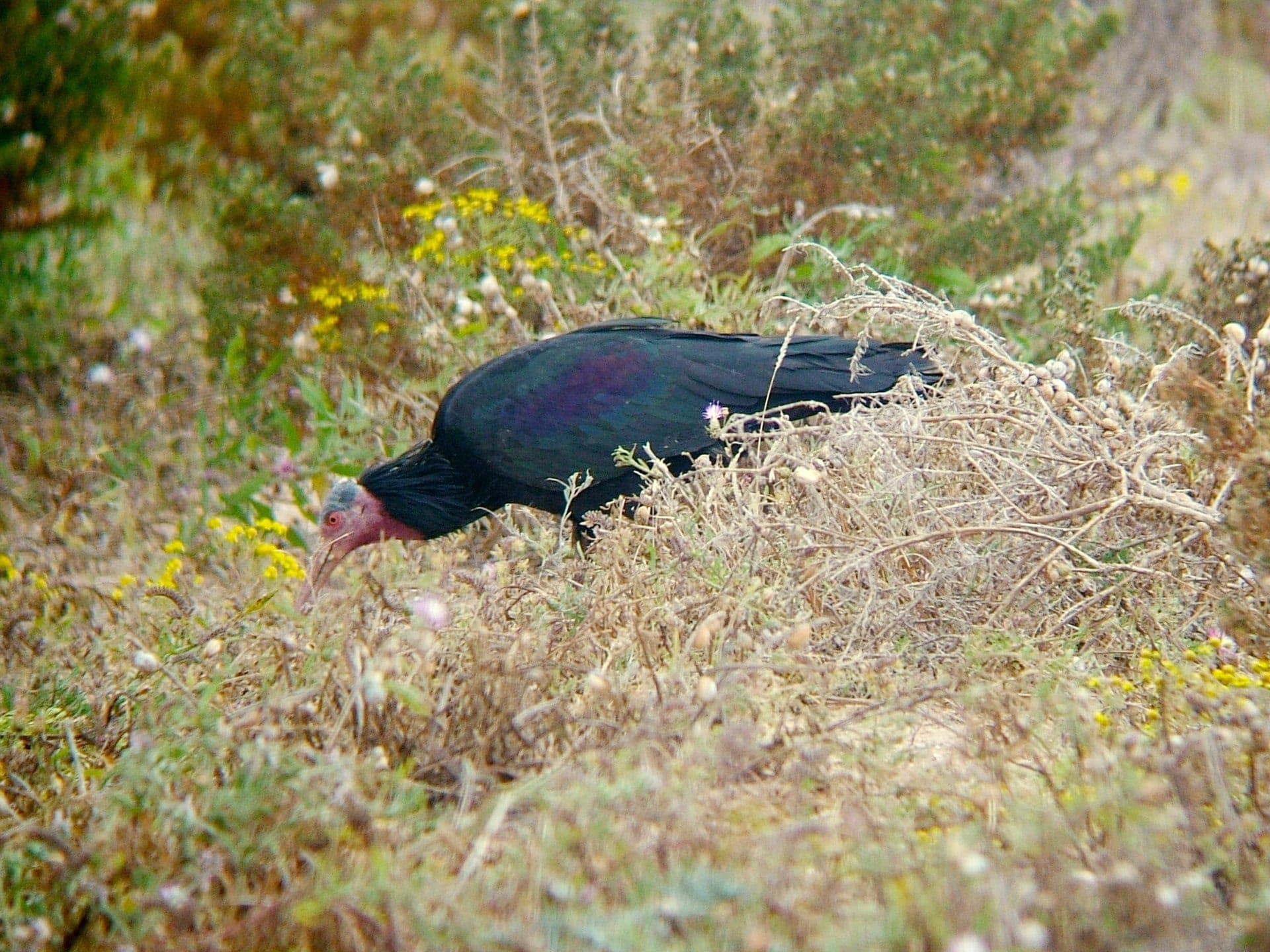
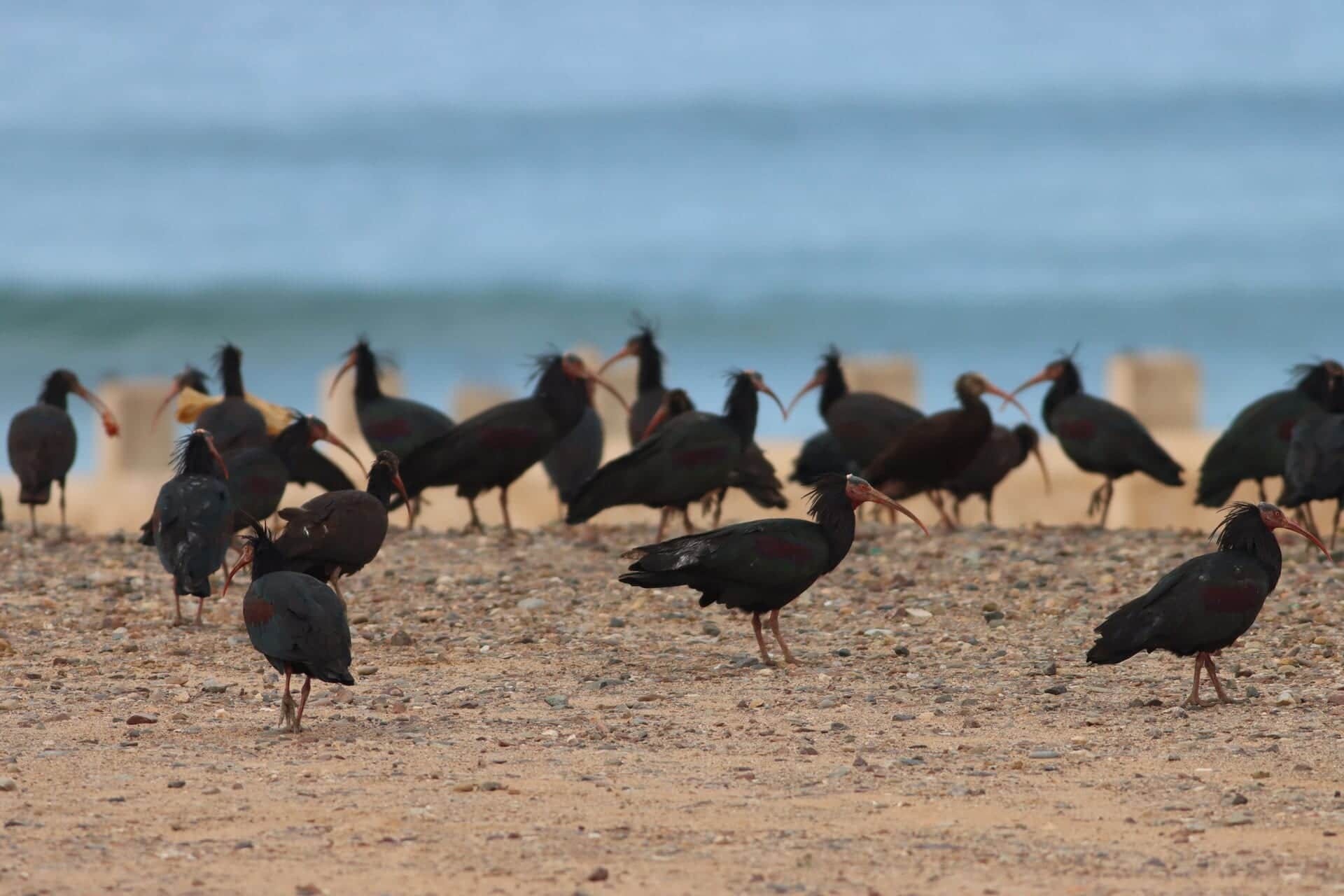
The bird itself is unmistakable — glossy black with a green-bronze sheen, a bare red face, a shaggy nape ruff, and a long, down-curved red bill — and it forages on short coastal grassland for lizards and beetles, never far from the cliff colonies where it breeds. We work the two strongholds: the Oued Massa estuary inside the national park (one of the richest birding localities of its size in Morocco, with 250+ species recorded), and the Tamri colony about 50 km north of Agadir, which holds almost half of Morocco's breeding population. Between them you have an excellent chance of close, ethical views.

But the ibis is the headline, not the whole bird list. Souss-Massa is a 33,800-hectare Ramsar wetland and Important Bird Area, and over four days a typical trip turns up Greater Flamingo, the globally threatened Marbled Duck, Eurasian Spoonbill, Audouin's Gull, and the brilliant North African endemic Moussier's Redstart, among many others. The park also runs reintroduction programmes for North African ostrich and four threatened ungulates — scimitar oryx, addax, dama and dorcas gazelle — which we visit where access allows.

This is a field tour led by a credentialed bird guide, capped at six guests, with a pre-trip species checklist and loaner optics if you need them. The ethics are non-negotiable: at the cliff colonies we keep well back and never approach nesting birds, following the American Birding Association's Code of Birding Ethics. The bald ibis has come back from 59 breeding pairs in 1997 to 708 birds in 2019 precisely because it has been left alone to do so — and the no-approach rule is how we keep it that way.

Lo más destacado del viaje
  • The Northern Bald Ibis (Geronticus eremita) — Endangered (downlisted from Critically Endangered in 2018); Souss-Massa and Tamri hold ~95% of the world's truly wild breeding birds
  • Oued Massa estuary — one of the richest birding sites of its size in Morocco, with 250+ species recorded
  • The Tamri coastal colony ~50 km north of Agadir, which holds almost half of Morocco's breeding bald ibis
  • Target species beyond the ibis: Greater Flamingo, the globally threatened Marbled Duck, Eurasian Spoonbill, Audouin's Gull, and the North African endemic Moussier's Redstart
  • A credentialed bird guide and a pre-trip species checklist — a real field tour, not a photo stop
  • An ethics-first, no-approach protocol at the cliff colonies, following the ABA Code of Birding Ethics
  • The conservation comeback story told on site: from 59 breeding pairs in 1997 to 708 birds by 2019
Día a día

Día a día

  1. Día 1

    Agadir arrival → Oued Souss estuary

    Pickup at Agadir's Al Massira airport or your hotel. Afternoon orientation birding at the Oued Souss estuary on the edge of the city — a gentle introduction to the coast's waders, gulls, flamingos and spoonbills, and a chance for your guide to set the week's targets and the no-approach ethics protocol. Overnight near Souss-Massa.

    Noche en destino

  2. Día 2

    Souss-Massa National Park — Oued Massa (full day)

    A full day inside Souss-Massa National Park, working the Oued Massa estuary and the riverside track — the single richest stretch for the bald ibis foraging on the grassland, plus Marbled Duck, Moussier's Redstart, Black-crowned Tchagra, flamingos and spoonbills. We watch the ibis from a respectful distance; no approaching the cliff colonies. Picnic lunch in the field. Second night near the park.

    Noche en destino

  3. Día 3

    Tamri colony + Cap Rhir

    Drive up the coast to the Tamri colony about 50 km north of Agadir, which holds almost half of Morocco's breeding bald ibis — often the most reliable foraging views of the trip on the coastal strip near the Oued Tamri mouth. Afternoon at Cap Rhir for seabirds and raptors. Overnight on the coast.

    Conducción · 2h

  4. Día 4

    Final morning → Agadir departure

    A last dawn session at whichever site has been most productive — bald ibis are most active foraging in the early morning — before returning to Agadir. Final species list compiled and sent on afterward. Transfer to Agadir airport or your onward connection on a flexible window.

    Fin del viaje

Qué está incluido

  • Credentialed bird guide for all 4 days (pre-trip species checklist provided)
  • Private vehicle + driver throughout (Agadir, Souss-Massa, Tamri coast)
  • Three nights mid-range Agadir / Souss-Massa lodging
  • Daily breakfast + most dinners; picnic lunch on the full park day
  • Souss-Massa National Park and reserve access fees
  • Loaner binoculars and shared spotting scopes if you need them
  • Post-trip compiled species list

No incluido

  • International flights to/from Agadir
  • Lunches in town (kept flexible around the birding)
  • Travel insurance (recommended)
  • Personal optics if you prefer your own
  • Single-room supplement
Bald Ibis status
Endangered, IUCN (downlisted from Critically Endangered in 2018)
Why Souss-Massa
Souss-Massa + Tamri hold ~95% of the world's wild breeding birds
Recovery
From 59 breeding pairs (1997) to 708 birds (2019)
Species recorded at Oued Massa
250+, incl. Marbled Duck & Moussier's Redstart
Most travellers have never heard of the bald ibis, and that's exactly why it's worth the trip. It's a bird that almost went extinct and didn't, and Souss-Massa is the one place on Earth you can stand and watch a wild population foraging. We keep our distance from the colonies on purpose — the comeback happened because the birds were left alone, and we're not about to be the ones who change that.
Youssef El Alaoui· Lead Morocco Specialist, Morocco Beauty Spots
Respuesta en menos de 24 horasCon base en Marrakech, MarruecosHabla con Youssef →
Voces de viajeros

Lo que dicen viajeros pasados

  • Sophie & Marc

    Sophie & Marc

    París, Francia

    El mejor viaje de nuestra vida. Nuestro guía conocía cada pueblo, cada mirador, cada riad escondido. Siete días en Marruecos valieron un mes en otro sitio.
  • James H.

    James H.

    Londres, Reino Unido

    Todo encajó a la perfección desde que aterrizamos en Fez al campamento del Sáhara y de vuelta a Marrakech. La noche bajo las estrellas no se me va a olvidar.
  • Ana Rodrigues

    Ana Rodrigues

    Lisboa, Portugal

    Organizados, cercanos, profesionales. Nos armaron el viaje a nuestra medida y nos dejaron total libertad para parar en cualquier punto del camino.
Antes de reservar

Lee esto primero si aún estás investigando

Preguntas, respondidas

The Bald Ibis Quest — preguntas frecuentes

Where can I see the Northern Bald Ibis in the wild?
Morocco's Atlantic coast is the only place on Earth to reliably see a truly wild population. Souss-Massa National Park (south of Agadir) and the Tamri colony (about 50 km north of Agadir) together hold roughly 95% of the world's wild breeding Northern Bald Ibis. A small, separate wild population has re-established near Cádiz in Spain, but Morocco is the stronghold.
How many Northern Bald Ibis are left?
The wild Moroccan population has recovered to just over 500 birds — 708 individuals were reported in early 2019, up from 59 breeding pairs in 1997. It remains Endangered on the IUCN Red List, but it was downlisted from Critically Endangered in 2018 after decades of decline, which is one of the rare genuine recoveries in bird conservation. (Larger figures you may see include captive birds and a separate European reintroduction.)
Is the Northern Bald Ibis still critically endangered?
No — it was downlisted from Critically Endangered to Endangered on the IUCN Red List in 2018. Many travel sites still call it 'critically endangered', which is out of date. It is still a rare and protected species, but the trend in Morocco has been upward thanks to colony protection at Souss-Massa and Tamri.
What's the best time of year to see the bald ibis near Agadir?
Year-round, the ibis is most reliably seen near its nesting sites in autumn, winter and spring. For the widest bird list overall, March–May and September–November are the peak migration windows, when the estuaries fill with waders, ducks and passage birds in addition to the resident ibis.
How far is Souss-Massa National Park from Agadir?
The Oued Massa entrance is roughly an hour's drive south of Agadir; the Tamri colony is about 50 km up the coast to the north, also around an hour. We base near the park so you're never far from the birds at the times of day they're most active.
Do I need to be an experienced birder?
No. The tour is led by a credentialed bird guide and we provide a pre-trip species checklist and loaner optics. The bald ibis is a large, distinctive bird that's satisfying for beginners, while the wider 250+ species list and the endemics keep experienced listers busy. It's a good first specialist birding trip.
Is it ethical to watch the bald ibis?
Yes, if it's done properly. We follow a strict no-approach rule at the breeding cliffs and the ABA Code of Birding Ethics — keeping well back, using optics rather than getting close, and never disturbing nesting birds. The species recovered because its colonies were protected and left undisturbed, and respectful viewing is how it stays that way.
What other wildlife will I see?
Beyond the ibis: Greater Flamingo, the globally threatened Marbled Duck, Eurasian Spoonbill, Audouin's Gull, Black-crowned Tchagra and the North African endemic Moussier's Redstart, among 250+ recorded species. Souss-Massa also runs reintroduction programmes for North African ostrich and four desert antelope species, which we visit where access allows.

¿Quieres este viaje, a tu medida ?

Cuéntanos tus fechas y tu ritmo. Nuestros especialistas en Marruecos responden en menos de 24 horas con un plan privado, día a día.

Planificar este viaje