Morocco festivals and harvests, month by month: almond blossom in February, the Rose Festival in May, Gnaoua in June, the date harvest in October.
Morocco's calendar runs on harvests and festivals, not just the weather. The marquee moments worth building a trip around: almond blossom around Tafraoute in February, the Rose Festival at Kelaat M'Gouna in May (timed to the dawn rose harvest), the Gnaoua World Music Festival in Essaouira and the Fes Festival of World Sacred Music in June, the date harvest in the Tafilalt in October, and the saffron harvest at Taliouine in November.
Most Morocco guides tell you about temperatures and rainfall. That matters — but it is only half the story. The other half is what the land is doing: which blossom is out, which crop is being picked, which moussem (saint's festival) is filling a mountain village. Time your trip to one of those and you see a Morocco that the average two-week itinerary never touches.
This guide ties the year together month by month. It is the companion to our best time to visit Morocco weather guide and our Morocco flower season calendar — so here I will stay focused on the events and harvests, and point you to those two for the temperature and bloom detail.
What's the best month to visit Morocco for festivals?
If you only optimise for one thing, optimise for late May into June. That stretch stacks the biggest cultural draws — the Rose Festival in the south, then back-to-back Gnaoua (Essaouira) and the Fes Sacred Music Festival — against genuinely pleasant pre-summer weather. It is the single richest window in the Moroccan calendar.
But "best" depends on what you are chasing. Want quiet beauty and almond orchards in full bloom with almost no crowds? February. Want the great oasis harvests and warm, golden light? October–November. Want a once-in-a-lifetime mountain spectacle? The Imilchil marriage moussem in September. The table below maps the whole year so you can match the trip to the moment.
| Month | Festival / harvest | Region | Why time a trip around it |
|---|---|---|---|
| February | Almond blossom + Almond Blossom Festival | Tafraoute, Anti-Atlas | Pink-and-white orchards under granite peaks, crowd-free |
| April | Marathon des Sables | Sahara, near Ouarzazate | Iconic 6-stage desert ultramarathon |
| May | Rose Festival (Festival des Roses) | Kelaat M'Gouna, Valley of Roses | The damask-rose harvest celebration — roses picked at dawn |
| May–June | Mawazine | Rabat | Huge international music festival, big-name headliners |
| June | Gnaoua World Music Festival | Essaouira | Trance music on the ramparts, free main stages |
| June | Fes Festival of World Sacred Music | Fes | Sufi and sacred music in medina courtyards |
| June | National Cherry Festival | Sefrou, near Fes | Morocco's oldest cherry festival, Berber–Andalusian town |
| September | Imilchil Marriage Festival (moussem) | High Atlas | Berber engagement gathering + livestock fair |
| October | Date harvest + Erfoud Date Festival | Tafilalt oases | Mejhoul and boufeggous dates, oasis cooperatives |
| November | Saffron harvest + Saffron Festival | Taliouine, Souss | Witness the world's most labour-intensive harvest |
| Autumn | Olive + argan harvests | Atlas foothills, Souss | First-press oil, working farms, no crowds |
One floating variable affects the whole calendar: Ramadan. The Islamic lunar month moves roughly 11 days earlier each year, so it drifts across the seasons over time. It does not stop you travelling, but it changes the rhythm — some restaurants and shops keep shorter or shifted daytime hours, and evenings come alive after the fast breaks. Check the exact dates for your travel year before you book.
What's happening in winter (December–February)?
Winter is quiet, cool, and — by February — quietly spectacular in the south. The cities are crisp and uncrowded, the High Atlas peaks carry snow, and then the almond trees do something extraordinary.
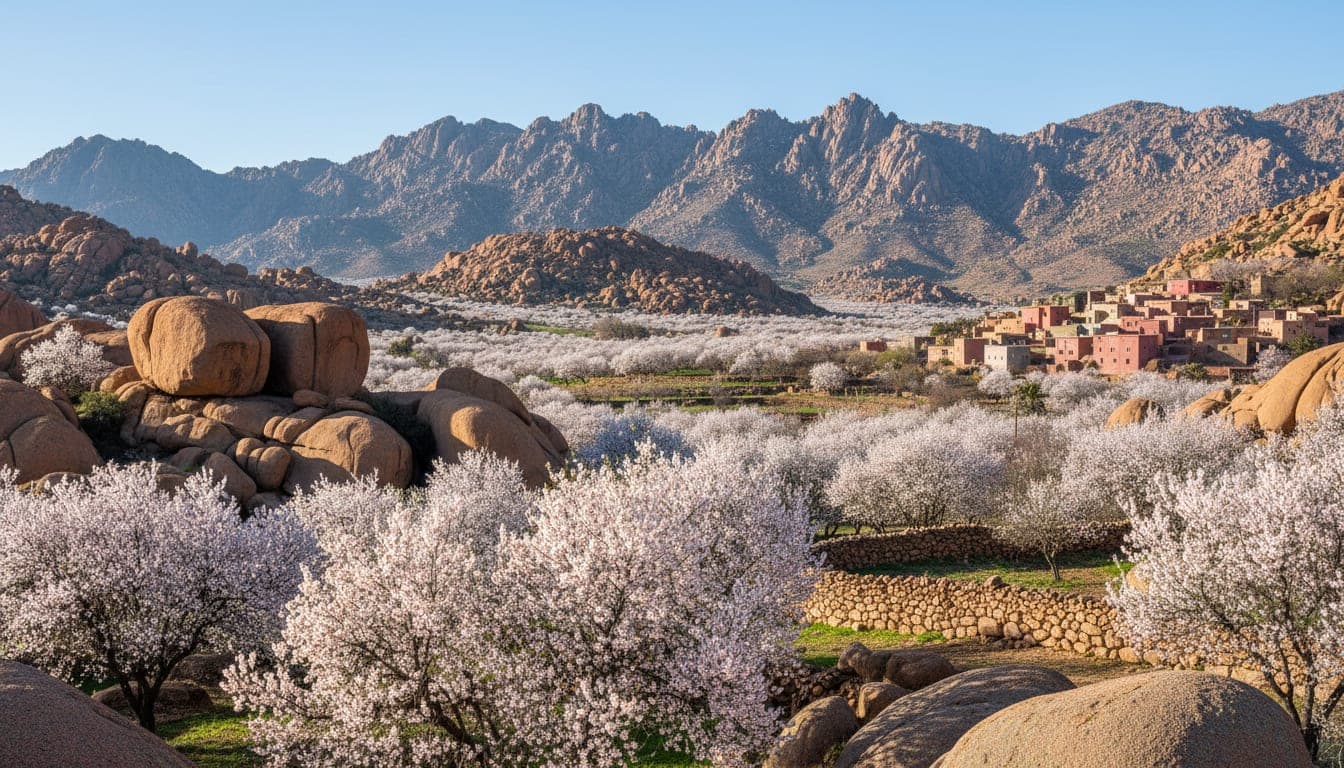
Around Tafraoute, in the granite bowl of the Anti-Atlas, the almond orchards burst into pink and white blossom typically in the second week of February. The town marks it with the Almond Blossom Festival (Tafraoute), a few days of Berber music, dance, and almond-based food. It is one of the loveliest and least-touristed moments in the Moroccan year — read our dedicated guide to the Tafraoute almond blossom in February for exactly when and where to stand.
Blossom timing swings with the winter weather — a warm spell pulls it forward, a cold one pushes it back — so build a few days of flexibility into a blossom-chasing trip and confirm locally before you commit. Our flower season calendar tracks how this rolls on into the spring wildflowers.
What's happening in spring (March–May)?
Spring is when Morocco's harvest theatre really begins, and it climaxes in May with the most romantic harvest in the country.
In April, the Sahara hosts the Marathon des Sables — a brutal six-stage, multi-day ultramarathon across the dunes near Ouarzazate (the 2026 edition ran in early-to-mid April). You do not have to run it to feel the desert at its most charged, but it is a reminder that April in the south is still cool enough for serious effort before the summer heat lands.
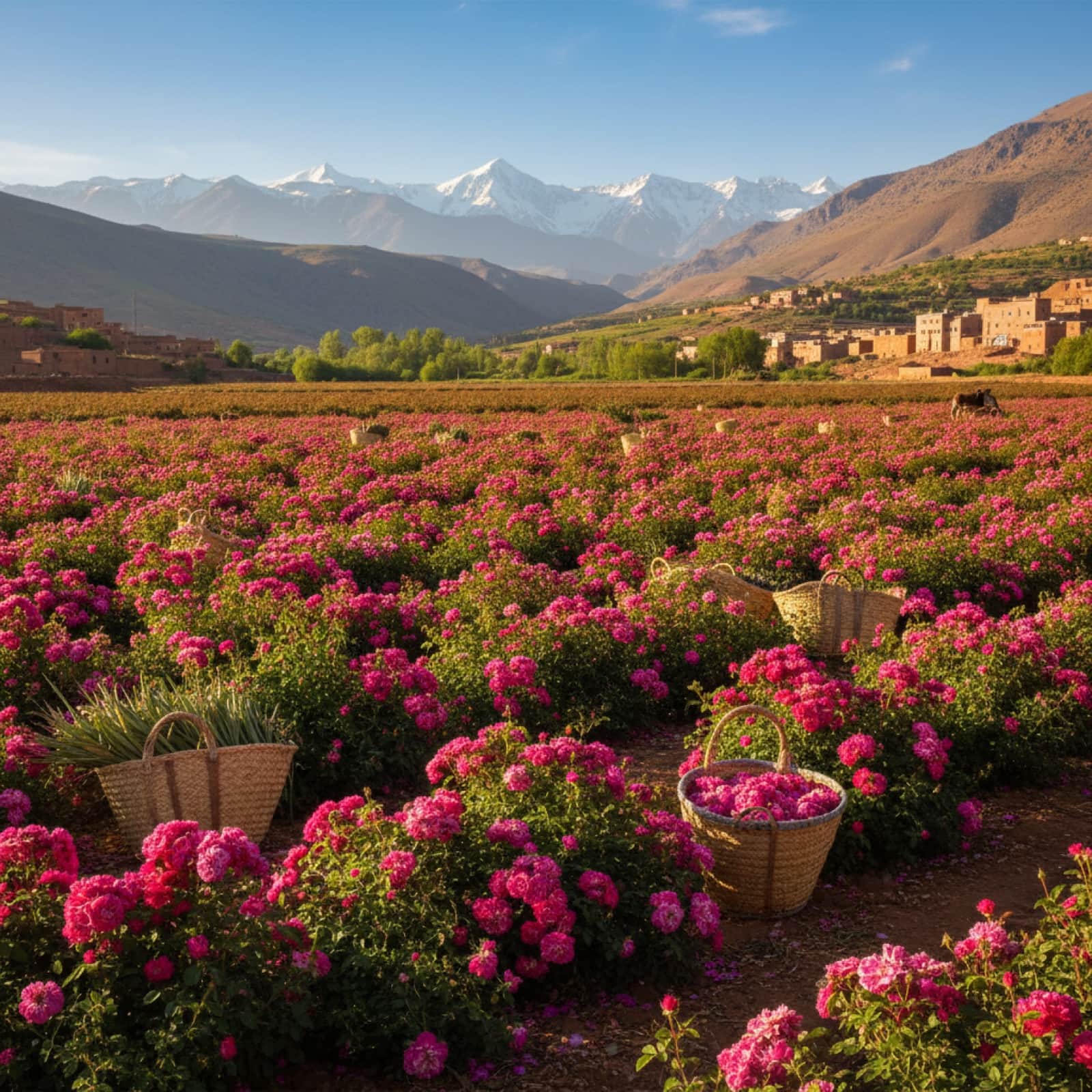
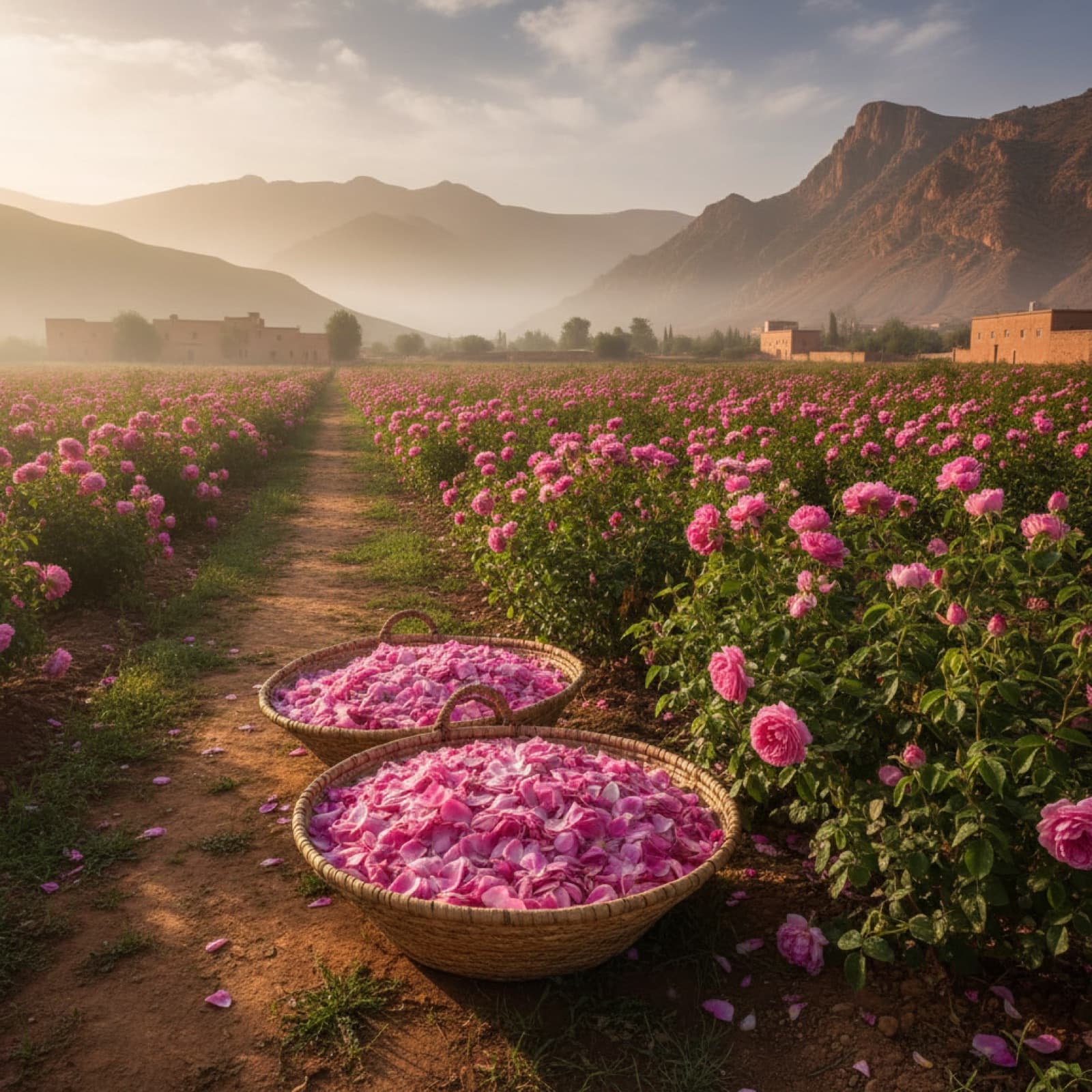
Then comes the headline. The Rose Festival (Festival des Roses) at Kelaat M'Gouna — El Kelaâ M'Gouna, the "Rose Capital" in the Dades / M'Goun region — celebrates the annual damask-rose harvest, typically over a few days in early May (around the 6th–9th in 2026). The roses are picked by hand at dawn, before the sun pulls the oil out of the petals, and the whole valley smells of them. There are floats, a crowned Rose Queen, Berber music, and souks piled with rosewater and rose products. Exact dates flex with the bloom, so confirm before you build around it.
“The Rose Festival is the one I send people to when they say they want the 'real' Morocco. You are up before dawn with the pickers, the cold mountain air thick with damask rose, and by mid-morning the whole town is dancing. It is a harvest and a party at once — and most visitors have never heard of it.”
— Amina Benkirane, Destination Editor
Late May also brings Mawazine in Rabat — one of the largest music festivals in the world, with international headliners on free public stages. It runs across late May into June, so it often overlaps the early-summer festival run below.
What's happening in summer (June–August)?
June is the cultural peak of the year, before the inland heat of July and August drives most travellers to the coast and the mountains.
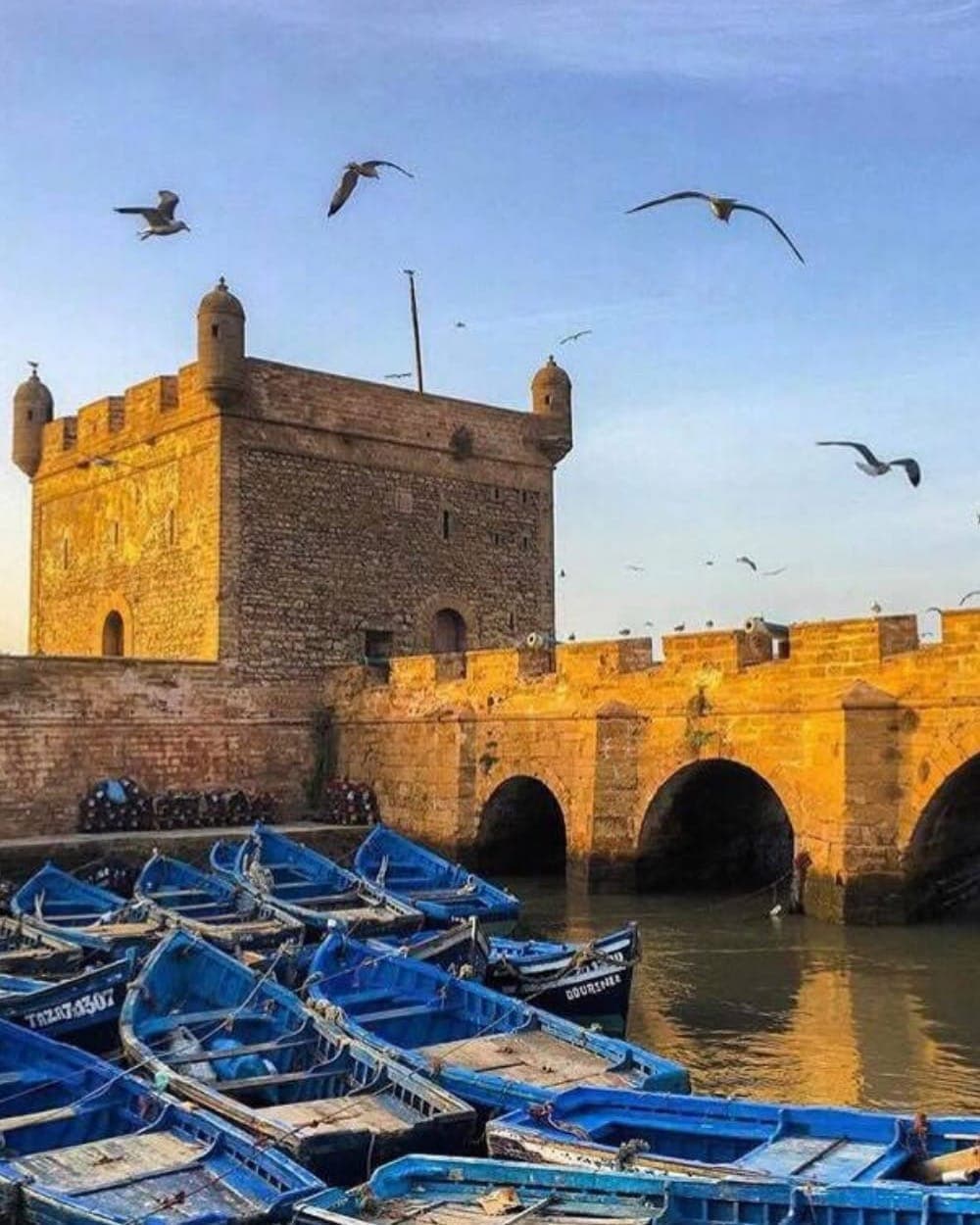
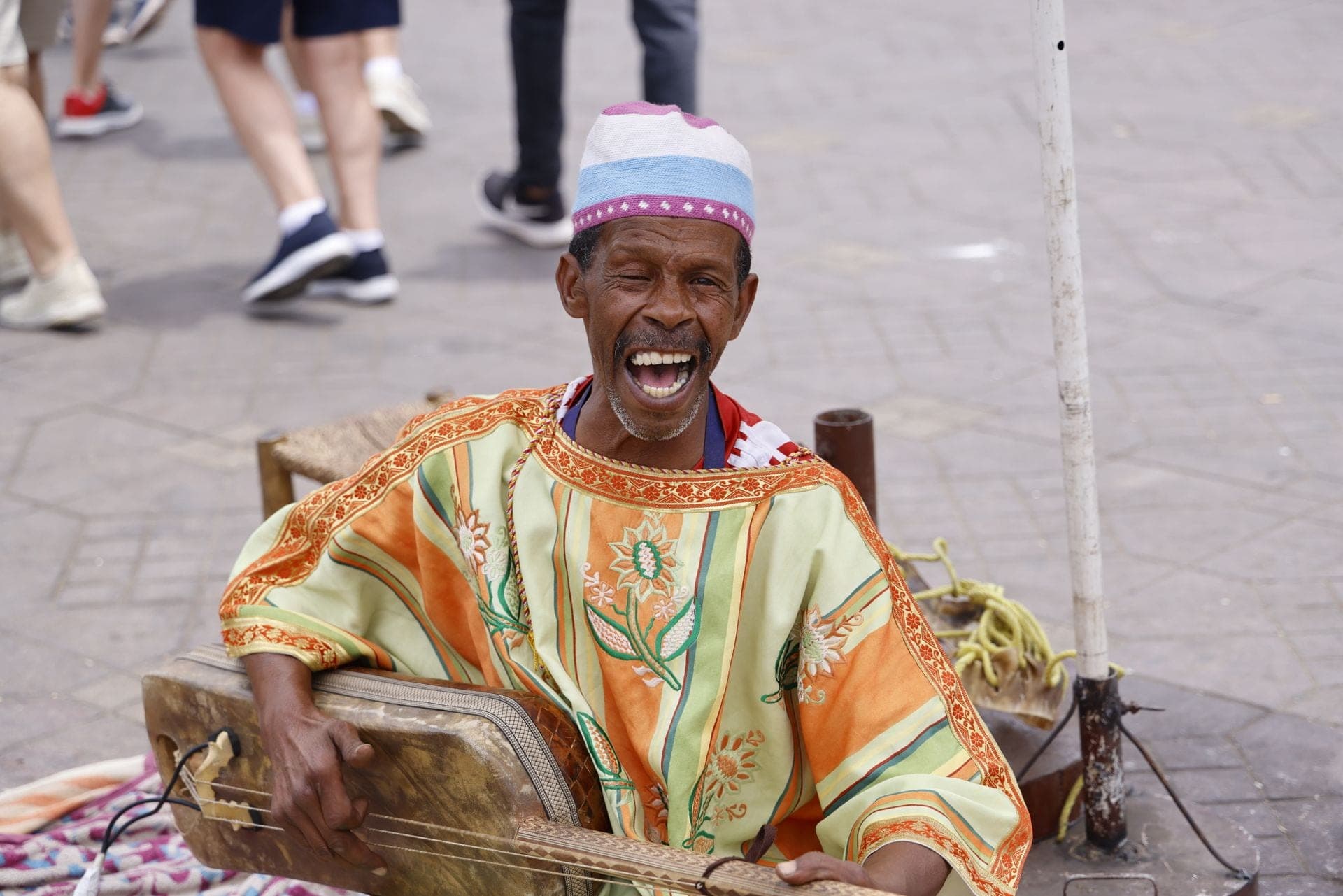
Two world-class festivals anchor the month, usually within a week or two of each other. The Gnaoua World Music Festival in Essaouira (around late June) fills the windswept Atlantic port with the hypnotic, trance-driven music of the Gnaoua brotherhoods, who jam with international jazz, blues, and world musicians — much of it free, on stages along the ramparts. Inland, the Fes Festival of World Sacred Music (typically early-to-mid June) gathers Sufi orders and sacred-music traditions from across the world into the medina's courtyards and gardens. We dig into both in our guide to the Fes Sacred Music and Essaouira Gnaoua festivals.
June also brings a quieter gem: the National Cherry Festival in Sefrou, a small Berber–Andalusian town near Fes, celebrating its cherry harvest with a crowned Cherry Queen — one of Morocco's oldest festivals and a charming half-day add-on if you are in the area for Fes.
July and August are festival-light by comparison. Inland cities like Marrakech and Fes get genuinely hot, so summer is when locals and savvy visitors head for Essaouira's sea breeze, the Atlantic beaches, or the cool of the High Atlas. If you are travelling in deep summer, plan around the heat — our best time to visit Morocco guide breaks down the regional differences.
What's happening in autumn (September–November)?
Autumn is harvest season proper, and arguably the best-value window in the calendar: warm but no longer scorching, golden light, and the great oasis crops coming in.
It opens in September with the Imilchil Marriage Festival (Moussem des fiançailles), high in the High Atlas — typically around late September. Rooted in Aït Hdiddou Berber tradition, it is part betrothal gathering, part vast livestock-and-craft fair, set against bare mountain plateaus. It is remote and weather-dependent, but for travellers chasing something genuinely unstaged, there is nothing else like it.
In October, the date harvest comes into the Tafilalt oases of the southeast. The town of Erfoud crowns it with the Erfoud Date Festival (Festival des Dattes / Salon International des Dattes), typically in early October — a three-day celebration of the region's prized mejhoul and boufeggous dates, with oasis cooperatives, music, and a Date Queen. It pairs beautifully with the dunes nearby; see our dark sky and deep time Sahara route through this corner.
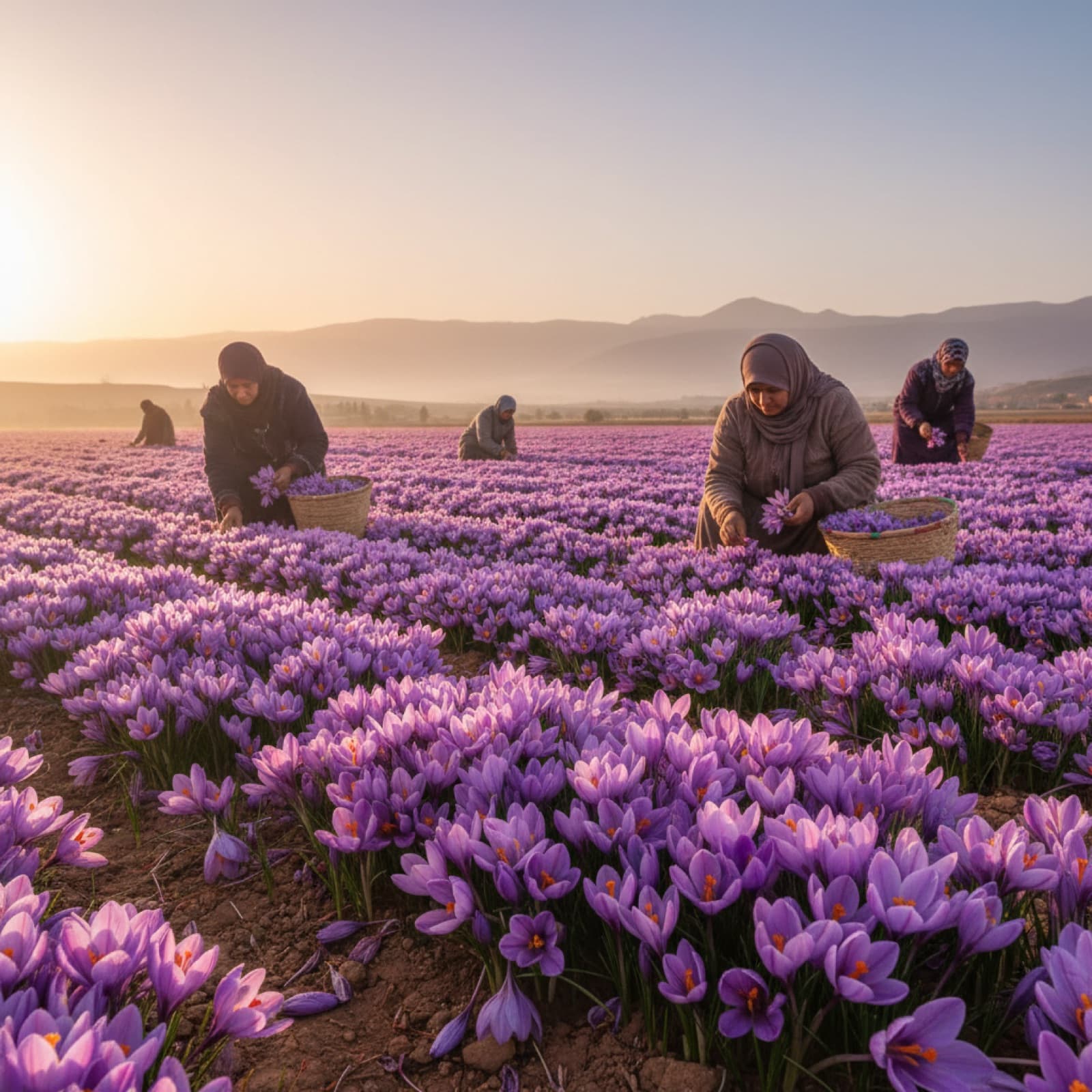
Then November delivers the most precious harvest of all. Around Taliouine, in the Souss, the saffron crocus flowers open for just a few weeks, and they must be picked at dawn by hand — it takes thousands of flowers for a few grams of spice. The International Saffron Festival (held late October into November) celebrates it with tastings, music, and the chance to watch the picking. Autumn is also when the olive and argan harvests run across the Atlas foothills and the Souss — first-press oil straight from working farms, with no crowds in sight.
Which festivals are worth planning a whole trip around?
Not every event justifies reshaping an itinerary. These five do — they are either unmissable spectacles or harvests you can genuinely participate in:
- Rose Festival, Kelaat M'Gouna (early May) — the dawn rose harvest plus a full town celebration. Pair it with the spring blossom trail on our Bloom Chaser route.
- Gnaoua World Music Festival, Essaouira (June) — trance music, free stages, Atlantic ramparts. The flagship of Morocco's music calendar.
- Fes Festival of World Sacred Music (June) — sacred and Sufi music in medina courtyards; deeply atmospheric. Both Fes and Essaouira festivals feature in our Sufi & Gnaoua sacred-music journey.
- Imilchil Marriage Festival (September) — a remote, unstaged Berber mountain moussem you will not see anywhere else.
- Almond blossom, Tafraoute (February) — quiet, beautiful, and timed to a real bloom rather than a stage.
When are the main harvests in Morocco?
Harvests are the heartbeat of the rural year, and several of them are open to visitors who time it right. The short version: roses in May, cherries in June, dates in October, saffron in November, olives and argan through the autumn. Each is tied to a specific region, so chasing a harvest also routes your trip.
| Harvest | Typical window | Where |
|---|---|---|
| Damask roses | Late April–May | Valley of Roses, Kelaat M'Gouna |
| Cherries | June | Sefrou, near Fes |
| Dates | October | Tafilalt oases (Erfoud, Rissani) |
| Saffron | Late October–November | Taliouine, Souss |
| Olives | Autumn (Oct–Dec) | Atlas foothills, Meknes region |
| Argan | Late summer–autumn | Souss, southwest |
A harvest visit changes the texture of a trip completely. Instead of photographing a finished product in a souk, you are in the field at dawn with the people who grow it. It is the single easiest way to turn a sightseeing holiday into something you actually remember.
How do we build a festival or harvest trip?
The honest constraint is that the best moments are short and the dates move. A rose harvest does not wait for your flights, and a remote mountain moussem is weather-dependent. So we work backwards: pick the event, confirm the year's dates against the official source, then build the route and pace around it — and add a buffer day or two for harvests that shift with the season.
If you are deciding how much time you need overall, start with how many days in Morocco and our broader Morocco itinerary guide, then read the best time to visit Morocco weather guide and the flower season calendar alongside this page. When you know which month and which moment you want to catch, tell us your dates and we will build the trip around it — start with the trip planner.
Written by
Amina Benkirane
Destination Editor
Writer and photographer covering the Maghreb. Ten years of wandering souks, kasbahs, and back roads most guidebooks miss.