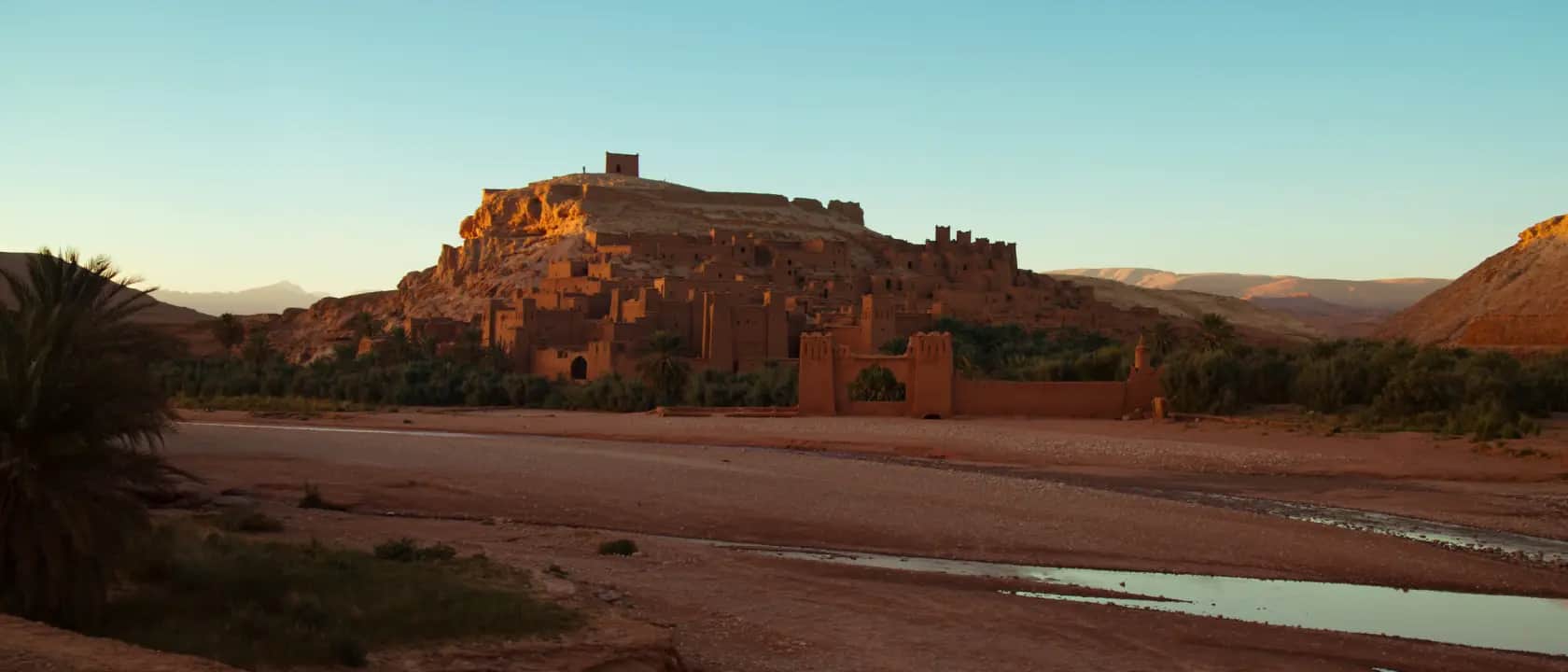
Christopher Nolan used four very different Moroccan landscapes for The Odyssey: Aït Benhaddou, Essaouira, Marrakech and Dakhla. The real places are visitable, but the temporary city of Troy is gone and Dakhla requires a separate journey.
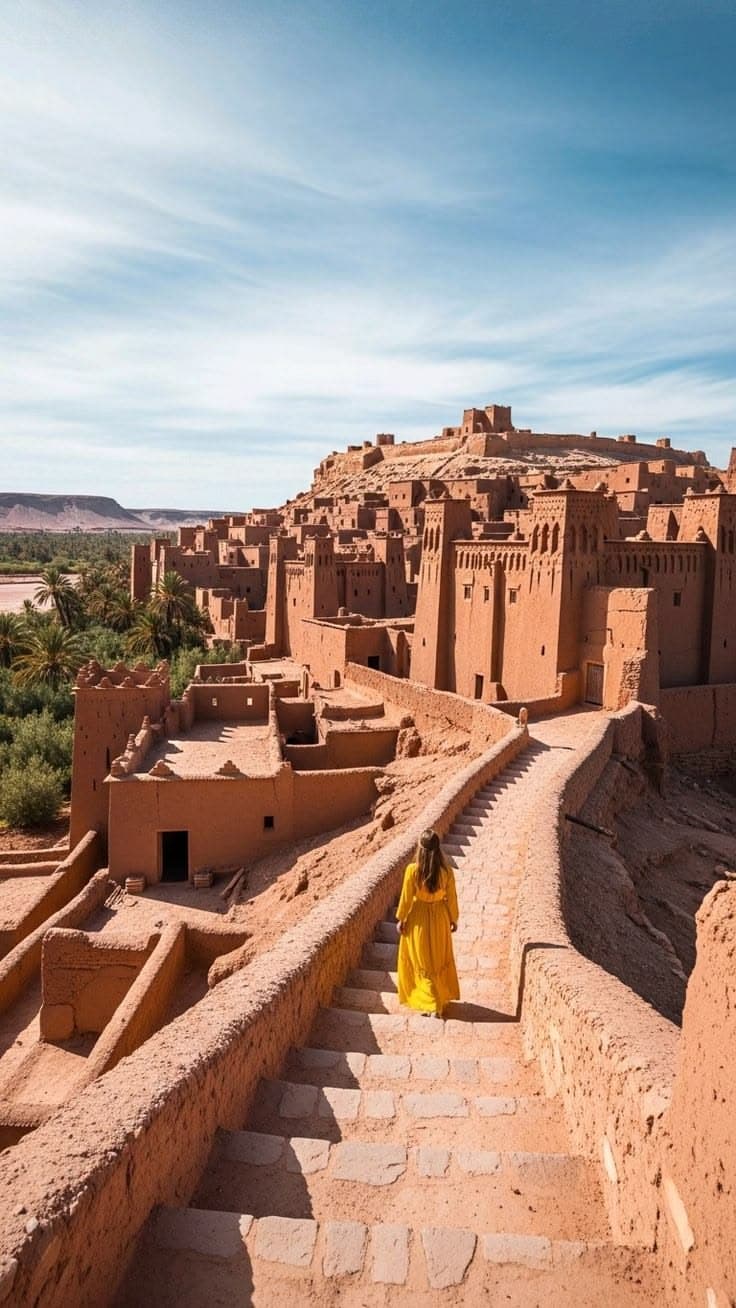
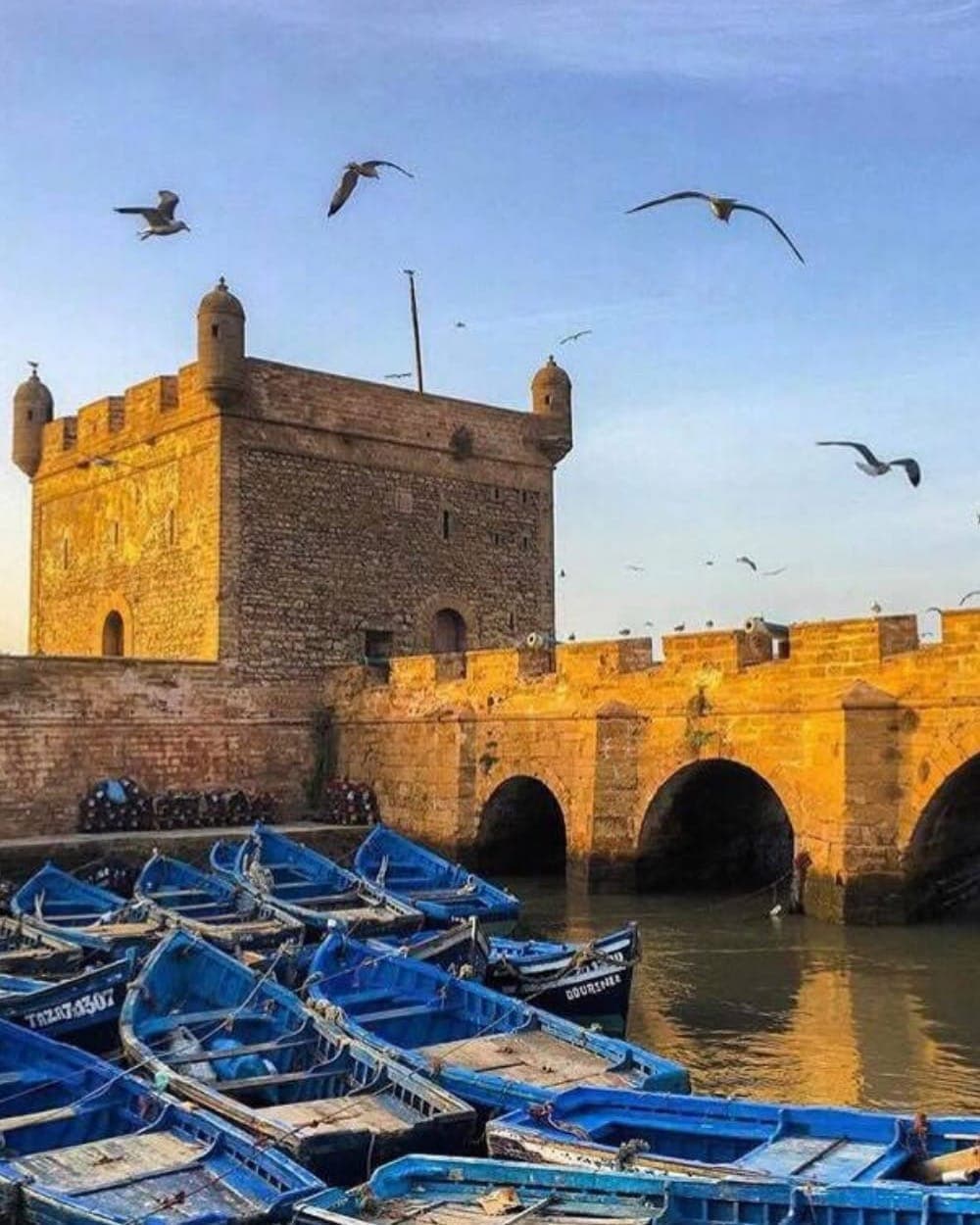
*Christopher Nolan filmed major sequences for The Odyssey in four Moroccan locations.* Aït Benhaddou formed the real skyline behind the production's temporary city of Troy; Essaouira's beaches framed the Trojan Horse discovery and departure; Marrakech supplied an interior for Menelaus's palace; and post-release reporting identifies Dakhla's White Dune as Ogygia. Travellers can visit all four landscapes, but the built Troy set no longer exists.
The Odyssey's Morocco filming locations at a glance
| Moroccan location | Role in The Odyssey | Can you visit? | What survives? |
|---|---|---|---|
| Aït Benhaddou | Troy and its skyline | Yes | The UNESCO ksar survives; the temporary Troy construction was removed. |
| Essaouira beaches | Trojan Horse discovery and departure from Troy | Yes | The public beaches, medina and ramparts remain. |
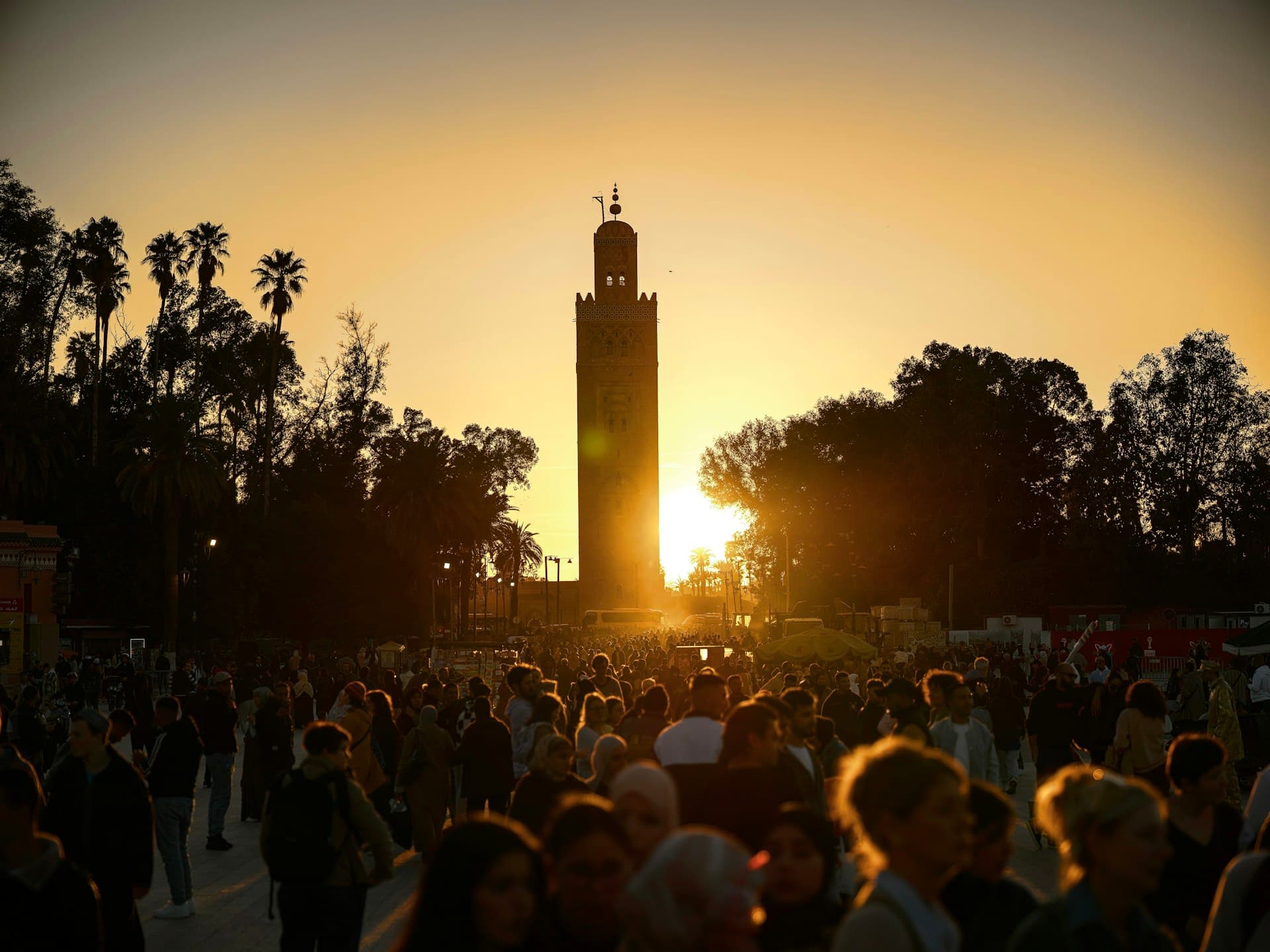
| Marrakech | Interior of Menelaus's palace | The city, yes | The production interior is not confirmed as a public attraction. |
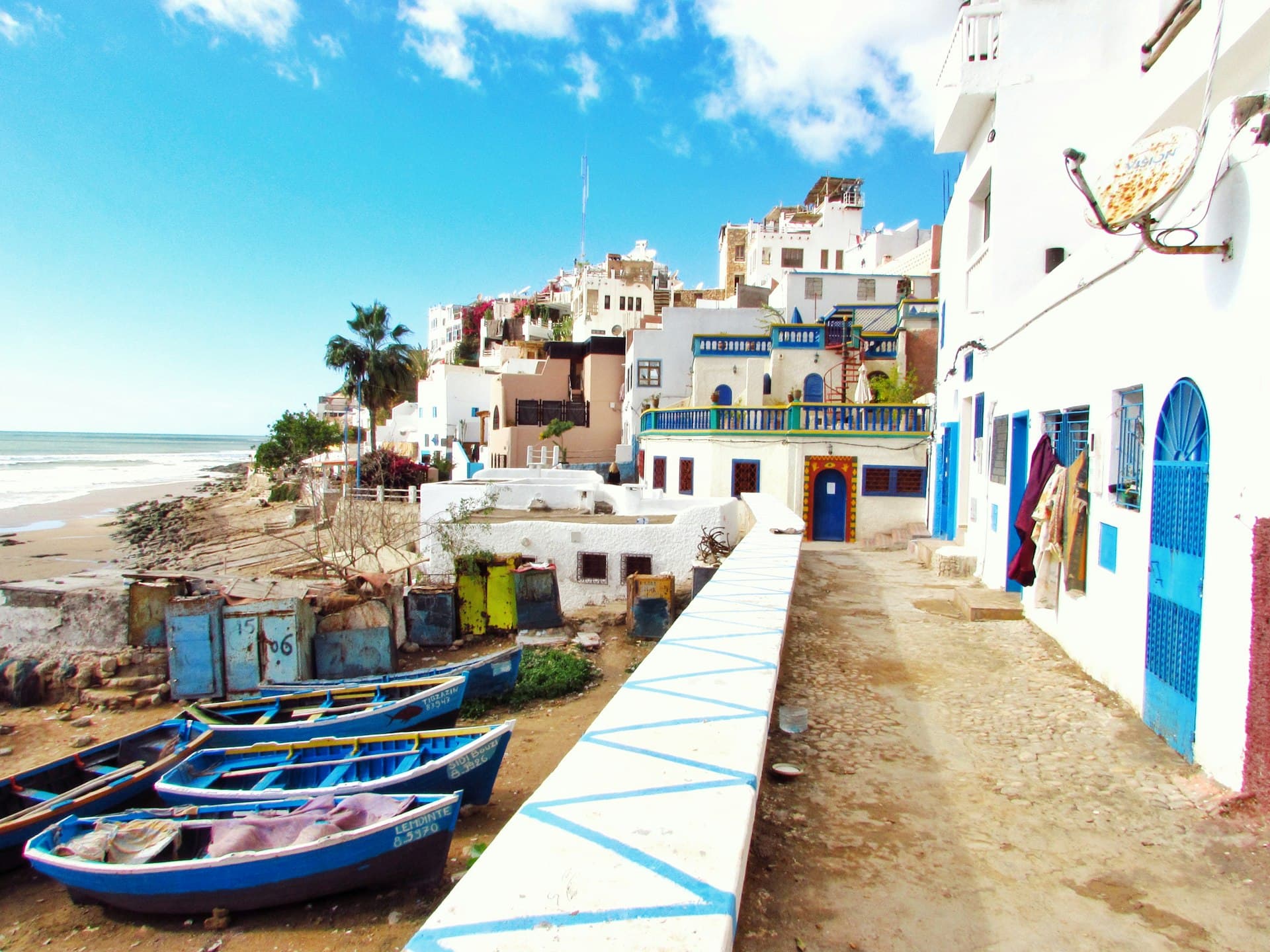
| White Dune, Dakhla | Ogygia, according to post-release reporting | With local planning | The desert-lagoon landscape remains about 30 km from Dakhla. |
Why did Christopher Nolan choose Morocco?
Morocco gave the production something a studio backlot could not: ancient-looking architecture, Atlantic beaches, palace interiors and desert-lagoon landscapes within one country. Production designer Ruth De Jong described building roughly 2.5 acres of burnable Troy sets beside Aït Benhaddou, so the real earthen ksar could supply the horizon while the temporary city took the action.
The film's wider shoot ran for 91 days across six countries. Morocco was not a generic desert stand-in; each location solved a different part of the story. That is also why a visit works best as several distinct legs rather than one rushed 'film locations day'.
Aït Benhaddou: where Troy was built
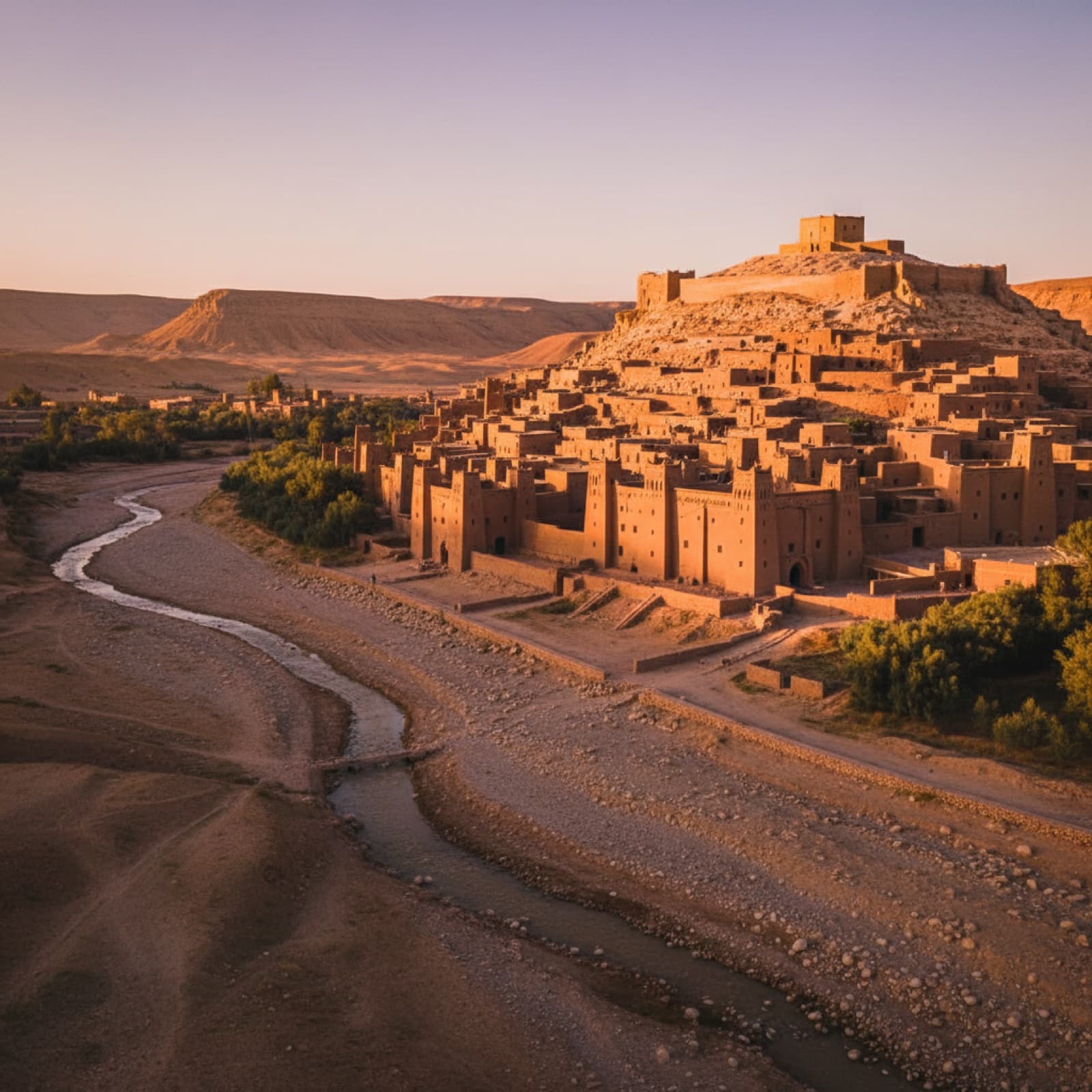
The production built Troy beside Aït Benhaddou, the UNESCO-listed ksar about 30 km from Ouarzazate. The historic village supplied the skyline, colour and scale; the burnable city constructed for filming was temporary. When you visit, you are seeing the real landscape behind Troy — not a preserved Nolan set.
That distinction is important because some itineraries loosely advertise an 'Odyssey set at Atlas Studios'. The evidence places this Troy sequence beside Aït Benhaddou. Visit the ksar early or late for softer light, cross the Ounila river on foot, and allow time to climb to the granary. Our Aït Benhaddou film and history guide explains the site beyond its screen credits.
Essaouira: the Trojan Horse and departure beaches
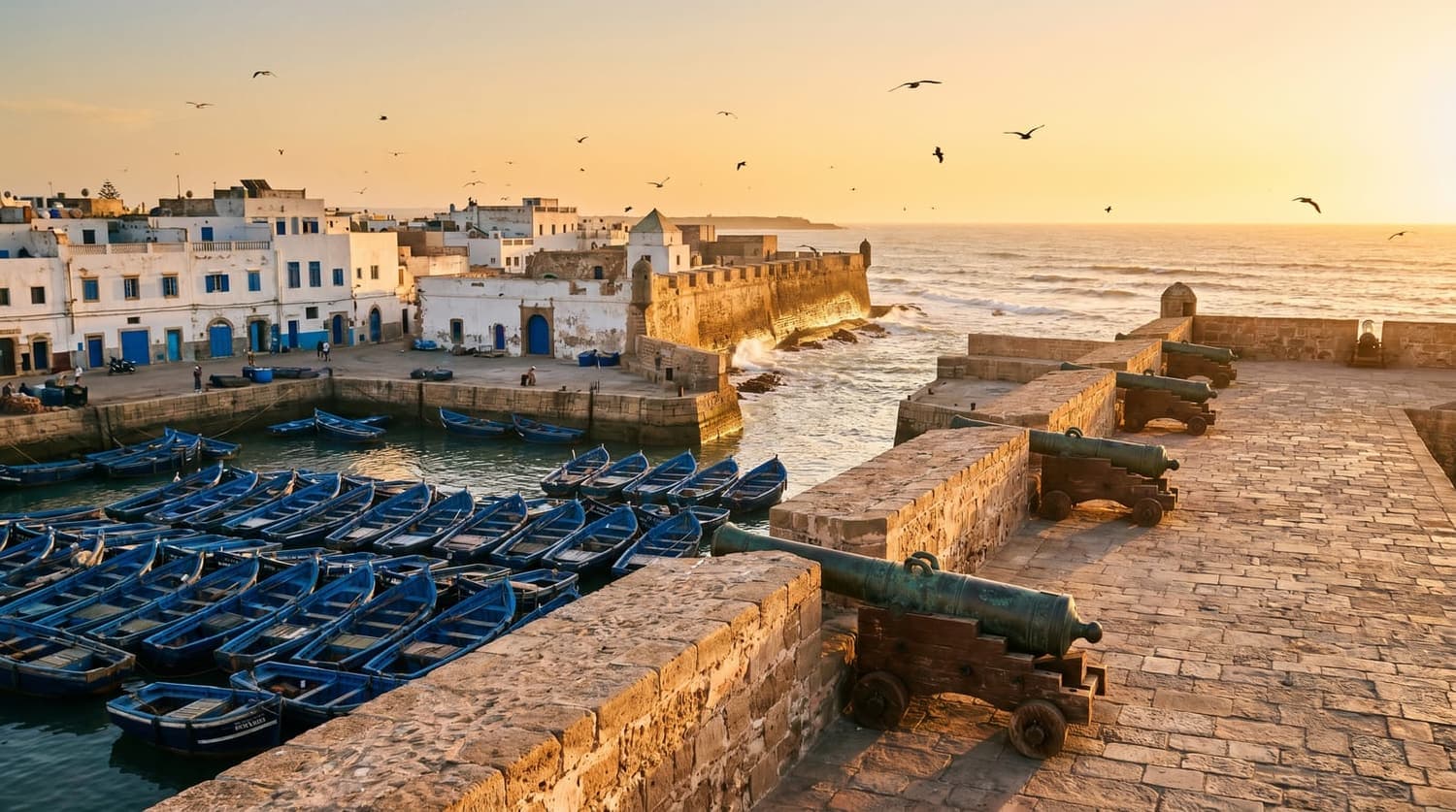
Essaouira's Atlantic beaches appear around the discovery of the Trojan Horse and the departure from Troy. The practical advantage is that the coastline is public and easy to experience, while the walled medina and Skala ramparts make the city worth a full stay even without the film connection.
Essaouira lies west of Marrakech, on the opposite side of the city from Aït Benhaddou. Treat it as a separate coastal branch and sleep at least one night rather than trying to combine both locations in a single day. For the wider destination, see our Essaouira wind, waves and Gnawa guide.
Marrakech: Menelaus's palace interior
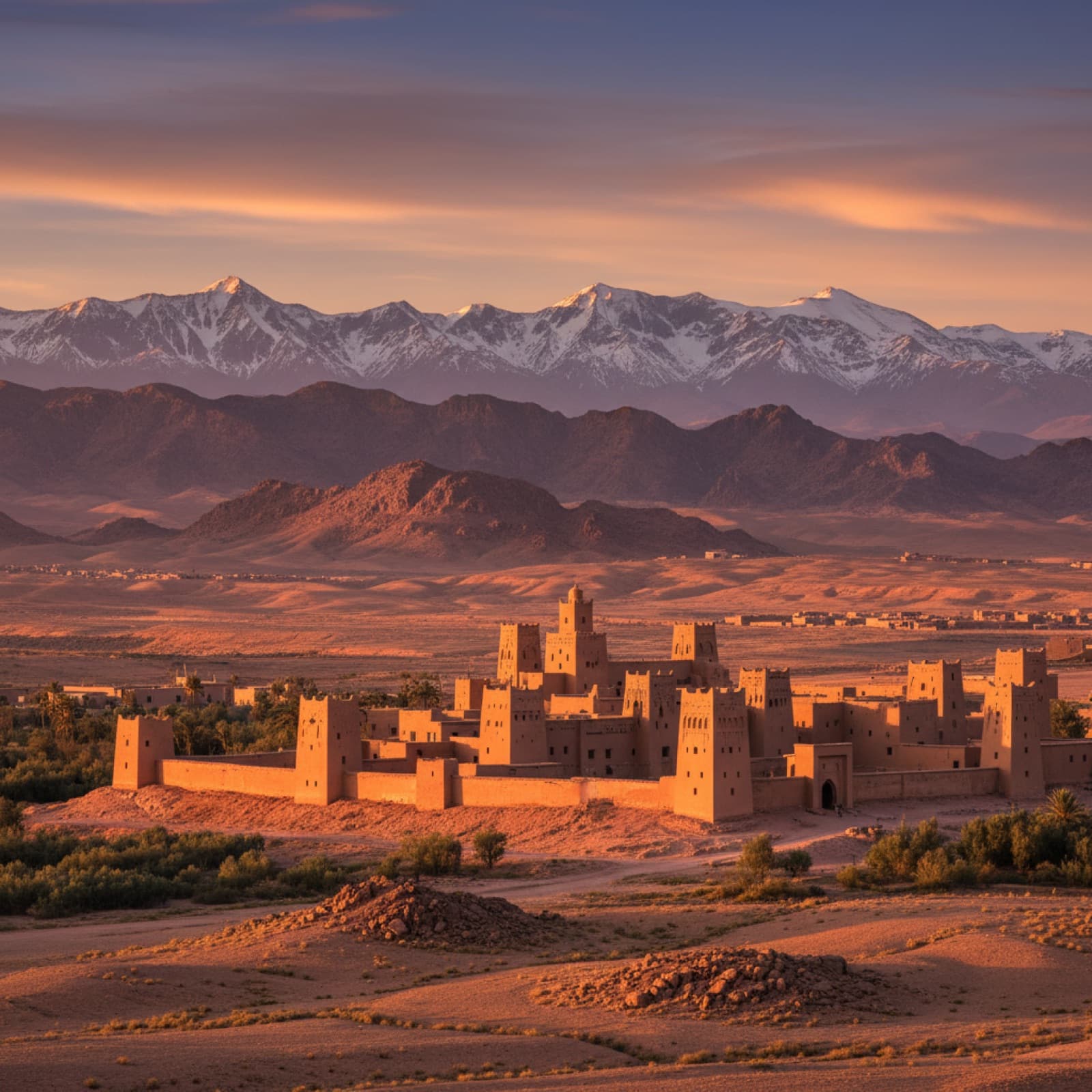
Marrakech supplied an interior used for Menelaus's palace. The city is straightforward to visit, but the production interior is not confirmed as a permanent public set, so do not plan the trip around guaranteed access to a specific room. Use Marrakech as the route hub: it connects naturally to both the High Atlas crossing toward Aït Benhaddou and the westbound road to Essaouira.
Dakhla's White Dune: the reported Ogygia landscape
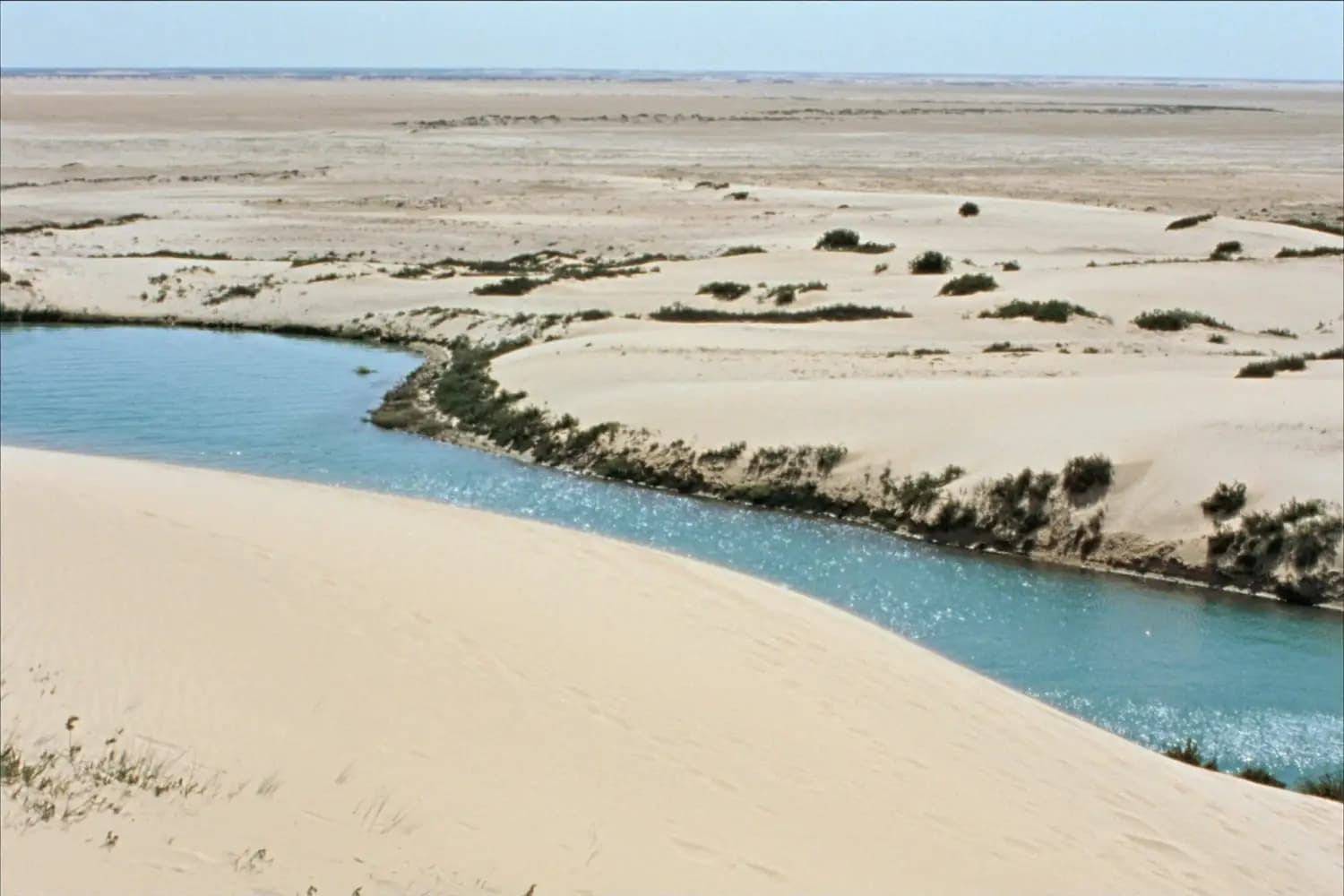
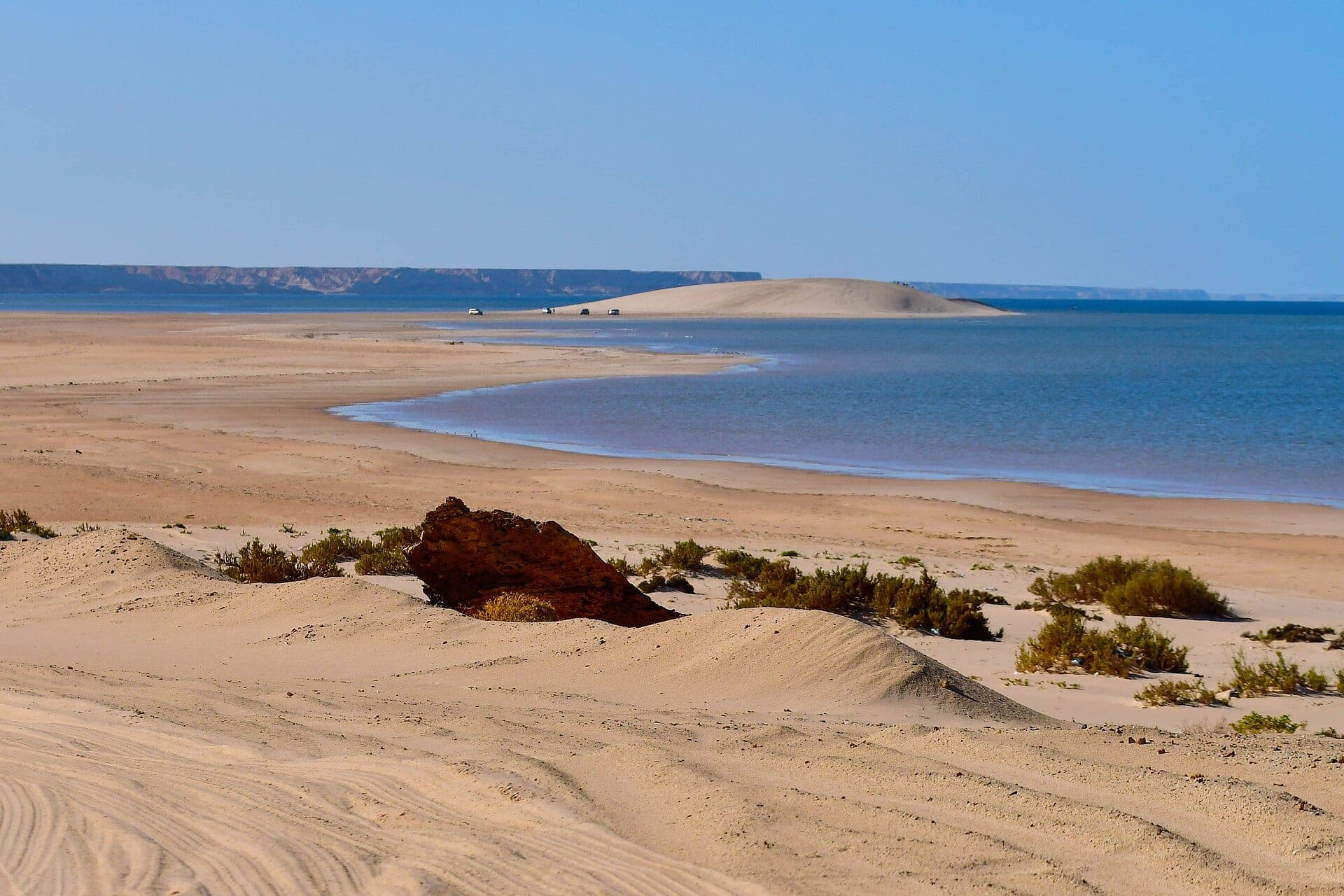
Post-release reporting identifies the White Dune near Dakhla as Ogygia. The landscape lies roughly 30 km from the city and requires local transport and conditions-aware planning. Dakhla is more than 1,300 km by road from Aït Benhaddou, so it is a separate fly-in extension, not an extra stop on the Marrakech–Ouarzazate loop.
Dakhla is in Western Sahara, a territory administered and claimed by Morocco whose status remains disputed. The shoot prompted criticism and boycott calls. That context is material for travellers: check current government travel advice, understand the political setting and use a locally informed operator rather than treating the White Dune as an uncontextualised photo stop.
How should you plan an Odyssey filming-locations route?
| Trip length | Realistic route | What not to force |
|---|---|---|
| 3 days | Marrakech → Aït Benhaddou and Ouarzazate → Marrakech | Do not add Essaouira; it is the opposite direction. |
| 5–6 days | Marrakech → Aït Benhaddou/Ouarzazate → Marrakech → Essaouira | Give the coast at least one night. |
| 8–9 days | Core route above + a separate flight to Dakhla for 2–3 nights | Do not attempt the 1,300+ km overland detour just for one location. |
The honest route is built around places that deserve the journey even after the screen connection fades. Aït Benhaddou and Essaouira pass that test; Marrakech is the natural hub; Dakhla is a specialist extension. For the broader cinema map, continue to our movies filmed in Morocco guide. To turn the locations into a private route with realistic driving days, send us your dates.
Written by
Amina Benkirane
Destination Editor
Writer and photographer covering the Maghreb. Ten years of wandering souks, kasbahs, and back roads most guidebooks miss.