Wondering what to wear in Morocco? A warm, honest packing guide covering dress codes, modest layers, and season-by-season tips for women and men.
There's no legal dress code in Morocco, but modest, breathable clothing that covers your shoulders and knees is the safe, respectful default — especially in medinas, rural villages, and religious sites. You can dress comfortably and still feel at ease.
If you're a first-timer — and especially a woman travelling solo — it's completely normal to feel anxious about getting this right. Take a breath. Morocco is relatively moderate, and locals are far more forgiving of a visitor's wardrobe than the internet sometimes suggests. Dressing modestly isn't about fear; it's a quiet gesture of respect that also happens to draw less attention your way.
After years of guiding travellers across Marrakech, the Sahara, and the Atlas, we've watched countless guests arrive nervous and leave realising they over-thought it. The truth is simple: loose, breathable layers that cover shoulders and knees will carry you almost everywhere. Below is exactly what to pack, by region, by season, and by gender — written to settle your nerves, not stoke them.
Is there a dress code in Morocco?
There is no law requiring tourists to dress a particular way. Morocco is a Muslim-majority country that is relatively moderate compared with parts of the region, but it remains conservative once you step outside the big tourist hubs. The practical norm — not a rule, a custom — is to keep shoulders and knees covered in public. You'll see Moroccan women in everything from full djellabas to jeans and t-shirts, particularly in cities like Casablanca and Rabat. As a visitor, covering up a little more than you might at home reads as courteous and helps you blend in. In medinas, small villages, and at religious sites, modesty matters most. At beach resorts and hotel pools, the rules relax considerably. Think of it as reading the room, not following a rigid code.
What should women wear in Morocco?
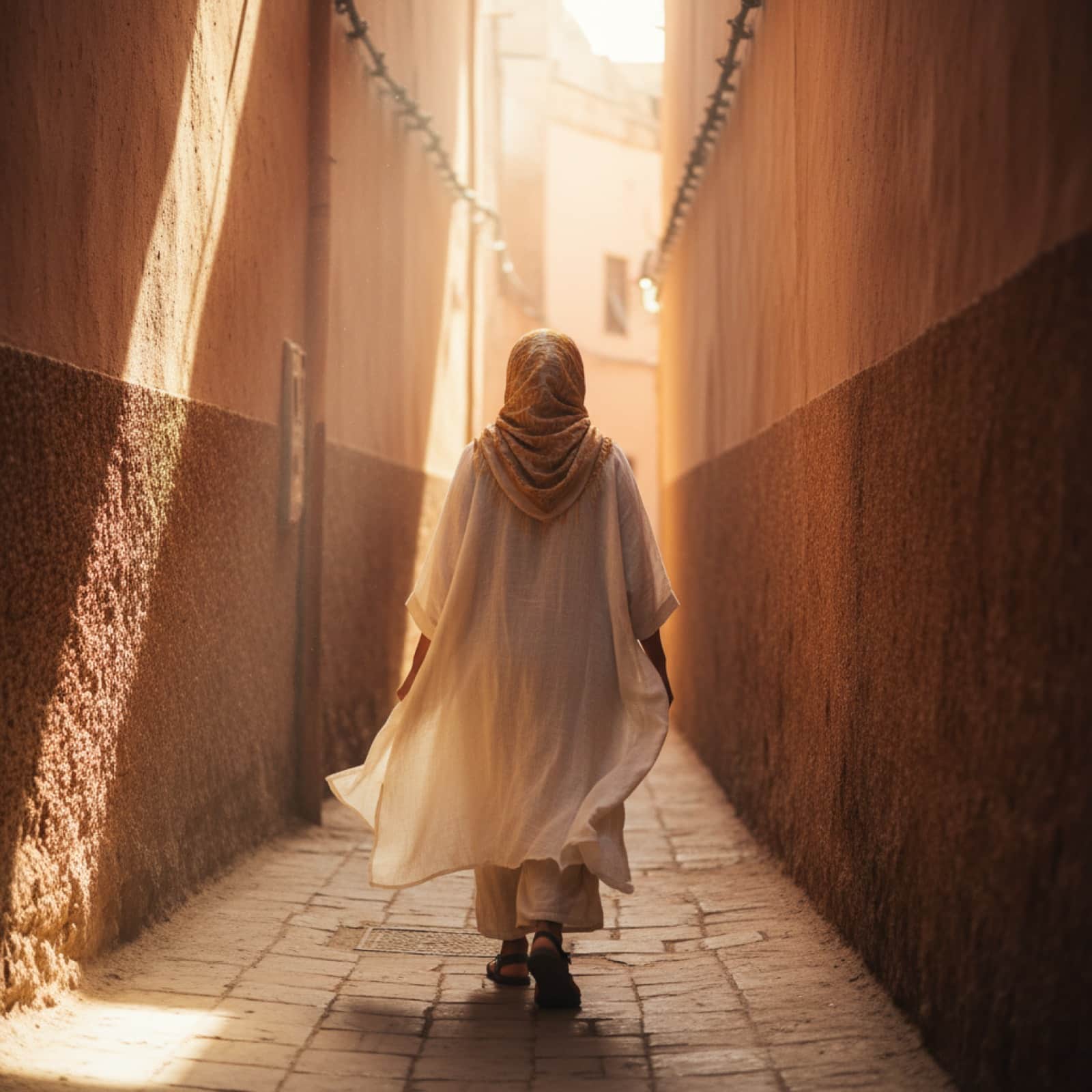
For women, the winning formula is loose, breathable, and layered. Long skirts, wide trousers, maxi dresses, and tunics that fall past the hip are your everyday uniform — flattering, cool, and modest all at once. Natural fabrics like cotton and linen breathe in heat that can climb past 38°C in a Marrakech summer. The single most useful item you can pack is a lightweight scarf: drape it over your shoulders when the sun bites, wrap it over your head at a religious site, or use it as a shawl on a chilly desert night.
A simple rule of thumb for women
You do not need a headscarf in daily life — non-Muslim women aren't expected to cover their hair in the street, cafés, or souks. The exception is the handful of mosques open to non-Muslims, most notably the Hassan II Mosque in Casablanca, where modest dress and covered shoulders are required to enter. Avoid very short shorts, low-cut tops, and tight cropped pieces in medinas and rural areas; they're not forbidden, but they tend to invite the stares you'd rather avoid. If you'd like more reassurance on travelling here independently, our honest take on whether Morocco is safe for solo and American travellers covers the harassment question directly.
What should men wear in Morocco?
Men have it easier, but the same logic applies: lean modest and practical. Long, lightweight trousers — chinos or linen — are the default in cities and the countryside, and they double as sun and mosquito protection. Short shorts read as beachwear and feel conspicuously out of place wandering a medina or visiting anywhere with a religious or traditional feel. Knee-length shorts are fine for hot days, beach towns like Essaouira, and casual settings, but pack at least one or two pairs of long trousers. T-shirts and short-sleeve shirts are perfectly acceptable; tank tops and going shirtless away from the pool or beach are best avoided. For evenings at a nicer riad or restaurant, a collared shirt and trousers will never feel overdressed. As with women, natural fabrics win when temperatures soar above 40°C in high summer.
What should I wear in Marrakech and the imperial cities?
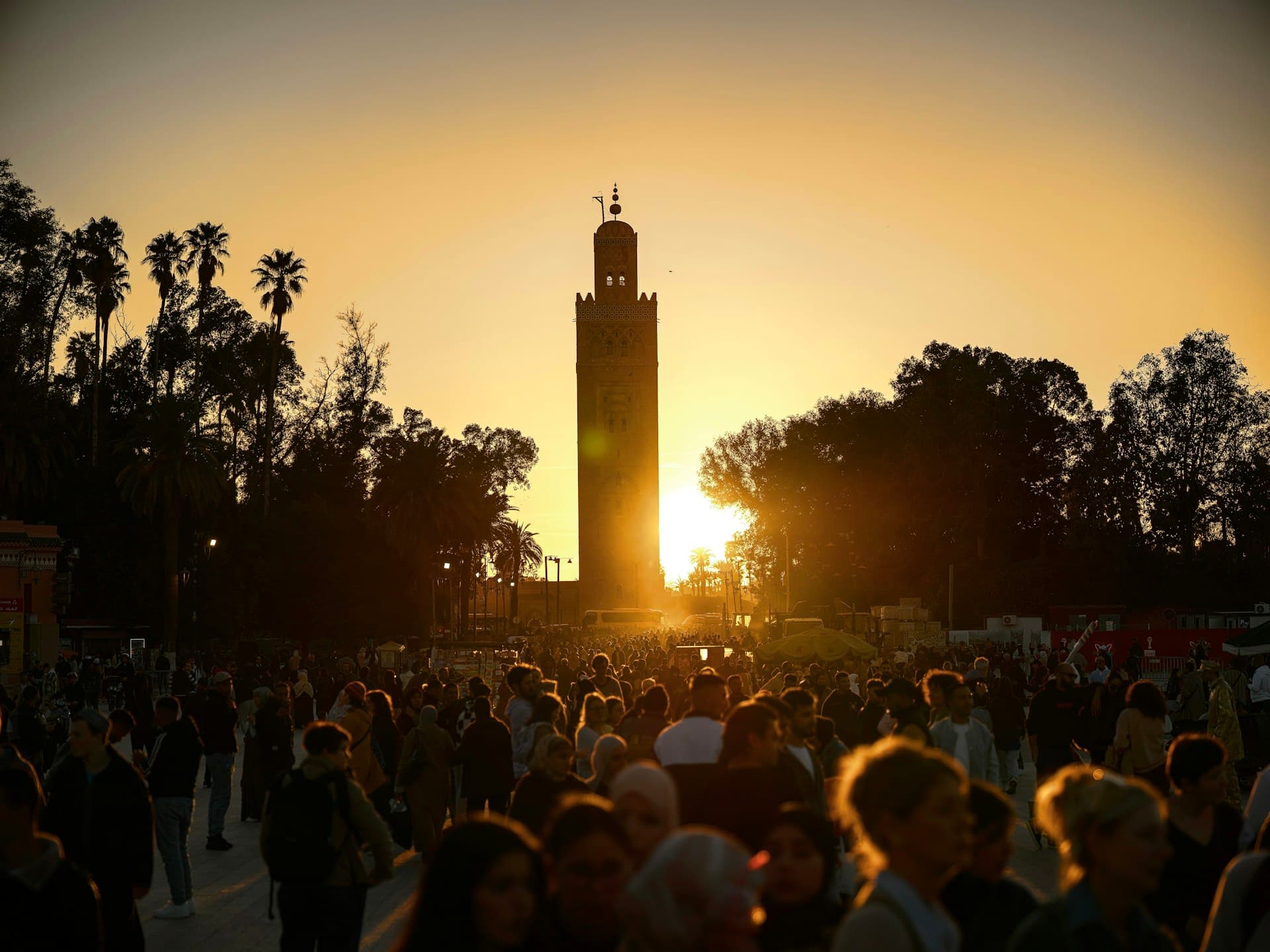
Cities like Marrakech, Fes, and Rabat are where most first-timers spend their days, and they're more relaxed than rural Morocco — but the labyrinth of the Marrakech medina still rewards modest, comfortable dressing. Expect to walk for hours on uneven, sometimes slippery lanes, so closed comfortable shoes matter more than fashion. Light layers handle the daytime heat and the surprisingly cool evenings of spring and autumn. One smarter outfit is worth packing for a rooftop dinner or an upscale riad. If you're building your first city itinerary, our Marrakech first-timer playbook pairs nicely with this guide. The general rule holds: shoulders and knees covered in the souks, a little freedom at your hotel.
What should I pack for each season?
Morocco isn't one climate — it's several stacked into one country, so timing changes your packing list dramatically. High summer in Marrakech and the south can hit 38–45°C, demanding the lightest natural fabrics and serious sun protection. The Atlas Mountains turn cold and snowy in winter. Spring and autumn are the gentle sweet spot. The table below sums up what to prioritise; for a deeper look at timing your trip, see our guide on the best time to visit Morocco.
| Season | Weather | What to prioritise |
|---|---|---|
| Spring (Mar–May) | Mild, 18–28°C, occasional rain | Light layers, a light jacket, scarf, sun hat |
| Summer (Jun–Aug) | Hot, 35–45°C in the south | Loose cotton/linen, sun hat, sunglasses, SPF, water |
| Autumn (Sep–Nov) | Warm days, cooler nights | Breathable layers, a mid-weight jacket for evenings |
| Winter (Dec–Feb) | Cool cities, cold/snowy mountains | Warm layers, a proper coat, closed shoes, gloves for the Atlas |
What should I wear in the Sahara Desert?
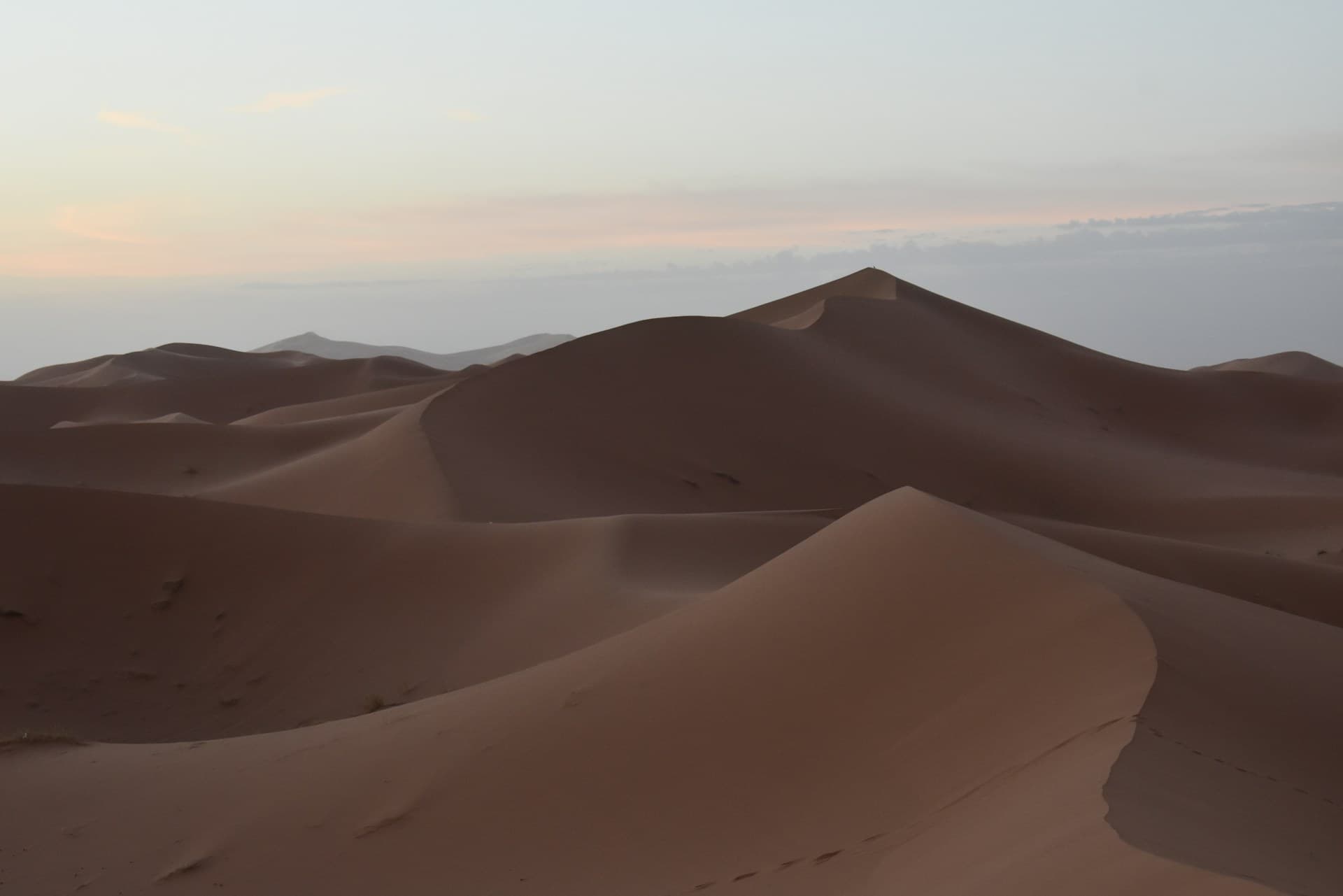
The desert tricks people, and it's the one place even seasoned packers get wrong. Around Merzouga and the Erg Chebbi dunes, days are scorching and nights can plunge toward 5°C — even in summer. The answer is layers you can add and shed: loose long sleeves and trousers protect you from sun and blowing sand by day, while a warm fleece or jacket becomes essential after sunset. A scarf you can wrap around your face is genuinely useful when the wind kicks up sand. Natural, light-coloured fabrics keep you cooler under the midday sun. Closed shoes or sturdy sandals handle the sand better than flimsy flip-flops. Don't let "desert" trick you into packing only for heat — that cold night air is the part travellers remember most, usually because they weren't ready for it.
What footwear should I bring to Morocco?
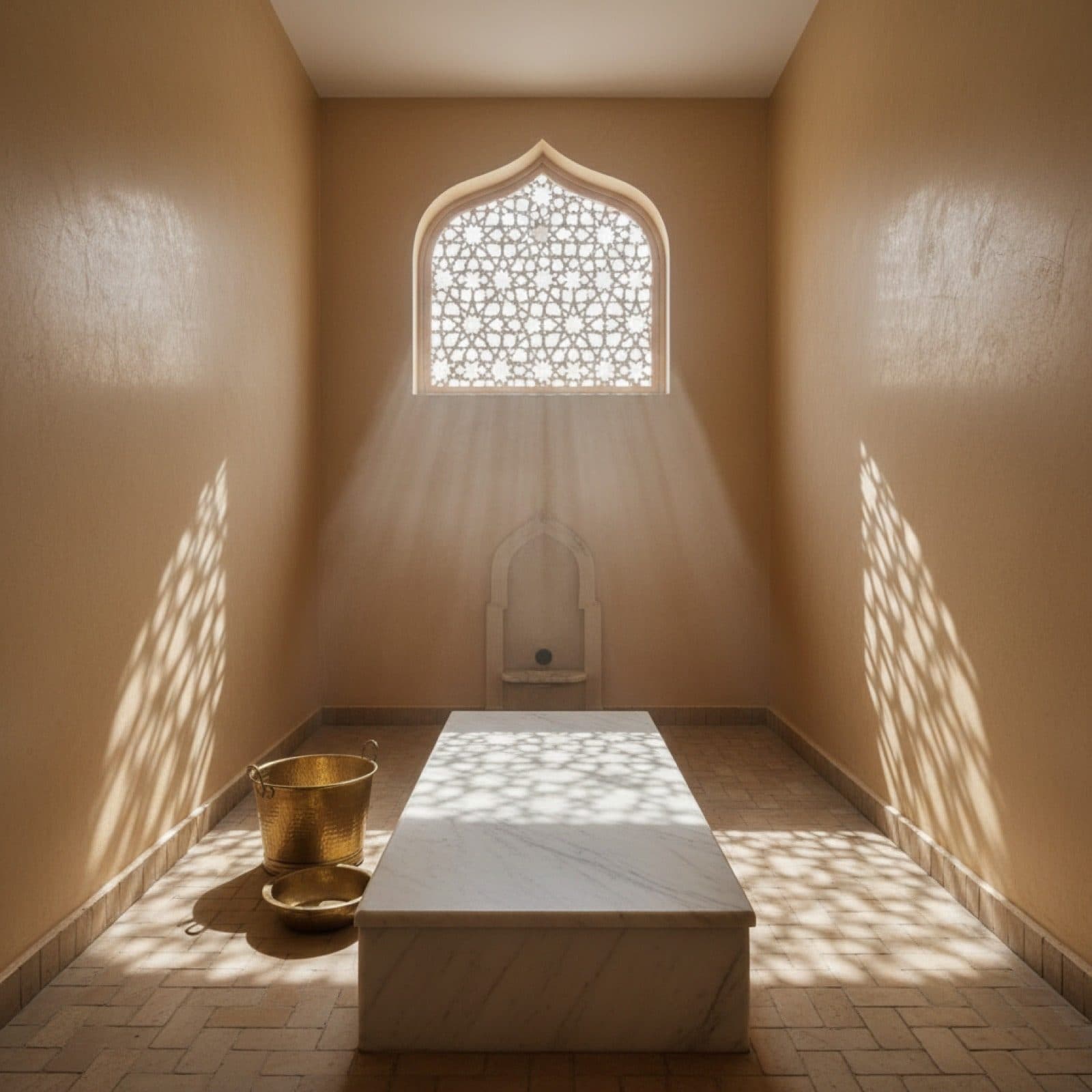
Footwear is where comfort beats everything. Medina lanes are narrow, uneven, often cobbled, and occasionally wet, so a pair of closed, broken-in walking shoes or supportive trainers will save your feet across long sightseeing days. Sandals are fine for hotels, beach towns, and hot afternoons, but you'll want something more substantial for the souks and the desert. If a hammam is on your list — and it should be — bring flip-flops or sandals you don't mind getting wet, as floors are warm, soapy, and slippery. Our Moroccan hammam guide explains exactly what to bring and what to expect. For the Atlas in winter, waterproof shoes with grip are worth the suitcase space. Whatever you choose, prioritise shoes already worn in; the medina is not the place to break in new soles.
Can I wear swimwear in Morocco?
Yes — with a little context. Swimwear, including bikinis, is perfectly fine at hotel pools and at beach resorts in places like Agadir and Essaouira, where you'll see plenty of tourists and locals doing the same. The courtesy is to cover up on your way to and from the water rather than walking through the lobby, street, or town in just a swimsuit. Topless and nude sunbathing are not acceptable anywhere publicly. If you're swimming at a more local or rural beach, you'll feel more comfortable in a one-piece with a cover-up, as the atmosphere is more conservative than a resort. Pack a lightweight kaftan, sarong, or loose dress as your cover-up — it does double duty as an easy modest layer for the evening, too.
What's the essential Morocco packing checklist?
Here's the distilled list we share with guests before every trip — everything earns its place in the bag.
- Loose trousers and long skirts/maxi dresses in cotton or linen (cover knees)
- Tunics and tops that cover the shoulders — pack a few
- One or two lightweight scarves (sun, shoulders, religious sites, desert nights)
- A warm fleece or jacket — essential for Sahara nights and the Atlas, even in summer
- Closed, broken-in walking shoes plus comfortable sandals
- Flip-flops for the hammam and pool areas
- Sun hat, sunglasses, and high-SPF sunscreen for 40°C+ days
- Swimwear plus a cover-up (kaftan, sarong, or loose dress)
- One dressier outfit for nice riads and restaurants
- A light rain layer if travelling in spring or winter
In summary: how should you dress in Morocco?
Dressing for Morocco comes down to three calm ideas: cover your shoulders and knees in public, choose breathable natural fabrics, and pack layers because the same trip can swing from a 42°C afternoon in Marrakech to a 5°C night in the Sahara. There's no legal dress code, and no one expects perfection — modesty here is courtesy, not constraint. Women thrive in loose tunics, long skirts, and a versatile scarf; men in lightweight trousers and collared shirts. Add comfortable closed shoes for the medinas, swimwear with a cover-up for the coast, and one nicer outfit for evenings, and you're set. Get those basics right and your clothing simply fades into the background, leaving you free to enjoy the country in front of you.
One last bit of honesty: the hardest part isn't the dress code — it's packing for so many climates and settings in a single trip. Travelling with a private driver-guide quietly solves this. You can layer for a cold desert dawn, peel down for a hot souk afternoon, and keep your dressier outfit in the car for dinner, with somewhere safe to stow it all in between. If you'd like that ease — and a guide who reads each setting for you so you never have to second-guess your outfit — our Healing Waters journey is a gentle, well-paced way to experience Morocco without the wardrobe stress.
Written by
Amina Benkirane
Destination Editor
Writer and photographer covering the Maghreb. Ten years of wandering souks, kasbahs, and back roads most guidebooks miss.