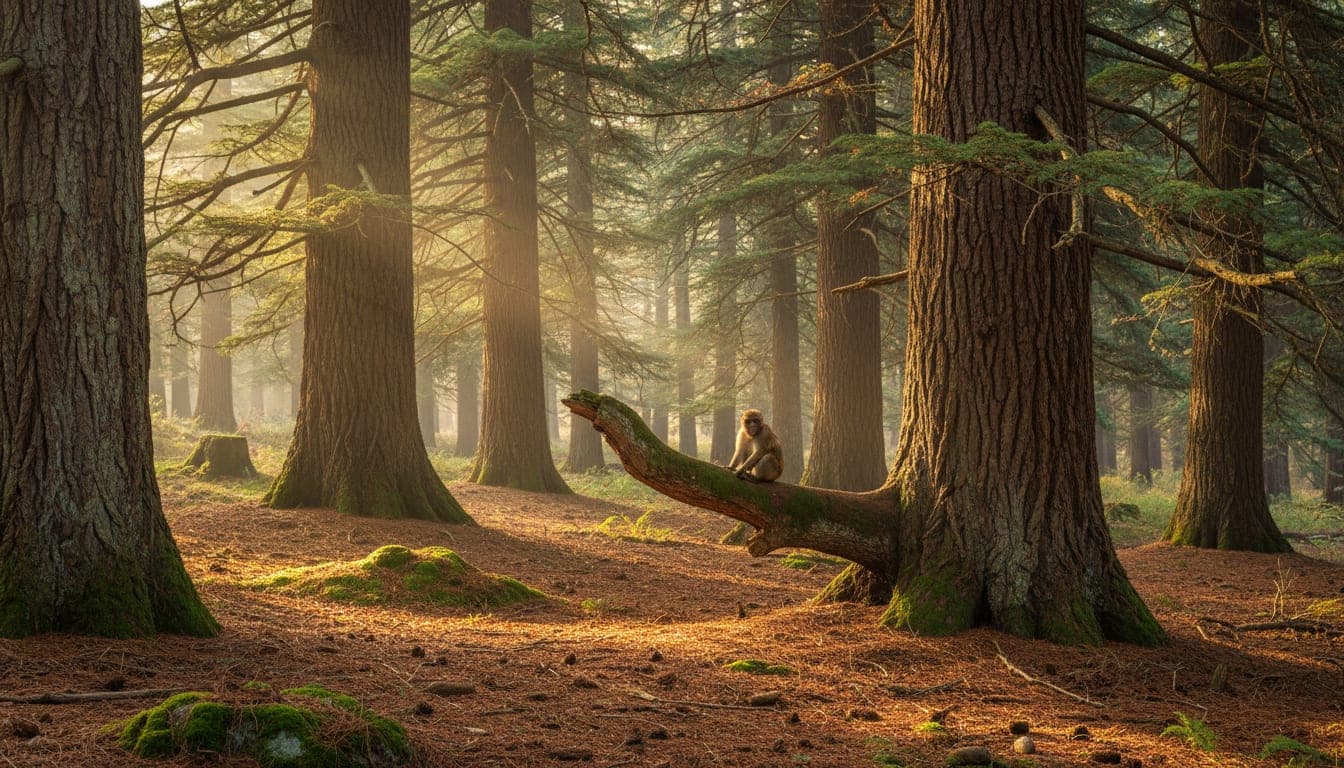
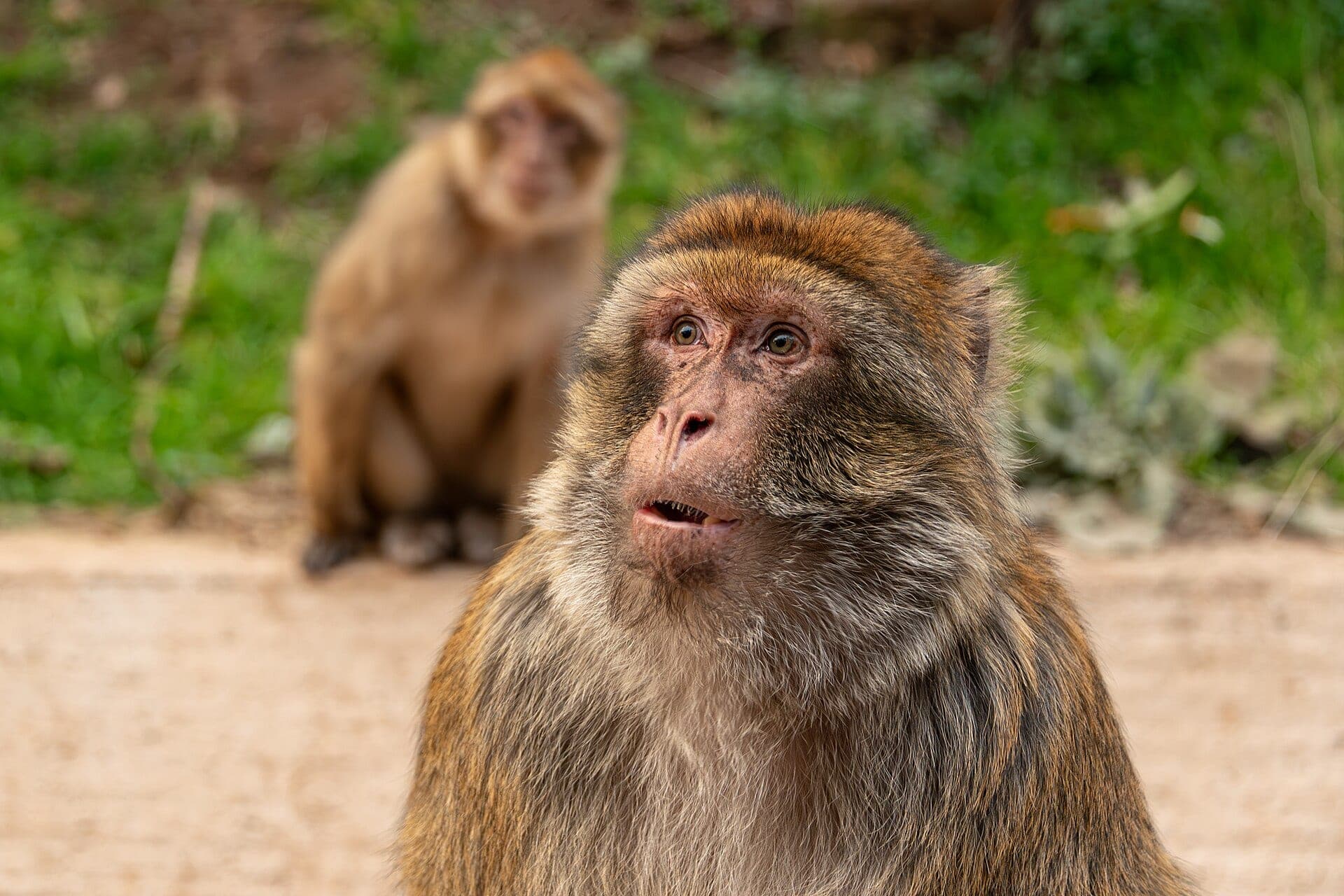
The Cedar & the Macaque is the ethical answer to a problem most Morocco trips create. Near Azrou, in the Atlas cedar forest, you can pull off the road and a wild Barbary macaque will climb on your car for a handful of peanuts a vendor just sold you. It photographs well and it is quietly destroying the animals. This 3-day tour from Fes does the opposite: a dawn, naturalist-led observation of the same species, in the same forest, with no feeding, no touching, and no photo props — just the macaques behaving as macaques.
The Barbary macaque is worth the care. It's the only macaque on Earth that lives outside Asia, the only primate native to North Africa and once to Europe, and it's now Endangered on the IUCN Red List, listed on CITES Appendix I. Numbers have fallen from over 20,000 in the 1970s to an estimated 12,000–21,000 today across Morocco and Algeria, with about three-quarters of them in Morocco's Atlas and Rif mountains. Ifrane National Park's own ecotourism office reports the local population has dropped around 40% in forty years. Feeding is a big part of why.
The science is unambiguous, and we'll show it to you. A 2016 study in PLOS ONE found that tourist-fed macaques were heavier and more stressed, had far more illness (32 bouts of sickness in the fed group versus one in the wild-feeding group), and bred far less — only a third of frequently-fed females gave birth in a season, versus all of the females that fed naturally. Feeding also brings the animals close enough to people for diseases to jump both ways. So we observe from a respectful distance, at dawn when the troop is active and the roadside is empty, and we let the forest do the rest.
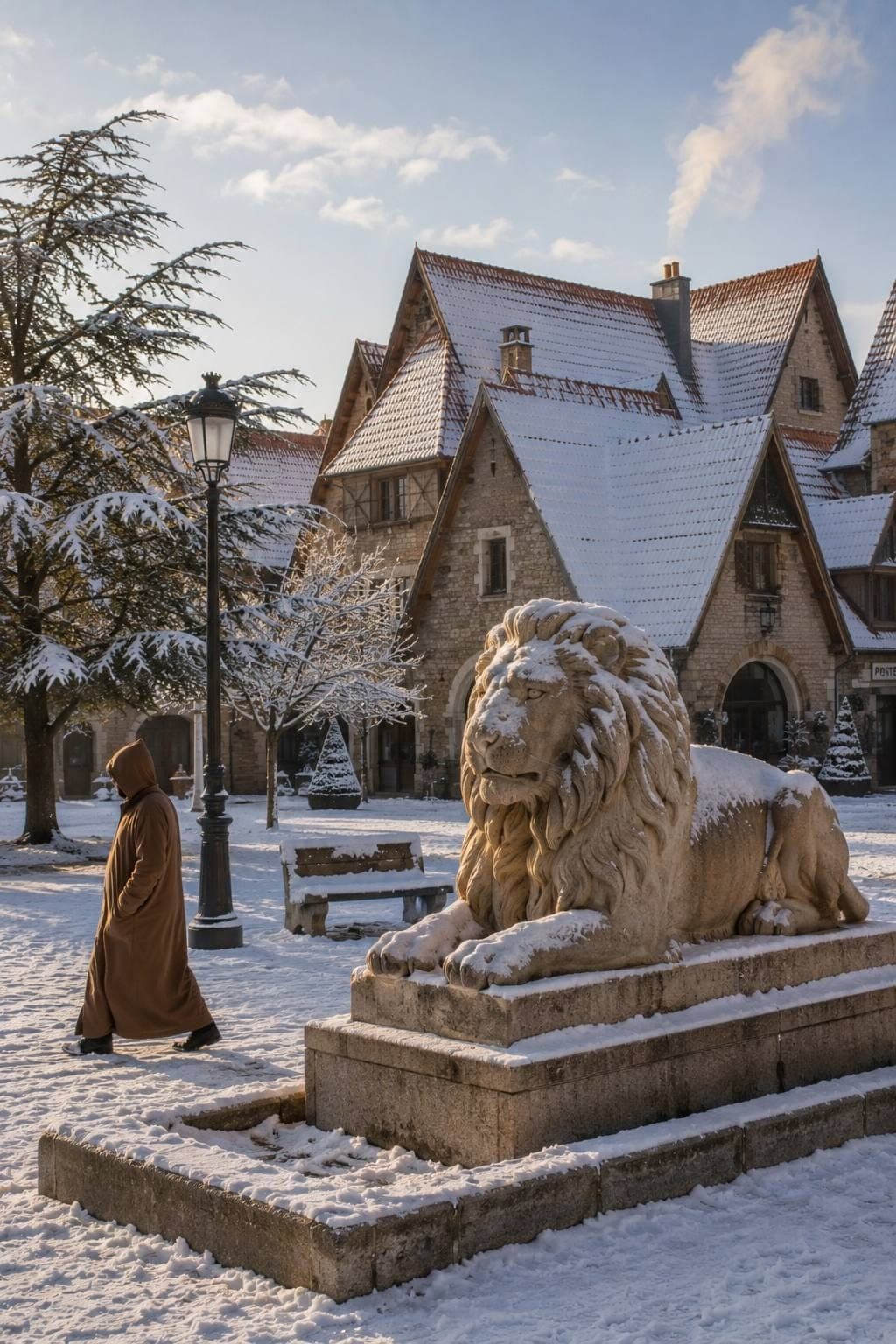
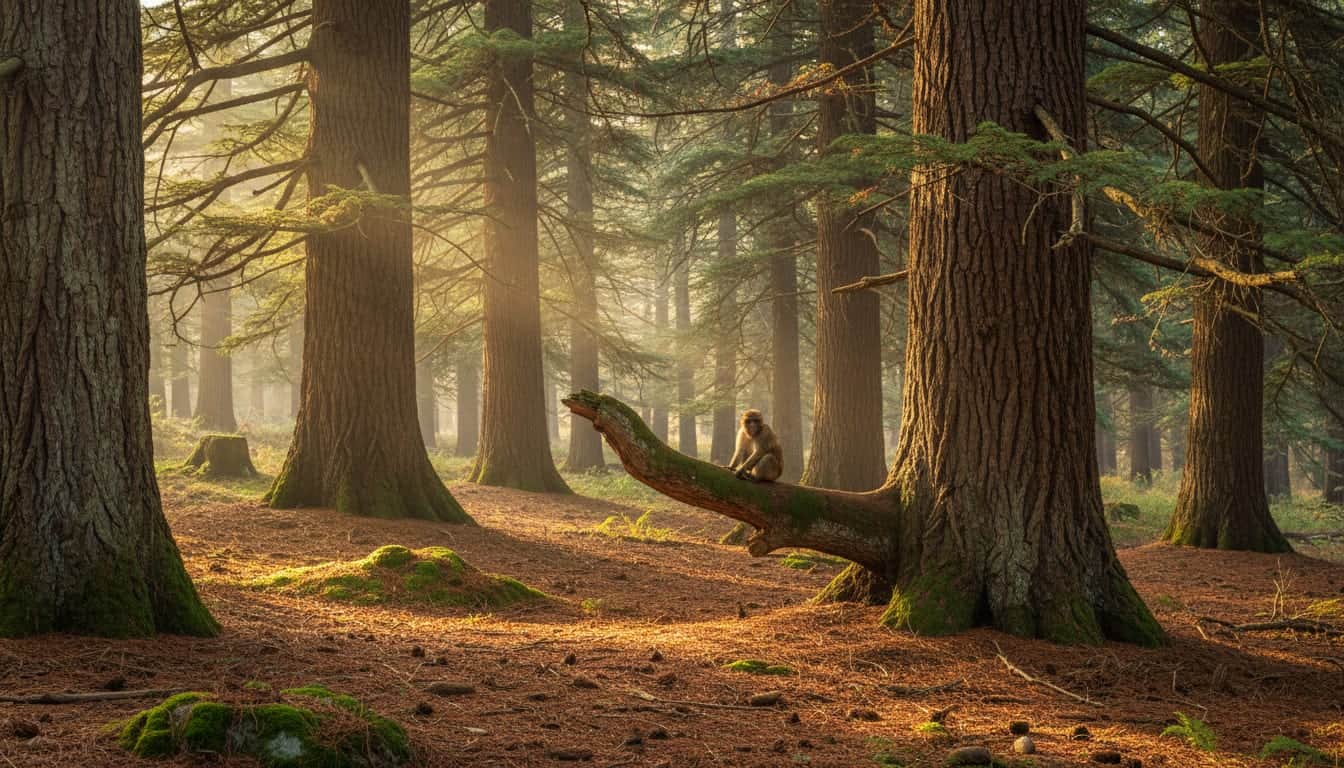
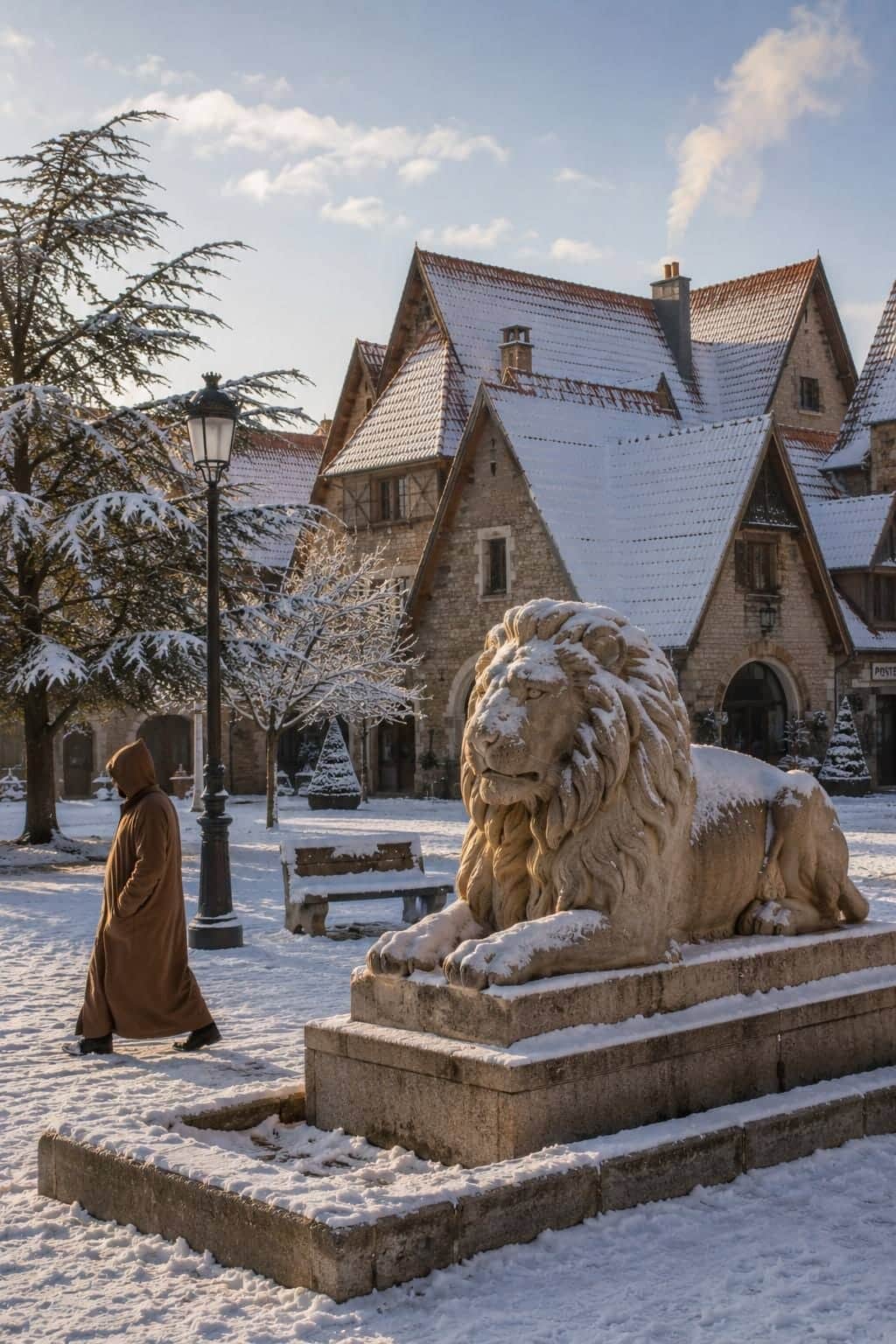
Beyond the macaques, this is a Middle Atlas immersion most itineraries skip entirely: the towering Atlas cedars of the Cèdre Gouraud forest, the lakes and alpine air around Ifrane (Morocco's improbable 'little Switzerland'), and an easy pace that suits families and first-timers. A fixed part of your fee goes to macaque conservation on the community model pioneered by IFAW's Born to be Wild programme and the Barbary Macaque Awareness & Conservation project. You leave with better photographs than the feeding crowd gets — and a clear conscience about how you got them.
- Wild Barbary macaque (Macaca sylvanus) — the only macaque living outside Asia and the only primate native to North Africa, Endangered (IUCN) and on CITES Appendix I
- Dawn observation in the Atlas cedar forest near Azrou, away from the roadside crowds — natural behaviour, strictly no feeding, no selfies, no touching
- The Cèdre Gouraud forest and Ifrane National Park (125,000 ha) — home to roughly a quarter of the world's Barbary macaques and a tenth of the world's Atlas cedar
- A naturalist guide who explains the conservation science — including why feeding harms the animals — instead of selling a photo prop
- A conservation contribution toward macaque protection (the IFAW / BMAC community-conservation model)
- Middle Atlas depth beyond the monkeys: cedar ecology, the lakes around Ifrane, and the alpine 'little Switzerland' town itself
Tag für Tag
- Tag 1
Fes → Ifrane → Azrou cedar forest
Morning pickup in Fes. Drive up into the Middle Atlas — about 90 minutes — through the alpine town of Ifrane (red-roofed, lake-dotted, startlingly un-Moroccan) to Azrou and the Cèdre Gouraud cedar forest at over 1,600 m. Afternoon orientation walk among the great cedars and an evening briefing on the observation protocol: how we watch, why we don't feed, and what to expect at dawn. Overnight in Ifrane or Azrou.
Fahrt · 2h
- Tag 2
Dawn macaque observation + Middle Atlas cedar ecology
An early start for the main event: dawn in the cedar forest with the naturalist, when the macaque troop is active and the roadside vendors and crowds aren't there yet. We watch from a respectful distance — natural foraging, grooming, the infants if the season is right (born March–April) — with no feeding and no approaching. Back for breakfast, then an afternoon on Middle Atlas depth: the ancient Cèdre Gouraud trees, the lakes around Ifrane, cedar-forest ecology, and a chance (never a promise) of Barbary deer. Second night in Ifrane/Azrou.
Übernachtung
- Tag 3
Second observation option → Fes
A second optional dawn observation for those who want it, or a slower morning in Ifrane town. Return to Fes by early afternoon, dropped at your riad or onward connection. (The tour extends to a 4-day version with a High Atlas / Middle Atlas trekking add-on; ask for the longer itinerary.)
Ende der Reise
Was enthalten ist
- Naturalist guide for all 3 days, briefed on the ethical-observation protocol
- Private vehicle + driver, Fes ↔ Ifrane / Azrou cedar forest
- Two nights mid-range Ifrane / Azrou lodging
- Daily breakfast + most dinners
- Dawn observation logistics (early access, quiet low-impact positioning)
- A conservation contribution toward Barbary macaque protection (IFAW / BMAC model)
Nicht enthalten
- International flights to/from Fes
- Lunches (kept flexible)
- Travel insurance (recommended)
- Any feeding of wildlife — not excluded so much as forbidden; it's the whole point of the tour
- Single-room supplement
- Macaque status
- Endangered (IUCN); CITES Appendix I; only macaque outside Asia
- Population trend
- From 20,000+ (1970s) to ~12,000–21,000 today (Morocco & Algeria)
- Why no feeding
- Fed macaques: 32 illness bouts vs 1; ⅓ of females breeding vs all (PLOS ONE, 2016)
- Ifrane National Park
- 125,000 ha — ~¼ of the world's Barbary macaques, ~⅒ of the world's Atlas cedar
“Everyone has the photo of a monkey on their car bonnet eating a biscuit. We think it's a photo of a sick animal. The science is clear — feeding makes these macaques fatter, more stressed, less able to breed, and more likely to pass diseases to and from people. So we go at dawn, we keep our distance, and we don't bring food. You get a wild animal in an ancient cedar forest instead of a beggar at a roadside, and the forest is better for it.”
Was vergangene Reisende sagen

Sophie & Marc
Paris, Frankreich
“Die beste Reise unseres Lebens. Unser Guide kannte jedes Dorf, jeden Aussichtspunkt, jedes versteckte Riad. Sieben Tage Marokko fühlten sich an wie ein Monat woanders.”

James H.
London, Großbritannien
“Alles hat reibungslos geklappt, von der Landung in Fès bis zum Saharacamp und zurück nach Marrakech. Die Nacht unter den Sternen werde ich nie vergessen.”

Ana Rodrigues
Lissabon, Portugal
“Organisiert, herzlich, professionell. Sie haben die Route um das gebaut, was wir mochten, und uns alle Freiheit gelassen, unterwegs anzuhalten, wo wir wollten.”
Lesen Sie das zuerst, wenn Sie noch recherchieren
Off-beatAre the Azrou Monkeys Ethical? A Guide to Morocco's Barbary Macaques
The roadside scene at Azrou — vendors selling peanuts, monkeys on car bonnets, selfies — is harming an endangered species. Here's the science on why you shouldn't feed the Barbary macaques, and how to see them ethically in the Atlas cedar forest instead.
Off-beatIs Ifrane Worth Visiting? A Local's Honest Answer for 2026
Ifrane is Morocco's alpine town — cedar forests, wild macaques, snow in winter, and one of the cleanest cities in the country. A local's honest 2026 answer on whether it's worth visiting, how many days you need, and how to plan it without wasting the trip.
The Cedar & the Macaque — häufige Fragen
- Where can I see Barbary macaques (monkeys) in Morocco?
- The most reliable place is the Atlas cedar forest near Azrou and Ifrane in the Middle Atlas, about 90 minutes from Fes. The Cèdre Gouraud forest holds a well-known wild troop. They also occur in the High Atlas (Ourika Valley) and the northern Rif, but the Azrou cedar forest is the classic site — which is exactly why doing it ethically, away from the roadside feeding scene, matters.
- Should you feed the Barbary macaques in Azrou?
- No. A 2016 PLOS ONE study found that tourist-fed macaques were heavier, more stressed, far sicker (32 bouts of illness versus one in the wild-feeding group) and bred much less — only a third of frequently-fed females gave birth, versus all of those that fed naturally. Feeding also spreads disease in both directions between monkeys and people. We observe without feeding, on purpose.
- Is it ethical to see the monkeys in the Azrou cedar forest?
- It can be, if you do it right. The roadside scene — vendors selling food, macaques climbing on cars, selfies and touching — is harmful and, frankly, grim. Our tour is the ethical version: a dawn observation at a respectful distance, no feeding, no touching, no props, led by a naturalist who explains the conservation science. Same forest, same species, completely different ethics.
- Are the Barbary monkeys in Azrou dangerous? Do they bite?
- Wild macaques observed at a distance are not dangerous. The bites and scratches that send tourists to Moroccan clinics every year almost always happen when people feed, crowd, or try to touch or pose with the animals — which is one more reason our protocol forbids all of it. Keep your distance, don't offer food, and there's no risk.
- How many Barbary macaques are left in the wild?
- Estimates put 12,000–21,000 across Morocco and Algeria combined, down from more than 20,000 in the 1970s, with about three-quarters in Morocco. The species is Endangered on the IUCN Red List and listed on CITES Appendix I. Ifrane National Park reports its local population has fallen around 40% in forty years — pressure from habitat loss, the illegal pet trade, and the effects of feeding all play a part.
- How do I get from Fes to the Azrou cedar forest?
- It's about 89 km, roughly 1.5 hours by car, south from Fes through Ifrane. Our tour includes private transport throughout, so you're not navigating it yourself or relying on the buses (which take around two hours). The forest sits at over 1,600 m, so it's cooler than Fes — bring a layer even in summer.
- What's the best time of year to see the macaques?
- Spring (April–May) is ideal — mild weather and infants, born in March–April, are visible with the troop. Autumn (September–October) is also excellent. Winter brings snow to the cedars, which is beautiful but cold. We run dawn observations year-round; the early start matters more than the season for seeing natural behaviour.
- Is this tour suitable for children?
- Yes, for children 8 and over, and it's a genuinely good lesson — kids learn why you don't feed wild animals by watching it done right. The walking is gentle and the dawn start is the only real demand. The no-touching, no-feeding rule is easy for children to follow once they understand why it matters.