Almost everyone who comes to Fes sees the Chouara tannery for about ninety seconds, from a leather shop's balcony, with a sprig of mint held to the nose and a salesman at the elbow. This five-day private tour does the opposite. It treats Fes leather as a living craft with a thousand-year lineage and takes you into it slowly — the pits, the benches, the makers — until you have worked a piece of hide yourself and understand what you are looking at.
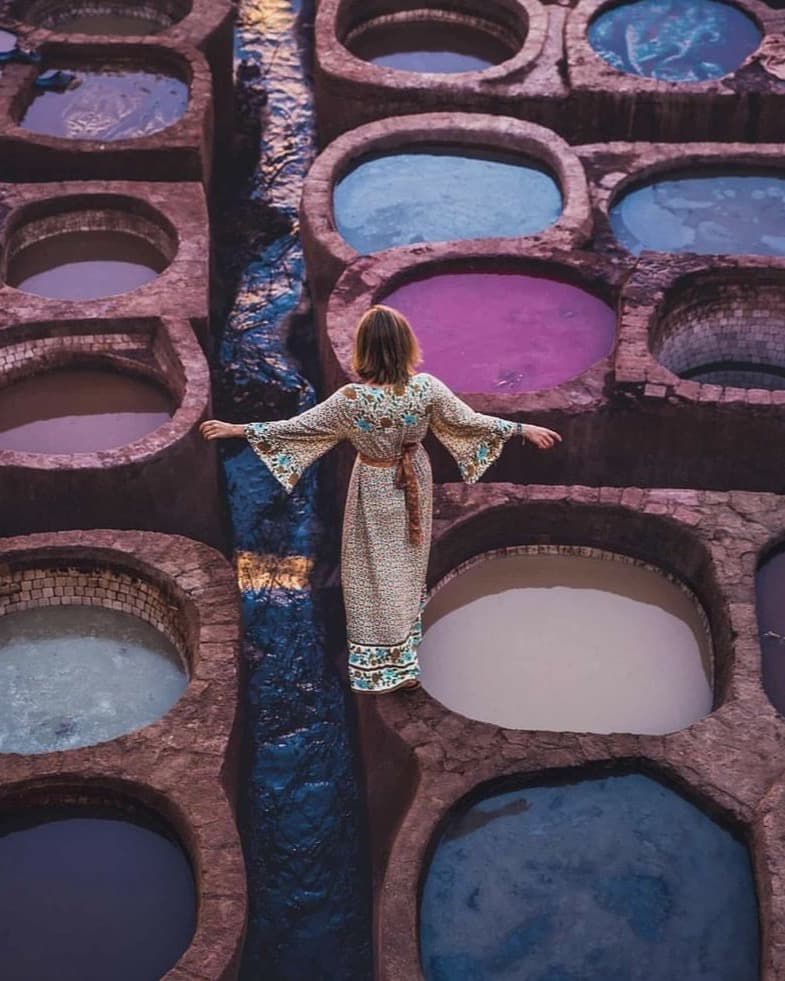
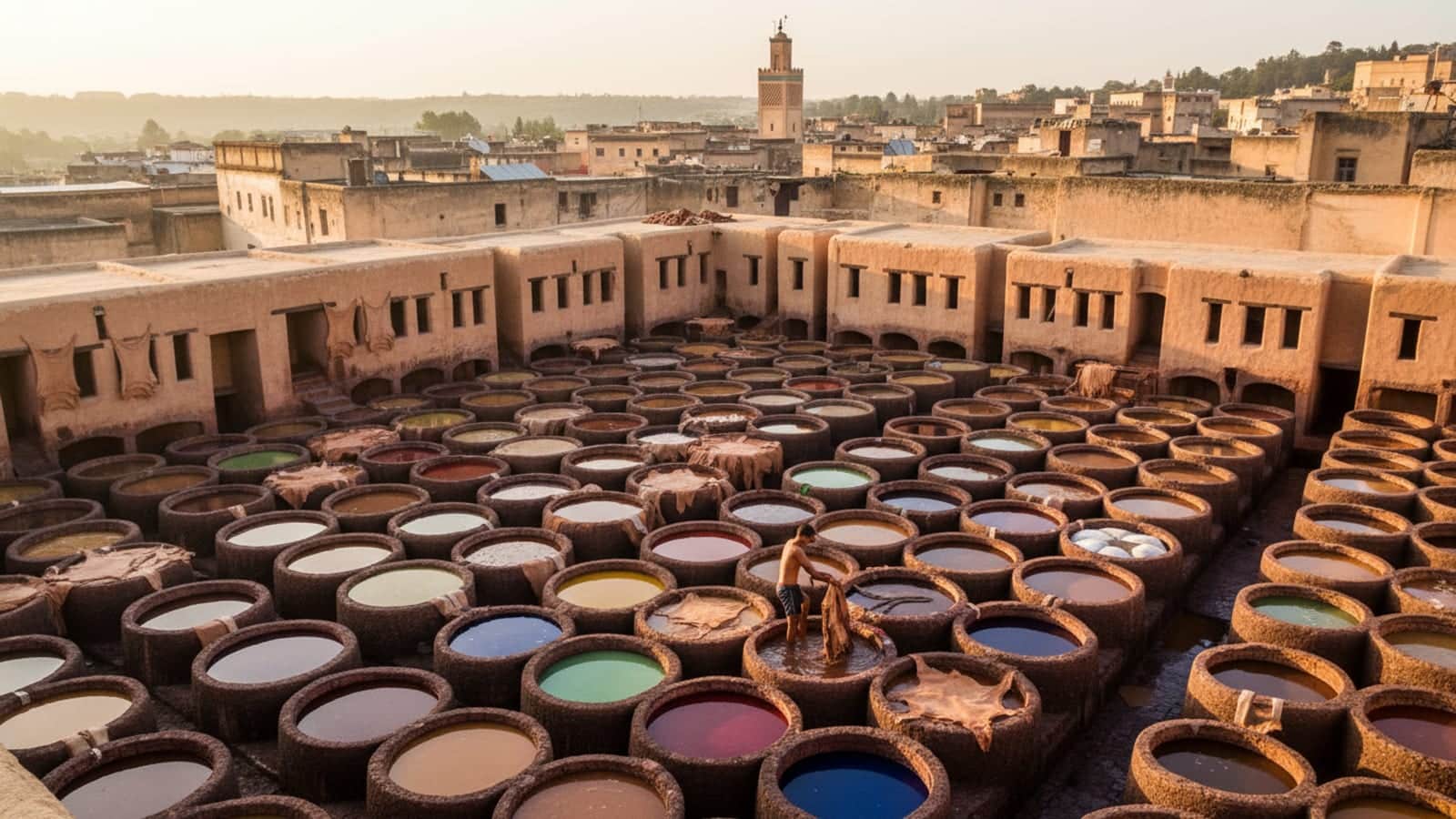
Chouara is the oldest and largest of the city's tanneries, in continuous use since roughly the 11th century, and it still tans the medieval way: hides cycled through white stone vats of lime and water, softened in a bath that famously includes pigeon droppings, then dyed in the round wells of colour you see from above — poppy, indigo, saffron, henna, mint. We walk the working edge early, with a guide the tanners know, so you see the men in the vats doing the actual labour rather than performing it for a tour bus. The craft historian with us reads the place as a system: the dabbagh guild that controlled it, the river that carried the waste, the reason a filthy, brilliant trade sits exactly where it sits.
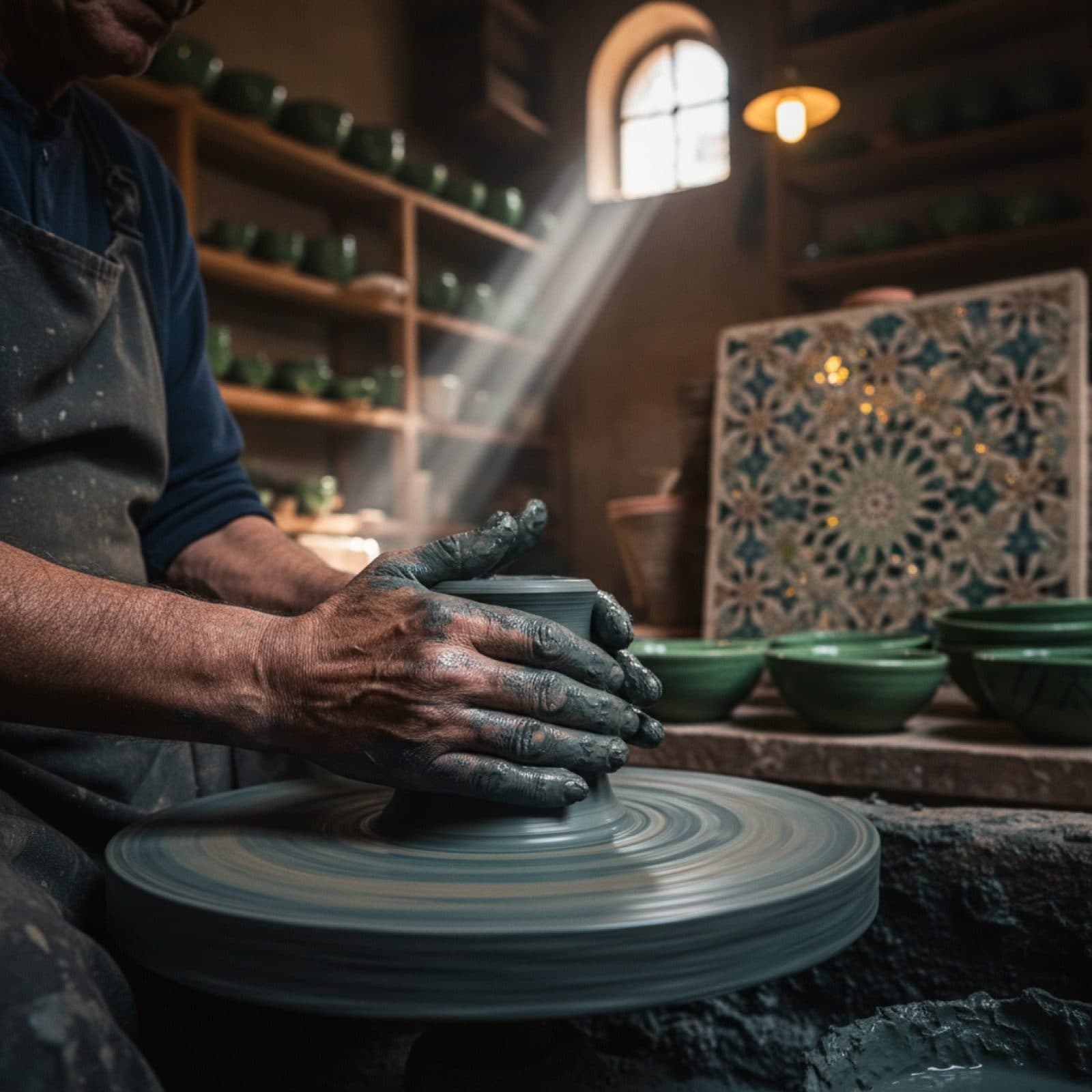
Then the week moves to the bench, because the tannery is only the first half of the story. Fes turned tanned leather into babouche slippers, into bound and gold-tooled books in the shadow of the Qarawiyyin, into bags and belts and saddlery. You spend real hours with a babouche maâlem and a bookbinder — cutting, stitching, dyeing — not watching a demonstration but doing the work badly and then a little less badly, which is the only way the hands learn. Where a maker is willing, you finish one small piece start to end and take it home.
We are honest about two things. First, the smell: it is real, it is strong, and the mint barely helps — but ten minutes in, most people stop noticing and start seeing. Second, the ethics: tannery work is hard, hot, and low-paid, and we will not pretend otherwise; we route to workshops that let you in honestly, we pay the makers for their teaching time, and we never dress the labour up as folklore. This is a craft-immersion week in one city, not a Morocco highlights loop — no Sahara, no Atlas crossing. If you want those too, we add a private leg before or after. The leather deserves the five days.
- Chouara tannery seen properly — not the 90-second photo from a leather-shop balcony, but a dawn walk along the working edge with a guide who knows the dyers by name, before the crowds and while the light is low
- The full vegetable-tanning process explained on site: the lime-and-water baths that loosen the hair, the pigeon-dung (and the enzymes in it) that soften the hide, and the natural dyes — poppy red, indigo, saffron yellow, mint green, henna brown
- A working session with a babouche maâlem — the slipper-makers whose hand-stitched seams the medina has bought for centuries — cutting and stitching a small piece under his hands
- The other leather lineage most visitors never see: bookbinding and gold-tooling in the orbit of the Qarawiyyin, the library founded in 859 that needed bound manuscripts and made a craft of it
- A guild reading of the medina with a craft historian — how the dabbagh (tanners') corporation governed who could tan, where, and how, and why the tanneries sit downstream on the Oued Fes
- One piece of leather you finish yourself — dyed and worked under a maker's eye — to carry home, plus honest help buying a jacket or bag direct at workshop prices, not commission-showroom prices
- A contrast morning at the smaller Sidi Moussa tannery, quieter than Chouara, where you can stand closer to the process without the press of a hundred phones
- Door-to-door on foot and by private car with a leather specialist — the workshops chosen for the craft and not the kickback, and the smell explained, not hidden (you will be handed mint, and told why it only half-works)
Day by day
- Day 1
Arrive Fes — leather in situ, the eye warmed up
Private pickup at Fès–Saïs airport and transfer to a riad inside the Fes el-Bali medina. An unhurried late-afternoon walk to set the eye before you meet the makers: the leather souk around the Attarine, a first look at babouche stalls and bound books, the Nejjarine fountain. No tannery today — you arrive at Chouara fresh, at dawn, tomorrow. Dinner at the riad.
Stay overnight
- Day 2
Chouara at dawn — the pits, the dyes, the dabbagh guild
Early to the Chouara tannery while the light is low and the crowds have not arrived. With a guide the dyers know, we walk the working edge: the lime baths, the softening soak, the wells of natural colour, the men turning hides in the vats. A craft historian reads it as a system — the tanners' corporation, the river, the thousand-year continuity. Afternoon free in the medina to let the morning settle; optional bookbinding peek near the Qarawiyyin.
Stay overnight
- Day 3
The babouche bench — your hands on the leather
A morning and into the afternoon with a babouche maâlem, the slipper-makers whose hand-stitched work the medina has bought for generations. You learn the cuts, the awl, the seam — and you do them, slowly and imperfectly, which is the point. Where the maker is willing you begin a small piece of your own. Late afternoon to wander the leather souk now that you can read a good seam from a glued one.
Stay overnight
- Day 4
Books, gold tooling, and a quieter tannery
The other Fes leather lineage: bookbinding and gold-tooling in the orbit of the Qarawiyyin, the 859 library that made bound manuscripts a craft. A session with a binder — folding, sewing, tooling a cover. Then a contrast visit to the smaller, calmer Sidi Moussa tannery, where you can stand close to the dyeing without the press of phones. You finish the piece you began yesterday and we confirm any direct purchases at workshop prices.
Stay overnight
- Day 5
Fes — departure
A slow last morning — coffee, a final pass through the souk for anything you marked, your finished leather wrapped for the journey — then a private transfer to Fès–Saïs airport for your onward flight. Travellers extending the trip transfer instead to Marrakech (about 530 km, or the fast train via Casablanca) or to the desert on a private leg arranged around your flights.
End of journey
What's included
- Private car and walking transfers with an English-speaking driver/guide throughout (also Arabic and French)
- A leather-craft specialist and a guided dawn visit to the Chouara tannery (low-crowd timing)
- Hands-on sessions with a babouche maâlem and a bookbinder, including materials
- Finishing of one small leather piece you work yourself, to take home
- A craft-historian medina walk reading the dabbagh guild and the tannery's history
- Four nights in a traditional riad inside the Fes el-Bali medina (breakfast daily)
- Entry fees for the workshop and museum visits on the itinerary
Not included
- International flights to and from Morocco
- Lunches and dinners beyond breakfast (budget ~$12–30/person/meal)
- Leather goods you buy direct from the workshops beyond the piece you finish
- Travel insurance — strongly recommended; we can suggest HeyMondo or SafetyWing
- Marrakech or desert extension and transfer (on request)
- Gratuities for the makers, guide, and driver (at your discretion)
- Chouara tannery
- In use since ~11th century, Fes el-Bali
- Tanning method
- Vegetable / traditional — lime, soak, natural dyes
- Hands-on benches
- Babouche-making + bookbinding (materials included)
- Driving
- None — single-city, on foot in the medina
“Visitors are told the pigeon droppings are a gimmick. They are not — the ammonia in the dung raises the pH and the enzymes break down the proteins, which is how an 11th-century tanner softened a hide without modern chemistry. Everything at Chouara has a reason like that: the lime loosens the hair, the river takes the waste, the guild decided who could work the vats. When you stop reacting to the smell and start reading the chemistry and the law of the place, the tannery turns from a photo opportunity into one of the best-preserved industrial processes still running anywhere.”
What past travellers say

Sophie & Marc
Paris, France
“The best trip of our lives. Our guide knew every village, every viewpoint, every hidden riad. Seven days in Morocco felt like a month somewhere else.”

James H.
London, UK
“Everything was seamless from landing in Fes to the Sahara camp and back to Marrakech. The night under the stars is something I'll never forget.”

Ana Rodrigues
Lisbon, Portugal
“Organized, warm, professional. They built the itinerary around what we loved and gave us complete freedom to stop anywhere along the way.”
The Tanner's Hands — A Fes Leather & Medina Craft Tour — frequently asked
- How do you visit the Chouara tannery — and is the balcony view all there is?
- The famous view is from the balconies of the leather shops that ring the tannery, free to enter on the understanding you might buy. This Fes tannery tour goes further: we time a dawn visit with a guide the dyers know, walk the working edge while it is quiet, and have a craft historian explain the lime baths, the natural dyes, and the guild that ran it — so you see the process, not just photograph the colours.
- What is the smell really like, and does the mint help?
- It is strong — ammonia, hide, and dye — and we will not pretend the sprig of mint everyone hands you does much. The honest truth: about ten minutes in, most people stop noticing it and start paying attention to what they are watching. We go early, when it is cooler and less concentrated, which helps more than the mint does.
- Is the tannery ethical to visit, and how do you handle that?
- Tannery work is hard, hot, and poorly paid, and we do not dress it up as folklore. We visit workshops that admit guests honestly, we pay the makers for the time they spend teaching you, and we are candid on site about the labour and the conditions. If that matters to you — it should — this tour is built to engage with it rather than gloss over it.
- Do I actually get to work the leather myself?
- Yes. Beyond the tannery, you spend real hours at the bench with a babouche maâlem and a bookbinder — cutting, stitching, dyeing, tooling. You will do it imperfectly at first, which is how hands learn, and where the maker is willing you finish one small piece start to end and take it home. Materials are included.
- How much should I expect to pay for leather goods in Fes?
- Prices vary hugely with quality and your willingness to bargain. As a rough guide in the medina, hand-stitched babouches run about $15–40, a decent leather bag $40–120, and a good jacket $80–250 — always negotiable, often by half from the opening price. Our specialist helps you buy direct from workshops at maker prices rather than commission-showroom markups, and tells you honestly when something is glued rather than stitched.
- What is the difference between this and a standard Fes city tour?
- A standard tour gives the tannery ninety seconds from a balcony and moves on. This slows down for five days and treats Fes leather as a craft with a lineage — the Chouara process, the babouche bench, the Qarawiyyin bookbinders, the dabbagh guild history — with your own hands in the work. It trades breadth for depth in one of the medina's defining trades.
- Is this tour suitable if I have mobility issues?
- The Fes medina is cobbled, stepped, and steep in places, and the dawn tannery visit involves standing and some uneven footing, so a reasonable level of mobility helps. That said, much of the week is bench-based and we can pace it gently, arrange shorter walking days, and position accommodation to minimise climbs — tell us your needs at booking and we adapt the route.