Alrededor de 300.000 rapaces cruzan el Estrecho de Gibraltar cada año, y casi todos los tours de observación de aves lo hacen desde el lado español en Tarifa. Aquí te explicamos cómo ver la migración desde el lado marroquí — Jbel Moussa, Cap Spartel y la laguna de Merja Zerga —, cuándo venir y qué verás.
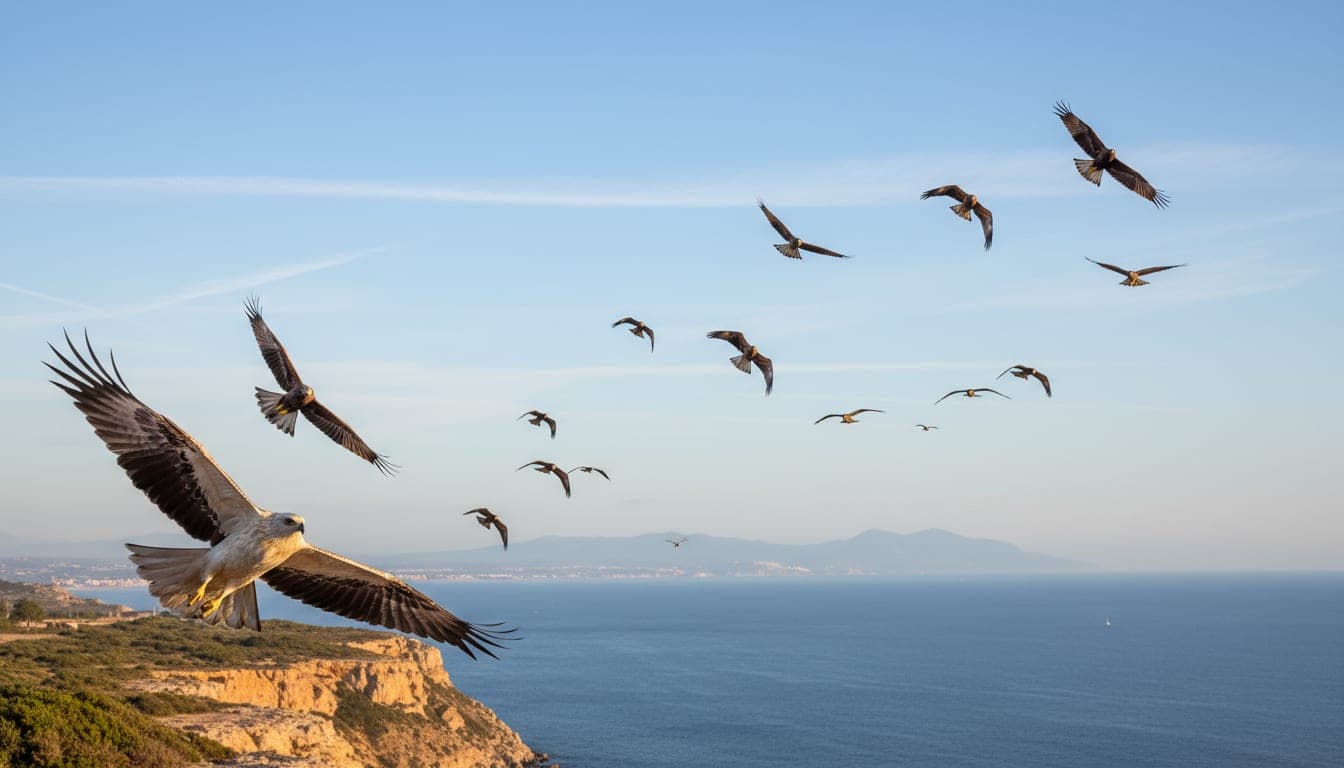
Alrededor de 300.000 rapaces de casi 30 especies, además de unas 150.000 cigüeñas, cruzan el Estrecho de Gibraltar cada año, canalizándose a través de los 14 kilómetros de estrecho entre África y Europa. Casi todos los tours de observación de aves lo observan desde Tarifa, en el lado español. Pero en primavera, las aves ganan altura sobre los promontorios marroquíes — Jbel Moussa y Cap Spartel — antes de comprometerse con el cruce, y casi nadie las observa desde aquí. Esta guía explica cómo ver la migración desde el lado marroquí, cuándo venir, qué verás y cómo se combina con la laguna de Merja Zerga, uno de los grandes humedales para aves limícolas de la Ruta Migratoria del Atlántico Oriental.
Soy un especialista en Marruecos, no un ornitólogo, pero he estado en la cresta de Jbel Moussa en una buena mañana de marzo con miles de milanos negros sobrevolando, y he observado el lado español desde el otro lado del agua haciendo lo mismo con multitudes más grandes. Las aves no llevan pasaportes. Lo que sigue es la versión práctica, desde el lado marroquí, de un viaje que el mundo de la ornitología realiza mayoritariamente desde España.
¿Por qué tantas aves cruzan el Estrecho de Gibraltar?
Porque es el salto más corto y el único que funciona para las aves planeadoras. El Estrecho tiene solo 14 km de ancho en su punto más estrecho, y las rapaces y cigüeñas dependen de las térmicas — columnas ascendentes de aire cálido — para ganar altura y planear. Las térmicas se forman sobre tierra, no sobre mar abierto, por lo que un cruce marítimo amplio es agotador y peligroso para un ave planeadora. El resultado es un embudo: las aves que migran entre Europa y África convergen en el cruce más estrecho, lo que convierte al Estrecho en uno de los cinco principales sitios de migración de rapaces en la Tierra.
¿Cuál es el mejor momento para ver la migración de rapaces en Marruecos?
La primavera — de mediados de febrero a finales de marzo — es el pico para el milano negro, las águilas culebrera y calzada, y los aguiluchos que cruzan hacia el norte de Europa. Principios de mayo trae el espectáculo más concentrado de todos: aproximadamente el 80% de la población europea de abejero europeo cruza en unos nueve días. El paso de regreso en otoño (finales de agosto a principios de octubre) es la otra ventana principal, con predominio de abejero europeo, cigüeñas y alimoche común que se dirigen al sur. Para un tour desde el lado marroquí, la primavera es la temporada principal.
| Especie | Pico de primavera | Pico de otoño | Notas |
|---|---|---|---|
| Milano negro | Mediados de febrero – finales de marzo | Agosto – septiembre | Migrante más abundante — más de 80.000 al año |
| Águila culebrera | Marzo | Septiembre | Más de 12.000 cruzan anualmente |
| Águila calzada | Marzo | Septiembre | Más de 10.000 cruzan anualmente |
| Abejero europeo | Pico a principios de mayo | Finales de agosto – septiembre | ~80% de la población en ~9 días en mayo |
| Cigüeña blanca y negra | Marzo | Agosto – septiembre | ~150.000 cigüeñas al año |
| Alimoche común | Marzo – abril | Agosto – septiembre | Más escaso; el otoño es mejor |
¿Desde dónde se observa la migración desde el lado marroquí?
El punto clave es Jbel Moussa, uno de los dos Pilares de Hércules y un Área Importante para las Aves designada por BirdLife. Es un auténtico cuello de botella migratorio donde el paso primaveral puede alcanzar alrededor de 40.000 rapaces más decenas de miles de cigüeñas y abejeros europeos. Las aves ganan altura sobre el macizo antes de cruzar, por lo que las verás ascender en espiral casi sobre tu cabeza. Cap Spartel, el promontorio al oeste de Tánger donde el Atlántico se encuentra con el Mediterráneo, ofrece una segunda vista y añade aves marinas y gaviotas. Ambos están a poca distancia en coche de Tánger.
¿Qué es Merja Zerga y por qué visitarla?
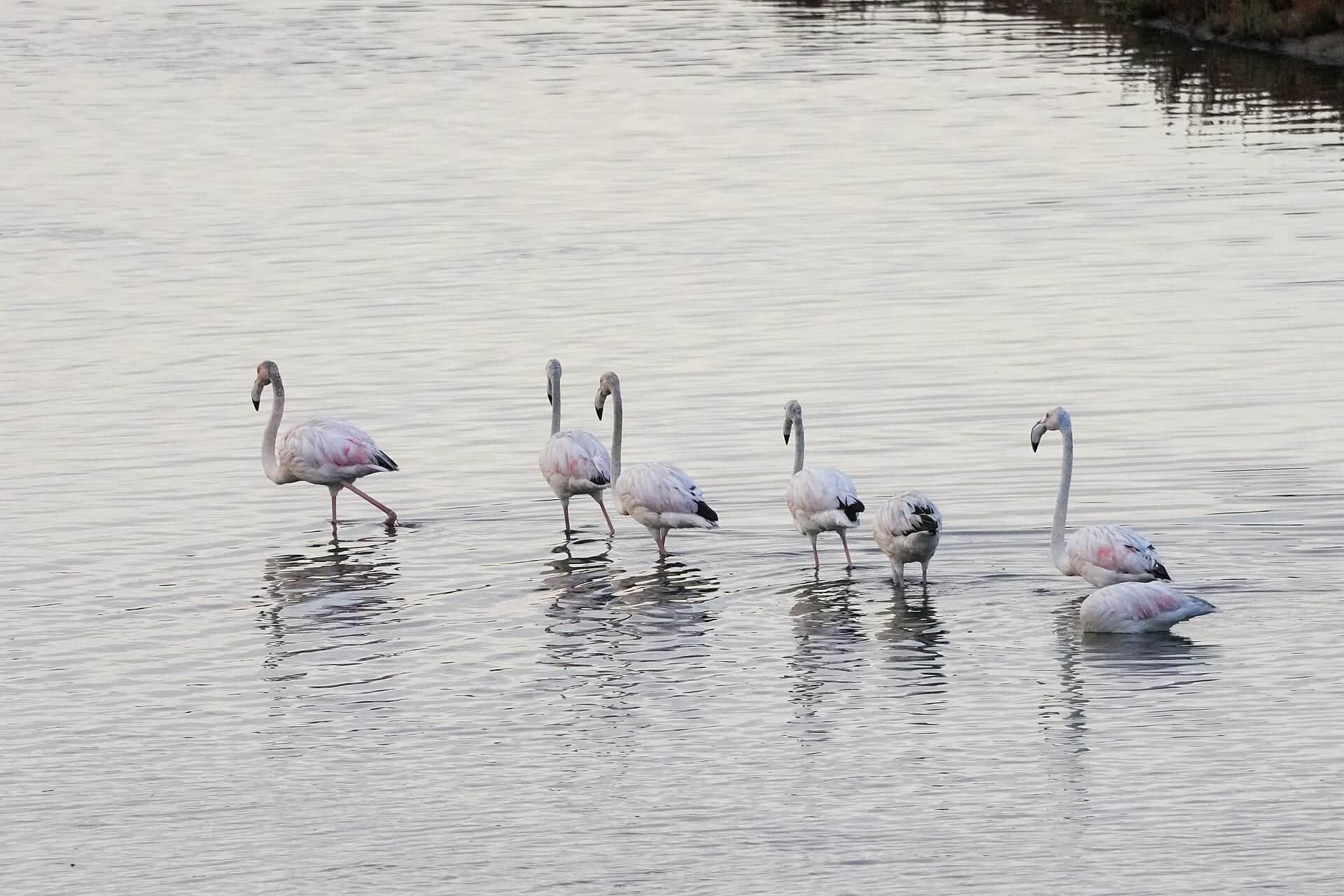
Merja Zerga, la laguna en Moulay Bousselham, aproximadamente a medio camino entre Tánger y Rabat, es un humedal Ramsar y uno de los sitios más importantes para aves limícolas en la Ruta Migratoria del Atlántico Oriental. Alberga entre 50.000 y 100.000 aves limícolas y entre 15.000 y 30.000 patos invernantes, con más de 100 especies registradas. Los pescadores locales ofrecen paseos en barco por la laguna (alrededor de 25 € la hora) que te acercan a flamencos rosados, cercetas pardillas, búhos campestres y gaviotas de Audouin y picofinas. Los estuarios atlánticos de Marruecos — Merja Zerga en el norte, el Loukkos cerca de Larache y Souss-Massa mucho más al sur, cerca de Agadir — son bastiones de flamencos y aves limícolas por derecho propio, no solo una nota al pie del cruce de rapaces.
¿Qué tiene que ver el zarapito fino con Merja Zerga?
Merja Zerga es donde el mundo vio por última vez de forma fiable un zarapito fino. La especie fue declarada extinta a nivel mundial por la UICN en 2024 — la primera extinción global conocida de un ave antes extendida por Europa, el norte de África y Asia occidental — y su último registro incontrovertible en cualquier parte de la Tierra fue aquí, en Merja Zerga, el 25 de febrero de 1995. Es algo aleccionador estar en una laguna tan hermosa y saber eso. También es parte de por qué la observación de aves de bajo impacto aquí es importante: el humedal es un superviviente y merece ser tratado como tal.
¿Cómo observar la migración de forma ética?
El protocolo del observador de aves serio, que cualquier buen guía seguirá: no usar reproducción de llamadas para atraer aves, no espantar bandadas para una fotografía y no acercarse a nidos o dormideros. El cruce de rapaces y la laguna Ramsar son sitios sensibles, y la única observación de aves que vale la pena hacer aquí es la de bajo impacto. La recompensa son aves comportándose de forma natural — una bandada de milanos ascendiendo en espiral en una térmica, flamencos alimentándose sin ser molestados al amanecer — que es la única versión del espectáculo que realmente vale la pena el viaje.
Si deseas una visita guiada, nuestro tour de observación de aves migratorias recorre el lado marroquí con un ornitólogo acreditado — Jbel Moussa y Cap Spartel para el cruce, luego la laguna de Merja Zerga en barco de pescadores — limitado a seis huéspedes, sin reproducción de llamadas, con una lista de especies previa al viaje y ópticas de préstamo. Se combina naturalmente con nuestro tour de cetáceos del Estrecho desde Tánger si deseas ver ballenas y rapaces en la misma base norte.

Escrito por
Youssef El Alaoui
Lead Morocco Specialist
Born in Fes, based in Marrakech. Designs private itineraries for Morocco Beauty Spots and still argues mint tea is best in the Atlas.