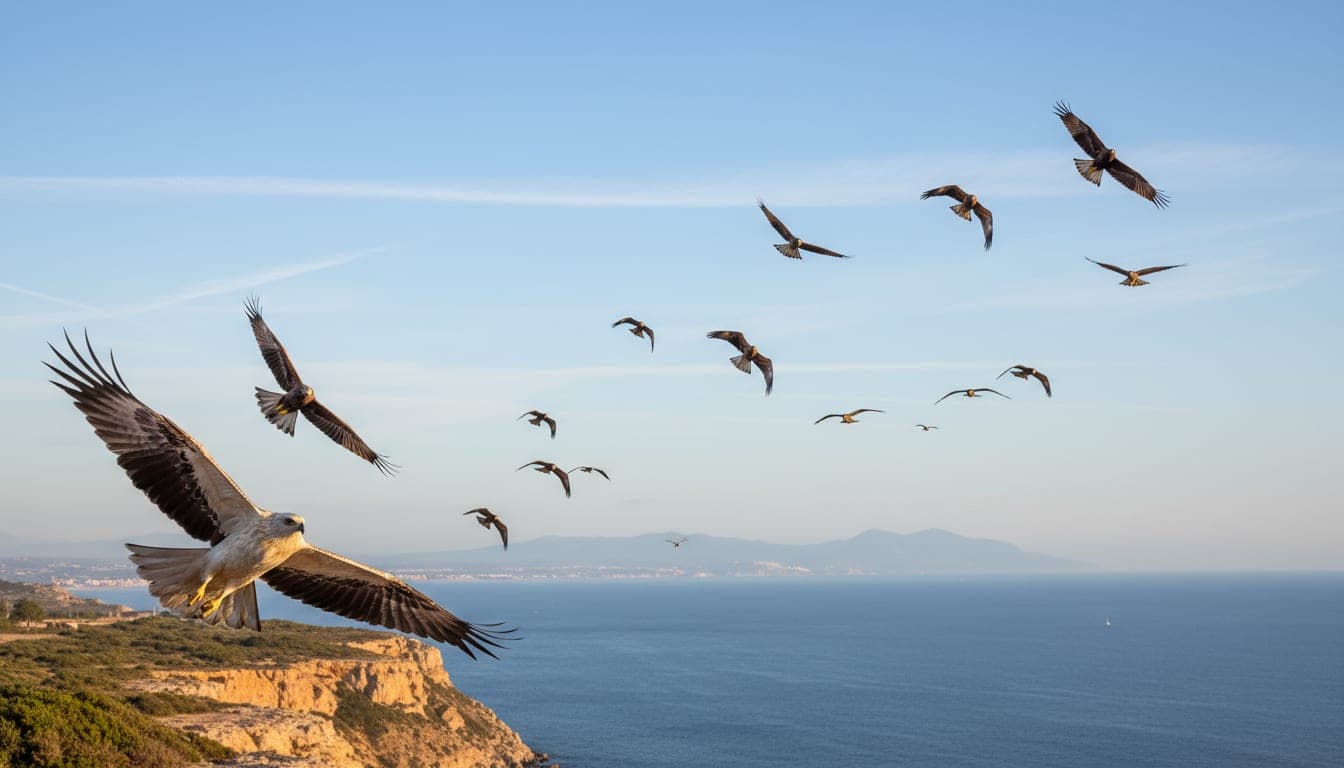

The Migration Birder is a 5-day tour built on a fact most birding itineraries miss: the great Strait of Gibraltar raptor crossing is just as watchable from the Moroccan side as from Tarifa in Spain — and almost nobody runs it from here. Each year around 300,000 raptors of nearly 30 species, plus some 150,000 storks, funnel across the 14-kilometre narrows between Africa and Europe, because soaring birds need the thermals that rise over land and can't form over open sea. In spring they cross south-to-north on a broad front from Tangier to Ceuta, gaining height over the Moroccan headlands before they commit to the water. We put you under that flightpath.
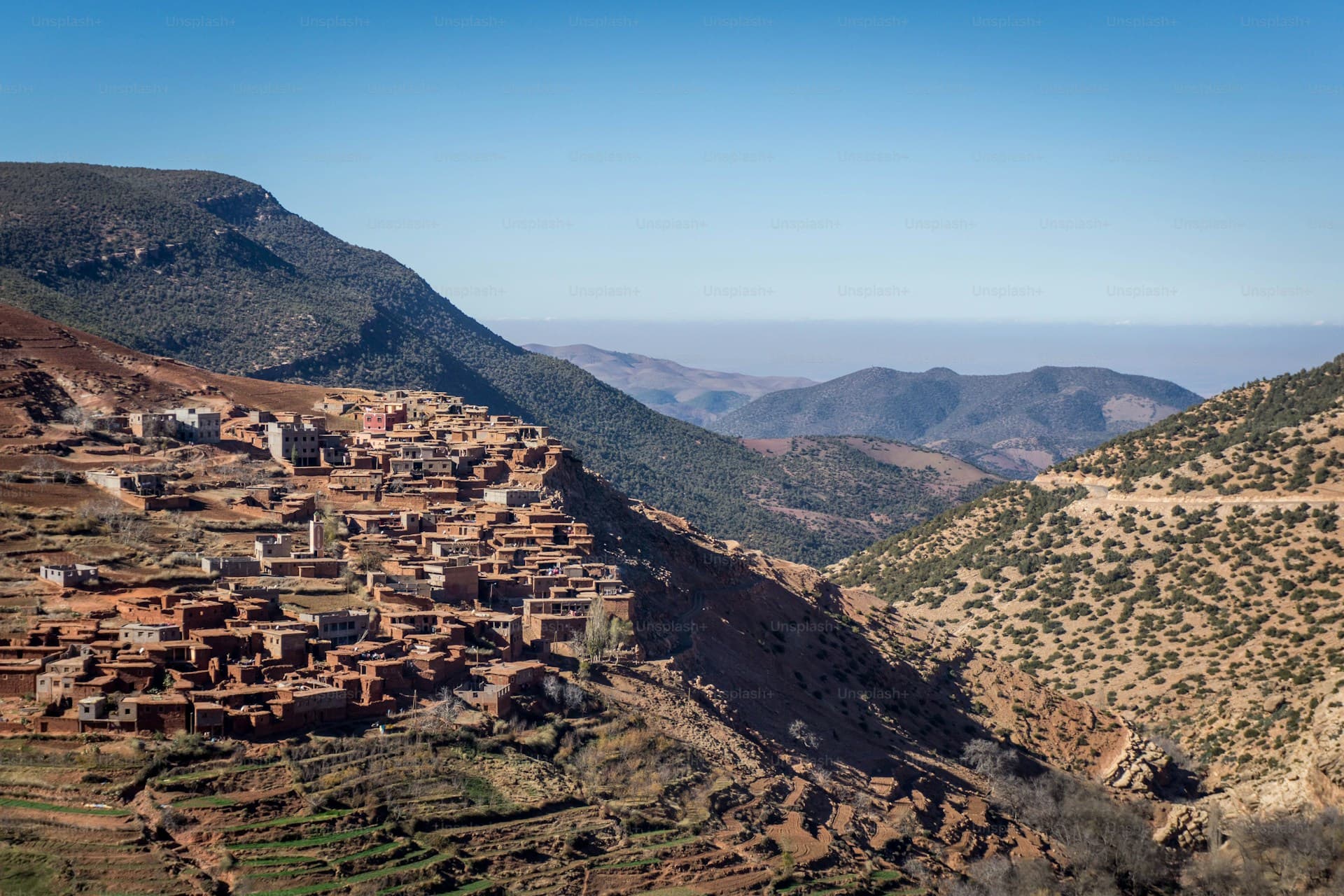
The Moroccan-side anchor is Jbel Moussa — one of the twin 'Pillars of Hercules', a BirdLife-designated Important Bird Area, and a genuine migration bottleneck where spring passage can reach around 40,000 raptors plus tens of thousands of storks and honey buzzards. Cap Spartel, where the Atlantic meets the Mediterranean just west of Tangier, gives a second vantage. March is the spring peak for Black Kite, Short-toed and Booted Eagles and harriers; if you come in early May you catch the extraordinary Honey Buzzard passage, when roughly 80% of the European population crosses in about nine days.
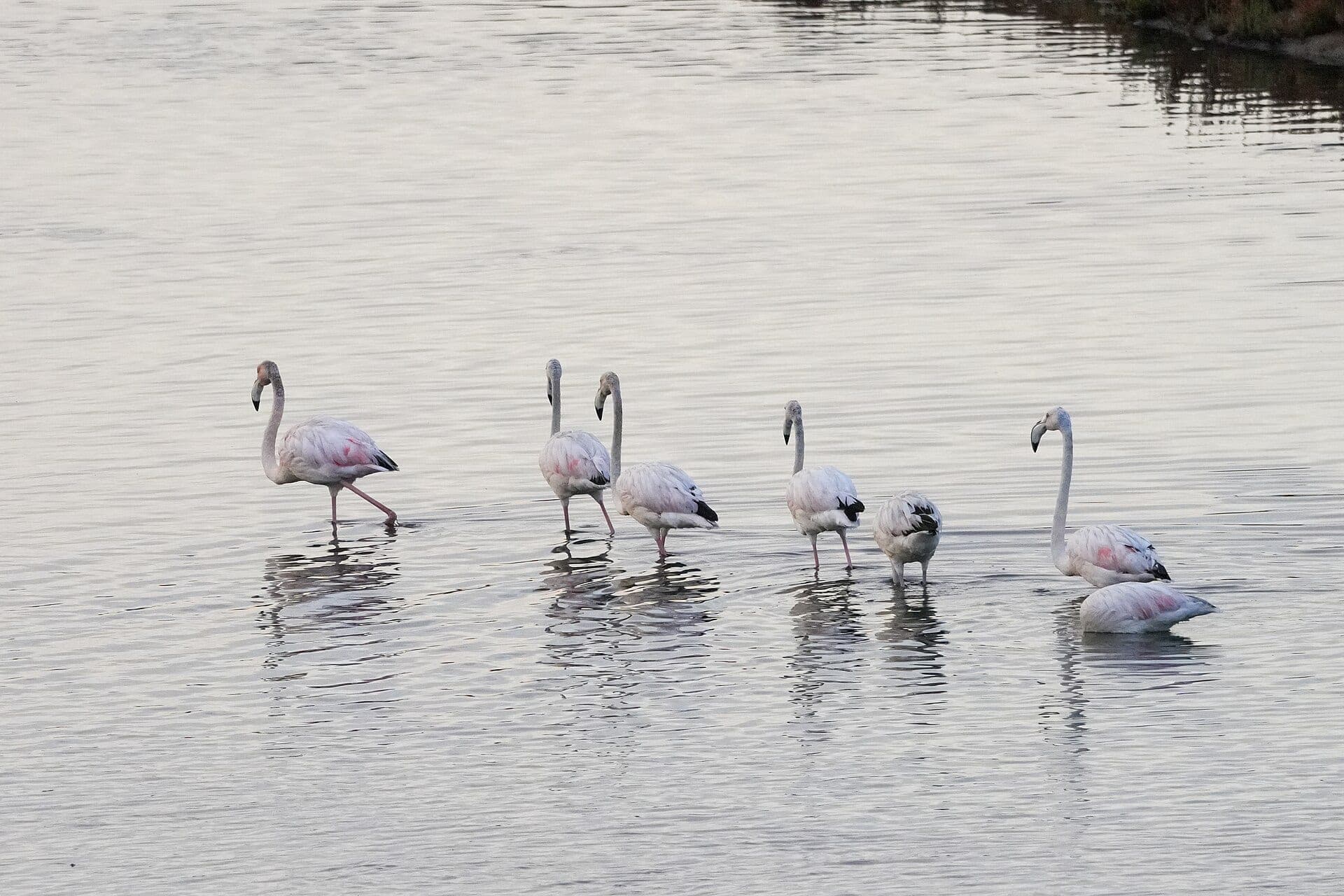
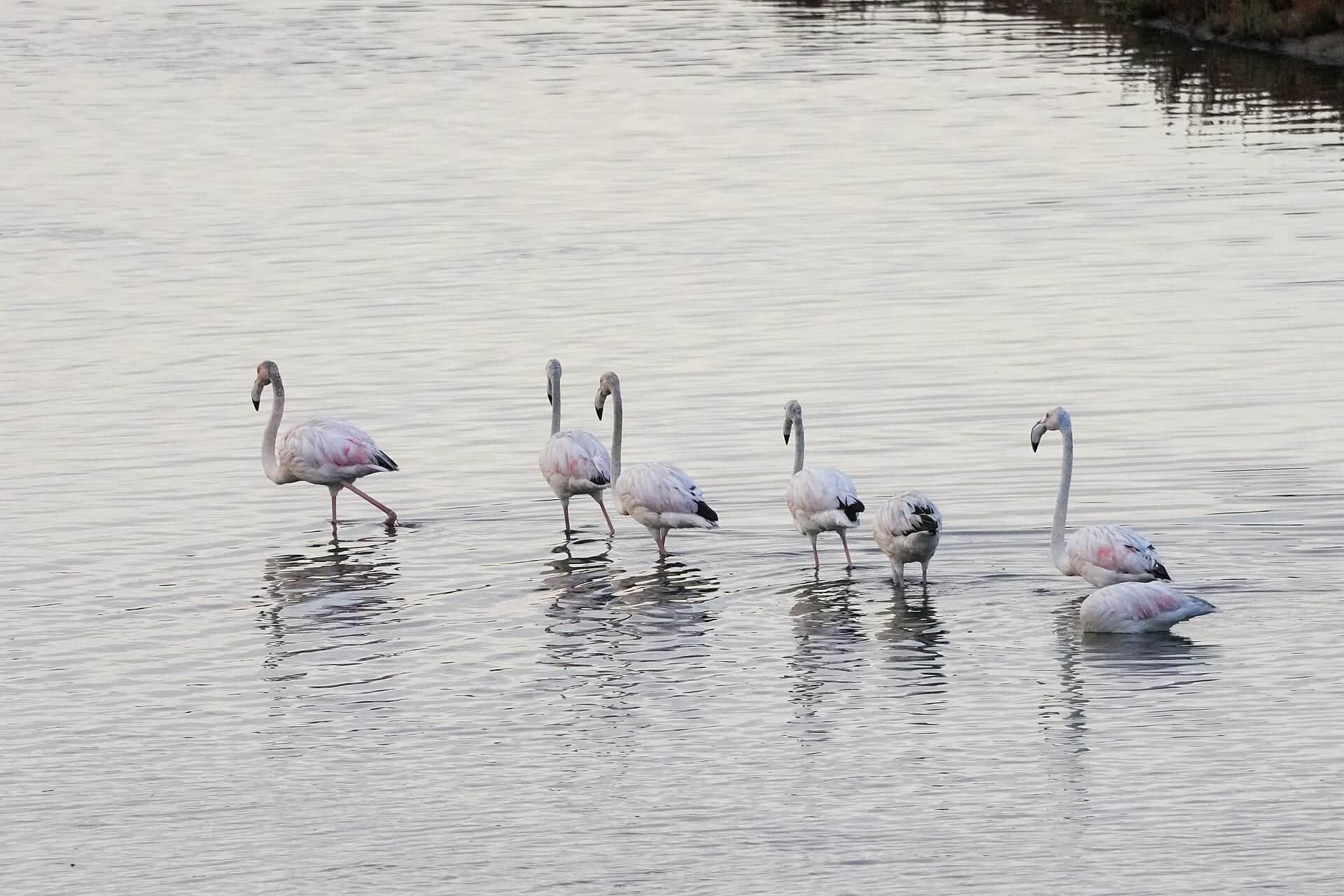
The second half of the tour drops south to Merja Zerga, the lagoon at Moulay Bousselham — a Ramsar wetland and one of the most important wader sites on the East Atlantic Flyway, holding between 50,000 and 100,000 waders and 15,000–30,000 wintering ducks, with more than 100 species recorded. We go out on the water with the local fishermen who run the lagoon's boats and know where the Greater Flamingo, Marbled Teal, Audouin's and Slender-billed Gulls and Marsh Owl are feeding. It is also a place that should make any birder pause: the Slender-billed Curlew, declared globally extinct by the IUCN in 2024, was last reliably seen on Earth here, at Merja Zerga, on 25 February 1995. We don't dramatise it. We just stand where it stood.
This is a field tour, not a sightseeing drive. It's led by a credentialed ornithologist, capped at six guests, and supported by a pre-trip species checklist and loaner optics if you need them. Our protocol is the ethics-first one serious birders expect: no call playback to lure birds, no flushing flocks for a photo, no approaching nests or roosts. The reward for the discipline is the real thing — birds behaving as if you weren't there, which is the only way the migration is worth watching.
A note on season: the spring raptor crossing (mid-February to late March, into the May honey-buzzard window) and the estuary's richest wader-and-duck numbers (November to March) don't perfectly overlap. Our standard departure is the spring raptor tour, with Merja Zerga as a strong complementary leg for residents, flamingos and early passage. If your priority is the estuary at its fullest, ask about a winter departure weighted to the lagoon.
- Spring raptor migration over the Strait of Gibraltar — around 300,000 raptors of ~30 species and 150,000 storks cross the 14 km narrows each year, riding thermals between Africa and Europe
- Jbel Moussa, the Moroccan-side migration bottleneck — a BirdLife Important Bird Area where spring passage can reach ~40,000 raptors (most birding tours only ever watch from Tarifa in Spain; we watch from Morocco)
- Black Kite (the most abundant migrant, 80,000+), Short-toed and Booted Eagles, harriers and Egyptian Vulture in the March spring peak
- Merja Zerga (Moulay Bousselham) — a Ramsar wetland on the East Atlantic Flyway holding 50,000–100,000 waders and tens of thousands of ducks, with 100+ recorded species
- A fisherman-guided boat on the Merja Zerga lagoon — local boatmen who know exactly where the flamingos, Marbled Teal and Audouin's Gulls are working
- Led by a credentialed ornithologist with a pre-trip species checklist — a field tour, not a sightseeing drive
- An ethics-first protocol: no call playback, no flushing birds for photos, no approaching nests or roosts
Día a día
- Día 1
Tangier arrival → Cap Spartel
Pickup at Tangier airport or the port. Afternoon orientation at Cap Spartel, the headland west of Tangier where the Atlantic meets the Mediterranean — first scan for passage raptors, gulls and seabirds, and a briefing from your ornithologist guide on the week's targets and the ethics protocol. Settle into a Tangier riad. Evening: species list set-up and what to expect from the crossing.
Noche en destino
- Día 2
Jbel Moussa raptor watchpoint (full day)
A full day at Jbel Moussa, the Moroccan-side migration bottleneck and BirdLife IBA. We position on the ridge where the birds gain height before the crossing and watch the spring passage — Black Kites streaming through, Short-toed and Booted Eagles, harriers quartering, the chance of Egyptian Vulture and, in early May, the Honey Buzzard surge. Picnic lunch on the watchpoint. Numbers depend on wind and weather, which your guide reads through the day. Back to Tangier for dinner and the day's tally.
Noche en destino
- Día 3
Tangier → Merja Zerga (Moulay Bousselham)
Drive south down the Atlantic coast to Moulay Bousselham and the Merja Zerga lagoon — a Ramsar wetland and one of the great wader sites of the East Atlantic Flyway. Afternoon first session on the lagoon edge: Greater Flamingo, godwits and plovers in their thousands, terns and gulls including Audouin's. Check into a lagoon-town guesthouse for two nights.
Conducción · 4h
- Día 4
Merja Zerga: fisherman-guided lagoon boat + full-day birding
Out on the water at first light with a local fisherman-boatman who knows the lagoon's channels — the close-up way to see flamingos, Marbled Teal, Marsh Owl at the reed edges, and the gull flocks. Back ashore for the day's wader passage on the flats. This is the stretch of coast where the Slender-billed Curlew was last seen on Earth in 1995; your guide will put the wetland's conservation story in context. Second night at Moulay Bousselham.
Noche en destino
- Día 5
Merja Zerga → Tangier → departure
A last morning session — the Loukkos estuary near Larache is an option en route if time and tide allow, adding storks, spoonbills and more waders. Drive back to Tangier for your onward flight or ferry. Final species list compiled and sent to you afterward. Flexible departure window.
Fin del viaje
Qué está incluido
- Credentialed ornithologist guide for all 5 days (pre-trip species checklist provided)
- Private vehicle + driver throughout (Tangier ↔ Jbel Moussa ↔ Merja Zerga)
- Four nights accommodation — two in a Tangier riad, two in a Moulay Bousselham lagoon guesthouse (mid-range)
- Fisherman-guided boat sessions on the Merja Zerga lagoon
- Daily breakfast + most dinners; picnic lunch on the Jbel Moussa watchpoint day
- Loaner binoculars and shared spotting scopes if you need them
- Post-trip compiled species list
No incluido
- International flights to/from Tangier
- Lunches in town (kept flexible around the birding schedule)
- Travel insurance (recommended)
- Personal optics if you prefer your own (bring 8×42 or 10×42 binoculars if you have them)
- Single-room supplement
- Raptors crossing the Strait/yr
- ≈300,000 of ~30 species, plus ~150,000 storks
- Strait width (narrowest)
- 14 km — soaring birds cross here because thermals don't form over open sea
- Spring peak
- Mid-Feb–late March; Honey Buzzard surge early May
- Merja Zerga (Ramsar)
- 50,000–100,000 waders, 100+ species recorded
“Every birding company sells the Strait crossing from Tarifa, on the Spanish side. The birds don't carry passports — in spring they gain height over Jbel Moussa on our side before they cross, and almost no one watches from here. We run it from Morocco, with a real ornithologist, no playback, and a boat on Merja Zerga with the fishermen who know the lagoon. It's the same migration, seen from the side nobody bothers with.”
Lo que dicen viajeros pasados

Sophie & Marc
París, Francia
“El mejor viaje de nuestra vida. Nuestro guía conocía cada pueblo, cada mirador, cada riad escondido. Siete días en Marruecos valieron un mes en otro sitio.”

James H.
Londres, Reino Unido
“Todo encajó a la perfección desde que aterrizamos en Fez al campamento del Sáhara y de vuelta a Marrakech. La noche bajo las estrellas no se me va a olvidar.”

Ana Rodrigues
Lisboa, Portugal
“Organizados, cercanos, profesionales. Nos armaron el viaje a nuestra medida y nos dejaron total libertad para parar en cualquier punto del camino.”
Lee esto primero si aún estás investigando
Off-beatMorocco Bird Migration: The Strait of Gibraltar from the Moroccan Side
Around 300,000 raptors cross the Strait of Gibraltar every year, and almost every birding tour watches from the Spanish side at Tarifa. Here's how to see the migration from the Moroccan side — Jbel Moussa, Cap Spartel, and the Merja Zerga lagoon — when to come, and what you'll see.
Off-beatStrait of Gibraltar Orca Watching from Tangier: A 2026 Local's Guide
There are roughly 49 Iberian orca left, they hunt bluefin tuna in the Strait every July and August, and almost nobody runs the tour from the Moroccan side. Here's how to do it right from Tangier — when to come, what you'll see, and why the ethics matter more than the photo.
PlanningMejor época para visitar Marruecos: Guía 2026 por mes + región
Los mejores meses para visitar Marruecos son de marzo a mayo y de septiembre a noviembre. Evite julio-agosto (calor de 45°C) y enero-febrero (nieve en el Atlas). Desglose mes a mes + región por región.
The Migration Birder — preguntas frecuentes
- Can you watch the Strait of Gibraltar bird migration from Morocco, or only from Spain?
- From Morocco — and it's a real advantage. In spring the raptors cross south-to-north, gaining height over the Moroccan headlands before they commit to the water, so Jbel Moussa (a BirdLife Important Bird Area) and Cap Spartel near Tangier are front-row seats. Almost every birding company runs the crossing from Tarifa on the Spanish side; we run it from the Moroccan side, which is less crowded and pairs naturally with the Merja Zerga estuary.
- When is the best time to see the raptor migration?
- Spring (mid-February to late March) is the peak for Black Kite, Short-toed and Booted Eagles and harriers. Early May brings the spectacular Honey Buzzard passage — roughly 80% of the European population crosses in about nine days. Autumn (late August to early October) is the other big window, weighted toward Honey Buzzard, storks and Egyptian Vulture. Our standard departure is the spring raptor tour.
- How many raptors actually cross the Strait?
- Around 300,000 raptors of nearly 30 species cross the Strait of Gibraltar each year, along with about 150,000 white and black storks. Black Kite is the single most abundant migrant (80,000+), with Booted Eagle and Short-toed Eagle each crossing in five-figure numbers. On a strong day under the right wind, the sky genuinely fills.
- Why do the birds cross at the Strait specifically?
- Because it's the narrowest point — just 14 km — between Africa and Europe, and because soaring birds depend on thermals (rising columns of warm air) that form over land but not over open sea. To avoid a long, energy-sapping sea crossing, raptors and storks funnel to the shortest hop, which makes the Strait one of the top five raptor-migration sites on Earth.
- What will I see at Merja Zerga?
- Merja Zerga is a Ramsar wetland holding 50,000–100,000 waders and 15,000–30,000 wintering ducks, with more than 100 species recorded. Highlights include Greater Flamingo, Marbled Teal, Marsh Owl, Audouin's and Slender-billed Gulls, and large flocks of godwits and plovers. We bird it both from the shore and from a fisherman-guided boat on the lagoon.
- Is it true the Slender-billed Curlew was last seen here?
- Yes. The Slender-billed Curlew was declared globally extinct by the IUCN in 2024 — the first known global extinction of a formerly widespread mainland bird from Europe, North Africa and West Asia — and its last reliable record anywhere on Earth was at Merja Zerga, Morocco, on 25 February 1995. Standing on that lagoon is part of why this tour matters beyond a species list.
- Do I need to be an experienced birder?
- No. The tour is led by a credentialed ornithologist and we provide a pre-trip species checklist and loaner optics, so keen beginners are very welcome — the Strait crossing is one of the most beginner-friendly spectacles in birding because the birds are large and numerous. Experienced listers get the depth of a Moroccan-side itinerary most tours never run.
- What's your stance on playback and getting close to birds?
- We don't use call playback to lure birds, we don't flush flocks for photographs, and we don't approach nests or roosts. The migration and the Ramsar lagoon are sensitive, and the only birding worth doing here is the low-impact kind. The reward is birds behaving naturally, which is also when they're most worth watching.